
Free Power at Lunch, Less Grid Power at Dinner: The Home Battery Shift
AEMO’s new data shows how batteries are changing evening grid demand. Here is how free-power offers fit in, where the rules differ, and what households should compare.
AEMO’s new data shows how batteries are changing evening grid demand. Here is how free-power offers fit in, where the rules differ, and what households should compare.

The household electricity story is increasingly about the clock. Rooftop solar creates energy in the middle of the day; batteries and flexible appliances can help households use more of that energy when it is useful. New findings from the Australian Energy Market Operator show that storage is changing evening demand.
Meanwhile, free-power offers give eligible households another reason to rethink when they run appliances and charge batteries.
AEMO’s September-quarter report says sampled households with rooftop solar and batteries drew around three-quarters less grid electricity during the 4 pm to 9 pm evening peak than households with solar alone. This is a comparison of grid use across groups of households.
It is not a controlled trial proving what a battery will save every buyer, and it does not mean electricity bills fell by the same percentage. AEMO also reports that grid-scale batteries supplied 8% of evening peak generation, ahead of gas at 5.1%.
These large batteries and household systems operate at different scales, but both can shift energy across the day.
Source: AEMO’s Q3 2026 report.
The report covers July to September; it should not be read as evidence of the later Victorian October rollout’s effects.
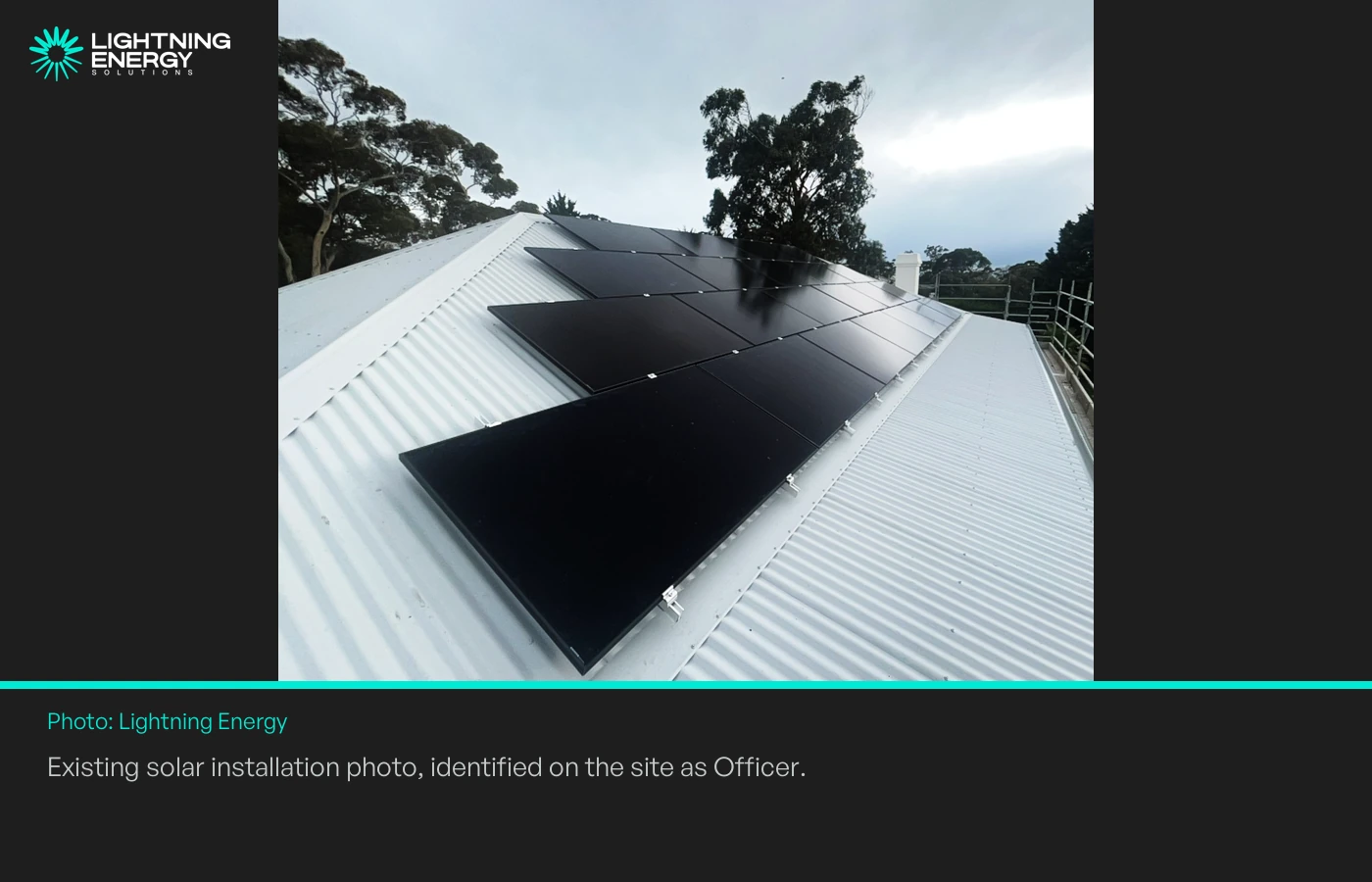
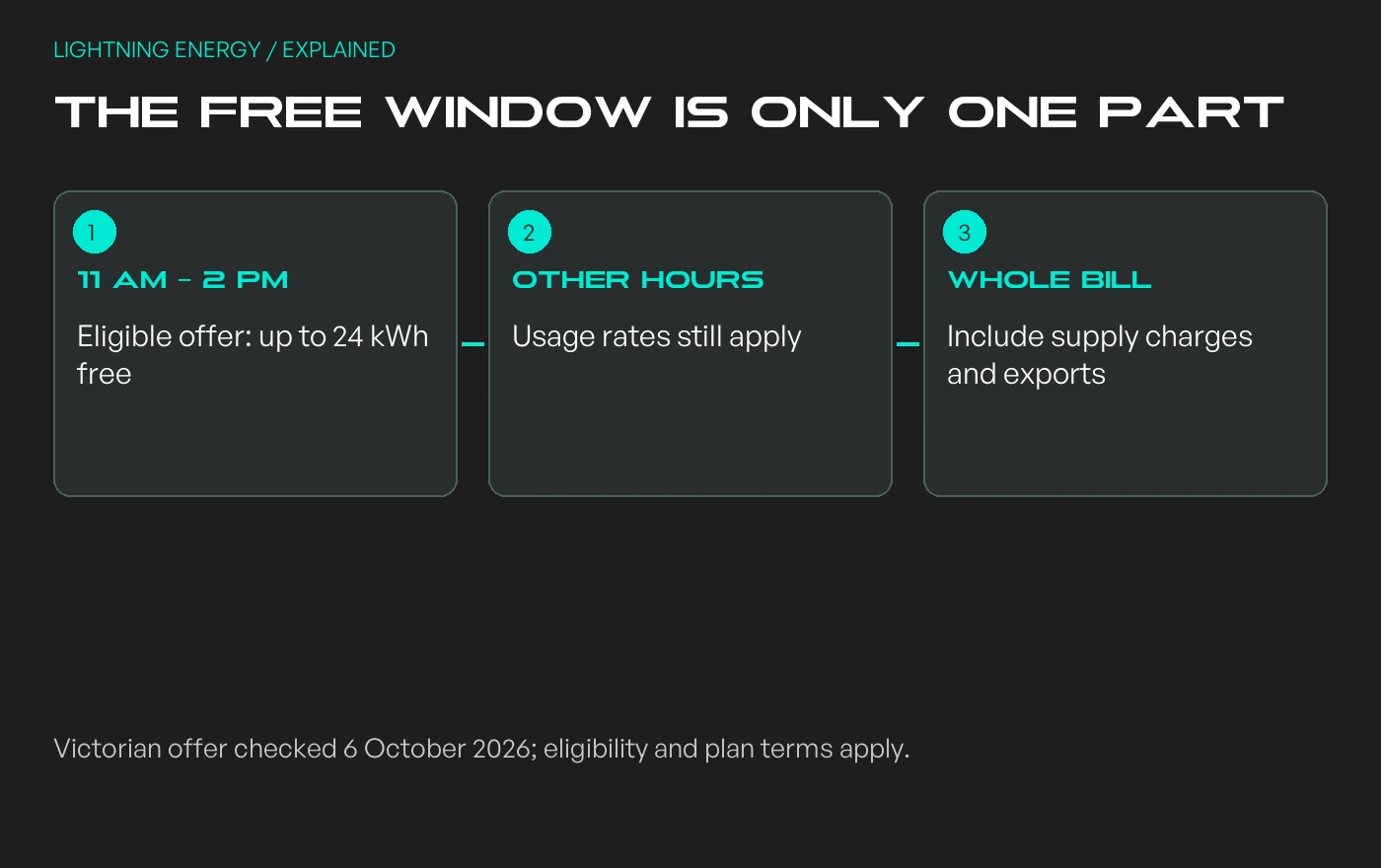
The federal Solar Sharer Offer is optional and available to eligible smart-meter households in NSW, South Australia and South East Queensland. You do not need rooftop solar to participate. Its daily windows are 11 am to 2 pm in NSW and South East Queensland, and noon to 3 pm in South Australia.
The offer includes up to 24 kWh in that window. Supply charges and other usage charges remain. Check retailer and household eligibility, including embedded-network exclusions, on the Australian Government’s Solar Sharer guide. Do not assume an offer applies nationally. Victoria’s separate Midday Power Saver began on 1 October 2026.
Eligible households can opt into up to 24 kWh of no-cost electricity between 11 am and 2 pm daily, through participating retailers. Read the Victorian Government’s offer details. See our Victorian midday power guide.
A battery separates the moment electricity is acquired from the moment it is used. If the equipment and plan allow it, a household can charge during a favourable period and use stored energy later. But a battery has limits.
Usable capacity, charging power, conversion losses, reserve settings and existing solar all affect the amount of electricity it can shift. A three-hour window does not guarantee a completely charged battery. There is a second trade-off for solar owners.
Filling a battery from the grid before your rooftop solar surplus arrives can leave less space for your own generation. The best schedule depends on the whole day, not just the free period. Ask how the proposed controls coordinate solar charging, grid charging and your evening demand.
If a VPP also controls the battery, check how its dispatch rules interact with your chosen retail plan.
A battery is one option, but it is not the entry ticket to shifting energy use. Some households can move laundry, dishwashing, hot-water heating or vehicle charging into suitable daytime hours. Start with tasks you already need to do. Running extra appliances simply because energy is temporarily free does not make the household more efficient.
Keep comfort, appliance instructions and safe operation in the plan.
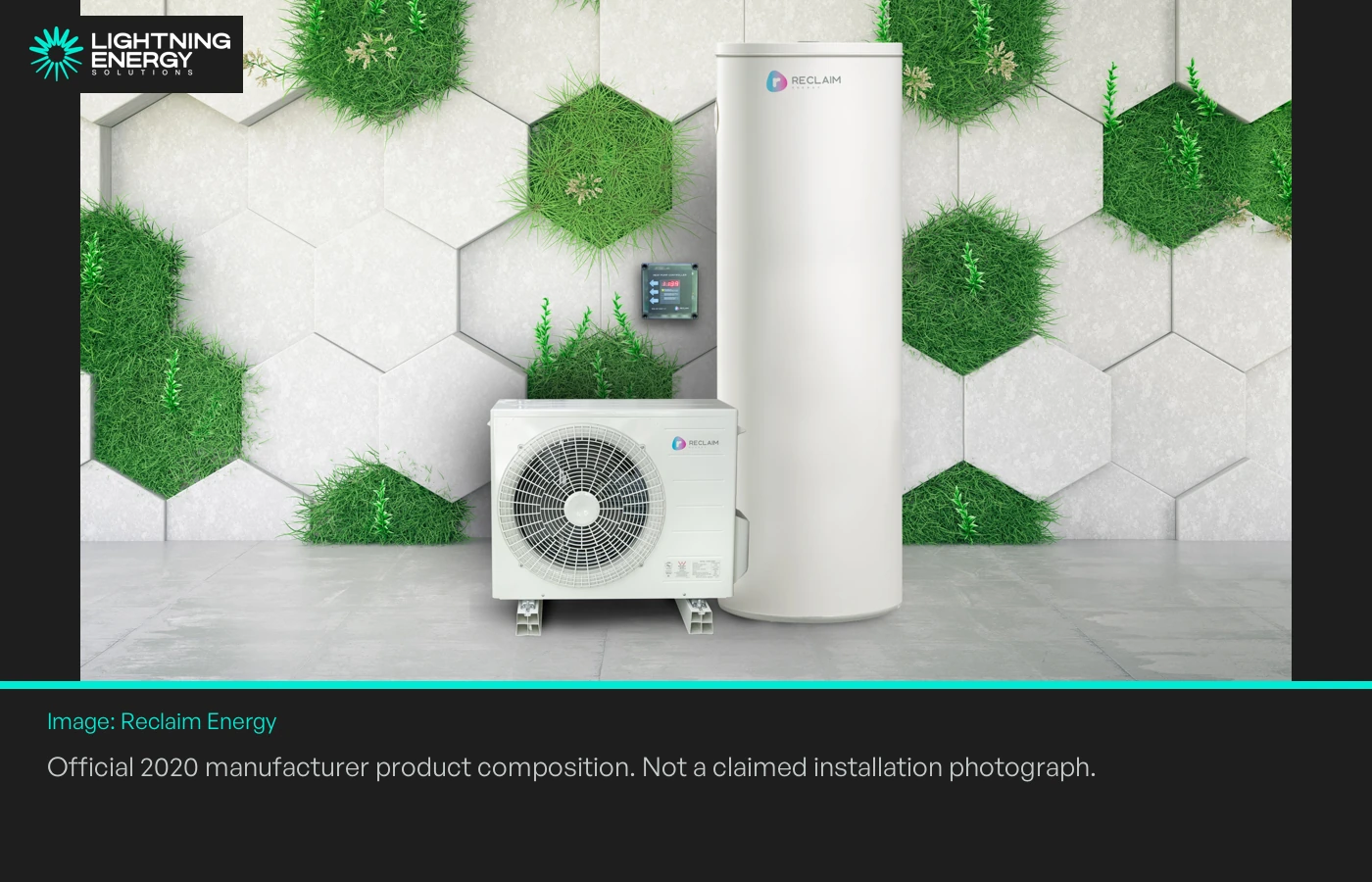
An EV charging setup is only useful for daytime shifting when the vehicle is actually home. Similarly, a hot-water schedule needs to meet your household’s needs and the system’s operating requirements. Victoria’s guidance recommends spreading high-energy appliances across the free window rather than switching them all on together.
Have an installer assess capacity and controls where needed; a tariff offer does not increase your electrical supply.
Use interval consumption data to compare your existing plan with the alternative. Include daily supply charges, all paid usage periods, feed-in credits and any applicable demand charges or limits. Then model only the energy you can realistically move. A weekday schedule may work differently on weekends or during winter.
Allow for battery losses and the electricity you still buy outside the free window.
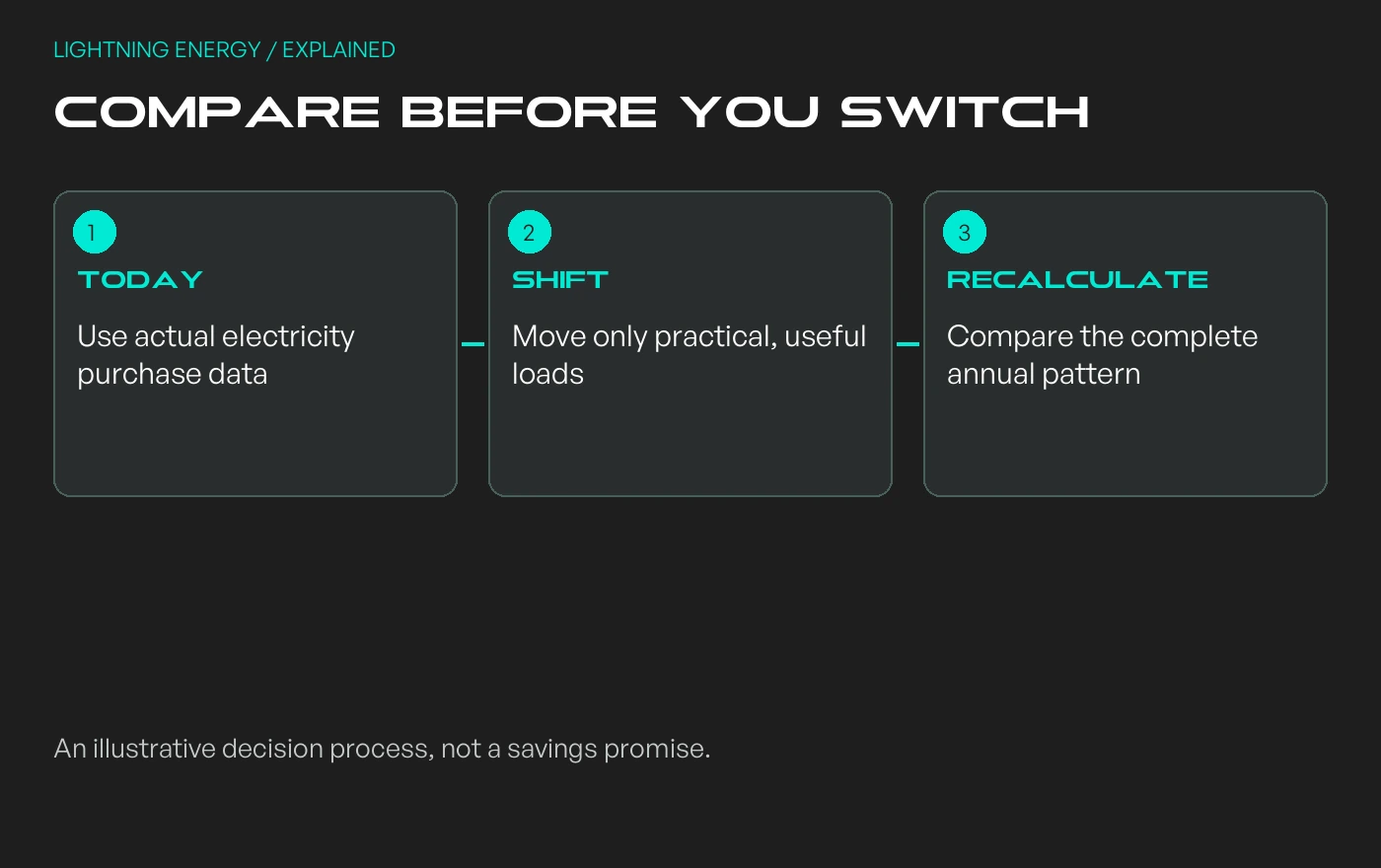
For a new home battery, keep the equipment decision separate from the tariff calculation. Lower running costs do not automatically justify the purchase price, and today’s retail offer may change over the system’s life. Review your solar system, battery settings and daily routine together.
A practical design uses the energy you need at better times, without relying on an unverified savings percentage.
The useful change is flexibility. When households can move demand away from busy evening hours, they can make better use of daytime generation. A lower wholesale price, however, does not automatically translate into an identical retail bill reduction. This is why the latest evidence is encouraging without being a universal sales promise.
Compare your actual usage, check the offer in your state and choose controls that match the way your home operates.
Research checked 24 October 2026.
Inspired by RenewEconomy’s report, with facts checked against AEMO and government sources. No hands-on test or customer savings are claimed.
Available times
Book a consultation and we'll map solar, storage, hot water, and the rebates around your bills and your goals.
Question 1 of 6
