EV Charging in an Apartment Building: A Practical Owners-Corporation Brief
For an apartment resident, choosing a charger can be the easy part. The harder questions concern the shared building: where the electricity comes from, who pays for infrastructure and how the next resident connects.
LLightning Energy TeamLightning Energy25 October 2026 · 5 min read
For an apartment resident, choosing a charger can be the easy part. The harder questions concern the shared building: where the electricity comes from, who pays for infrastructure and how the next resident connects.
A practical owners-corporation brief should make those decisions visible before anyone buys hardware. The outline below is a discussion aid, not a legal approval or an electrical design.
Put the building before the first parking bay
Victoria recommends a building-specific strategy covering technical, commercial and legal considerations.
It recognises that a staged project, an interim option or deferring investment may be appropriate. Installing every charger immediately is not the only possible outcome.
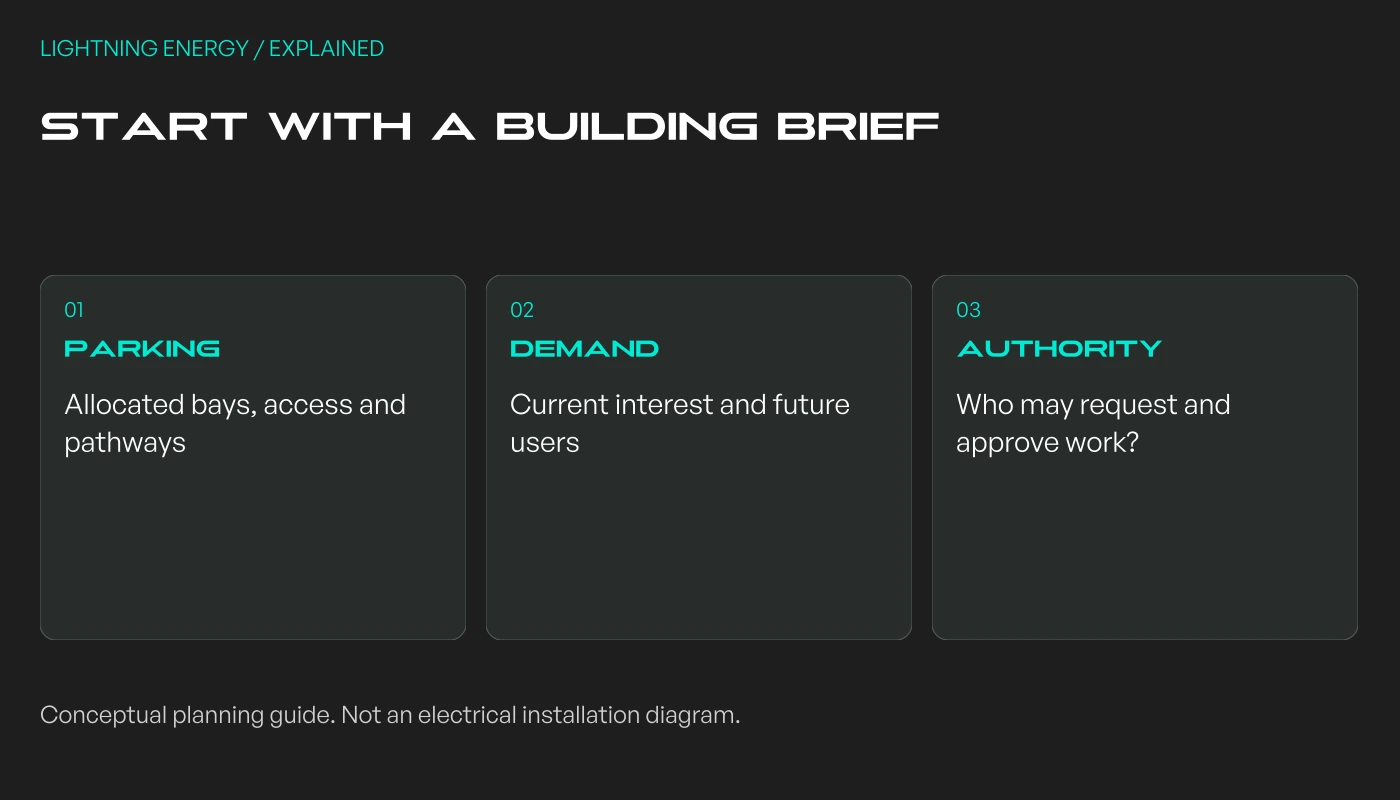
Begin with a parking plan, current EV interest and likely future demand. Include residents who do not own an EV, because shared costs and access arrangements affect them too.
Conceptual planning guide. Not an electrical installation diagram.
Write a clear assessment request
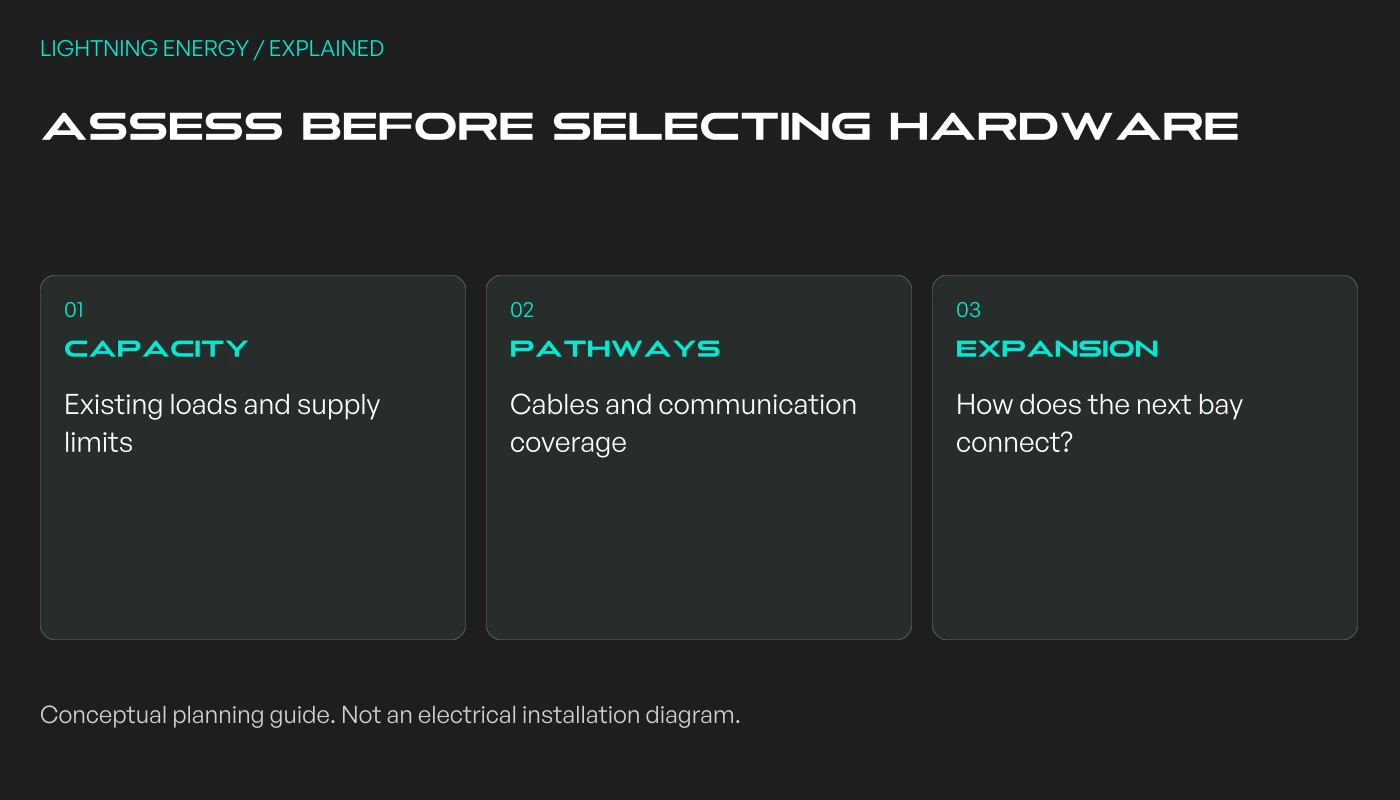
Ask a qualified practitioner to assess supply capacity, existing loads, cable pathways, communication coverage and possible load management. Record whether parking spaces are allocated, shared or subject to another arrangement.
Request an explanation of the constraints, rather than just a total installation price. A quote for one bay is not automatically a plan for twenty future bays.
The home charging overview introduces common equipment, but apartment proposals also need a building-wide decision about ownership and future connections.
Conceptual planning guide. Not an electrical installation diagram.
Separate three kinds of cost
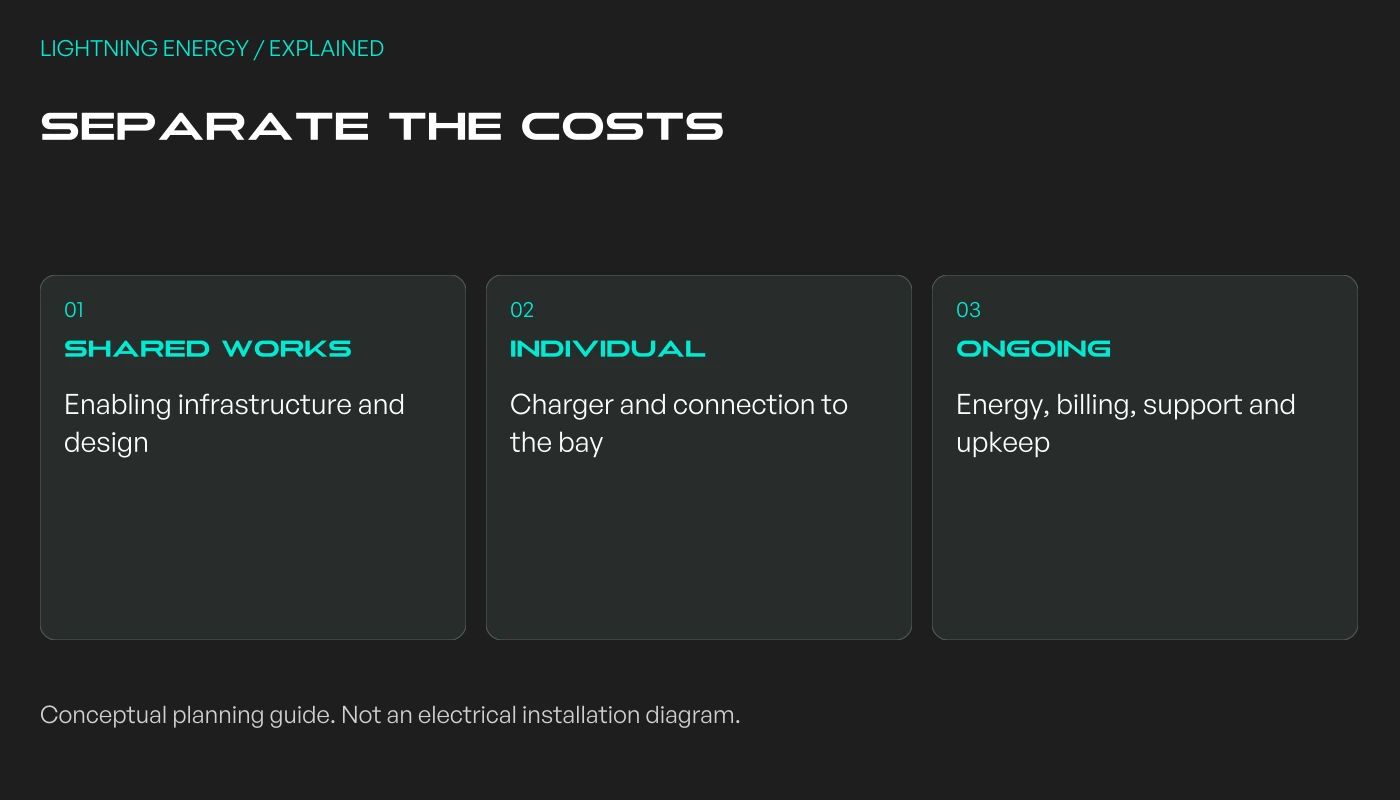
Use three headings in the committee paper: shared enabling infrastructure, the individual charger connection and ongoing operation. Ask suppliers to place every quoted item under one of those headings.
For ongoing operation, include electricity measurement, billing administration, subscriptions, maintenance and support. Identify who receives invoices and who handles a disputed charge.
For example, a resident might pay for their own charger while a separate decision funds shared infrastructure. That is an option to assess, not a statement about the lawful allocation for your building.
Conceptual planning guide. Not an electrical installation diagram.
Decide how people will actually use it
A shared charging bay needs rules about booking, moving vehicles and visitors. Dedicated chargers in allocated spaces need a process for adding residents without undermining the original capacity assessment.
Ask what happens during an internet outage, when a resident moves out, or if the billing supplier stops operating. Request data export and equipment ownership terms before signing a long service contract.
If the building has shared solar, have the practitioner explain metering and allocation separately. Solar generation somewhere on the building does not establish that an individual charger receives it free.
Conceptual planning guide. Not an electrical installation diagram.
Take a staged proposal to the meeting
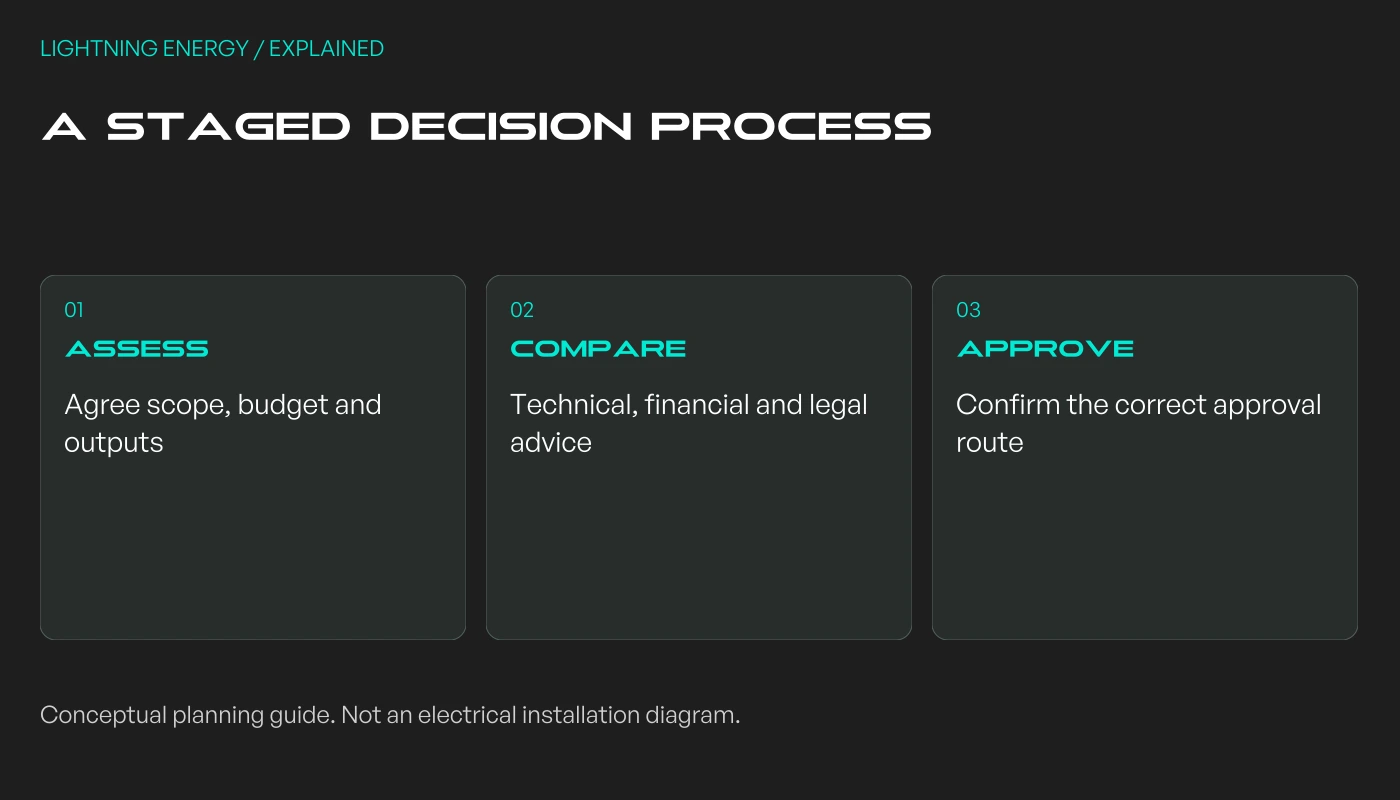
A useful first decision may be approval to commission an assessment, with a defined budget and deliverables.
The later installation proposal can then include drawings, costs, funding, insurance questions and the required approval pathway.
Ask the strata manager or suitably qualified adviser to confirm the applicable resolution and common-property requirements. Do not transplant voting rules from another state or assume a committee email is enough.
Consider future battery storage only where it addresses a documented building requirement. It should not distract from basic capacity, access and billing decisions.
Contact Lightning Energy with the parking plan and assessment brief. Make clear who is authorised to obtain quotes and which decisions still belong to the owners corporation.
Book a consultation and we'll map solar, storage, hot water, and the rebates around your bills and your goals.
Loading consultations…
Lightning EnergyPlan your next energy upgrade.
⚡
Hi, I’m Lightning Energy’s project guide. I’ll ask a few practical questions, explain what usually matters for your project, and help you decide on a useful next step — no guesswork or sales pressure.
First, what kind of property are we planning for?