
Running heat pump hot water on solar: a practical timer guide
Set heat-pump hot-water timing around actual solar surplus, recovery and household demand, while preserving the selected system’s hygiene and safety functions.
Set heat-pump hot-water timing around actual solar surplus, recovery and household demand, while preserving the selected system’s hygiene and safety functions.

A useful solar hot-water schedule gives the heat pump enough time to restore the water your household needs while favouring periods of available rooftop generation. It should not require perfect sunshine to provide the next shower.
Use the selected system's supported controls. The objective is reliable hot water with sensible electricity use, not restricting every heating event to a narrow midday slot.
Check when your roof produces electricity and how much other household demand already uses. Generation and spare generation are different: cooking, heating and charging may consume much of the midday output.
Government solar-use guidance recommends matching suitable loads to generation.
Your actual roof orientation, shading, weather and household pattern determine the opportunity.
For a home with solar, review several representative days rather than one clear summer afternoon. Winter production and hot-water recovery can differ from the conditions that made the first schedule look ideal.
A timer does not measure clouds or automatically reserve electricity for the heat pump. Unless compatible surplus controls are installed, it simply defines when normal operation is permitted.
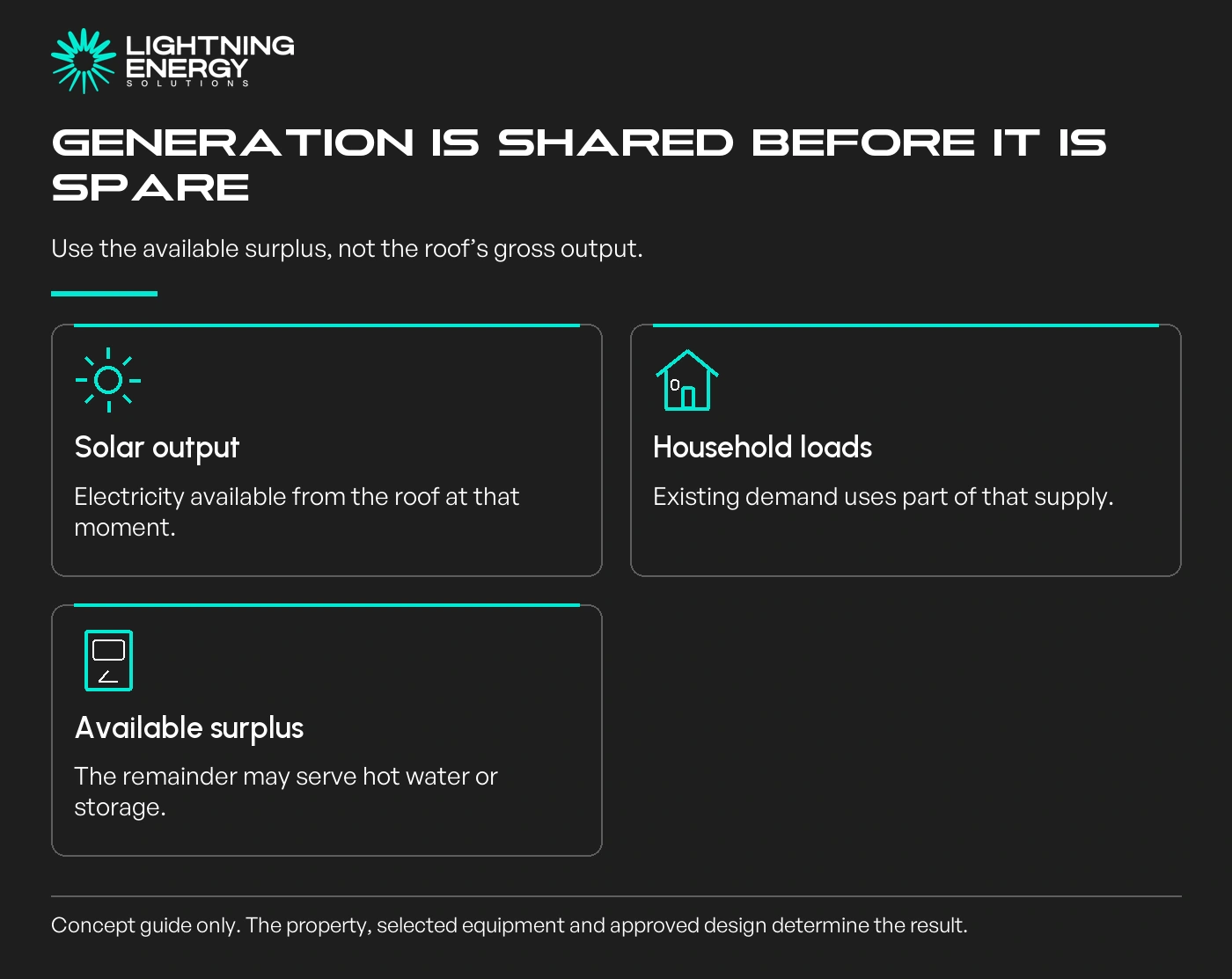
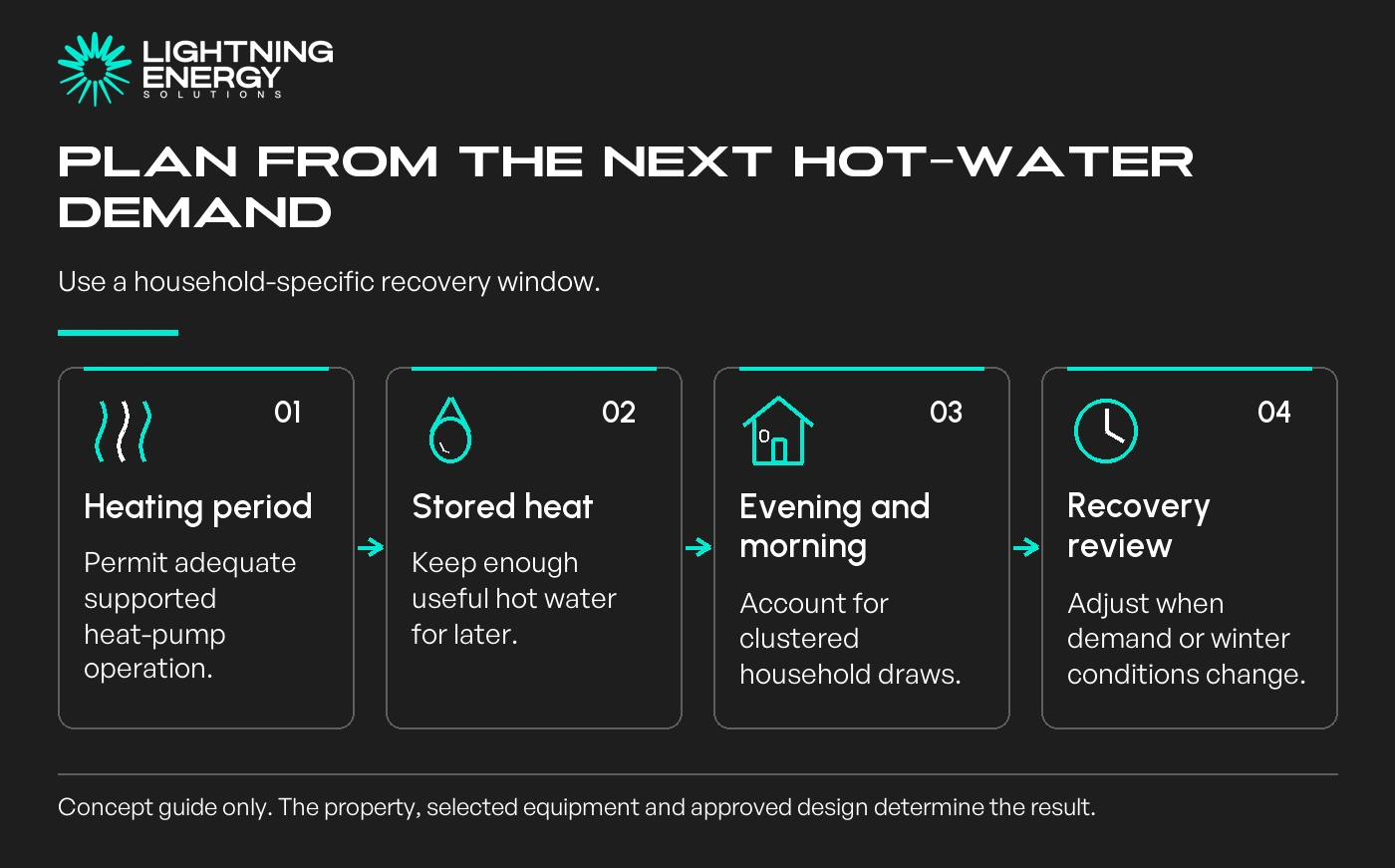
Record the busiest shower period and other significant draws. The tank needs enough useful stored heat, plus any available recovery, to meet that demand.
Imagine a household with evening showers and another group early next morning. A daytime cycle must leave adequate hot water across both periods, or the design needs an appropriate additional heating opportunity.
Solar Victoria's planning guidance discusses timing, storage and boosting.
Ask the installer to explain the selected heat-pump system against your actual routine.
Do not borrow another household's timer hours without comparing equipment, tank capacity and use. Identical start and stop times can produce very different outcomes in different homes.
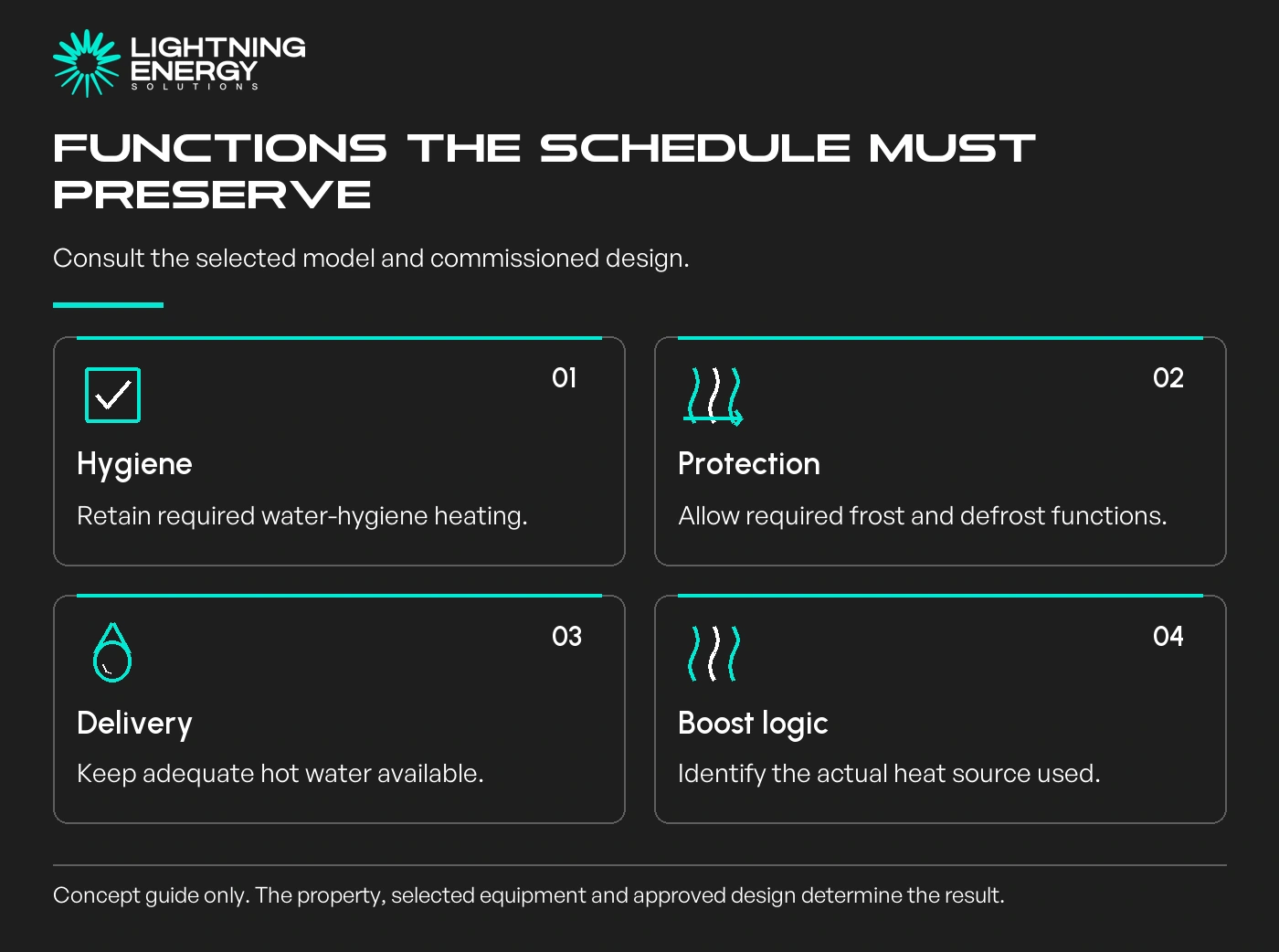
Hygiene heating, frost protection, defrost and adequate hot-water delivery may require operation outside the preferred window. The correct behaviour depends on the model and installation.
Solar Victoria's 2026–27 programme requirements explicitly recognise necessary operation beyond normal timer periods.
A solar-focused schedule must not disable those protections.
Do not lower storage temperatures, alter installer parameters or cut the appliance's power to suppress an inconvenient heating cycle. Ask why the event occurred and whether the system is operating as designed.
Also establish what boost means on the installed equipment. It may request compressor operation, use an element or combine heat sources; the word alone does not establish electricity demand.
If battery storage is installed, heating water may change how much solar reaches the battery. The same surplus cannot be used twice, so the preferred priority depends on hot-water needs and later demand.
Compatible energy-management controls may coordinate devices, but matching brand names or Wi-Fi apps do not prove integration. Ask what is measured, which device decides and what happens if communication fails.
Reclaim's controller documentation library illustrates that timer and remote-input capabilities vary by controller generation. Use the manual for the equipment actually installed.
If hot water is on a controlled-load circuit, confirm the wiring and tariff arrangement with qualified people before assuming a daytime setting makes rooftop solar available to it.
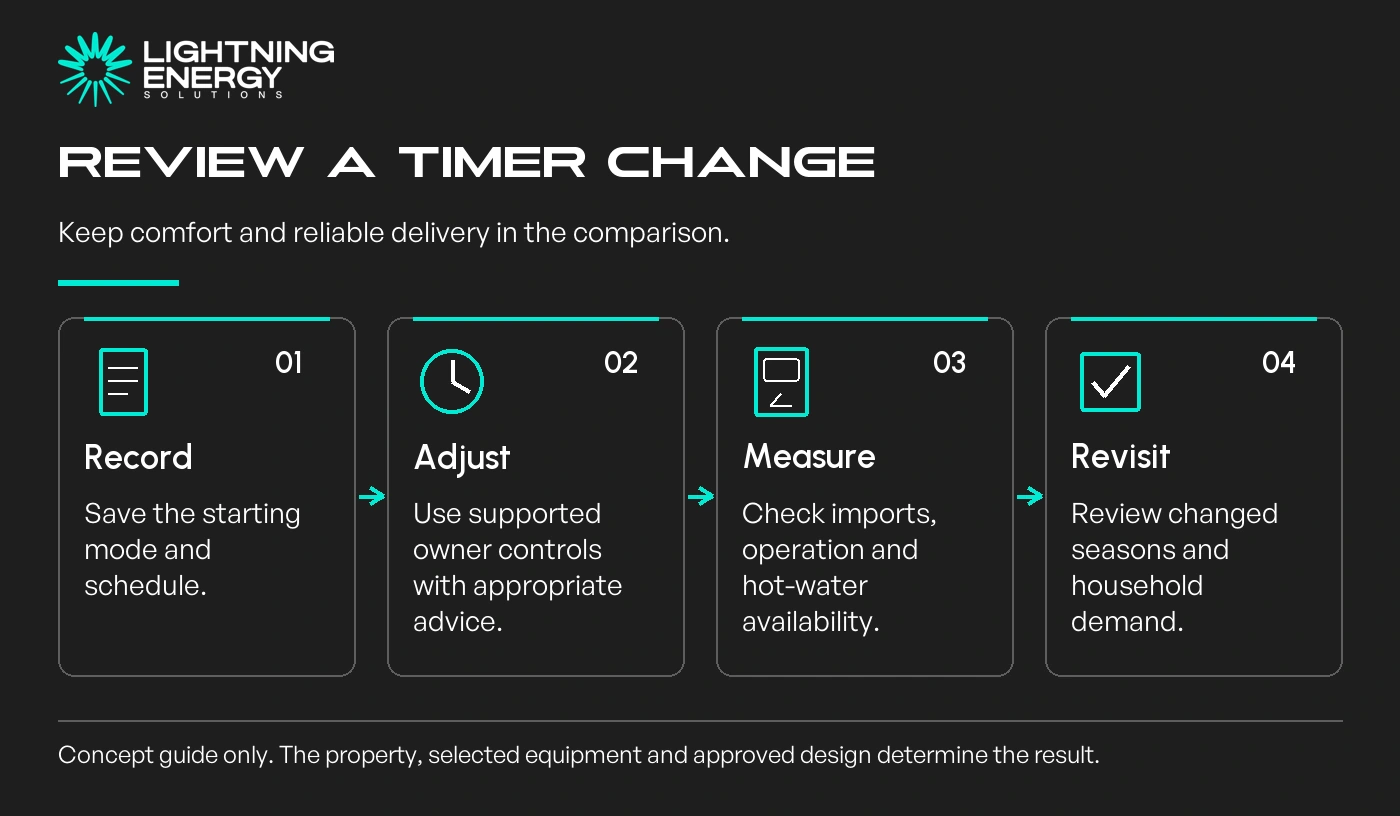
Keep a record of the original mode and schedule. After an installer-supported adjustment, check hot-water availability, actual energy use and grid imports over representative days.
Allow for weather and occupancy changes. A sunny week's lower imports do not by themselves establish that the new timer was responsible for the entire improvement.
Review the schedule when seasons, tariffs or household routines change. A reasonable grid top-up can be preferable to unreliable hot water or repeated manual intervention.
If the existing schedule already provides reliable water and uses the available solar sensibly, extra controls may add little.
Contact us with the model, current settings and monitoring record when the trade-off needs a closer look.
Available times
Book a consultation and we'll map solar, storage, hot water, and the rebates around your bills and your goals.
Question 1 of 6