
NSW's Hot Water Discount Doesn't Apply to Victorians
NSW just tightened its hot water heat pump discount rules. Here's what changed, why the headline numbers vary so wildly, and what Victorian homeowners actually qualify for instead.
NSW just tightened its hot water heat pump discount rules. Here's what changed, why the headline numbers vary so wildly, and what Victorian homeowners actually qualify for instead.
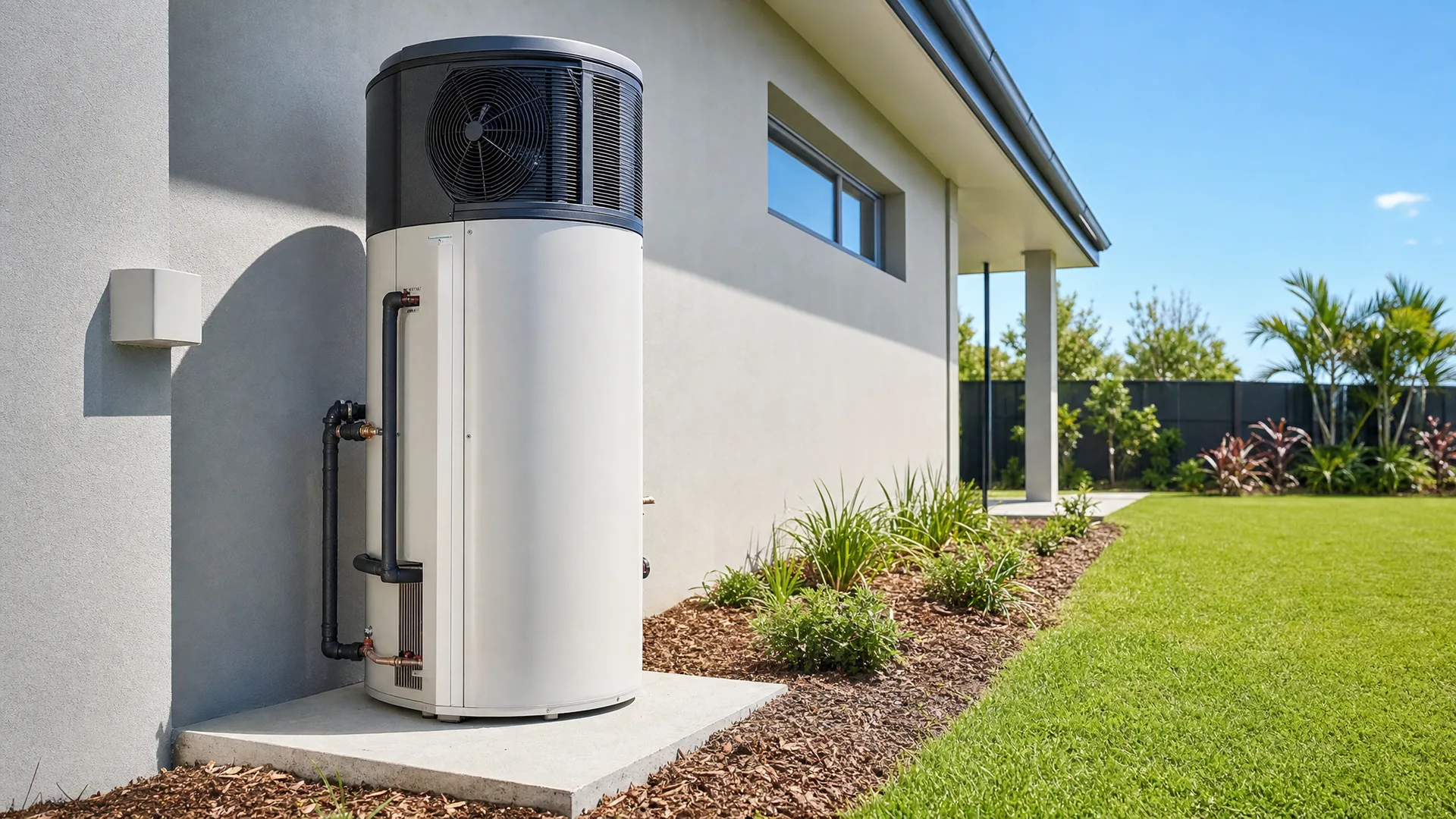
So, you've probably seen the ads. "Free heat pump hot water system." "$33 heat pump, installed." They're doing the rounds again.
If you're in Victoria, here's the short version: this particular scheme isn't yours to claim.
Victoria has its own incentive stack that works quite differently, and I want to save you the confusion before you go chasing a discount that was never available at your address.
The scheme those ads are riffing off is real, but it's a NSW program, and NSW just changed the rules on it.
Let me walk you through what's actually happening over the border, then cover what genuinely applies here.
NSW runs something called the Hot Water Upgrade Incentive, delivered through the state's Energy Savings Scheme.
It's an upfront discount your installer applies directly to the quote, not a rebate cheque that lands in your account later.
The NSW Government lists indicative figures of up to $640 for an electric-to-heat-pump swap and up to $330 for a gas-to-heat-pump swap.
On 12 September 2025, NSW's scheme administrator brought in a batch of changes.
That included a ban on unsolicited door-knocking and cold-calling for these upgrades, confirmed on the scheme administrator's own notice.
The September 2025 rules also introduced a mandatory minimum customer co-payment on every incentivised installation.
The exact current dollar amount varies across sources, so rather than quote a figure I can't verify, your installer's written quote will itemise it as its own line. That's the number to trust.
They also brought in a minimum five-year warranty requirement on the heat pump tank and parts.
The government's own position paper spells out why: the old, looser rules were attracting operators who'd door-knock, undercut, and install cheaply with no real accountability.
The same pattern shows up elsewhere in the rebate world. When a state incentive gets generous and loosely policed, cowboy operators show up fast, and the customer wears the risk.
It's the same dynamic I wrote about with the battery rebate rorts: cheap doesn't mean legitimate, it usually means someone's cutting a corner you can't see.
If you see an ad promising a free or $33 heat pump hot water system in NSW right now, that's a red flag rather than a bargain.
A mandatory minimum co-payment applies to every incentivised installation today, and it should show up as its own line item. An offer with nothing attached isn't playing by today's rulebook.
Honestly, mostly as a warning sign. The NSW incentive doesn't apply to a Victorian property at all. Different state, different scheme, different administrator.
If you've been searching "heat pump hot water rebate" and landed on NSW figures, they're simply not the numbers relevant to your quote.
What is relevant is the pattern: state-run, certificate-based hot water discounts everywhere are getting tightened, tracked more closely, and used as bait by operators who cut corners.
Victoria's own version of this discount is structured differently, and it pays to understand it properly before you sign anything.
Victoria's equivalent stack has two layers. First, Victorian Energy Upgrades (VEU) certificates work similarly to NSW's ESS: a point-of-sale discount your installer applies to the quote.
Second, there's the Solar Victoria Solar Homes Program, which pays a separate hot water rebate.
Solar Victoria currently offers 50% of the eligible purchase price after other discounts, capped at $1,000 for other eligible products or $1,400 for products on its locally made list. The higher cap has applied since 1 July 2025.
Ordinary eligibility is for owner-occupiers and includes income, property, prior-rebate and replacement-system requirements.
The current ordinary threshold is combined owner taxable income below $150,000, with property value below $3 million. Solar Victoria publishes specific exceptions for affected Solstice Energy customers.
Industry sources indicate it's restricted to owner-occupiers replacing a system at least three years old.
Federal STCs generally step down over time as part of the scheme's countdown to 2030.
The exact current STC value for a heat pump at your postcode does affect your final out-of-pocket cost. If you want that worked out for your address, get in touch and we'll run through it.
Before you get excited about a discount, run through this quick filter.
Both schemes are structured to reward switching away from an inefficient system, not to subsidise brand-new installs or upgrades you don't need.
In practice, the discount is typically modest against the install cost, so early replacement purely to catch an incentive rarely works out financially compared to letting the system reach its natural end of life.
If you want my honest take: don't let a rebate be the reason you replace a working hot water system. Use it as a nice-to-have that sweetens a decision you'd probably make anyway, not the whole justification.
What actually matters more is the condition of your current unit and your switchboard's capacity. A hot water heat pump is one more meaningful electrical load.
Have a capacity check done at the same time you're getting a hot water quote, not after the new unit's been ordered.
When you're also running an EV charger, induction cooktop or reverse-cycle air conditioning, older switchboards can run into capacity limits. I've written more about that in our piece on Australian switchboards and electrification.
For Victorian homeowners specifically, there's a more concrete reason to act than any rebate story.
From 1 March 2027, Victoria’s published end-of-life rules require covered gas hot-water replacements in existing homes to use an efficient electric alternative. Check the scope and exemptions linked from Solar Victoria for the property.
Include that requirement, the existing unit’s condition and the household’s hot-water needs in the replacement plan.
If your current gas or electric hot water system is old, unreliable, or already near end of life, yes, now is a reasonable time to move.
STC values generally reduce over time, though the annual shift is usually modest against the cost of the system itself.
The bigger driver is Victoria's gas end-of-life rule coming regardless, so if your system is already failing, now is sensible timing.
If your system is working reliably and you're planning to stay in the property, the rebate alone usually doesn't justify an early replacement.
Letting it reach its natural end of life typically works out better than moving early just to catch an incentive. Plan the swap for when it's actually due.
If your hot water system is newer, performing fine, and you're not planning to stay in the property long term, I wouldn't chase this.
In practice, the discount, typically a few hundred to just over a thousand dollars depending on your state and system, is a modest offset against the cost of a new heat pump system. It's a nice-to-have, not a windfall big enough to justify replacing something that isn't broken.
It's also not something a Victorian renter can currently lean on the way a NSW renter might, given the ownership requirement on Victoria's Solar Homes rebate.
If that's your situation, the conversation with your landlord about system age and condition matters more than any rebate research you do yourself.
Get a written quote that itemises every discount separately: the VEU certificate value, any Solar Victoria rebate you're eligible for, and the federal STC contribution, each shown as its own line, not bundled into one vague "rebate" figure.
The only number that actually matters is the line-item discount on your own accredited installer's written quote for your specific system and address.
Our heat pump hot water page covers the system side of the decision, and our rebates page has current program information to cross-check your quote. If you want to talk through which stack applies to your place, that's what we're here for.
Want the real numbers for your property?Rebate headlines are a starting point, not a quote. Get in touch and we'll work out exactly what applies to your address, your existing system, and your household, then itemise every discount on the quote so you know precisely what you're paying and what's being taken off.Available times
Book a consultation and we'll map solar, storage, hot water, and the rebates around your bills and your goals.
Question 1 of 6