
Should You Choose a Hybrid Inverter Before Buying a Battery?
Decide whether a hybrid inverter now suits your future battery plans, with compatibility, later AC coupling, backup requirements and upgrade costs explained.
Decide whether a hybrid inverter now suits your future battery plans, with compatibility, later AC coupling, backup requirements and upgrade costs explained.

A hybrid inverter can be a sensible purchase before a battery when the storage plan is fairly clear. It is less compelling when the battery is an indefinite possibility and nobody can identify a supported future configuration.
The useful question is what you are buying now: a working solar inverter, a documented storage connection path and any required extras. The phrase battery-ready is not enough on its own.
Our solar service can compare the current design with a staged installation before you commit to a particular equipment platform.
String describes how groups of solar panels connect to an inverter. Hybrid describes equipment that combines solar and battery inverter functions. A hybrid inverter can therefore also be a string inverter.
A conventional solar inverter converts panel DC into household AC. In a supported hybrid system, the equipment also manages an appropriately matched battery connection.
The Australian Government inverter guide explains the functions and the alternative of adding an AC-coupled battery inverter to existing solar.
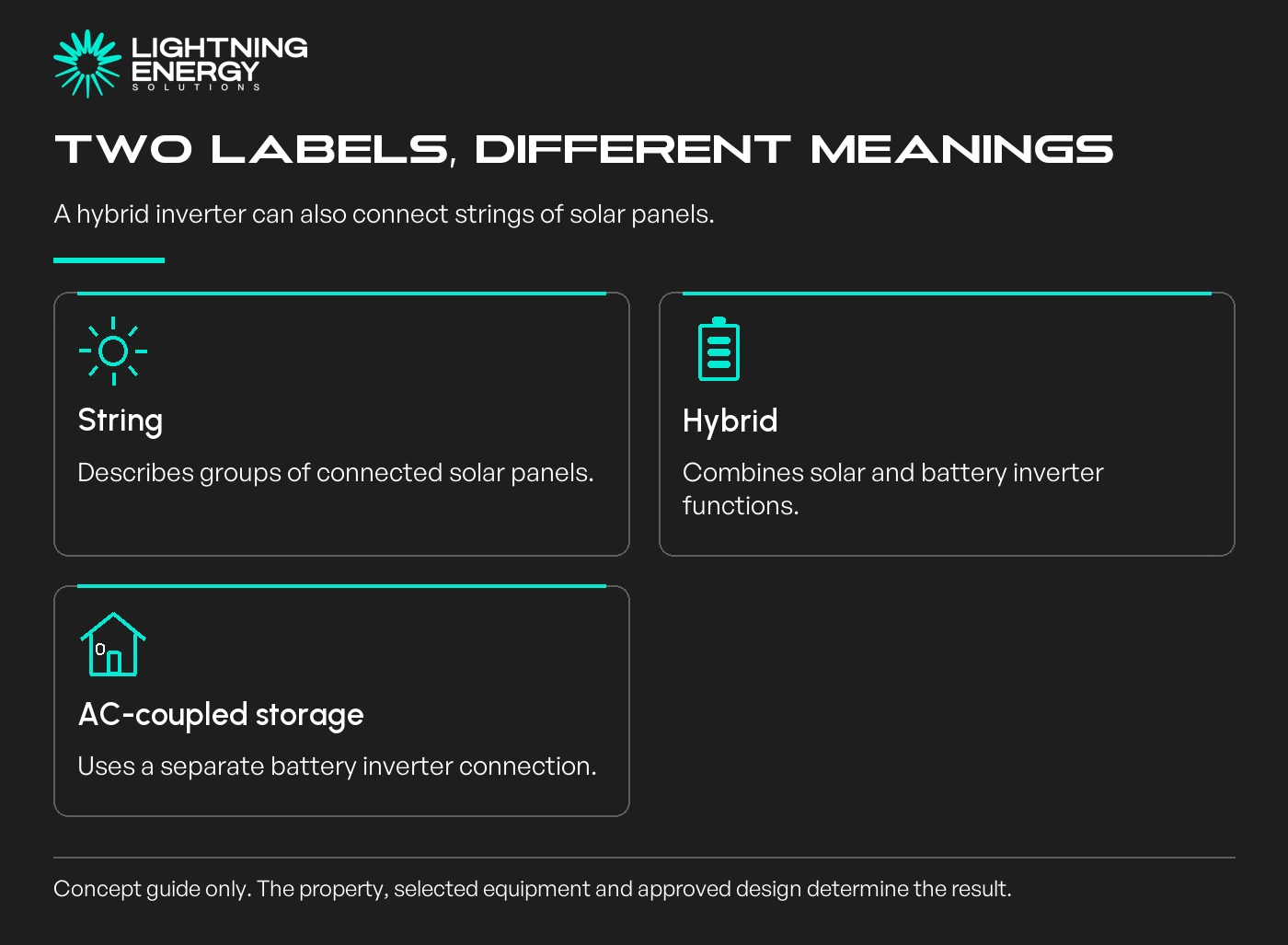
AC coupling can provide a later route without replacing a serviceable solar inverter. It still needs compatible equipment, a compliant design and the relevant network approval; it is not a promise that any battery will work.
Ask which exact batteries the proposed inverter currently supports. The answer should identify the Australian inverter model, battery family, permitted configuration and relevant communications or firmware conditions.
Voltage alone is not proof of compatibility. A battery and inverter also need a supported control arrangement. A future product using a familiar brand name may not appear on the same compatibility list.
Fronius links compatibility and backup documents in its Australian storage guide. It illustrates why the model and configuration matter more than a generic hybrid label.
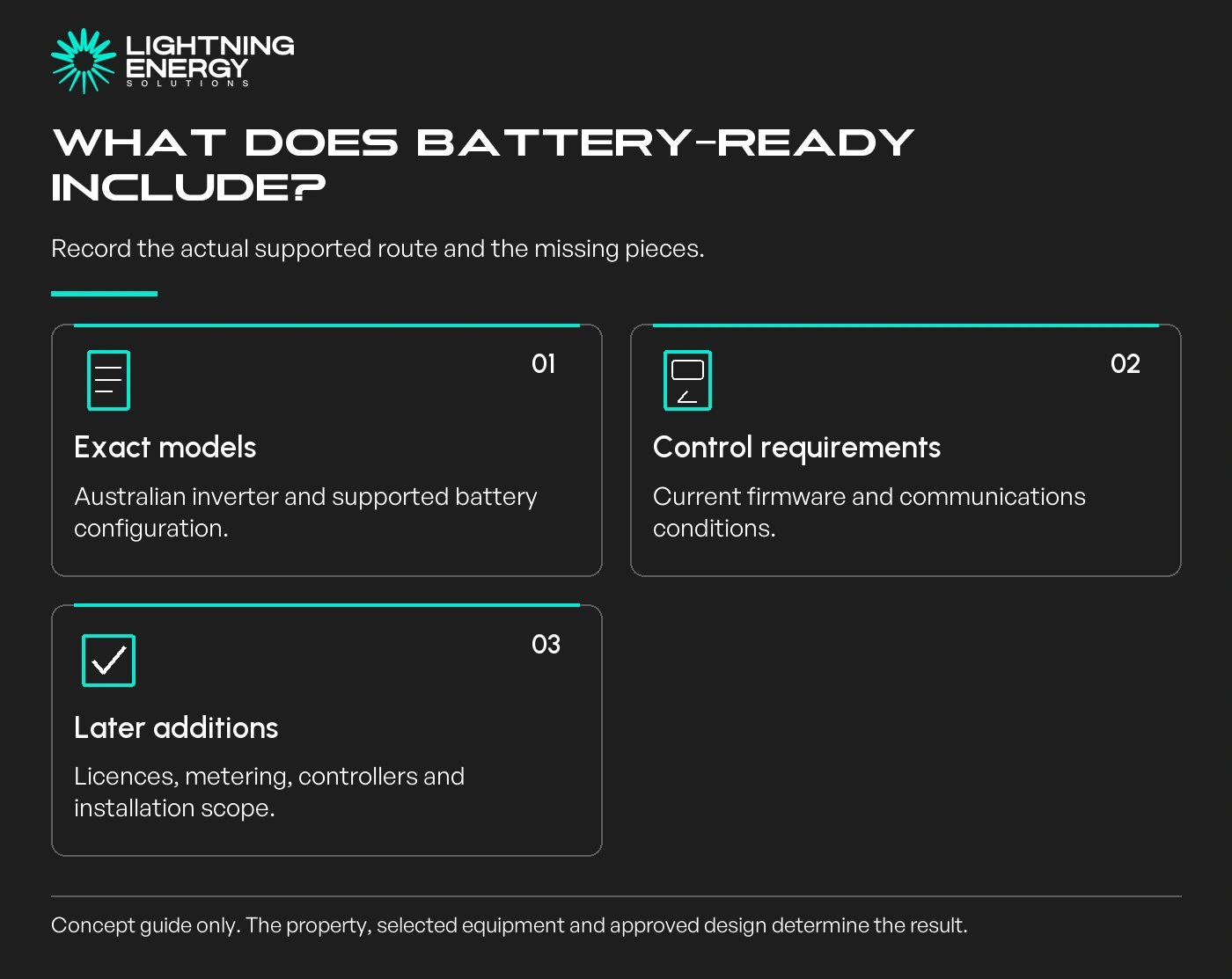
Also check whether storage operation requires a later software licence, additional meter, controller or other hardware. Ask which costs are included now and which remain a future installation expense.
If storage is planned soon, request a complete solar-and-battery option beside the staged option. The comparison may expose duplicated labour or equipment that a headline inverter price misses.
Our battery quote checklist helps gather the details required for that comparison.
Battery compatibility does not automatically provide blackout power. Backup depends on the inverter capability, isolation arrangement, selected circuits, available battery power and the installed system controls.
Ask what would operate during an outage and what would remain off. Confirm whether the proposed solar can recharge the battery in that operating mode, rather than assuming it follows from normal grid-connected operation.
A household planning only bill management may not need the same equipment as one prioritising essential-circuit backup. Make that distinction before buying hardware for a future use case.
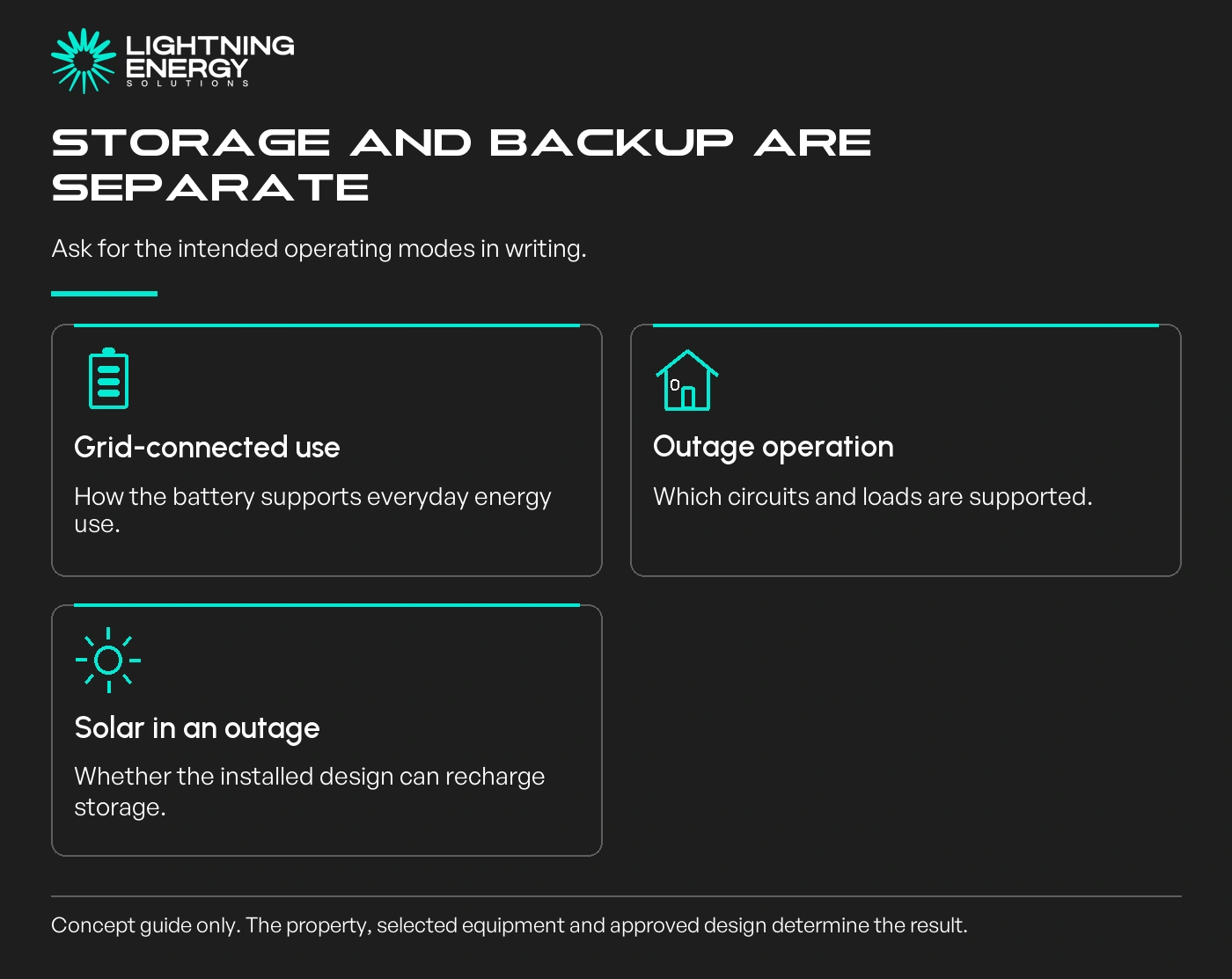
A home battery assessment should document those priorities and any constraints imposed by the existing supply or equipment.
Imagine a family expecting to buy storage next year with a known location and shortlist. A supported hybrid path may reduce later replacement work. Confirm the complete installed difference before assigning value to that convenience.
Now imagine a household considering storage in five or ten years without a budget or defined need. Future compatibility and commercial terms are uncertain, while the inverter premium is paid today.
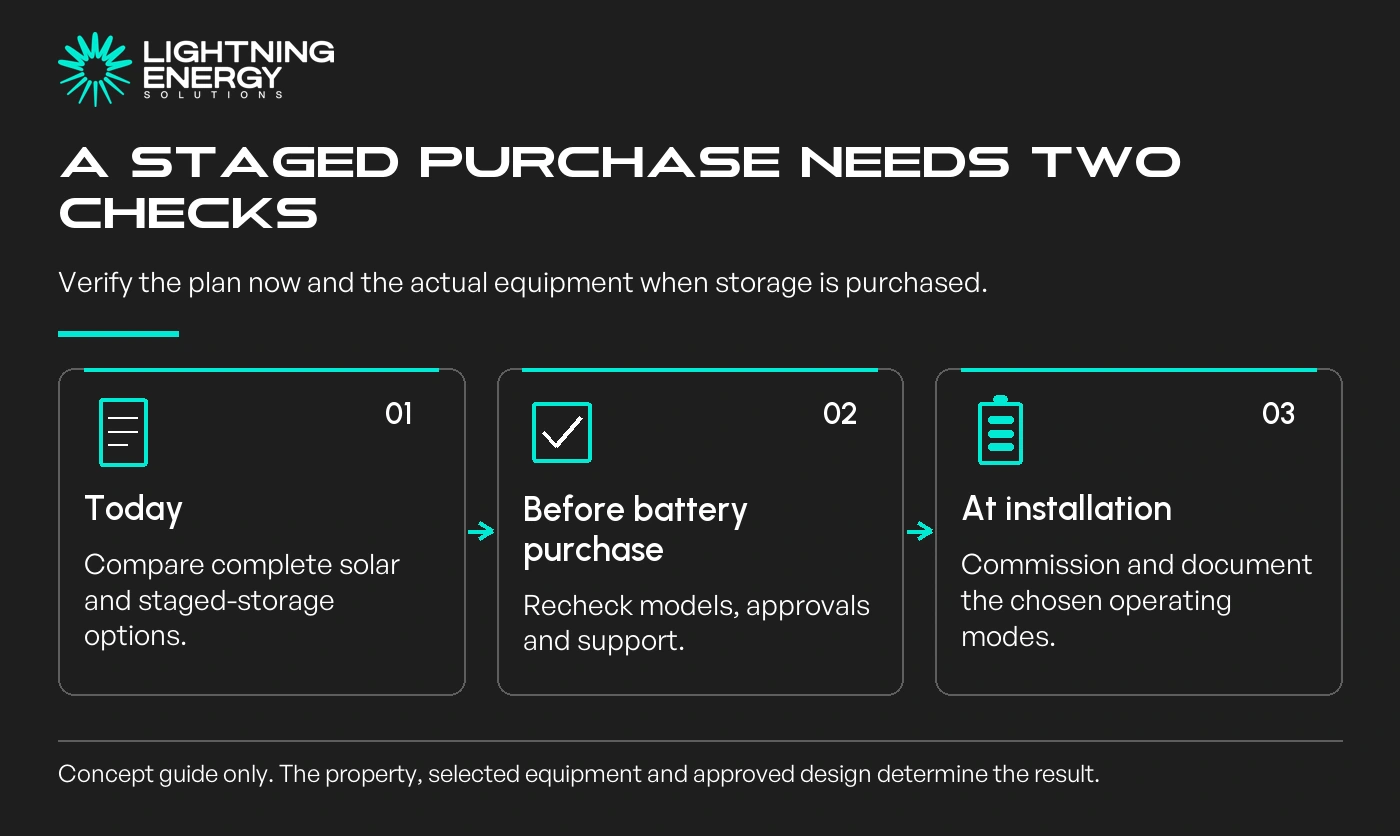
Keeping a suitable conventional inverter and assessing AC-coupled storage later can be reasonable. So can choosing a hybrid now for a documented near-term plan. Neither approach deserves a universal recommendation.
Do not replace an effective inverter merely because a brochure calls a new model future-proof. Start with its condition, your actual storage objectives and the supportable alternatives.
Ask for a staged-system comparison showing the supported battery path, backup scope, later additions and total costs. Keep the compatibility documents with your solar contract.
Available times
Book a consultation and we'll map solar, storage, hot water, and the rebates around your bills and your goals.
Question 1 of 6