Tesla Powerwall 3P Orders Open in Portugal: What Australians Need to Know
Tesla’s three-phase battery rollout has reached Portugal. Here is what the news means for Melbourne homes, the limits of the overseas specifications, and why Australian availability still matters.
LLuke CoveLightning Energy21 September 2026 · 6 min read
Tesla Powerwall 3P orders have opened in Portugal, bringing its three-phase home battery to another European market. For Melbourne homeowners, the useful question is what this changes when planning a battery here.
My advice is to use this news to sharpen your battery plan. A three-phase connection makes backup design especially important, but it does not make every household a candidate for the newest battery.
What has actually been announced?
The report shared by Yahoo covers orders opening in Portugal on 4 September 2026. It is a European rollout story, rather than an announcement that Australians can place an order today.
Tesla’s European documentation describes Powerwall 3P as an integrated solar and battery system for three-phase homes. Its appeal is the ability to support a three-phase system from a purpose-built unit.
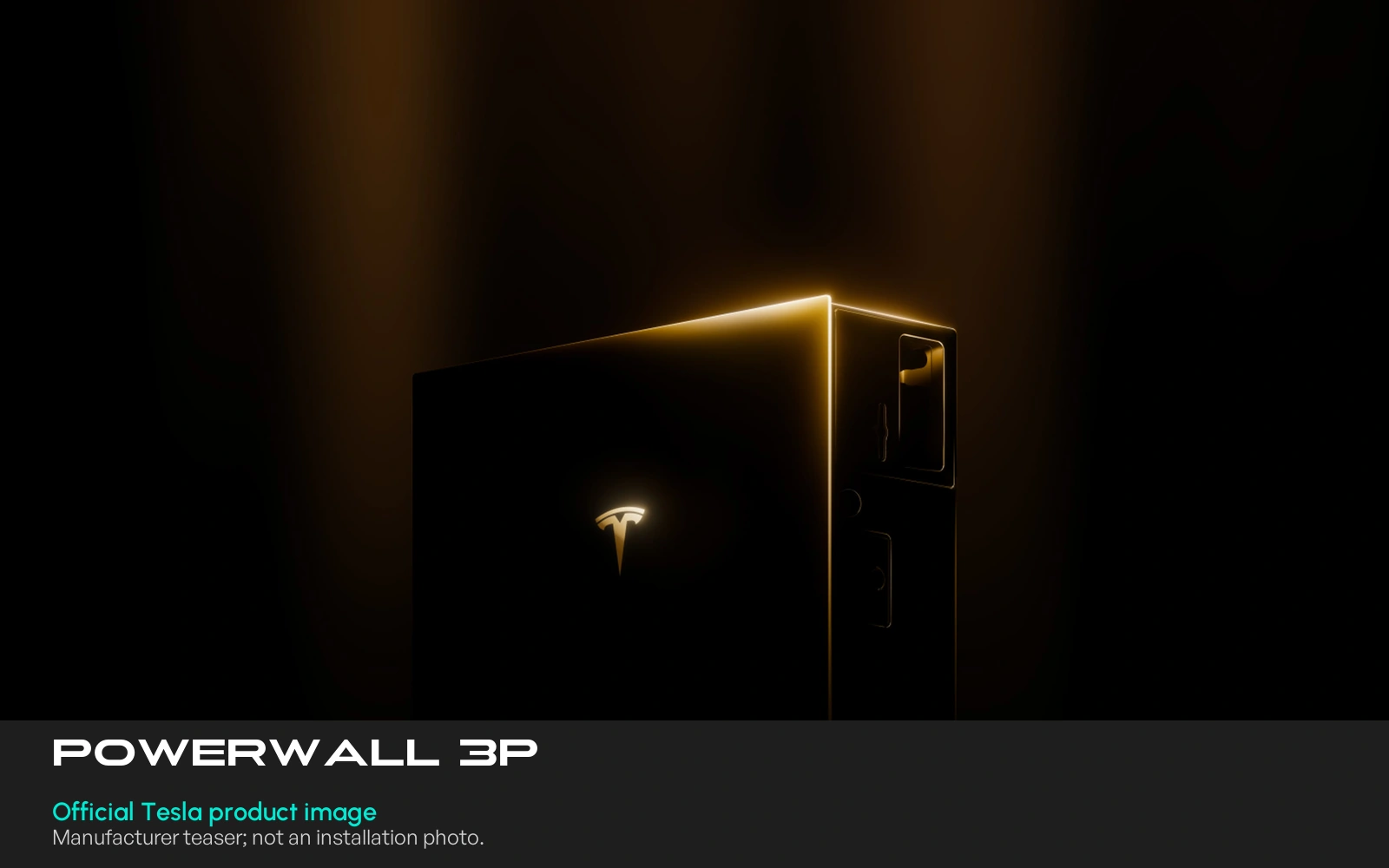
Official Tesla Powerwall 3P product imagery. Manufacturer-supplied visual, not a Lightning Energy installation. Australian launch timing remains unannounced.
Why three-phase power matters for a Melbourne home
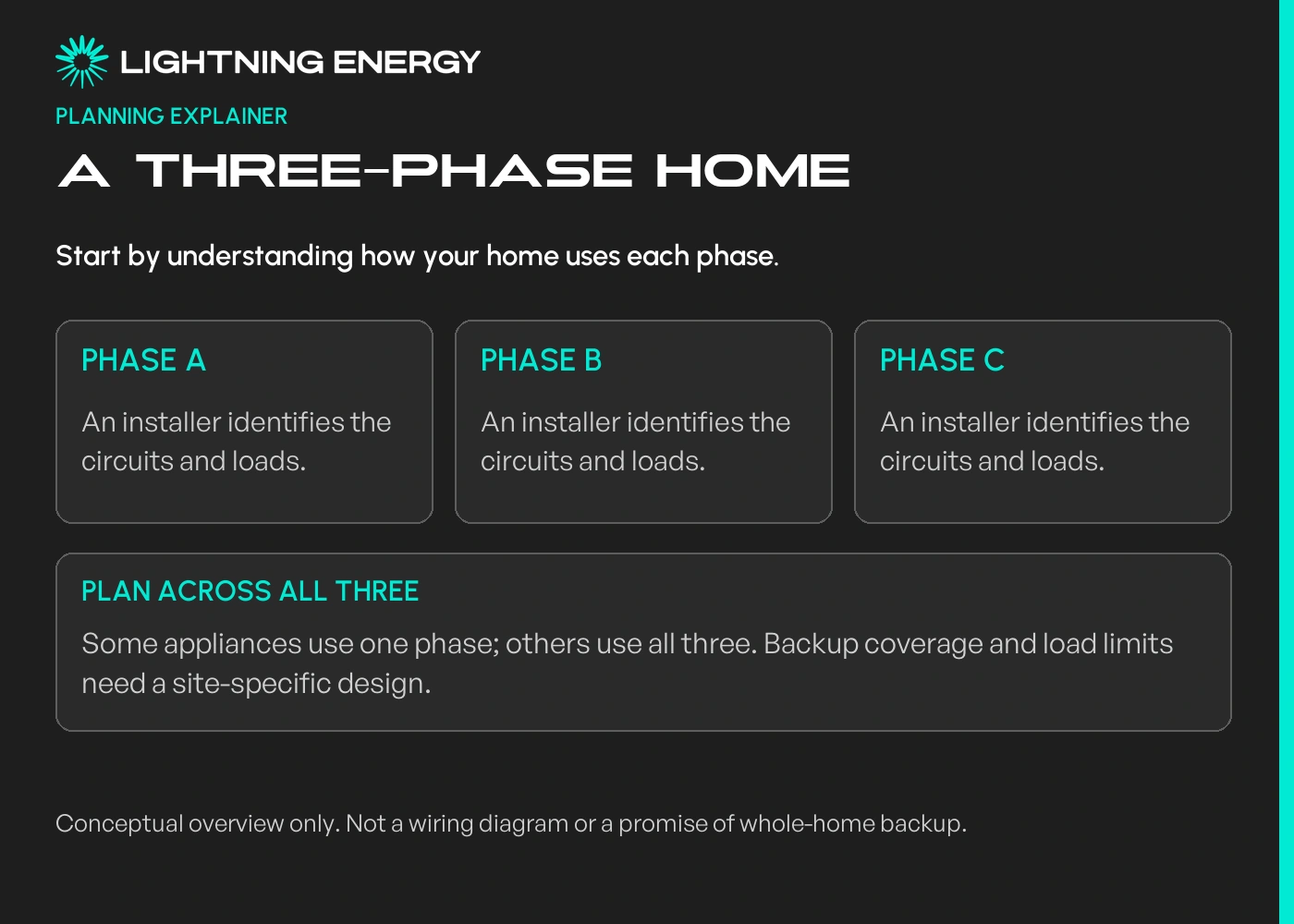
A three-phase home has three electrical phases at the supply. Household circuits can be distributed across them, while some appliances use all three. The arrangement needs to be understood before deciding what a battery should back up.
That matters when the wish list includes ducted heating and cooling, an EV charger, cooking and everyday essentials. The capacity printed on a battery brochure cannot tell you which of those loads will work together during an outage.
I would start with two separate lists: the appliances you want to run on an ordinary evening, and the essentials you want to keep running when the grid fails. Those lists often lead to different design priorities.
Our home battery backup guide explains how to turn the second list into a practical discussion about circuits, starting loads and runtime.
Conceptual explanation only. Actual circuits, phase allocation and backup design must be assessed for the property.
The European specifications need their footnotes
The overseas ratings are useful context, but I would not use them as an Australian installation specification. Tesla’s German datasheet lists these figures for the European product:
13.5 kWh of usable AC storage.
Up to 15.4 kW AC output with sufficient solar generation and an ambient temperature of 25°C or below.
Up to 11.5 kW AC output without solar, or at higher temperatures.
21 kW peak output for three-phase loads, lasting one second.
The distinction matters. A short starting surge is different from sustained output, and a rating that includes solar contribution should not be treated as guaranteed battery-only power after sunset.
For an Australian quote, I would want the local model, approved configuration and operating limits confirmed before promising what the system can run.
More power and more stored energy solve different problems
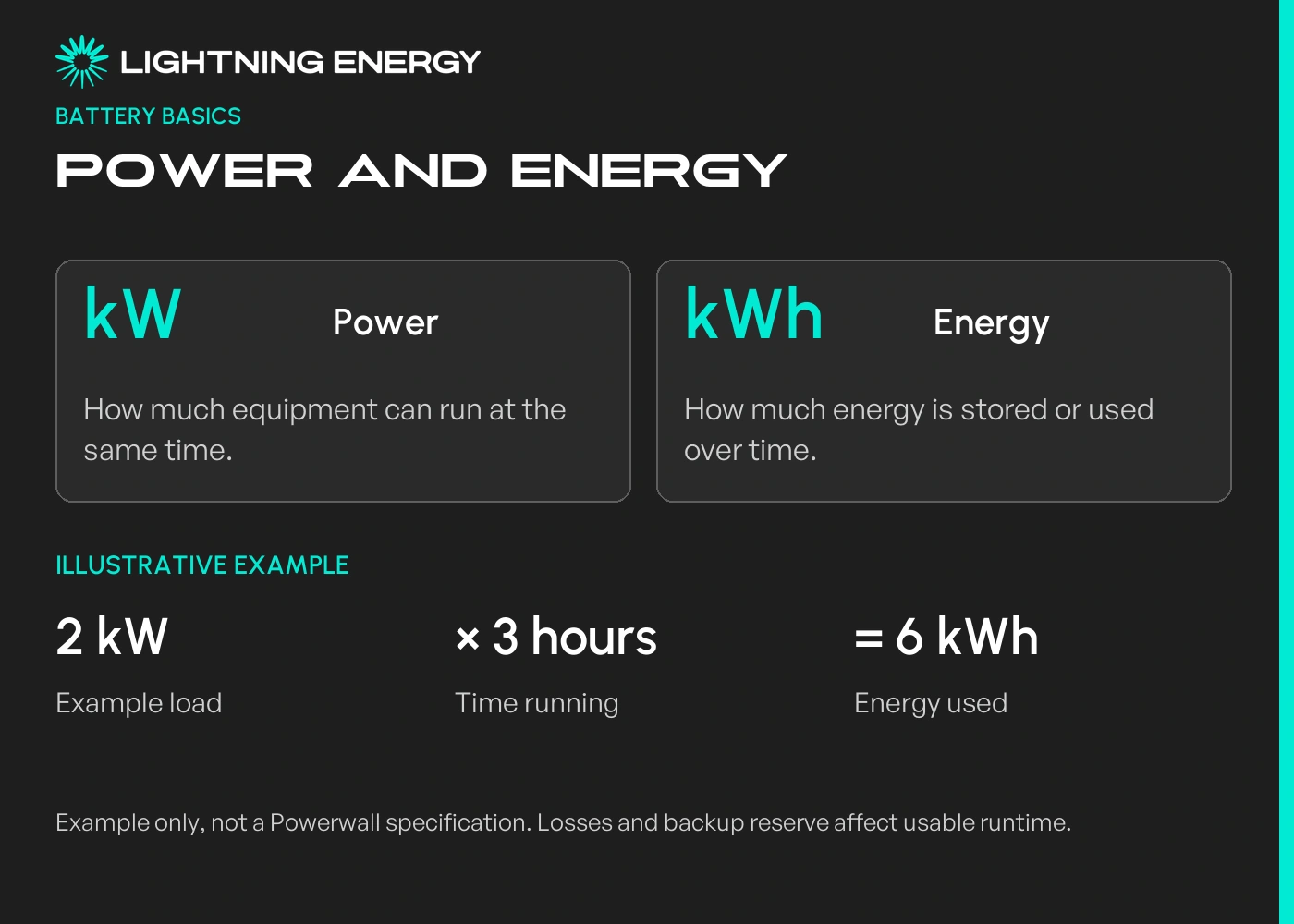
Power, measured in kW, describes the rate at which electricity is supplied. Stored energy, measured in kWh, describes the amount available to use. A larger power rating does not automatically give you a longer evening on battery.
Think about cooking dinner while the air conditioning is running. That creates a different demand from keeping a fridge, a few lights and the internet running for several hours.
The first question is whether the system can supply the simultaneous load. The second is whether enough stored energy remains for the time you need. Solar conditions and the reserve you keep for outages also matter.
Power affects what can run together. Usable stored energy and demand affect how long it can run. This diagram does not state Australian Powerwall 3P ratings.
What if you already have Powerwall or rooftop solar?
Tesla’s Australian FAQ says Powerwall 3P cannot be combined with Powerwall 2 or Powerwall 3. It also says 3P supports existing solar systems using major inverter brands, within supported configurations.
I would therefore avoid buying a Powerwall 3 today on the assumption that a Powerwall 3P can simply be added beside it later. Start with the intended final system and work backwards.
If three-phase backup is central to your plans and there is no urgent installation deadline, this is a product worth following. First, establish the loads you need and what a suitable system would have to deliver.
If you have single-phase supply or mainly want to shift surplus solar into the evening, this announcement alone is not a reason to put your project on hold. Compare systems that suit your actual household.
For anyone needing backup soon, I would compare available local options now. An overseas launch does not give us a dependable Australian installation date.
There is also no verified Australian Powerwall 3P price to build a payback claim around. I would compare the complete installed scope, including backup equipment, switchboard work and any changes to existing solar.
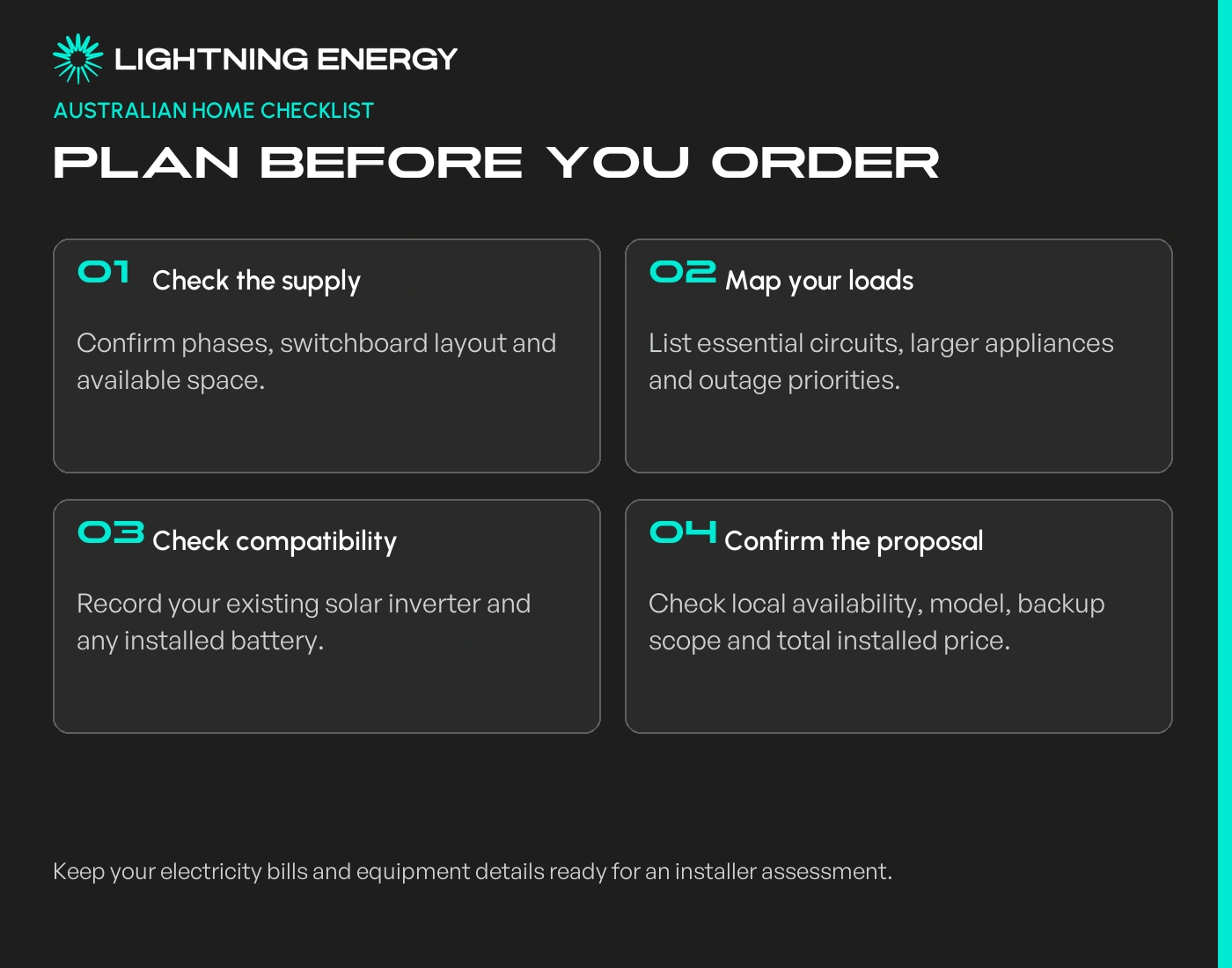
Bring a recent electricity bill, existing inverter and battery model details, and your backup priorities. These make an assessment more useful.
If a new rooftop solar system is part of the plan, assess generation and storage together. In Melbourne, the energy available to charge a battery through winter deserves attention alongside summer production.
Book a consultation and we'll map solar, storage, hot water, and the rebates around your bills and your goals.
Loading consultations…
Lightning EnergyPlan your next energy upgrade.
⚡
Hi, I’m Lightning Energy’s project guide. I’ll ask a few practical questions, explain what usually matters for your project, and help you decide on a useful next step — no guesswork or sales pressure.
First, what kind of property are we planning for?