
Two Electric Cars, One Home: Planning Charger Power Sharing
The second electric car changes the charging conversation. Two wall boxes may make parking easier, but they do not automatically double the electricity available to the house.
The second electric car changes the charging conversation. Two wall boxes may make parking easier, but they do not automatically double the electricity available to the house.

The second electric car changes the charging conversation. Two wall boxes may make parking easier, but they do not automatically double the electricity available to the house.
Start with the energy each car needs before its next departure. Then decide whether one shared charger or two coordinated units best fits the household routine.
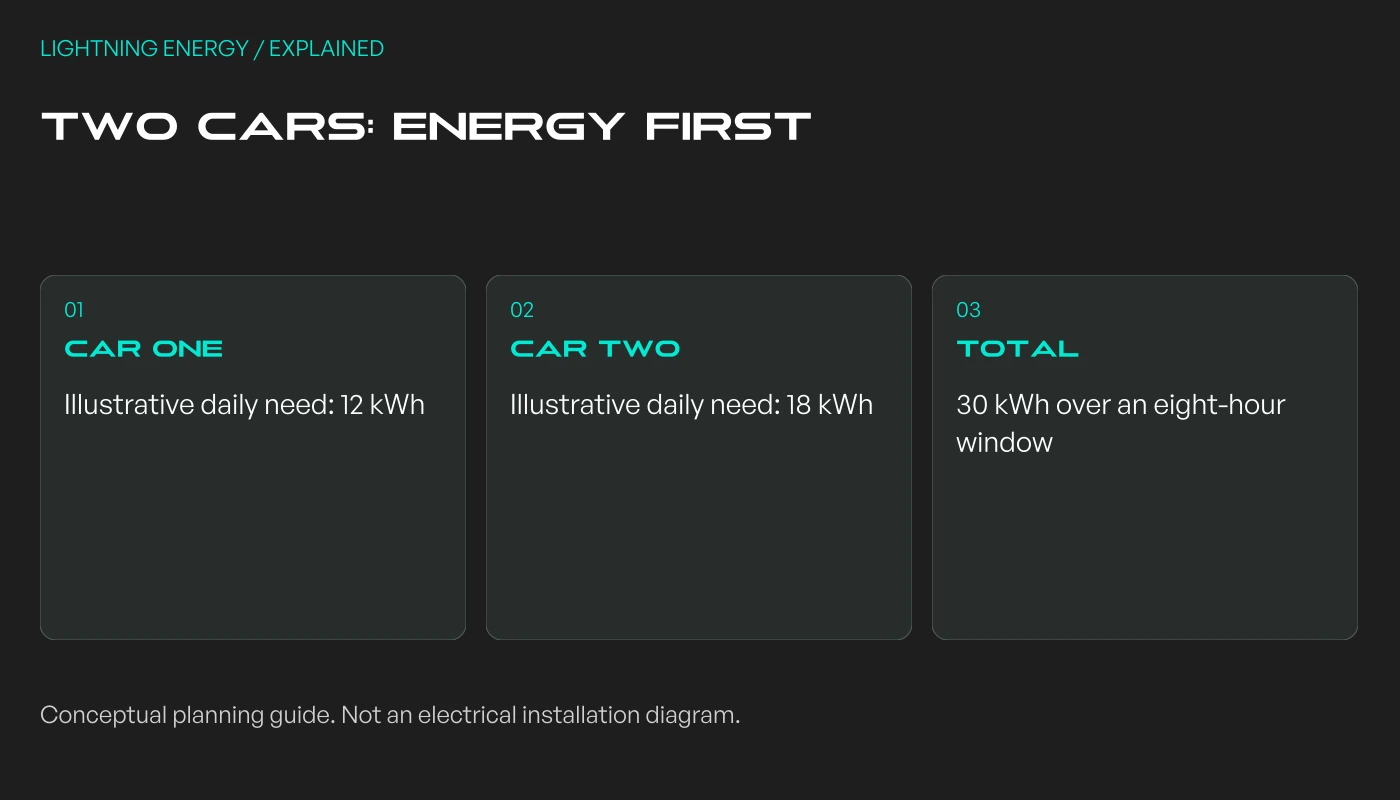
Imagine one car needs 12 kWh and the other 18 kWh. That is 30 kWh in total. Across eight hours, the average delivery required is 3.75 kW, before charging losses and interruptions.
This invented example explains why daily energy needs can matter more than the biggest number on a charger. It is not a prediction for a particular car or house.
When discussing EV charger installation, bring both vehicle models, usual arrival and departure times, and a separate estimate for the busiest driving day.
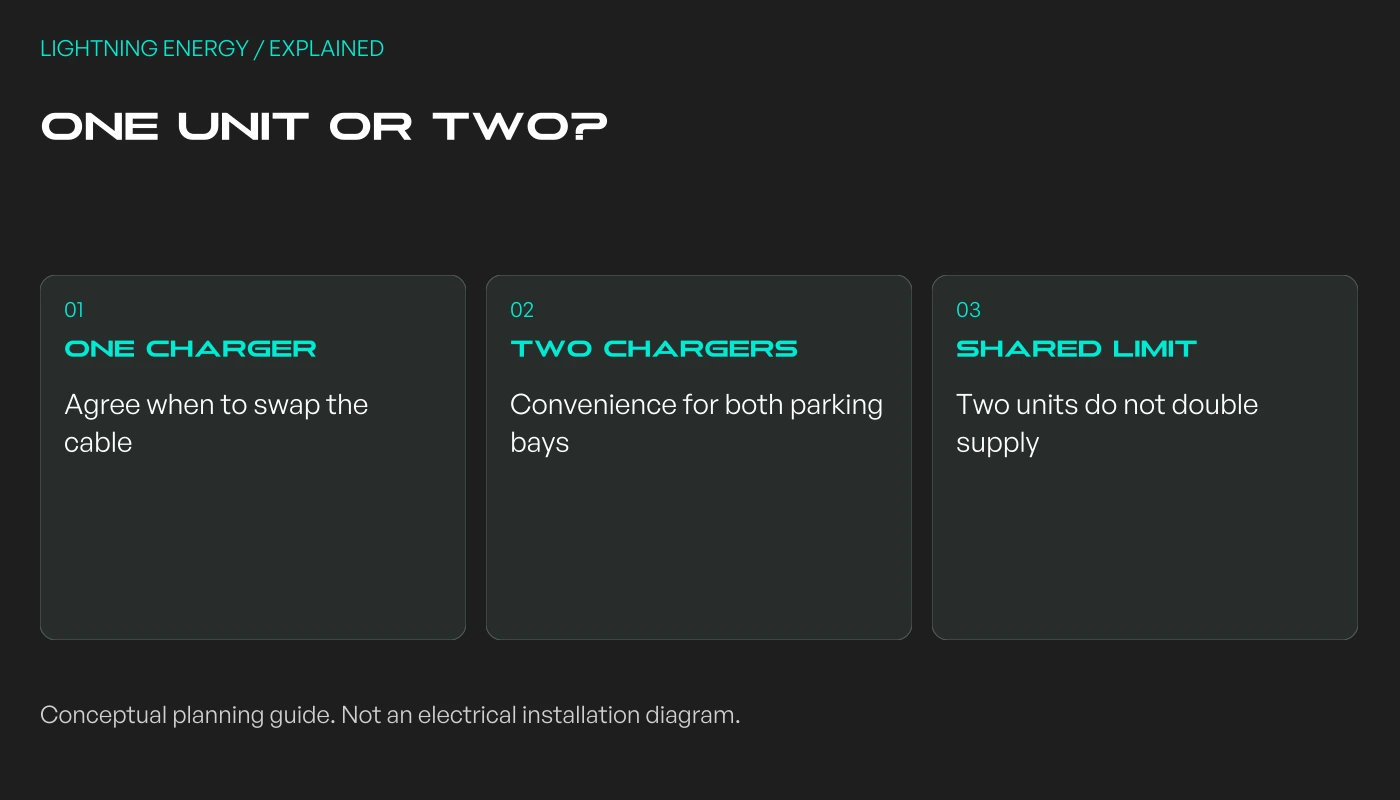
A single unit may be enough when cars charge on alternate nights or one driver can swap the cable before bed. Test that routine against the real driveway: can either vehicle reach the charging position without moving the other?
Two units remove the cable-swapping chore and can accommodate different departures. Their value may be convenience and consistent access, rather than twice the charging speed.
A shared 7 kW charging budget remains 7 kW across both cars. It might be divided or allocated in sequence, depending on the equipment. Ask how priority changes when one car finishes or leaves early.
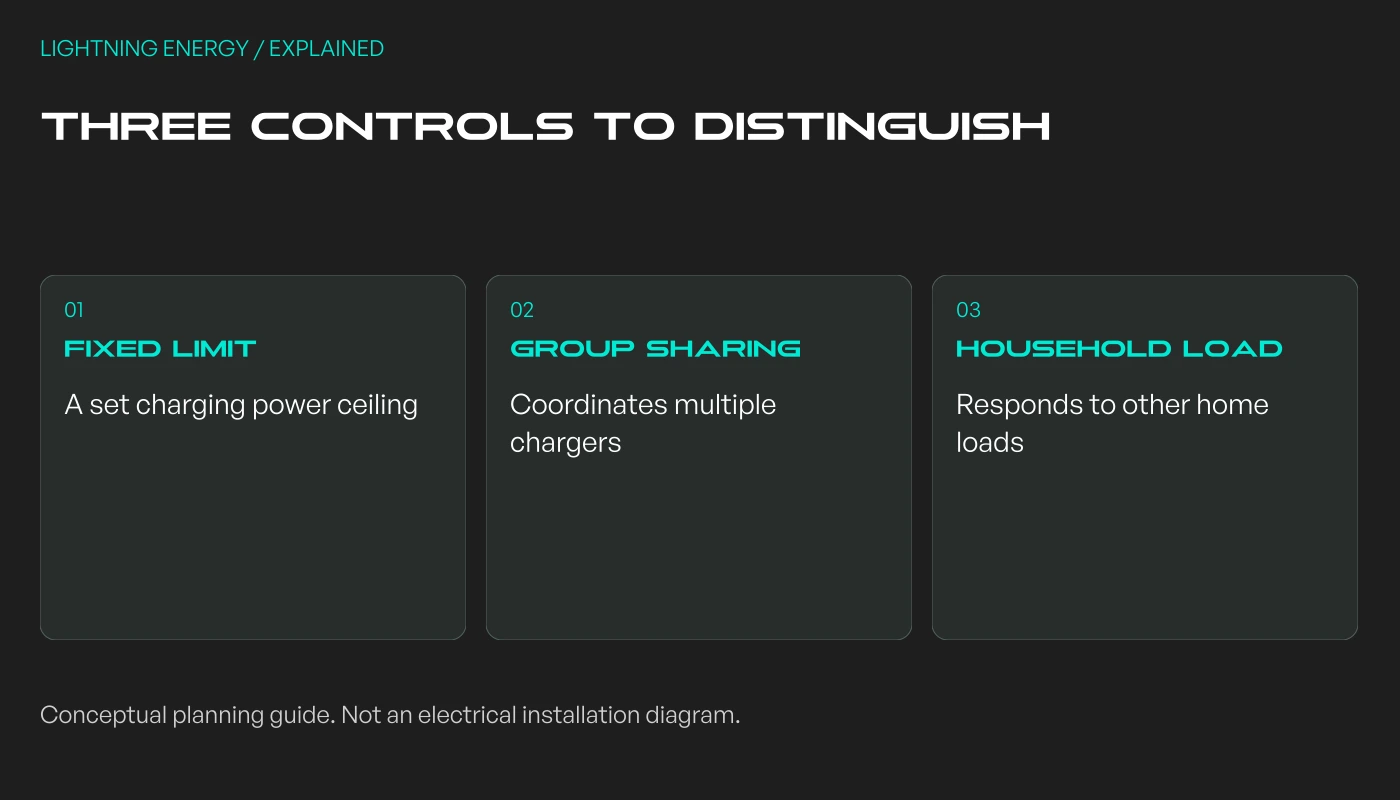
Tesla's Australian power-management documentation distinguishes fixed limits, dynamic household monitoring and group sharing between chargers.
Crucially, that page currently says its Dynamic Power Management is for a single Wall Connector and cannot operate across multiple Wall Connectors. Do not assume every feature can be combined because the names sound compatible.
For any brand, request a written explanation of the proposed configuration, required meters, communication method and behaviour if communication fails. This is a documented planning guide, not a hands-on product test.
If one car stays home during the day, rooftop solar may change which car should charge first. A vehicle that returns after sunset needs a different schedule from a second car parked at home.
Also clarify whether EV charging is allowed to discharge the home battery. A large vehicle top-up can consume energy intended for household evening use or a backup reserve.
Avoid promising a fixed overnight completion time from charger nameplate power.
The government charging-equipment guide identifies vehicle limits and battery conditions among the factors affecting charging speed.
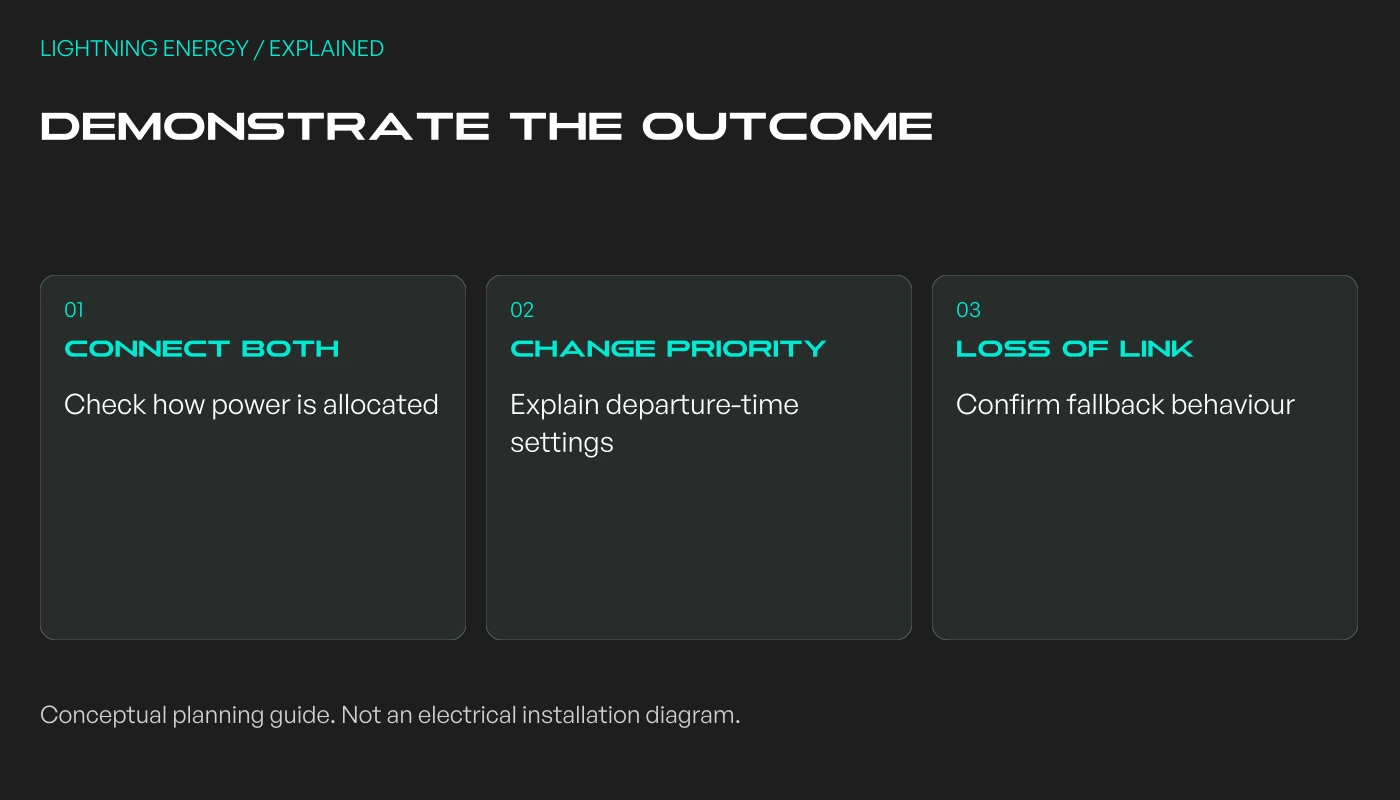
Request a demonstration with both vehicles connected, then with an ordinary household load operating. Ask the installer to explain the limits shown in each app and how to change departure schedules safely.
Keep a record of the agreed charging budget and any subscription or connectivity requirements. Confirm that a future replacement car will not require a completely different management system.
Send Lightning Energy your parking layout and both vehicle models. A useful quote should describe the household outcome, electrical assessment and control arrangement, not simply list two chargers.
Available times
Book a consultation and we'll map solar, storage, hot water, and the rebates around your bills and your goals.
Question 1 of 6
