
Where Should Your Home EV Charger Go? Cable Reach and Daily Parking
An EV charger can look perfectly placed on an empty garage wall and become awkward as soon as the car, bicycles and bins return. Plan the position with the driveway in normal use.
An EV charger can look perfectly placed on an empty garage wall and become awkward as soon as the car, bicycles and bins return. Plan the position with the driveway in normal use.

An EV charger can look perfectly placed on an empty garage wall and become awkward as soon as the car, bicycles and bins return. Plan the position with the driveway in normal use.
The best location lets you connect comfortably, store the cable neatly and keep the normal route into the home clear. The electrical installation still needs a licensed electrician's assessment.
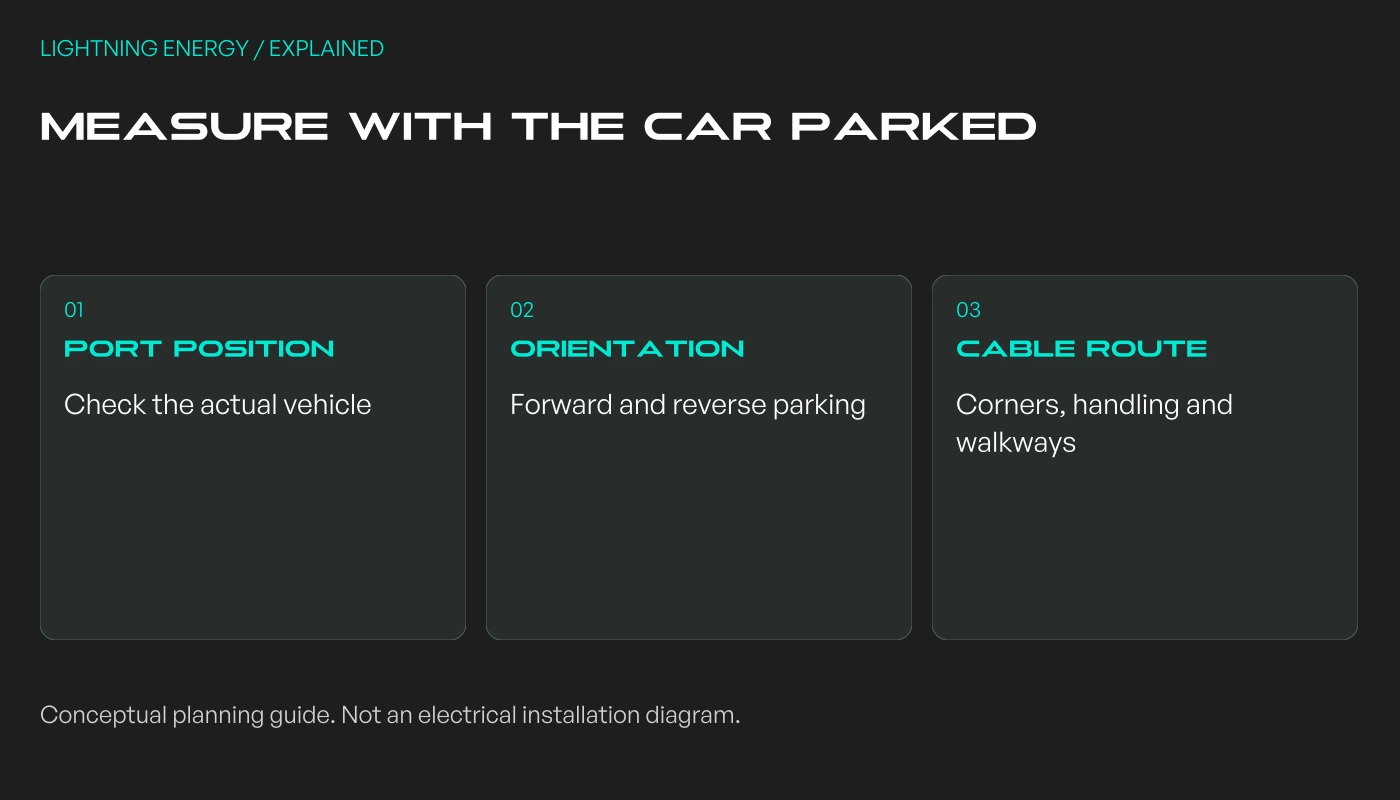
Park the vehicle where it usually sits and identify the charge-port position. Repeat the exercise facing the other direction if you sometimes reverse in. Include a second car if it regularly shares the space.
Measure the practical cable route, allowing for corners and comfortable handling. A straight-line measurement through the bonnet or across a walkway does not describe how the cable will be used.
Bring those observations to an EV charger discussion. Do not buy a particular cable length solely from a generic parking-space diagram.
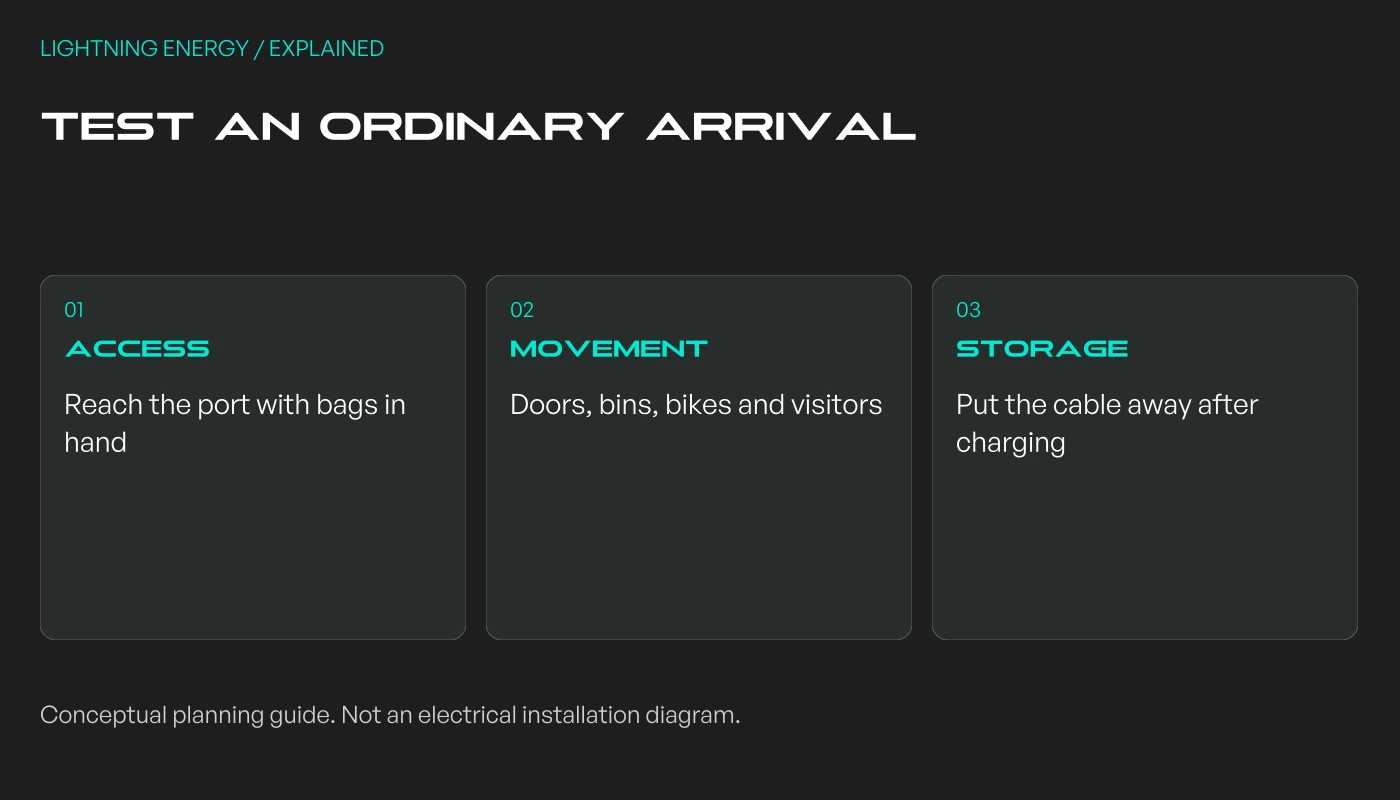
Imagine coming home in rain with shopping bags. Can you reach the connector without squeezing behind a vehicle? Does the garage door operate normally? Is the cable stored where children, pets and visitors will pass?
Check the routine with the charge port on both sides of a future vehicle. You do not need to predict your next car, but a little flexibility can prevent an unnecessarily restrictive location.
Seek licensed electrical advice and follow the vehicle manufacturer's requirements. Do not solve a poor layout with improvised extensions.
Government home charging guidance.
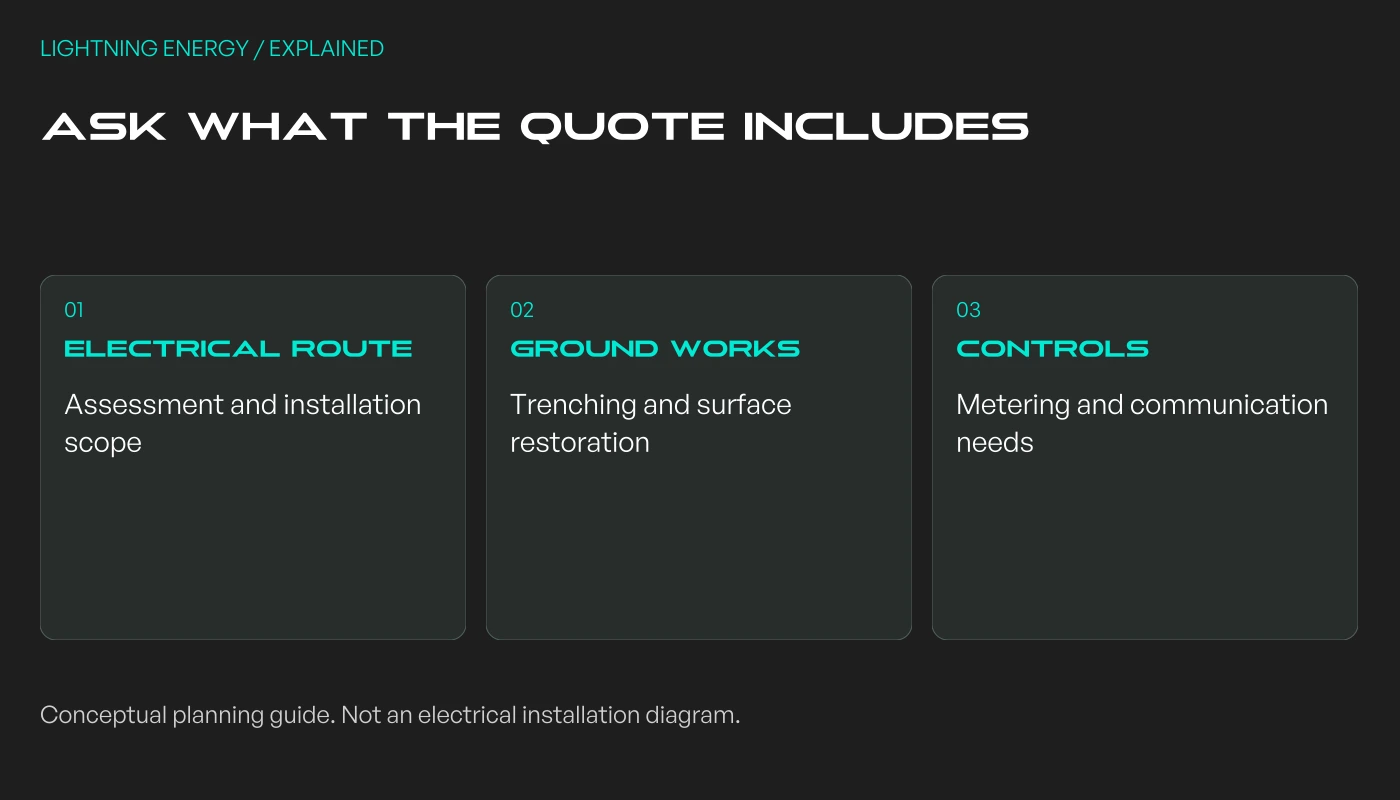
The electrician needs to assess the proposed mounting location, exposure, protection and cable pathway from the supply. A convenient wall position may involve a less convenient electrical route.
Ask whether the quotation includes any trenching, surface restoration, communication equipment and additional assessment. Confirm who is responsible for work outside the charger's immediate mounting point.
If solar charging is part of the plan, discuss the metering and communication required by the selected system. A nearby Wi-Fi symbol alone does not prove that every control feature will work at the charger.
A tethered cable stays with the charger; a socketed arrangement uses a compatible removable cable. Consider storage, handling and whether the same cable is also needed away from home.
Ask to see how the connector rests when unused. Check that the supplied holder and cable arrangement suit the planned position, rather than assuming every accessory is included.
If you have a home battery, tell the installer how you want vehicle charging to interact with it. Charger placement and energy control are separate decisions that both belong in the quote.
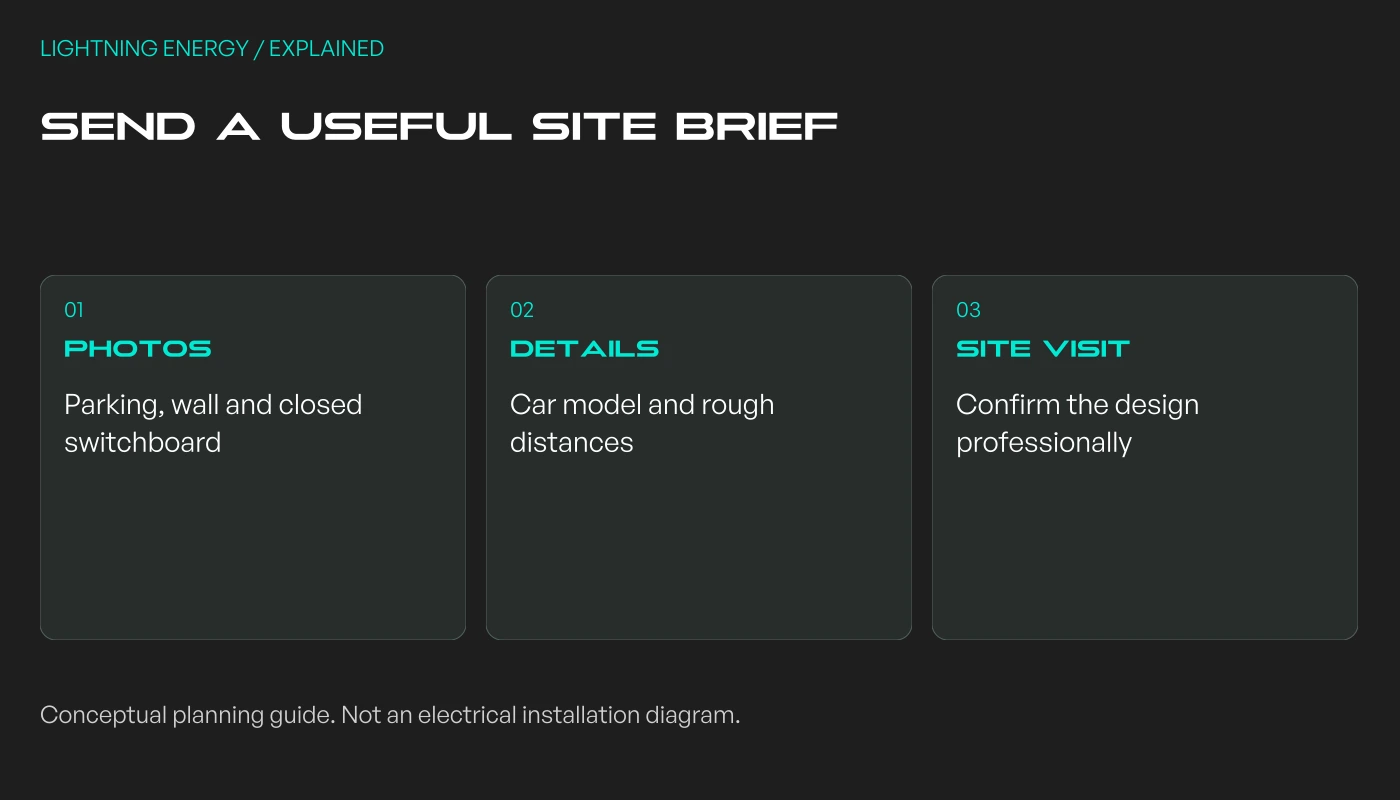
Take pictures of the whole parking area, the usual vehicle position, the proposed charger wall and the switchboard from a safe distance. Do not remove electrical covers or open equipment to get a better picture.
Add rough distances, the car model, port location and any concern about shared access. These help scope the discussion, but photographs cannot replace the electrical assessment.
Contact Lightning Energy with that information. Ask the final proposal to show where the charger and cable holder will sit, what work is included and how daily access will remain practical.
Available times
Book a consultation and we'll map solar, storage, hot water, and the rebates around your bills and your goals.
Question 1 of 6
