
Usable energy
Battery capacity in kWh determines stored energy. Available energy changes with the state of charge, reserve setting, losses and operating conditions.
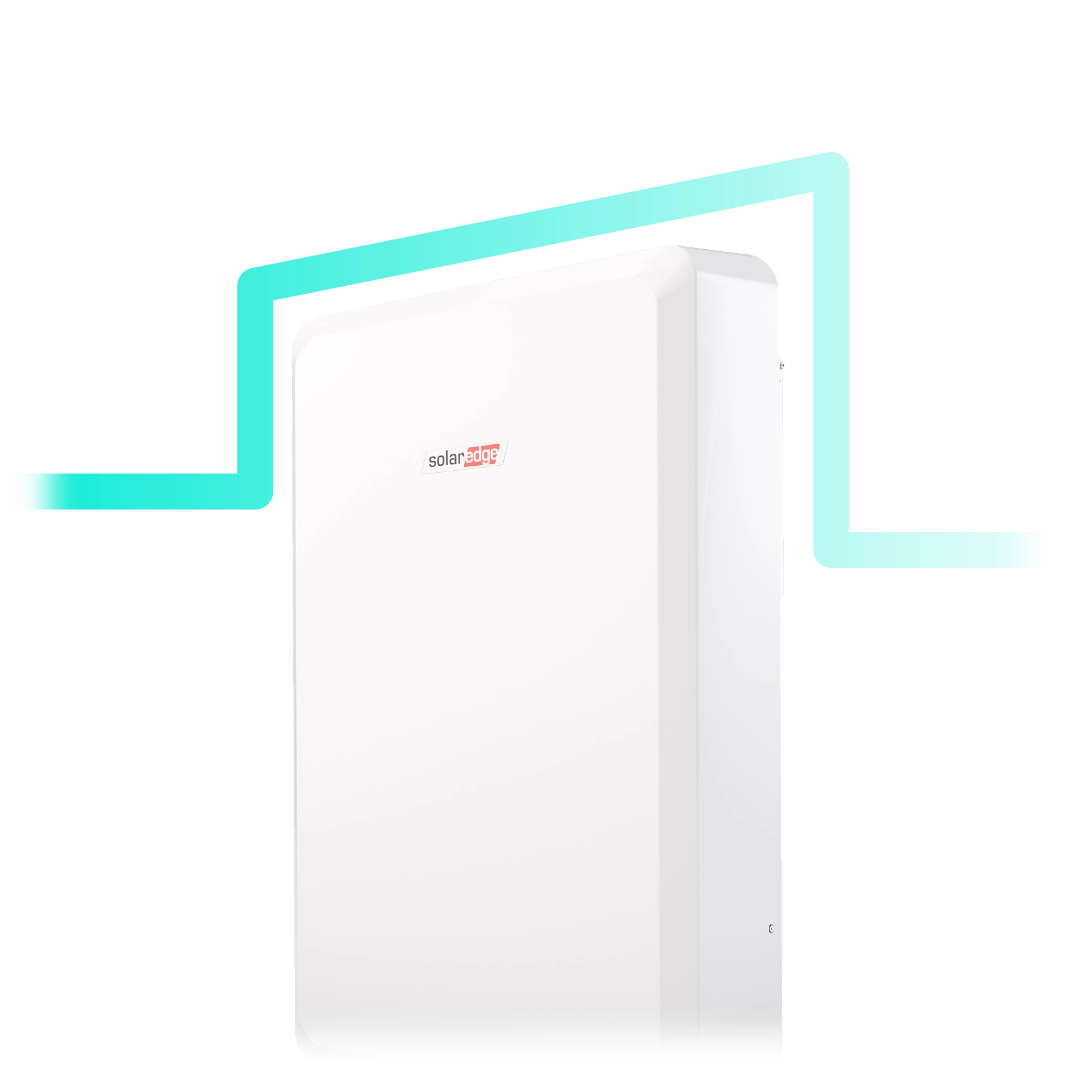
Home energy storage
Storage designed for a compatible SolarEdge system.
Home Battery 400V example
SolarEdge offers more than one Home Battery architecture. The 400V model described here has 9.7 kWh of usable energy and 5 kW continuous output. It needs a compatible inverter, and backup requires the appropriate Home Hub inverter and Backup Interface. Three-phase battery products use different specifications.
Battery capacity in kWh determines stored energy. Available energy changes with the state of charge, reserve setting, losses and operating conditions.
Continuous output in kW limits the loads a system can supply together. Motor starting and phase arrangements also affect the design.
A battery does not automatically back up every circuit. Compatible controls, safe grid isolation and a specified load list are part of a backup installation.
Product details
Home Battery 400V example. For a product family, the exact model and configuration are confirmed in your quote. Figures below apply only to the model or configuration identified.
| Model example | Home Battery 400V — BAT-10K1PS0B-01 | Usable energy | 9.7 kWh |
|---|---|---|---|
| Continuous output | 5 kW | Backup | Compatible Home Hub and Backup Interface required |
Manufacturer references checked 21 September 2026:
SolarEdge Home Battery — existing Lightning Energy product image; confirm the quoted model.
Warranty and support
The linked 400V datasheet specifies a 10-year warranty. Consult the applicable warranty for capacity retention, operating requirements and exclusions.
Check which components are covered, the warranty term and any registration, usage or servicing conditions.
Your quote should identify the installation work, commissioning, handover and support contacts.
Keep model and serial numbers, the invoice and the applicable Australian warranty. Manufacturer warranties sit alongside Australian Consumer Law rights.
Planning the system
Storage value depends on when your home imports and exports electricity, the tariff and the proposed operating settings. There is no single savings or runtime figure for every household.
Use interval-meter data where available to understand evening demand and daytime solar surplus.
Account for import prices, export payments, charge scheduling and any energy-plan conditions.
Keeping energy in reserve changes how much the battery can use for everyday bill savings.
Explore your wider home energy plan
Compare the options
These pages cover different models and product families. Compare exact quote specifications and installation scope before comparing prices.
| Brand or product | Range covered | What to confirm |
|---|---|---|
| Sigenergy | SigenStor system | Specify usable storage and inverter output separately. |
| Tesla Powerwall 3 | Powerwall 3 — Australian specification | Confirm your approved AC output and which circuits will operate during an outage. |
| GoodWe ESA | ESA modular storage range | Check the controller and battery module model numbers as a matched combination. |
| SolarEdge | Home Battery 400V example | Confirm whether the quote uses the 400V or three-phase battery architecture. |
| Enphase | IQ Battery 5P family | Identify the original 5P or FlexPhase SKU in the quote. |
| Anker SOLIX | X1 home energy storage range | Confirm whether the design is hybrid or AC-coupled and single- or three-phase. |
Before choosing SolarEdge
Ask for a complete quote
From consultation to installation
We assess the site and your goals, confirm a suitable configuration, and explain what is included before installation.
Review your usage, existing equipment, site conditions and priorities.
Confirm model numbers, compatibility, installation work and the complete quote.
Complete the agreed installation and commissioning, then explain the controls and support pathway.
Available times
Pick a time that works. We’ll assess whether SolarEdge suits your home and confirm the model, installation scope and any applicable incentives.
Question 1 of 6