
A Seasonal Reverse-Cycle Air Conditioning Maintenance and Service Checklist
Plan seasonal air conditioner checks around your model’s instructions, record changes in airflow, noise or drainage, and keep servicing and warranty records.
Plan seasonal air conditioner checks around your model’s instructions, record changes in airflow, noise or drainage, and keep servicing and warranty records.

A seasonal air conditioning check is a chance to notice changes before the system is needed every day. Use the exact owner manual to separate accessible housekeeping from work requiring a qualified technician.
Do not treat a quick filter clean as proof that the whole system is healthy. Equally, a generic service interval should not replace the instructions and conditions applying to your equipment.
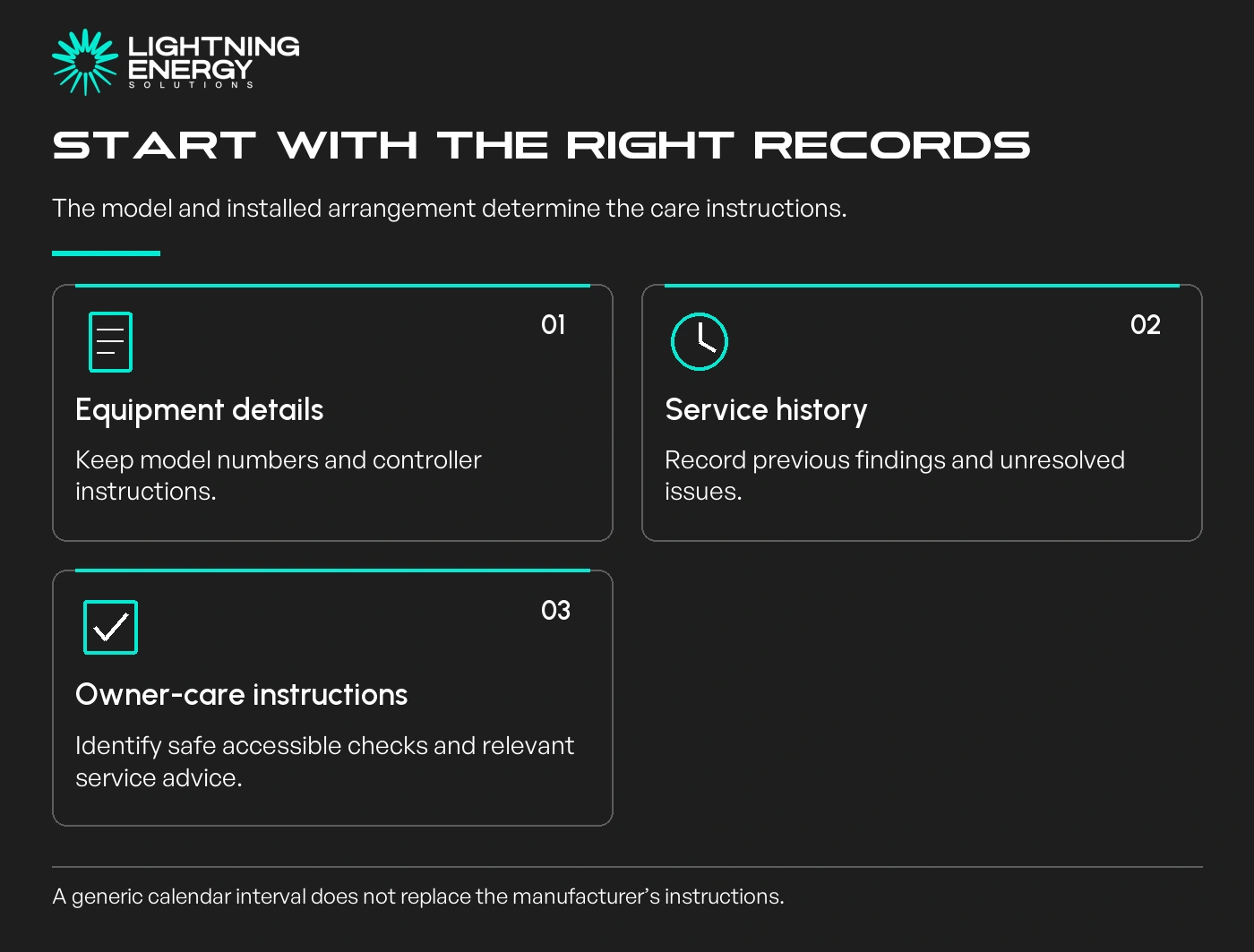
Keep the indoor and outdoor model numbers, controller instructions, accepted installation scope and previous service records together. These identify which care instructions actually apply.
Check the manufacturer’s recommended maintenance and any warranty terms relevant to servicing. If the instructions are unclear or conflict with advice you received, ask the supplier for written clarification.
Our air conditioning service discussion is more useful when the equipment and previous work are identifiable, rather than described only as an old ducted system.
Before a busy season, note any unresolved issue from the previous one. A room that was never comfortable or a repeated fault should not be hidden by an otherwise tidy service calendar.
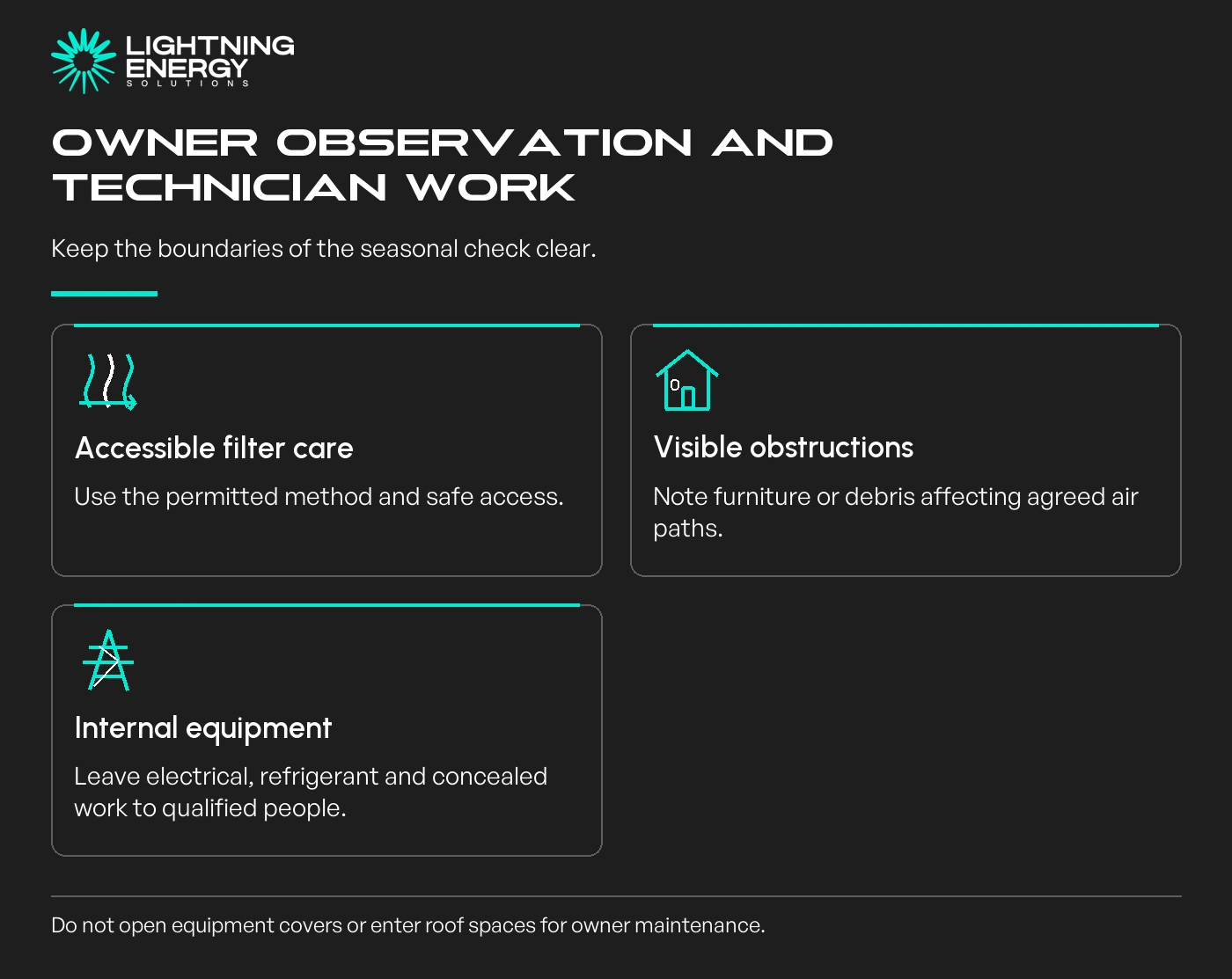
Inspect filters only where the manual allows safe owner access, and use the correct cleaning or replacement method. Different filter materials can need different treatment.
Daikin’s filter-care guidance explains why washable and disposable types must be distinguished.
From normal accessible areas, note furniture obstructing an indoor return or outlet and loose debris near the outdoor unit. Preserve the installation’s designed clearances rather than rearranging equipment or its enclosure.
Ask for assistance where access requires unsafe climbing. Do not open electrical covers, enter a roof void or wash internal components as part of a homeowner checklist.
Where a future heat pump installation or landscaping project shares the outdoor area, check that the air conditioner’s agreed service space will remain available.
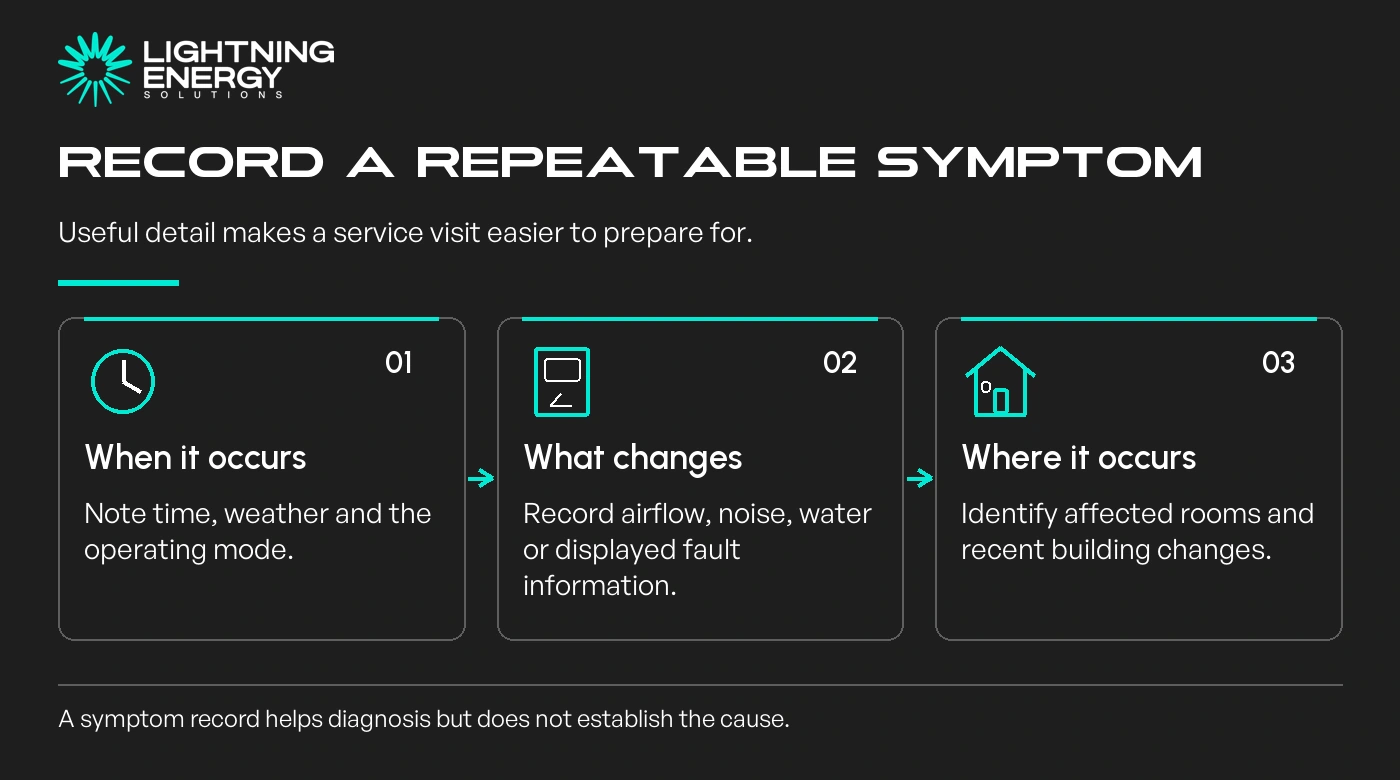
Write down unusual noise, water appearing in an unexpected place, weak airflow, repeated pauses or rooms failing to reach normal comfort. Note the operating mode, time and any displayed fault code.
For an illustrative record, “bedroom airflow reduced after renovation, heating mode, door closed” gives a technician a starting point. “The system is bad” does not identify the circumstances.
Daikin’s troubleshooting guidance describes several owner checks and directs unresolved problems to its representatives. Normal operating events and equipment faults should not be diagnosed from one symptom alone.
Manufacturer troubleshooting information.
If there is smoke, a burning smell or another apparent electrical hazard, stop use if safe and seek appropriate urgent assistance. Do not repeatedly restart equipment to see whether the warning disappears.
Provide the technician with the model details, maintenance history and symptom record. Ask what the service includes and whether the reported comfort or drainage issue requires separate diagnostic work.
Have any electrical installation work documented appropriately. Energy Safe Victoria explains the Certificate of Electrical Safety process; a routine visit does not mean every conceivable certificate applies.
Energy Safe’s electrical-work documentation.
Keep findings, recommendations and completed work with your electrification project records, particularly if other trades later alter the building.
Avoid replacing functioning equipment solely because it has reached an arbitrary birthday. Use its condition, recurring costs, comfort and a qualified assessment to decide whether repair, continued use or replacement is appropriate.
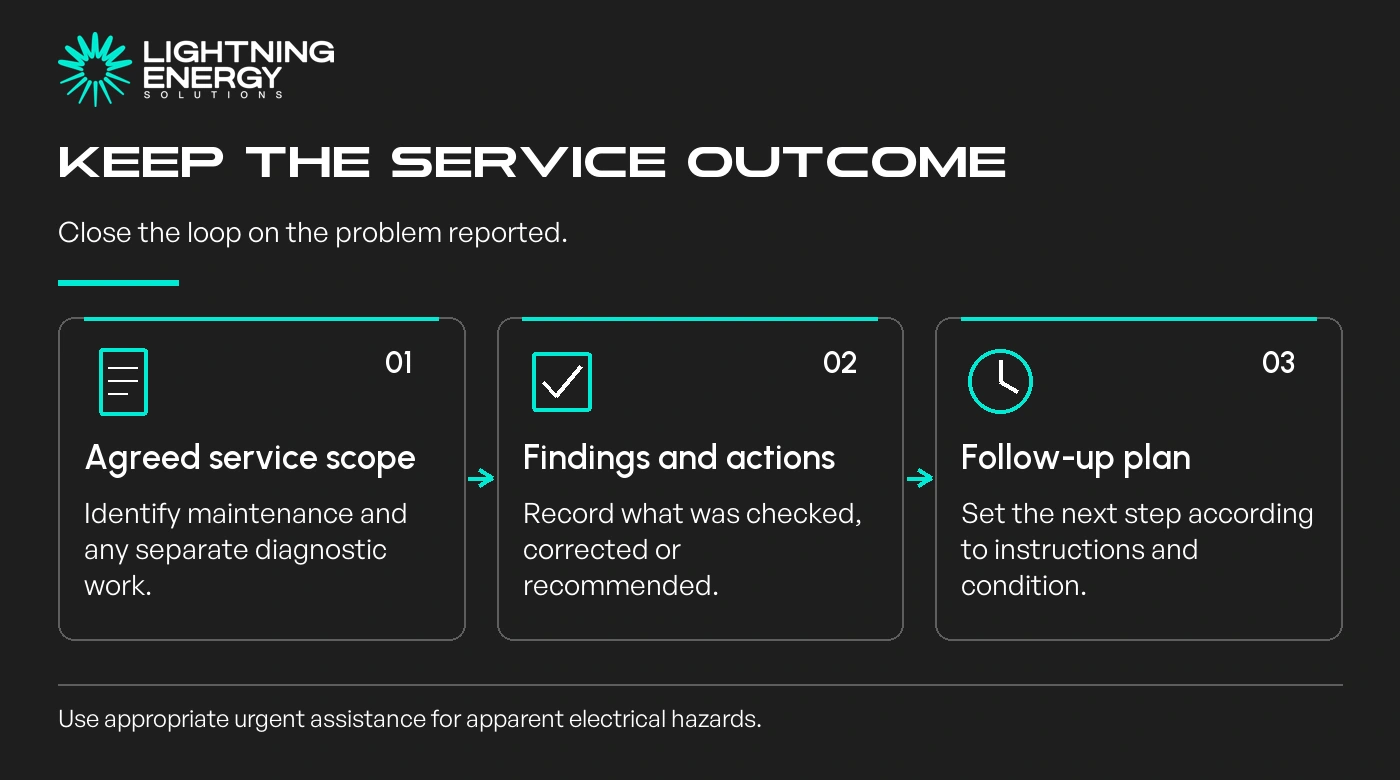
Set the next review according to the manual and the system’s use. Book a service discussion when changes persist or you need help separating routine maintenance from a specific fault investigation.
Available times
Book a consultation and we'll map solar, storage, hot water, and the rebates around your bills and your goals.
Question 1 of 6
