
What order should you electrify a Melbourne home?
Plan a Melbourne home electrification sequence around appliance condition, electrical capacity, shared site work, solar use and the final gas exit.
Plan a Melbourne home electrification sequence around appliance condition, electrical capacity, shared site work, solar use and the final gas exit.

Electrifying a Melbourne home works best as a coordinated plan, even when the purchases are spread over several years. The right order depends on what is failing, what the house needs and what you can afford.
Start with urgent safety or service problems, then identify work that enables several future upgrades. Solar, hot water, heating, cooking and batteries do not have to be purchased together to be planned together.
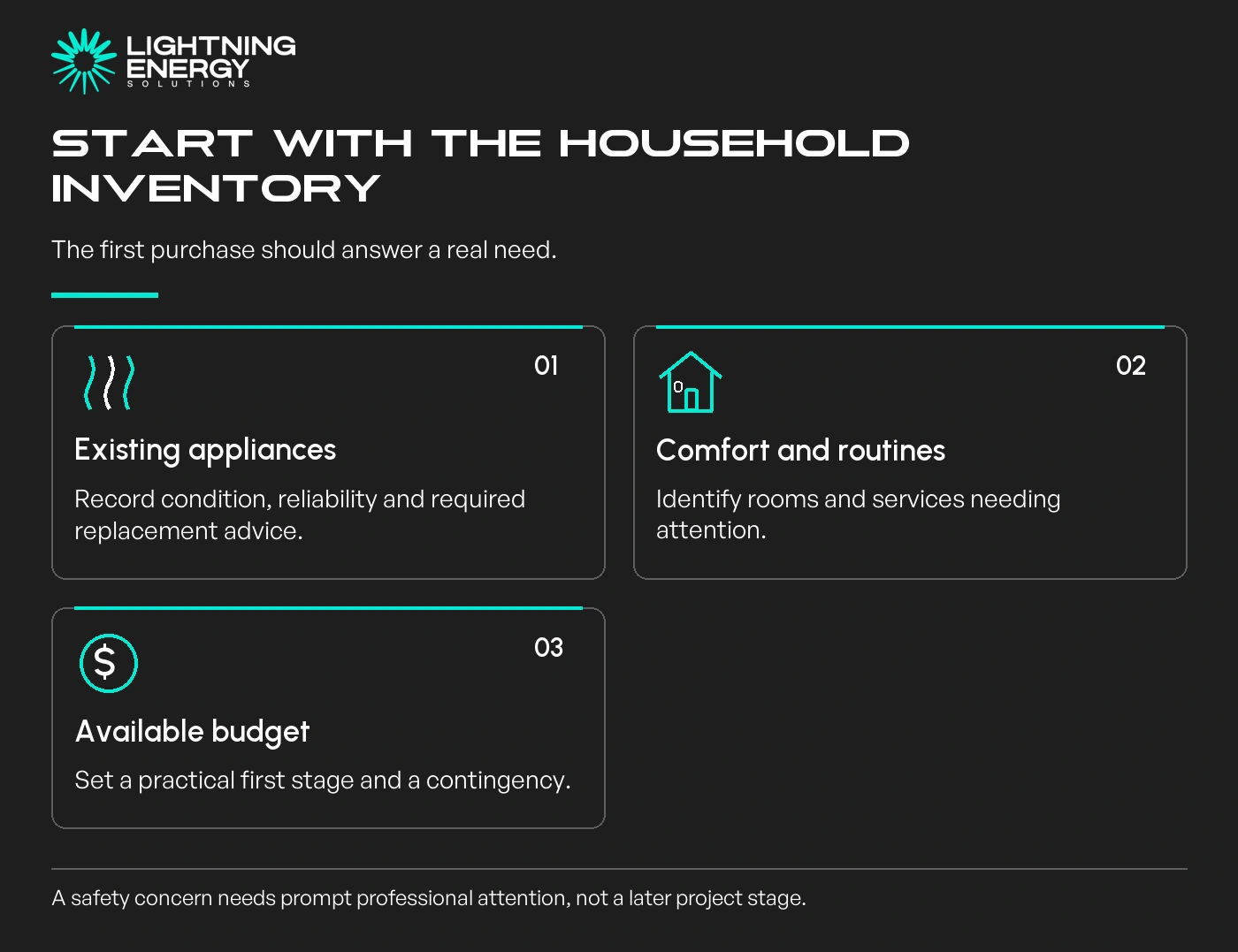
List each gas appliance, its condition and the service it provides. Record uncomfortable rooms, unreliable hot water and planned renovations alongside the energy bills.
Ask a qualified practitioner about an appliance that may be unsafe or near failure. Do not keep using suspect equipment simply because it occupies a later position in your preferred upgrade sequence.
The government’s electrification guide recommends planning replacements around condition, household needs and budget rather than requiring every change at once.
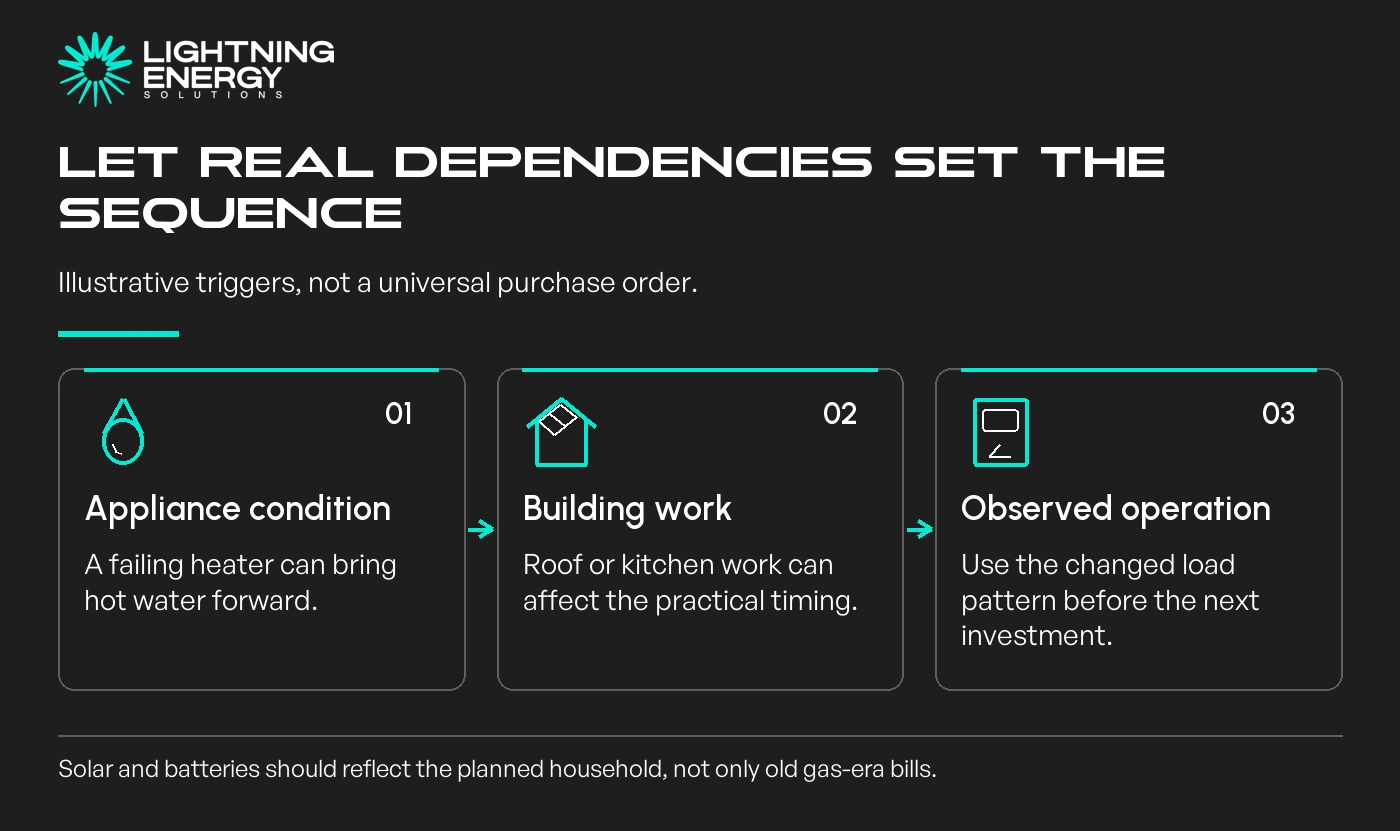
For an illustrative household with a failing water heater and adequate existing heating, heat pump hot water may be the first purchase.
Another home with reliable hot water but poor winter comfort may set a different priority.
Include practical building improvements in the discussion. Insulation and appropriate draught reduction can change heating and cooling needs, while required ventilation must be preserved.
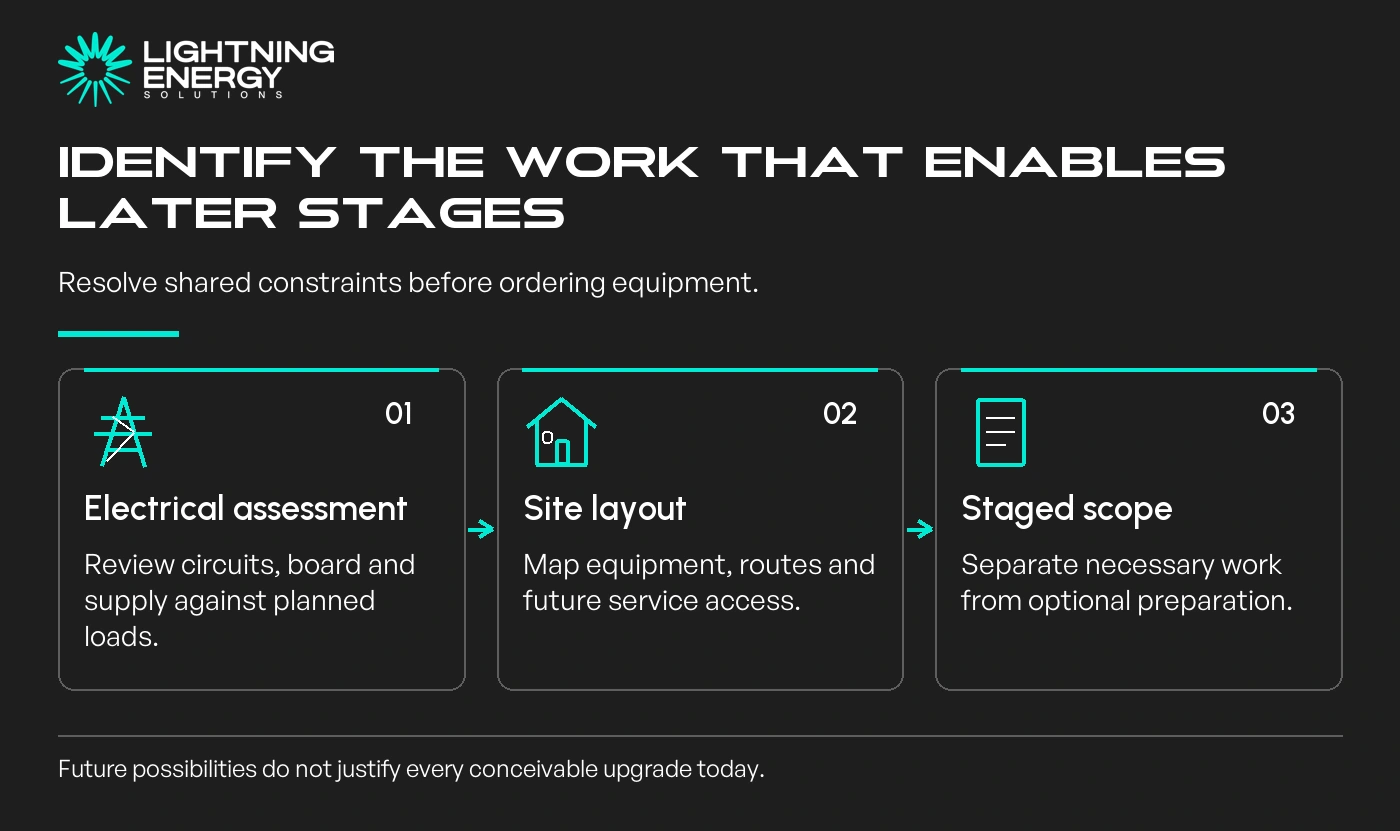
Have the electrician consider existing circuits, switchboard condition, supply capacity and plausible future loads. Keep a future EV charger or induction cooktop in the brief even if purchase is not immediate.
The electrical planning guide explains why a new appliance and a supply upgrade are separate questions.
CitiPower and Powercor describe supply alterations, metering and phase changes as work coordinated through a registered electrical contractor and the relevant connection process.
Distributor supply-change guidance.
Map tank positions, outdoor units, cable routes and maintenance access together. Avoid reserving a location for one product that prevents a later essential installation.
Agree which enabling work is necessary now and which is only preparation. A future possibility does not justify paying for every conceivable upgrade today.
A kitchen renovation can make cooking changes practical; roof work may affect solar timing; replacing a failed heater can make heating the immediate job. Use these dependencies to shape the order.
For solar planning, include the likely future daytime and evening loads. Do not size solely from bills that describe a home still using gas for most heating.
A battery can be assessed after the revised load pattern is understood, or modelled alongside planned changes. Its storage and backup design should reflect those loads rather than a generic whole-home promise.
Ask one lead contact to coordinate overlapping trades, access and shutdowns. Shared planning can avoid repeated visits or reworking a route, even where separate businesses supply the equipment.
Before each installation, confirm applicable incentive eligibility and approval requirements. Do not let an assumed discount determine the sequence before the provider has checked the actual property and product.
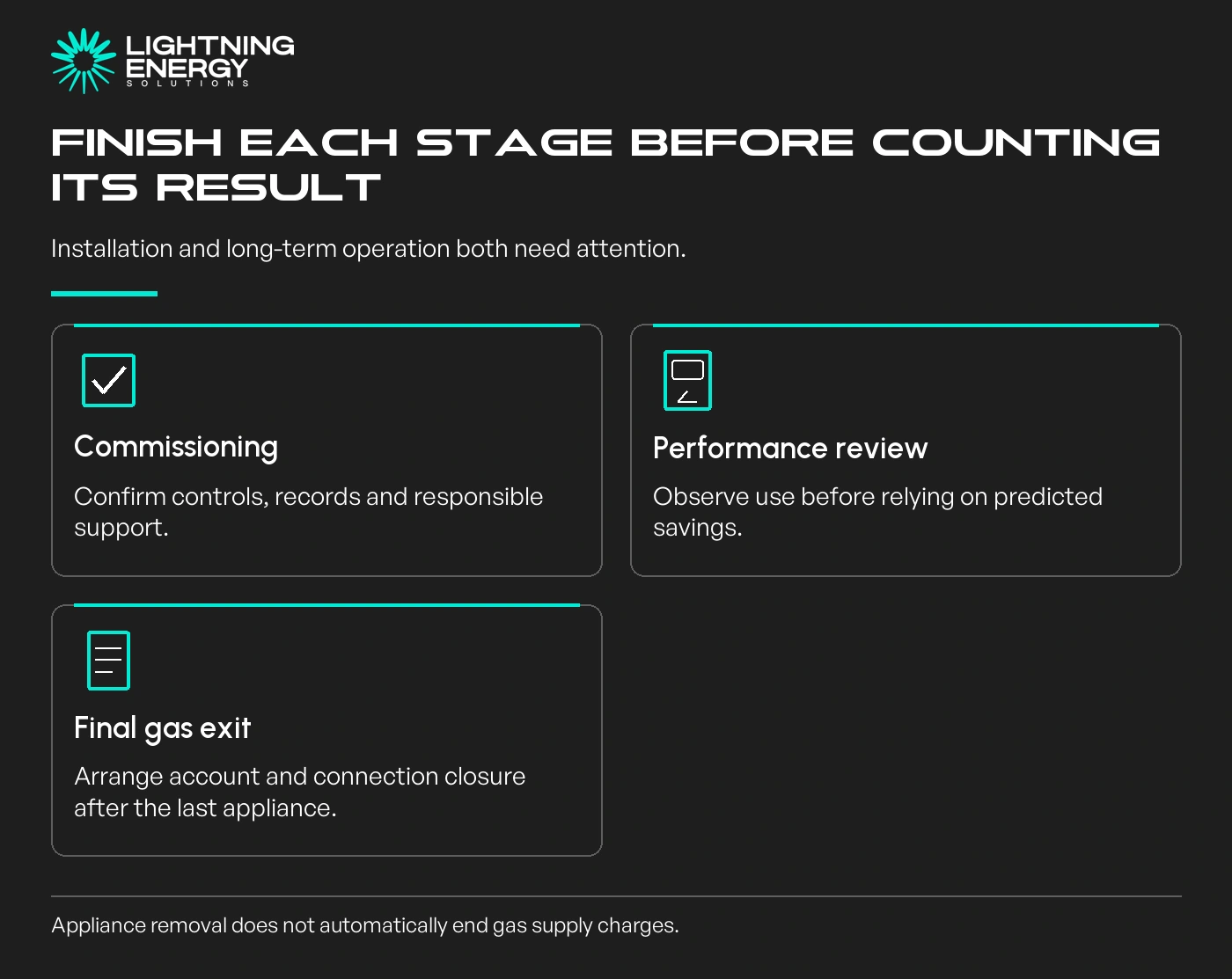
After each upgrade, confirm controls, required certificates, owner records and support contacts. Observe how the household actually uses the new appliance before relying on its predicted savings for another purchase.
Keep a simple remaining-work list with the next trigger: appliance failure, renovation date, available budget or evidence that extra storage would be useful.
Once the last gas appliance is safely removed, arrange the appropriate account and connection exit. Removing a heater or cooktop does not automatically close the gas account.
For a household keeping gas cooking temporarily, retain its supply charge in the budget. Remove that cost only when the final exit has actually been arranged and the billing position confirmed.
Avoid an all-at-once package if it compromises the design or consumes money needed for essential enabling work. A well-sequenced smaller first stage can be a sound start.
Bring the appliance list, floor plan and future plans when you request an electrification assessment. The result should identify priorities, dependencies and a practical next step for your home.
Available times
Book a consultation and we'll map solar, storage, hot water, and the rebates around your bills and your goals.
Question 1 of 6