
Battery Monitoring: The Data and Owner Access to Ask for at Handover
Battery handover should include owner access, clear energy data and usable records. Learn what the app shows and how to recognise missing information.
Battery handover should include owner access, clear energy data and usable records. Learn what the app shows and how to recognise missing information.

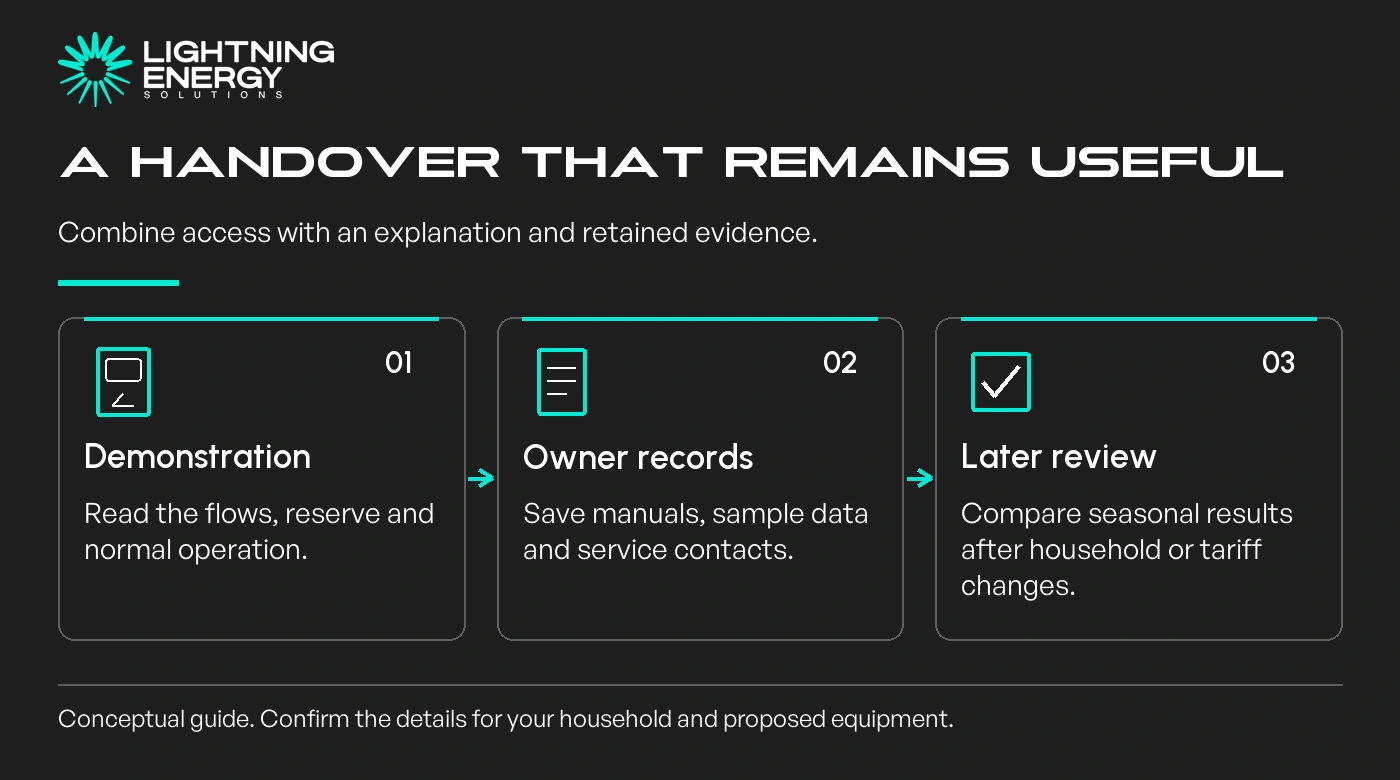
A battery handover is incomplete if the household cannot access its own system or understand the main measurements. Ask for owner account access, a demonstration of the energy flows and a way to retain useful records.
The aim is practical visibility, not daily micromanagement. You should be able to recognise normal operation, report a specific concern and understand what information a provider or installer can access.
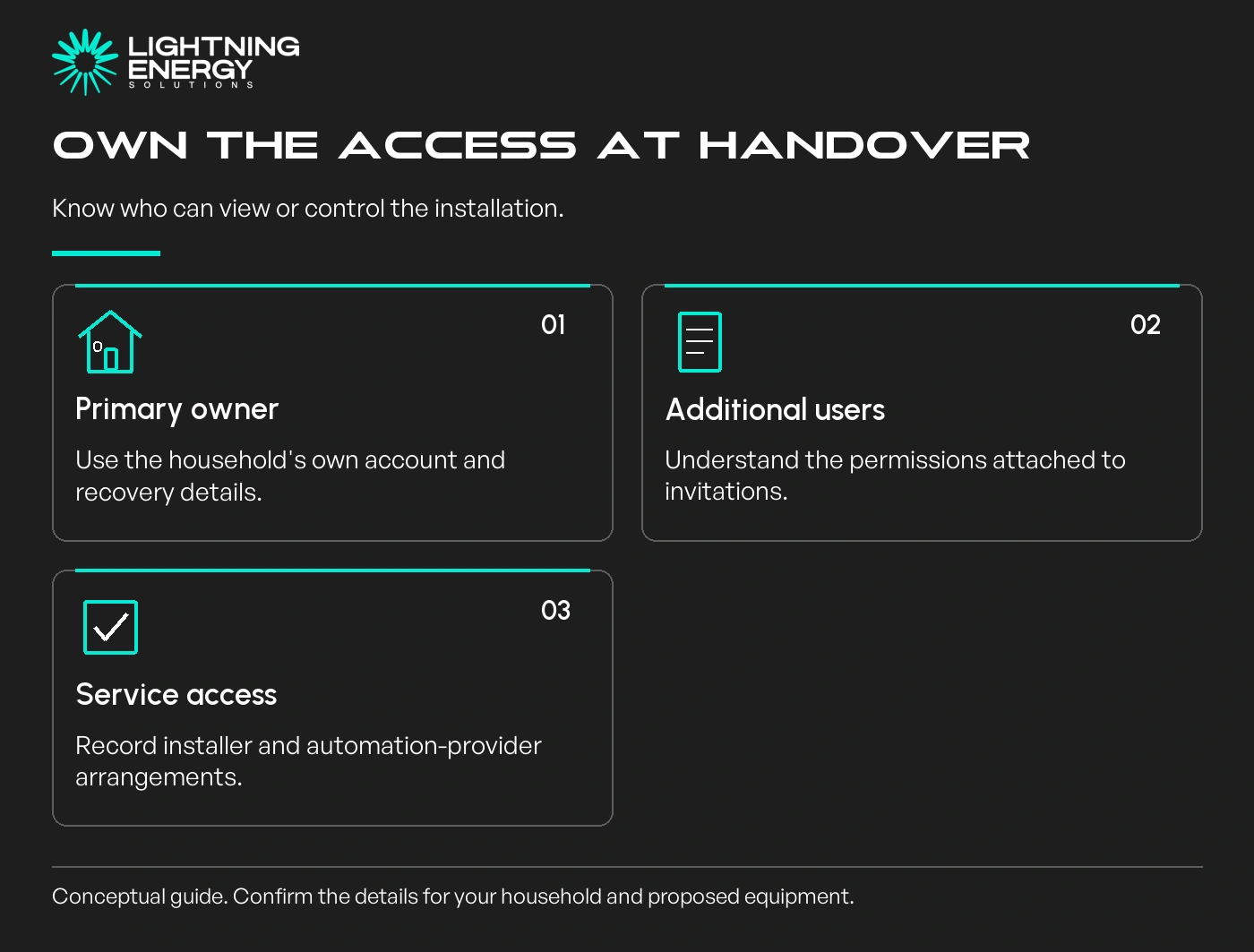
Confirm which account is the primary owner and how additional household users are added. Use your own account credentials rather than relying on an installer's personal login or a shared password.
Tesla's Australian access guide, for example, lets the primary owner manage additional users and notes their broad feature access. Do not assume an invited user is automatically read-only.
Tesla Australian access guidance.
Ask separately about installer service access and any authorised automation provider. Record how those relationships are changed if the property is sold or the service arrangement ends.
The battery quote checklist helps make the expected handover part of the original scope.
Have the installer explain solar generation, household demand, battery charging and discharging, and grid imports and exports. Check which quantities are measured directly and which the system calculates.
Instantaneous power is measured in kW; energy accumulated over a period is measured in kWh. A daily total and a momentary power reading are not comparable numbers.
Tesla's Australian Energy Data guide shows component views, charge history and grid direction. Other manufacturers may use different colours, signs and reporting intervals.
Tesla Australian energy-data guide.
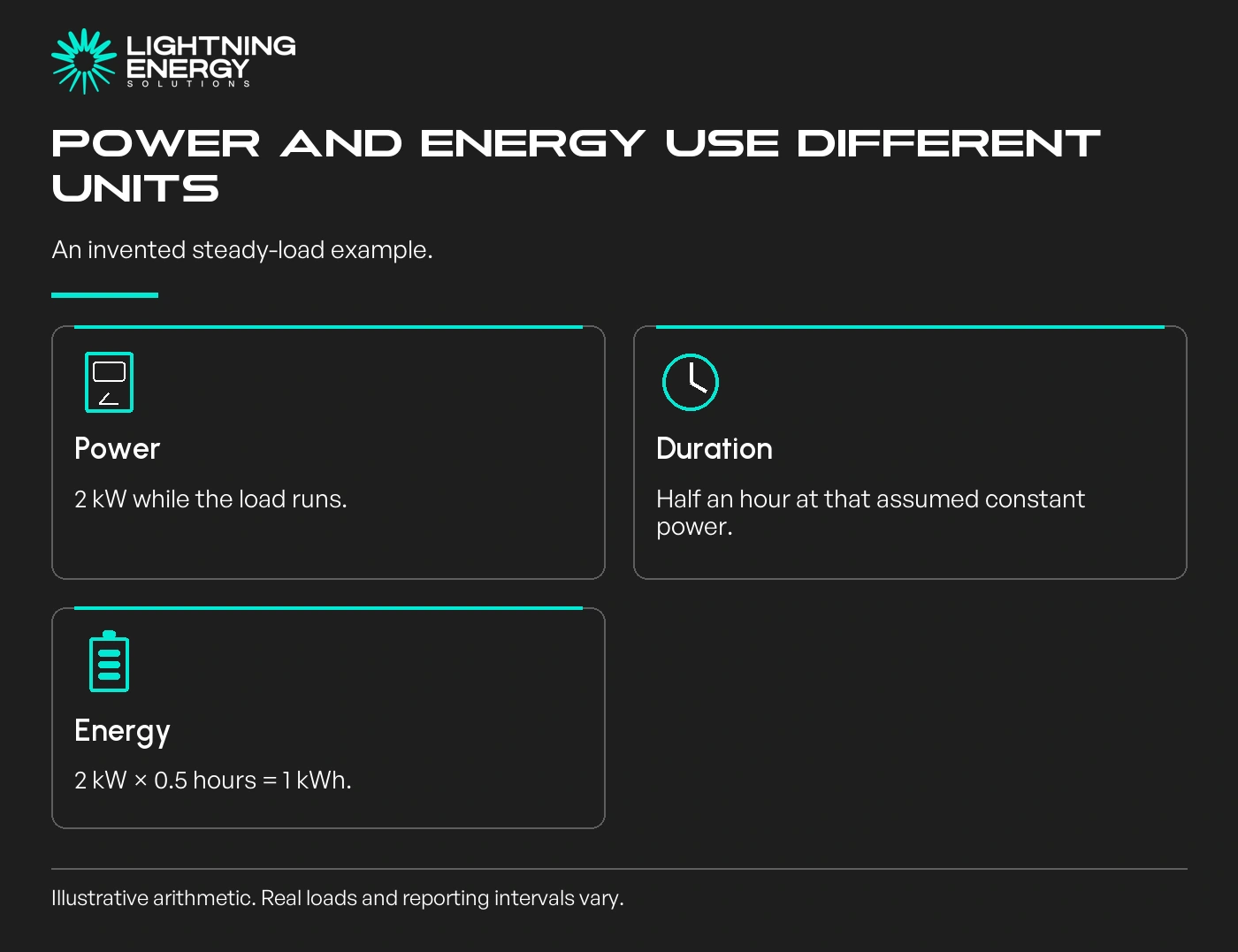
For an invented steady example, a 2 kW load running for half an hour uses 1 kWh. That illustrates the units; real household demand usually changes during the interval.
State of charge describes how full the battery is at the time shown. It is not a direct measure of how much original usable capacity remains after years of operation.
A battery displaying 100% can be fully charged relative to its current operating assessment without proving a particular warranty-capacity result. Performance claims require the manufacturer's relevant process.
A battery review should use suitable operating records alongside product specifications and household demand, not diagnose degradation from one percentage screenshot.
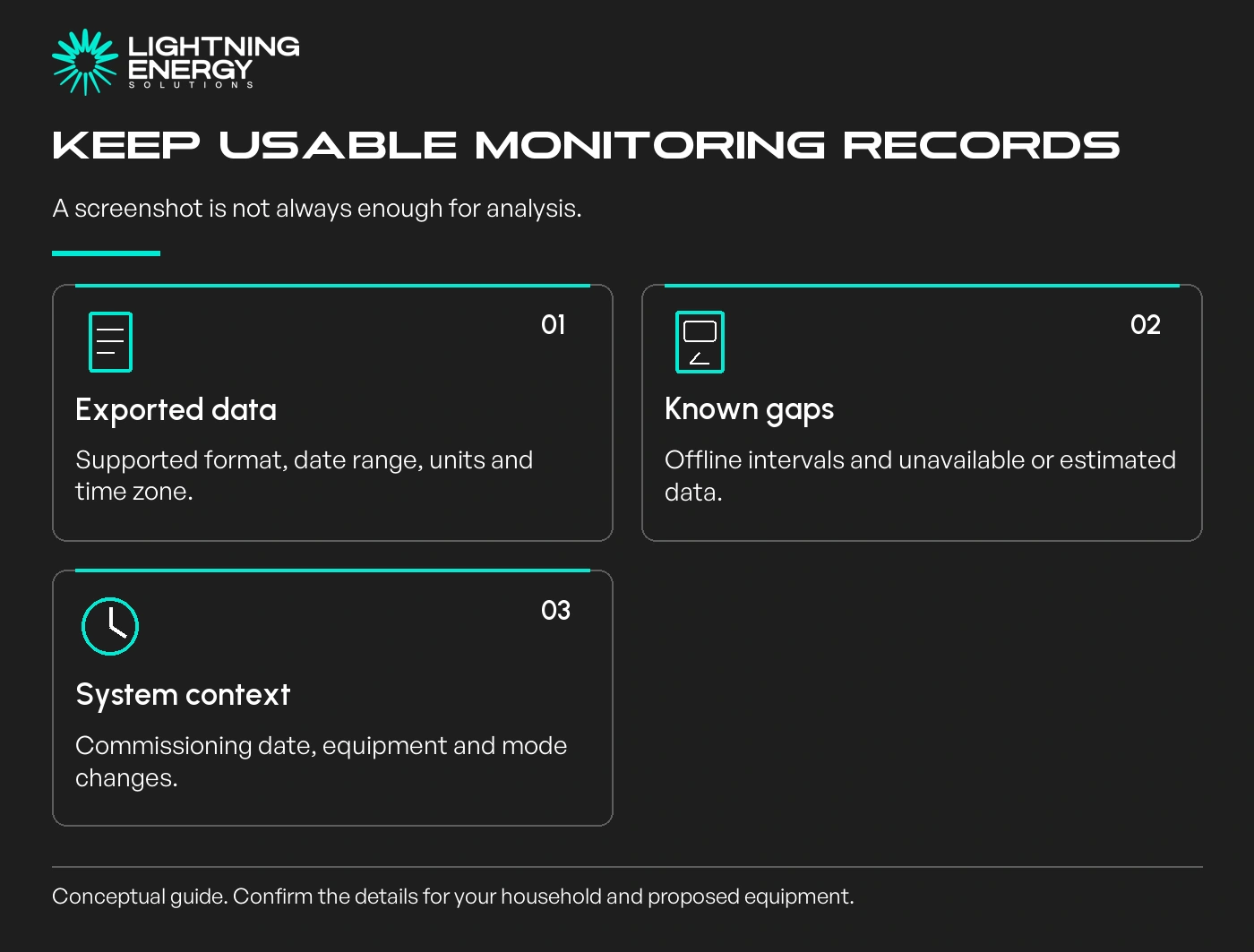
Ask how to export the data that the product makes available and what time periods it covers. Tesla's guide describes CSV downloads; not every app exposes the same detail or history.
Keep a sample export with the commissioning date and final equipment schedule. Check time zone, units and whether gaps or estimated values are marked before using records for financial comparisons.
Turn on the appropriate owner notifications and identify the support contact for a connection failure. A silent app is not proof that no fault or outage occurred while communications were unavailable.
Tesla's Australian local-monitoring guidance has software, pairing and network prerequisites. Ask what offline access your actual system supports before it is needed.
Tesla Australian offline monitoring.
Save representative seasonal records and note changes to tariffs, major appliances or operating modes. That context helps distinguish a new household load from a change in battery behaviour.
Our electrification guide explains why an EV or heating upgrade can alter the original storage brief.
Do not interpret every extra charge cycle as a fault or every reported saving as a settled bill result. Ask how the app defines throughput and financial estimates, then compare relevant meter and retailer records.
A good handover leaves the household able to explain what it sees and provide useful evidence when it needs help. It should not depend on remembering an undocumented demonstration months later.
Plan your battery upgradeAsk us to include owner access, a sample data export and a clear explanation of operating modes and alerts in the handover for your proposed installation.Available times
Book a consultation and we'll map solar, storage, hot water, and the rebates around your bills and your goals.
Question 1 of 6
