Can a Battery Help With an Electricity Demand Charge?
A small energy bill and a large demand charge can appear on the same statement. The surprise is usually about timing: several large loads operated together, even though the household did not use much energy across the month.
LLightning Energy TeamLightning Energy25 October 2026 · 5 min read
A small energy bill and a large demand charge can appear on the same statement. The surprise is usually about timing: several large loads operated together, even though the household did not use much energy across the month.
A battery may help, but only if its controls reduce the particular grid-import peaks your retailer bills. Buying storage capacity alone does not establish that result.
Read the demand rule first
Energy Made Easy explains demand tariffs as an extra charge alongside usage and supply charges. Retailers can use different peak calculations and seasonal rates.
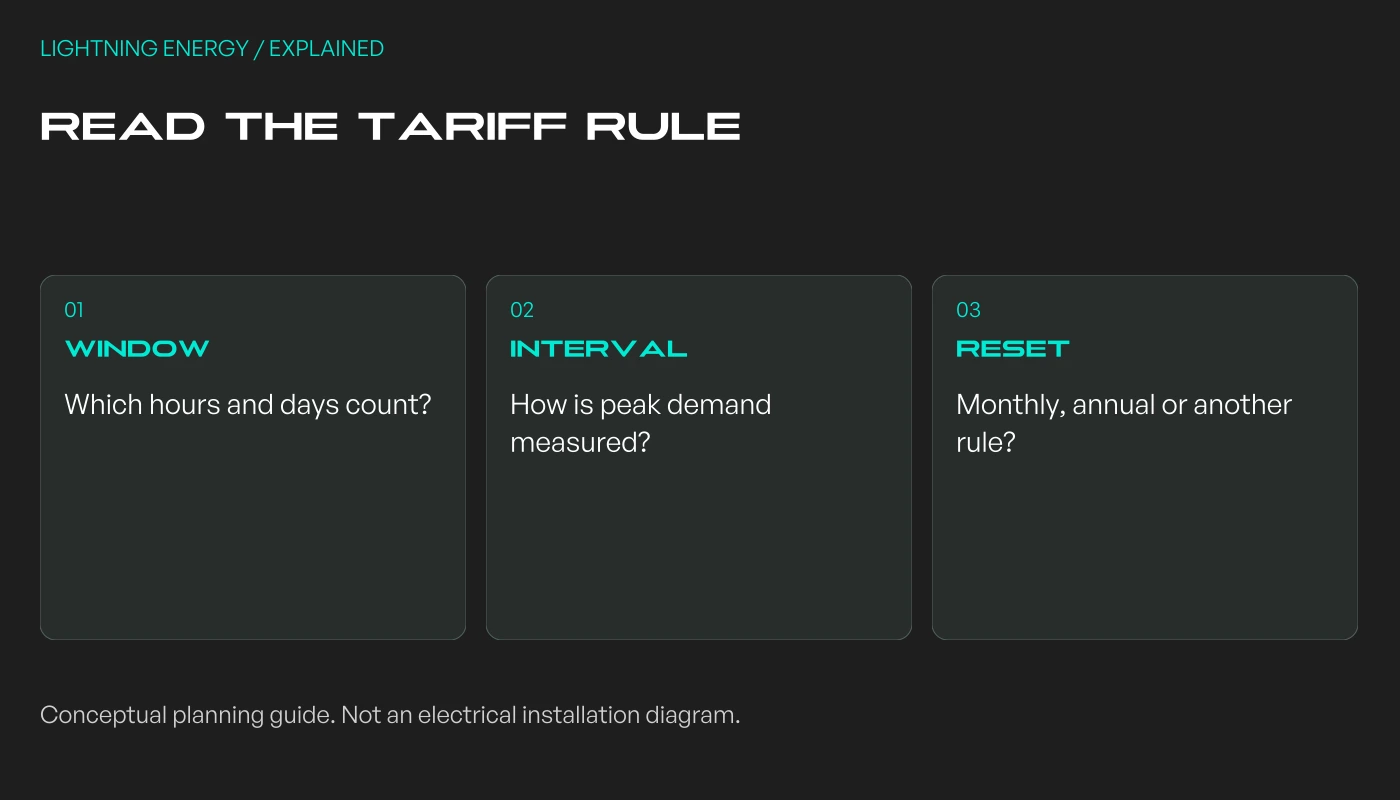
Find the measurement interval, eligible hours, billing period, minimum billed demand and units on your plan. Ask the retailer to explain any rule you cannot reproduce from the bill.
Kilowatts describe power. Kilowatt-hours describe energy over time. Our battery sizing guide is a starting point, but a demand-charge assessment also needs interval data and the actual tariff formula.
Conceptual planning guide. Not an electrical installation diagram.
A worked example, with invented prices
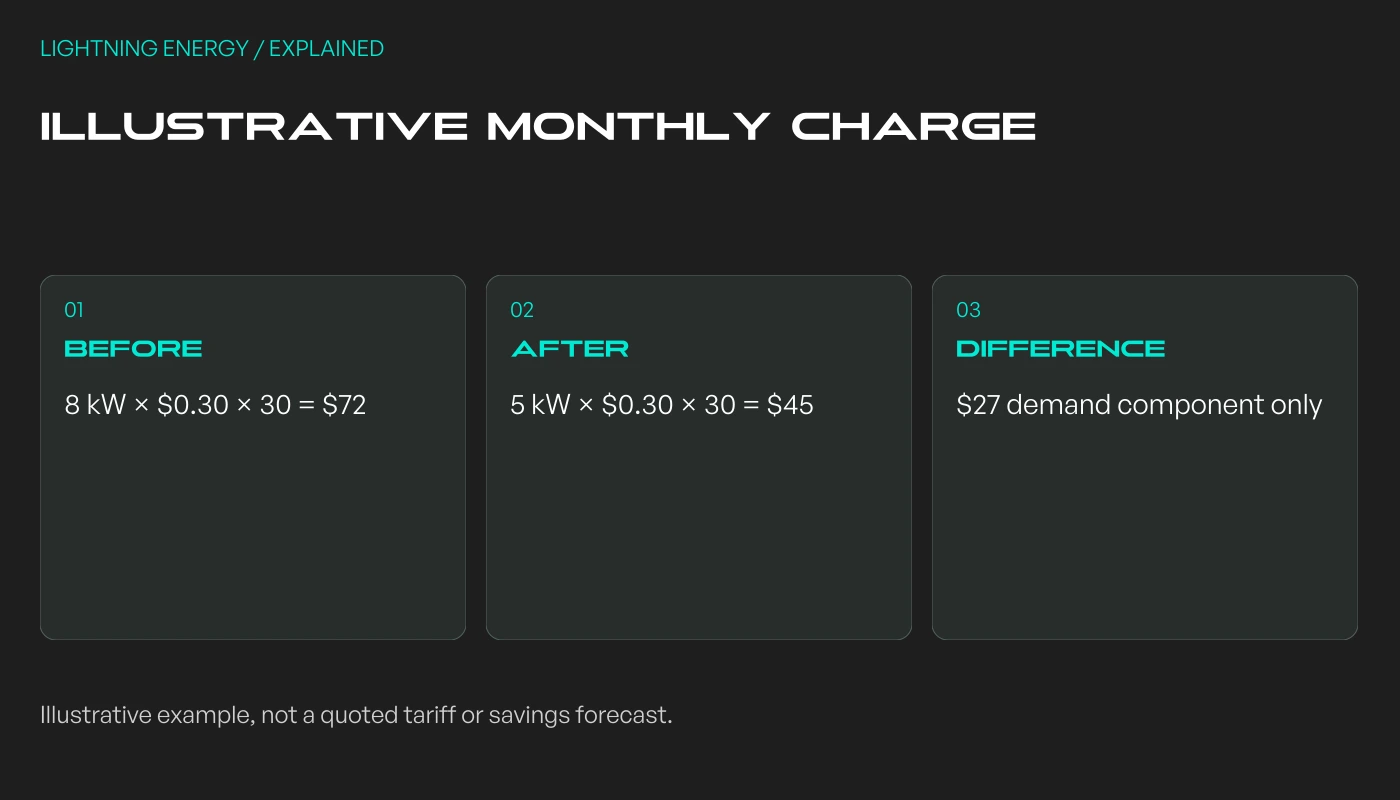
Suppose a fictional plan bills the month's highest eligible 30-minute average import at $0.30 per kW per day. Over a 30-day period, an 8 kW peak would create a demand charge of 8 × $0.30 × 30 = $72.
If suitable control kept every eligible interval at or below 5 kW, that component would be $45. The difference is $27 for that month. These are illustrative numbers, not a retail offer or savings forecast.
Reducing one evening peak is insufficient if another eligible interval still reaches 8 kW. Nor does the calculation include energy bought to recharge the battery, conversion losses or equipment costs.
Illustrative example, not a quoted tariff or savings forecast.
Ask what the battery can sustain
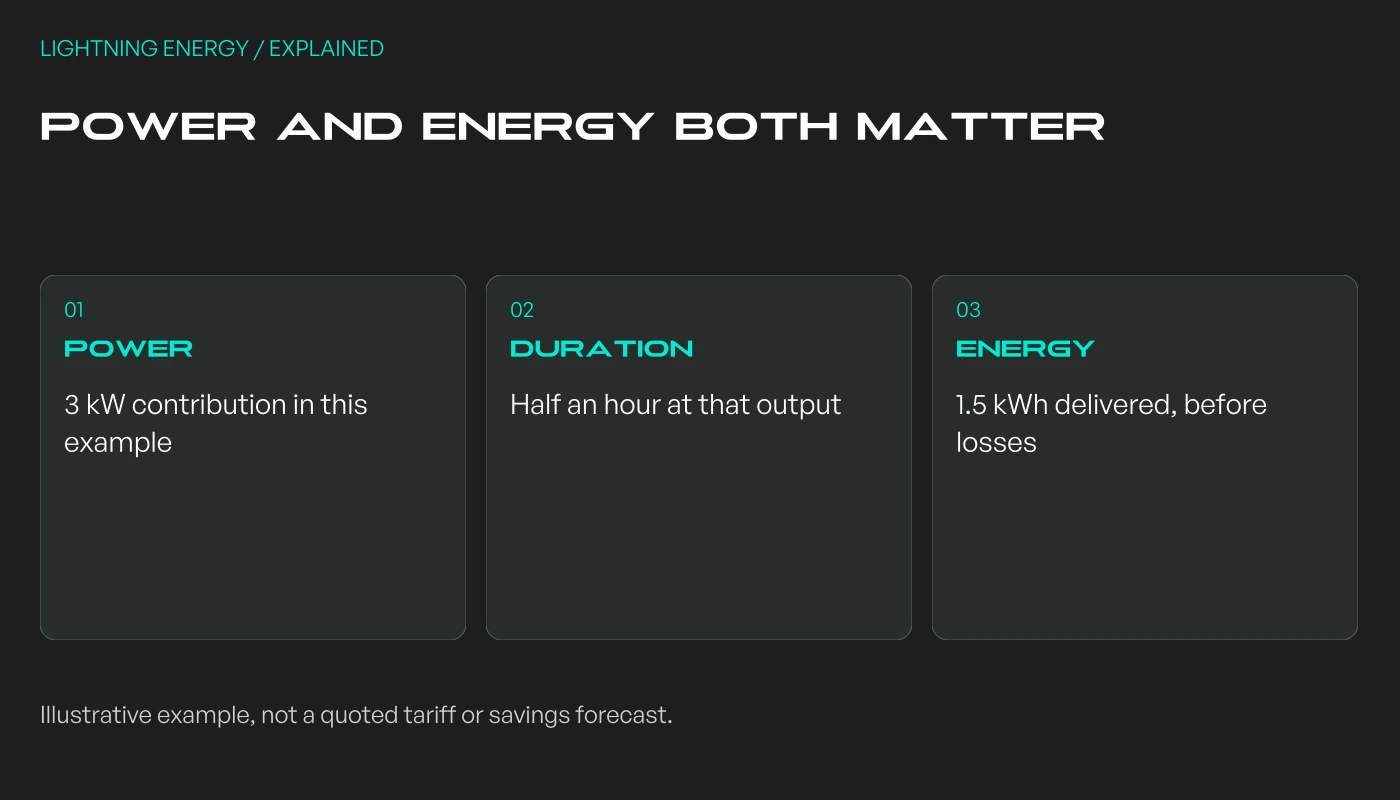
In that example, meeting an 8 kW household load while limiting grid import to 5 kW requires 3 kW from another source. Sustaining that contribution for half an hour requires 1.5 kWh delivered, before allowing for losses.
That arithmetic is a design question, not a recommended battery size. Check continuous discharge power, available charge, operating reserve and whether the control system actually supports the intended import limit.
A battery already emptied by normal evening use may have little left for a later peak.
A reserve kept for blackouts also changes what is available.
Illustrative example, not a quoted tariff or savings forecast.
Compare simpler changes too
An EV starting at the same time as cooking and heating is a useful event to investigate. A different charging schedule or compatible load control may reduce overlap without adding battery capacity.
For home EV charging, tell the installer that billed demand matters as well as connection capacity. Those are related questions, but staying within the electrical supply limit does not necessarily minimise the bill.
A lower demand charge can be offset by higher energy or daily supply charges.
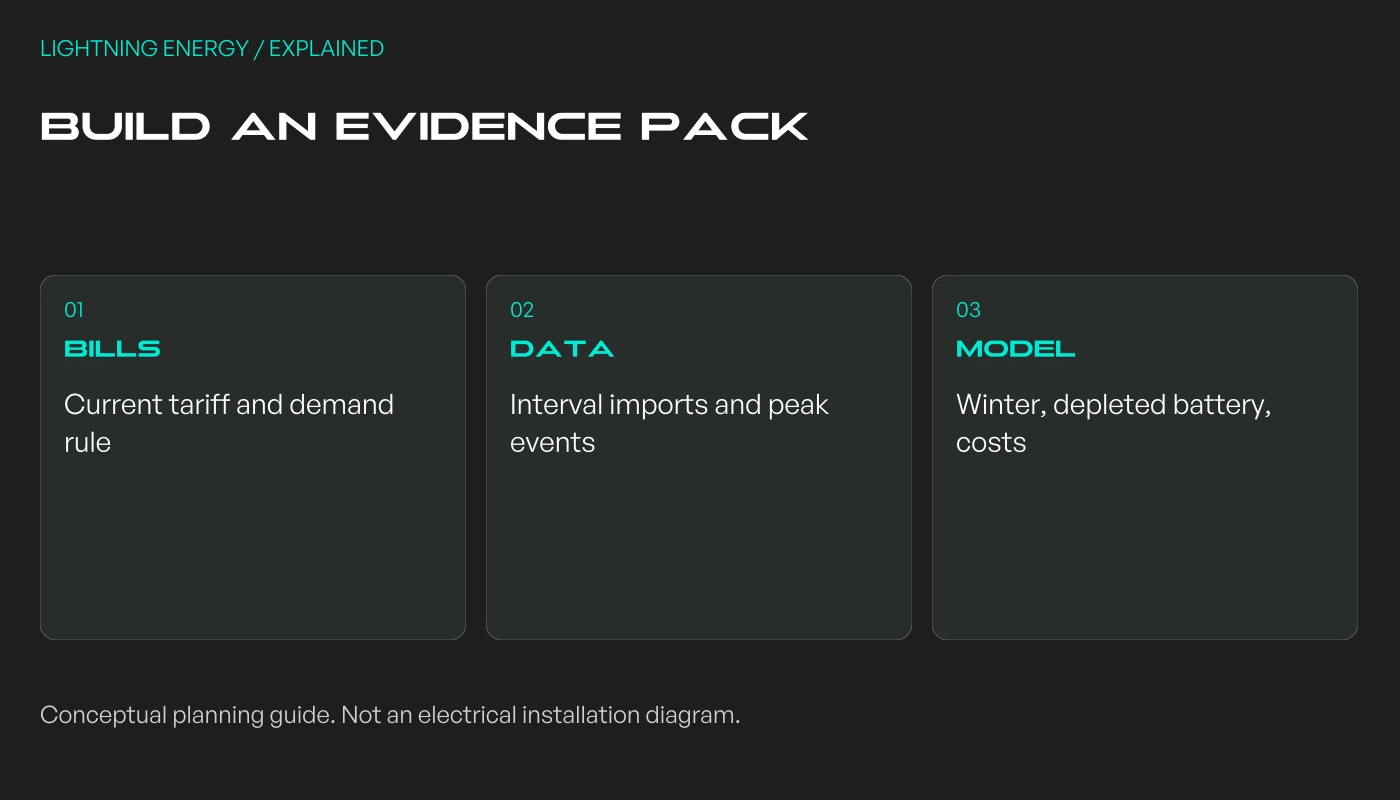
Conceptual planning guide. Not an electrical installation diagram.
Bring evidence to a quote discussion
Collect recent bills, your plan document and downloadable interval consumption. Mark unusual events, such as visitors charging a car, and distinguish a typical month from a one-off peak.
Ask for a model using those records, including winter operation and a day when the battery is depleted. Request separate estimates for energy savings and demand savings so the same benefit is not counted twice.
Contact Lightning Energy with that information before selecting a system. The useful outcome is a design and control strategy matched to the tariff, with assumptions you can check afterwards.
Book a consultation and we'll map solar, storage, hot water, and the rebates around your bills and your goals.
Loading consultations…
Lightning EnergyPlan your next energy upgrade.
⚡
Hi, I’m Lightning Energy’s project guide. I’ll ask a few practical questions, explain what usually matters for your project, and help you decide on a useful next step — no guesswork or sales pressure.
First, what kind of property are we planning for?