
Can a Small Battery Make Sense with a 5 to 6.6 kW Solar System?
A small battery can suit some 5 to 6.6 kW solar homes. Use seasonal surplus and evening demand to compare useful capacity, fixed costs and alternatives.
A small battery can suit some 5 to 6.6 kW solar homes. Use seasonal surplus and evening demand to compare useful capacity, fixed costs and alternatives.

A small battery can make sense with a 5 to 6.6 kW solar system, but panel capacity alone cannot establish that. The important questions are how much energy remains after daytime use and how much useful demand follows later.
Two homes with the same panels can have very different storage opportunities. One may export regularly while everyone is away; another may already consume most generation through heating, hot water or work-from-home demand.
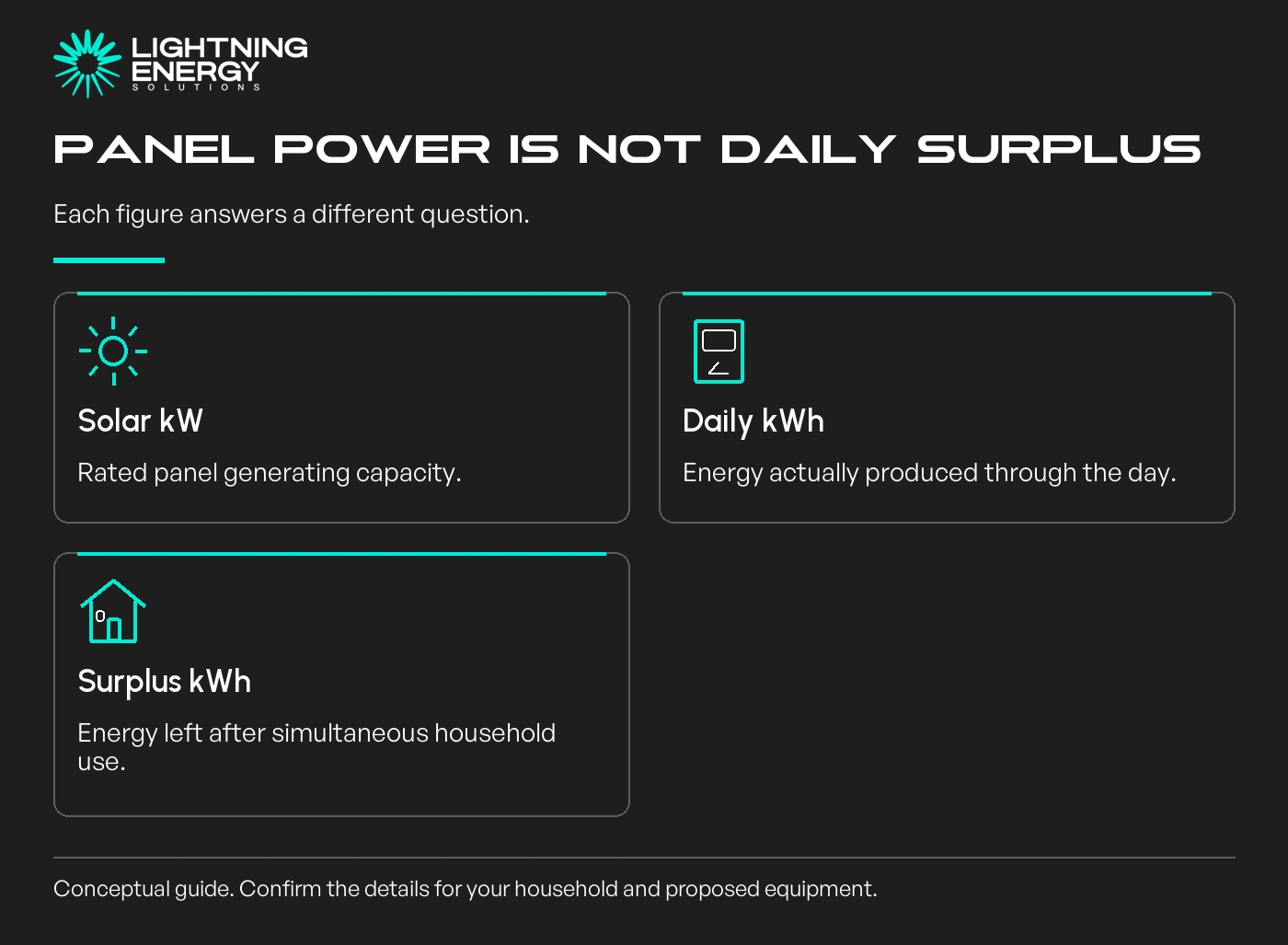
Solar array size is its rated generating power. It is not the number of kilowatt-hours generated every day, and it does not tell you how much of that energy is surplus.
The Australian Government's sizing guide explains panel and inverter capacity and recommends using bill or interval data to improve system estimates.
Australian Government solar sizing guide.
Our solar service overview covers the roof and equipment assessment behind the generation side of the decision.
Use representative seasonal records rather than multiplying the panel rating by an assumed number of sunshine hours. Roof orientation, shade, weather and household use change the result.
Imagine a hypothetical home exporting 6 kWh during a representative day and importing 4 kWh after solar production falls. There may be a useful small-storage opportunity, allowing for losses and operating limits.
Now consider the same home on a winter day with only 1 kWh surplus. A larger battery would not manufacture the missing solar; the charging strategy and economics would need separate assessment.
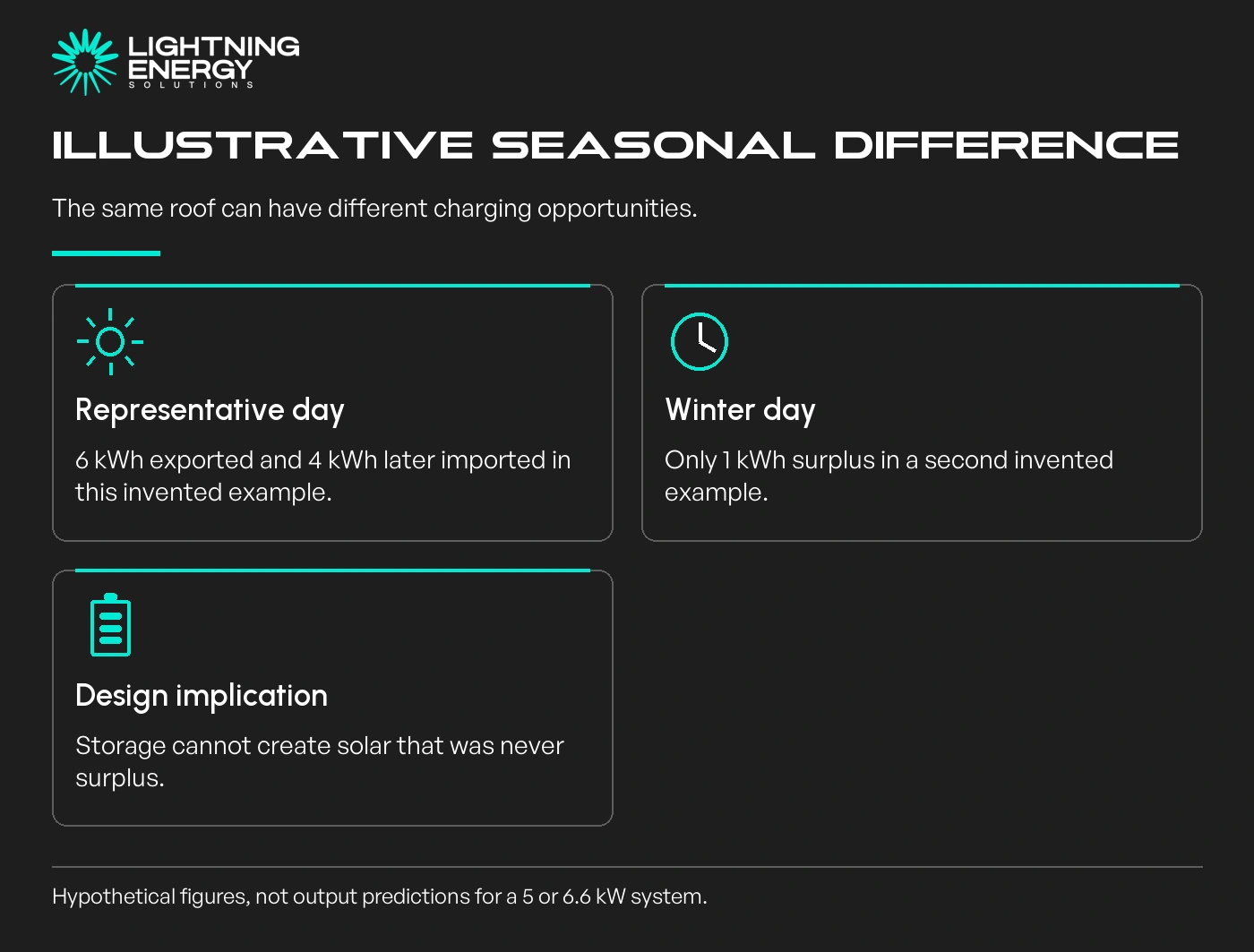
The example is deliberately simple. A proper estimate uses timing, charge and discharge power, usable capacity and reserve, rather than only matching two daily totals.
Our battery value guide explains how the useful energy movement becomes a financial comparison.
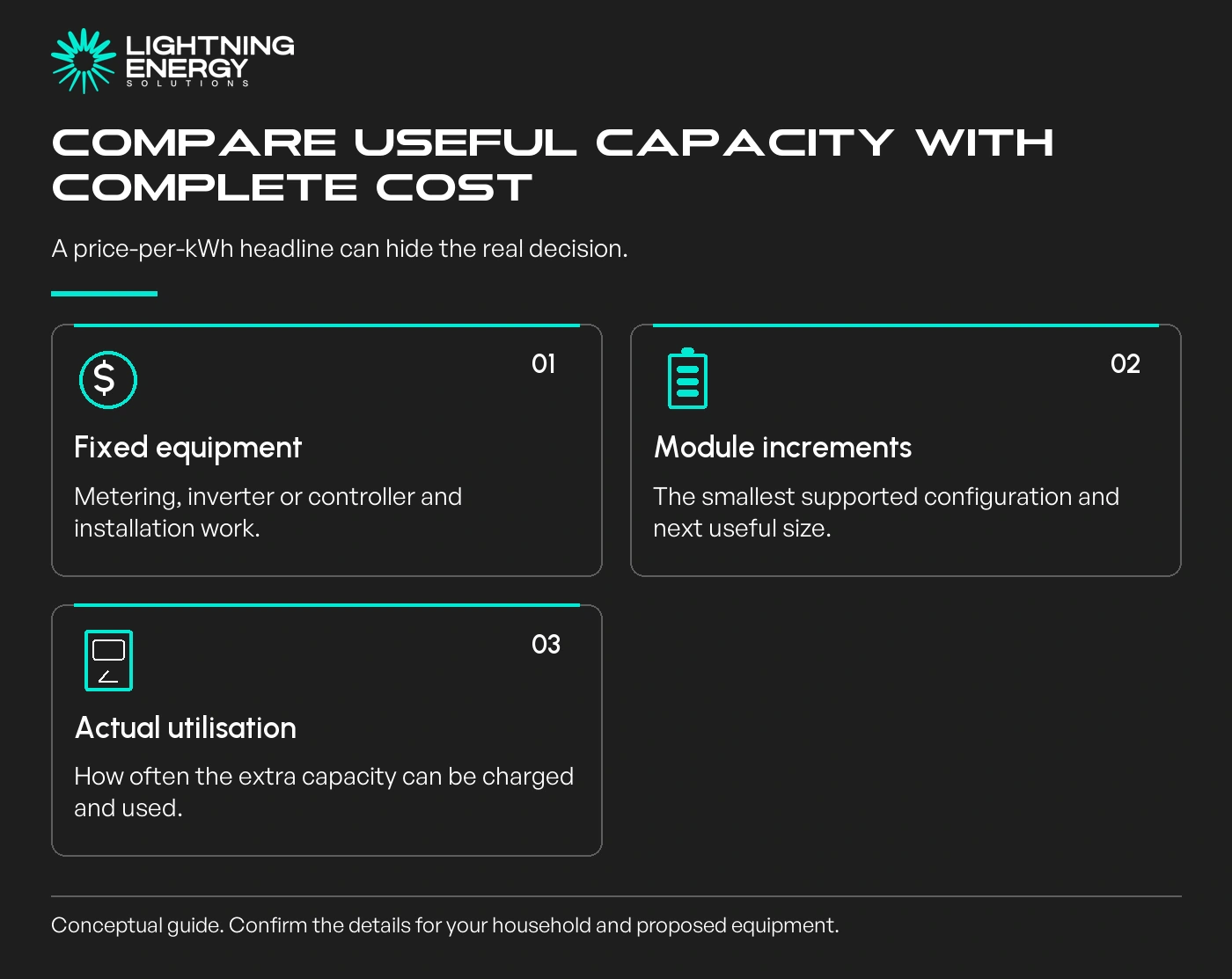
Smaller systems can still require metering, an inverter or controller, electrical work and commissioning. Those costs do not necessarily shrink in proportion to storage capacity.
Conversely, a larger model with a lower advertised cost per kWh is not automatically better value if much of its extra storage is rarely used. Compare the complete installed prices and realistic delivered energy.
A product's available module increments can also affect the choice. Ask for the smallest supported configuration that meets the household brief, alongside the next practical size if relevant.
A battery assessment should explain what each increment adds in usable energy and whether it changes output or backup capability.
Before buying storage, consider whether suitable appliance demand can move into solar hours. Government guidance recommends getting more from solar through practical household energy use.
Australian Government solar-use guidance.
Hot-water recovery, EV departure needs and comfort still matter. Do not propose a schedule that leaves the household without a necessary service simply to improve a self-consumption percentage.
If direct daytime use already absorbs most surplus, the solar-charged battery case may be weaker. Grid-tariff shifting is a different calculation and needs its own rates, permissions and loss assumptions.
A small battery may provide useful backup for a carefully chosen essential-load set, if configured for it. It should not be assumed to run every appliance through a long cloudy outage.
Ask for a realistic load list and a clearly qualified runtime illustration. Energy capacity, output and supported circuits remain separate constraints.
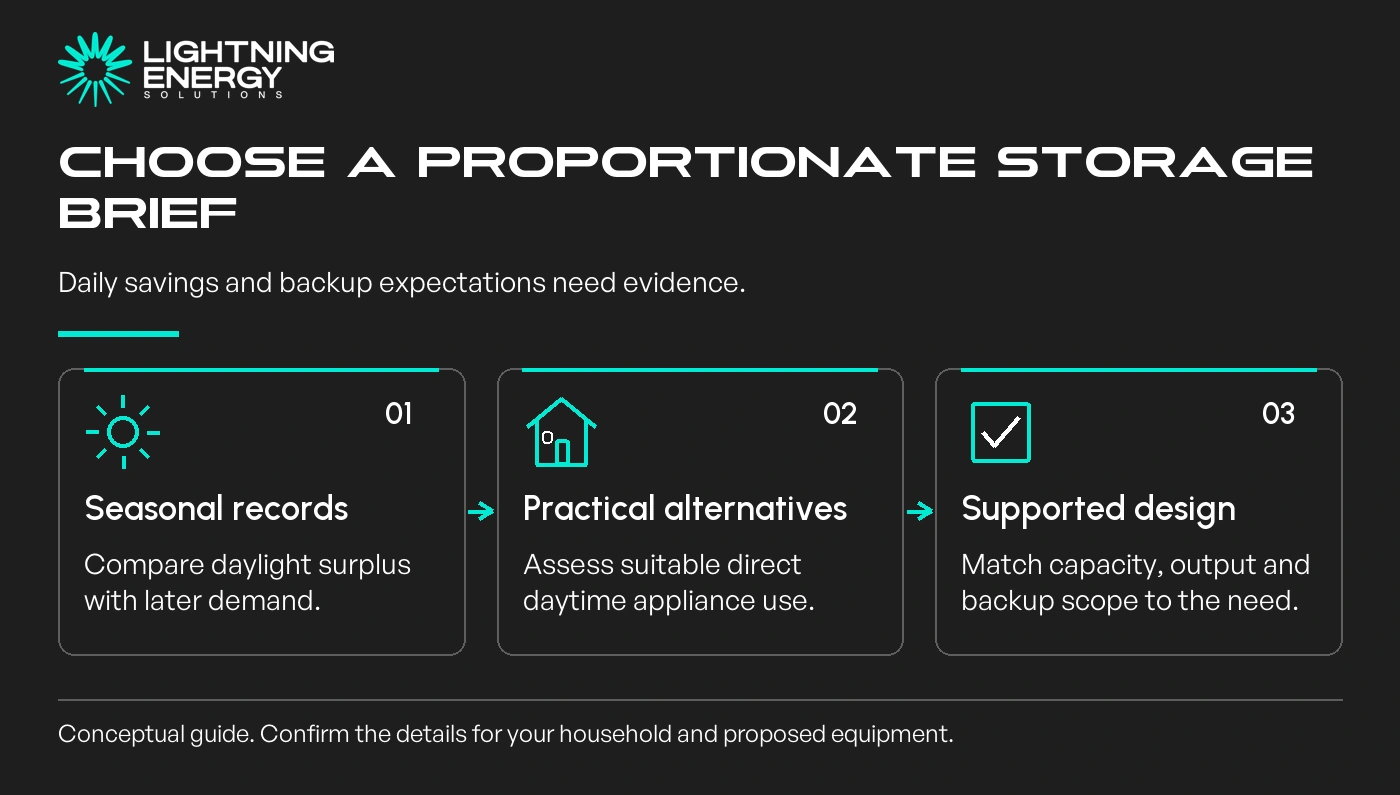
Choose the smallest system that usefully meets the assessed need, or postpone storage if the evidence is weak. The right answer is not determined by the solar system's headline size alone.
Plan your battery upgradeBring a year of interval data if available, plus your existing solar details. We can compare modest storage, practical daytime use and seasonal backup expectations against complete installed costs.Available times
Book a consultation and we'll map solar, storage, hot water, and the rebates around your bills and your goals.
Question 1 of 6
