Batteries

Is a Home Battery Worth It in 2026? An Honest Victorian Answer

Batteries aren't a scam, but 'worth it' isn't one answer either. Here's how I'd actually work out whether one makes sense for your place, your solar, and your bills in 2026.

LukeLightning Energy21 September 2026 · 9 min read
Is a Home Battery Worth It in 2026? An Honest Victorian Answer

I hear this question a lot right now: is a home battery actually worth it, or is it just a good rebate story? Honestly, the answer depends on things that have nothing to do with the marketing.

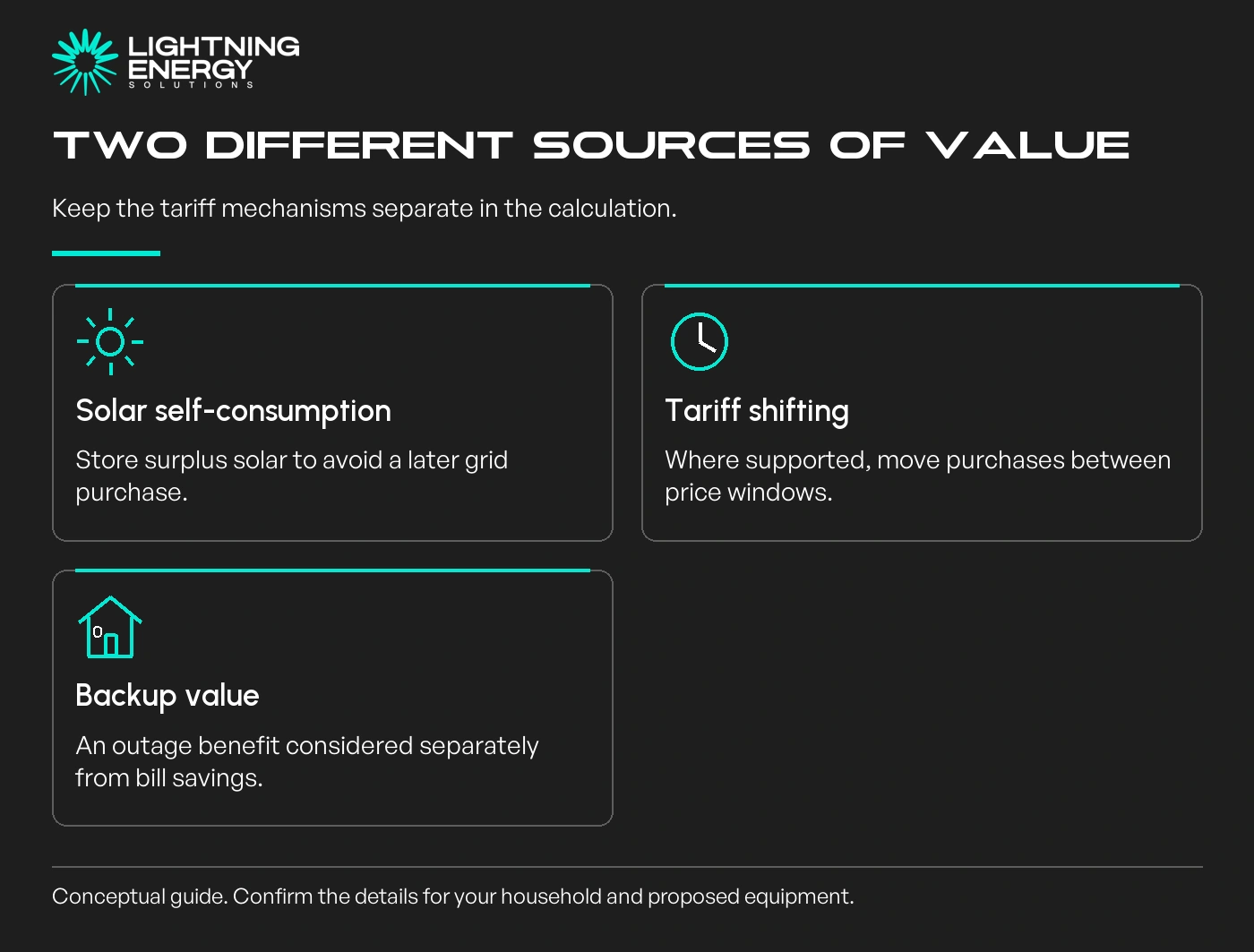
So let's separate the two questions people usually mash together. Does a battery save you money? And do you want blackout protection? These have completely different maths, and conflating them is how people end up disappointed.

Two different reasons to buy a battery

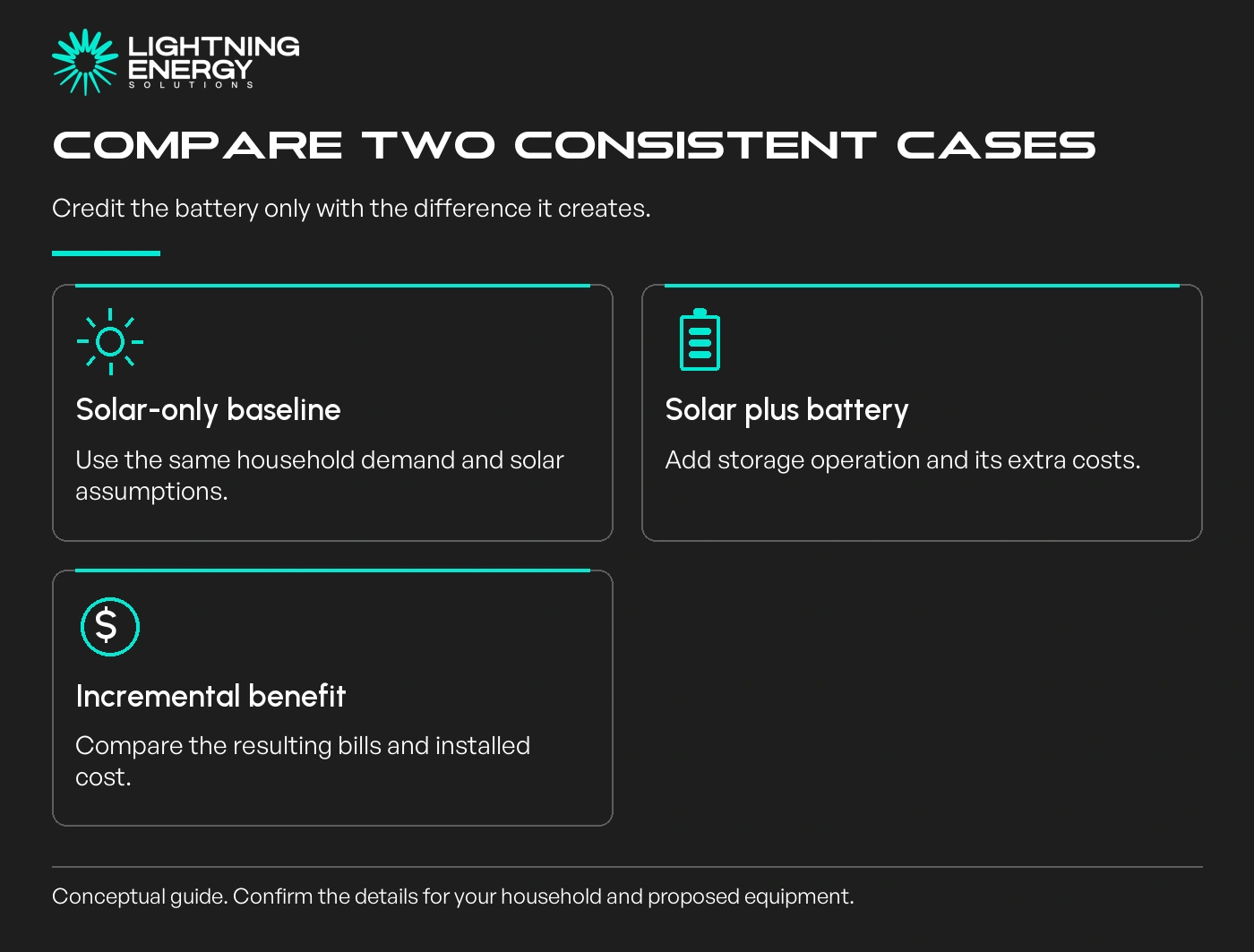
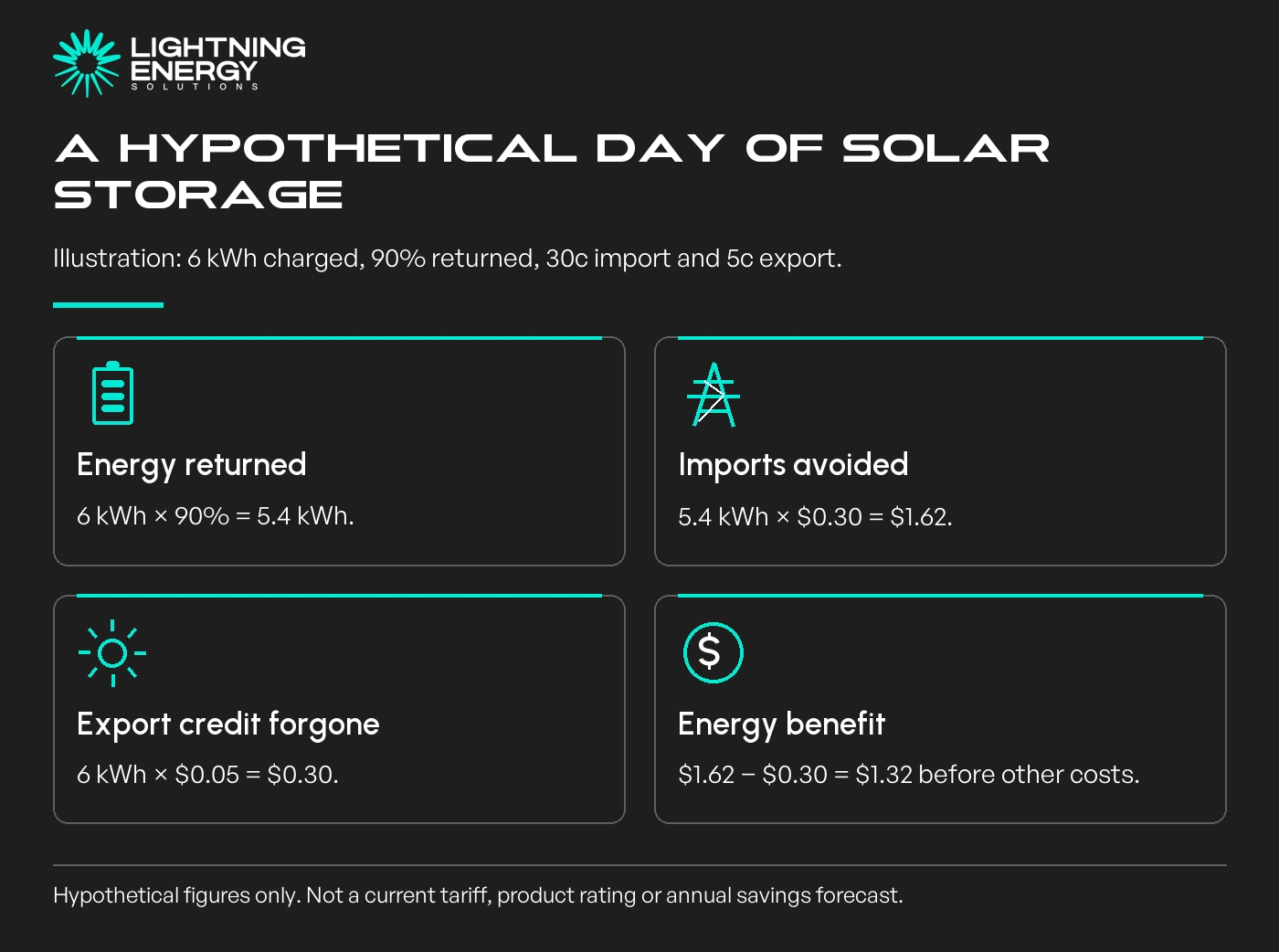
The bill-savings case is a spreadsheet problem. It lives or dies on the gap between what you're paid to export solar and what you're charged to import power in the evening peak.

The blackout case is an insurance decision. You're paying for peace of mind during outages, not chasing a return on investment. Both are legitimate, but be honest with yourself about which one you're actually buying for.

Why 2026 changed the bill-savings maths

Here's the thing that's actually shifted this year. Victoria's minimum feed-in tariff was deregulated from 1 July 2025.

Retailers are no longer required to pay anything above zero for your exported solar, per the Essential Services Commission.

The Victorian Government's own explainer confirms the same thing: the market has moved to a near-zero, retailer-set rate rather than a guaranteed minimum.

In previous years, when a minimum feed-in tariff was still mandated, exporting solar made more financial sense than it does now. That's genuinely changed.

Evening peak import rates haven't gone anywhere. They vary a lot by distribution zone and retailer plan.

There's no single 'average' rate I can hand you here, because deregulation means every retailer sets its own number. Your own bill is the only reliable guide to where you actually sit, and if you want us to read it with you, get in touch.

So the maths that used to say 'export your solar and get paid for it' now says 'store your solar and use it yourself, because selling it gets you almost nothing.'

That's the real 2026 story. A battery's value has quietly shifted from an export-income tool to a self-consumption tool.

If you've got solar sitting on your roof exporting into a near-zero tariff every afternoon while you pay a much higher rate for grid power after dark, that gap is exactly what a battery is built to close.

Does this actually apply to you?

Before you go further, pull your last three power bills and look at two numbers: how much solar you're exporting, and how much you're paying for evening grid import.

  • You already have solar installed and it's producing more than your household uses during the day
  • Your export credit is tiny or near-zero on your current retailer plan
  • You use a decent chunk of power after 4pm: dinner, heating or cooling, an EV charging overnight
  • You're on, or can move to, a time-of-use plan that actually rewards shifting usage into daylight hours

If most of those apply, a battery has a genuine job to do in your home. If you tick one or none, the honest advice is different, and I'll get to that.

What it means for your wallet

I won't pretend a battery pays for itself quickly, because it doesn't, not at current tariffs. Our home battery cost guide has the full price breakdown by size.

My baseline estimate of 8 to 10 years assumes near-zero export value and an evening import rate somewhere in the high-20s to low-30s cents per kWh, roughly the middle of Victoria's tariff range.

If your evening peak runs higher than that, payback tends to shorten.

If your rate is lower, it stretches out. Check your last few bills to see which side of that you're actually on, or get in touch and we'll model your specific tariff.

That baseline also assumes a typical system such as an 8kWh unit.

Warranty terms and degradation profiles vary by brand and battery chemistry, so the exact payback number shifts with the model you choose. Check your model's warranty documentation for its specific capacity retention guarantee.

What I will say plainly: that's not a spectacular return on paper.

An 8-10 year payback landing near a warranty's end isn't guaranteed for every system. That's exactly why the specific model matters, not just the category.

You're not just breaking even and then losing the asset. You keep getting the benefit for however many years the battery has left in it after that.

8-10 yearsTypical estimated payback for an 8kWh battery in Victoria at current tariffsBased on near-zero export value and evening import rates roughly in the high 20s to low 30s cents per kWh, the middle of Victoria's range. Individual results vary with usage and tariff. This is an estimate, not a quote.

The rebate helps, but don't let it drive the size decision

The federal Cheaper Home Batteries Program is live and does knock a real amount off the upfront cost, but it's tiered, not flat. You get the strongest per-kWh benefit on the first slice of capacity, roughly the first 14kWh, with the rate dropping off on anything beyond that. We've broken down the exact tier thresholds and per-kWh values in our Cheaper Home Batteries Program explainer.

That matters because I see people get talked into a bigger battery than their household needs, on the logic that 'the rebate makes it cheap.'

It doesn't, not proportionally. A 10kWh system gets rebated at the full rate all the way through, while a 20kWh system only gets that full rate on its first slice and a much thinner benefit on the rest.

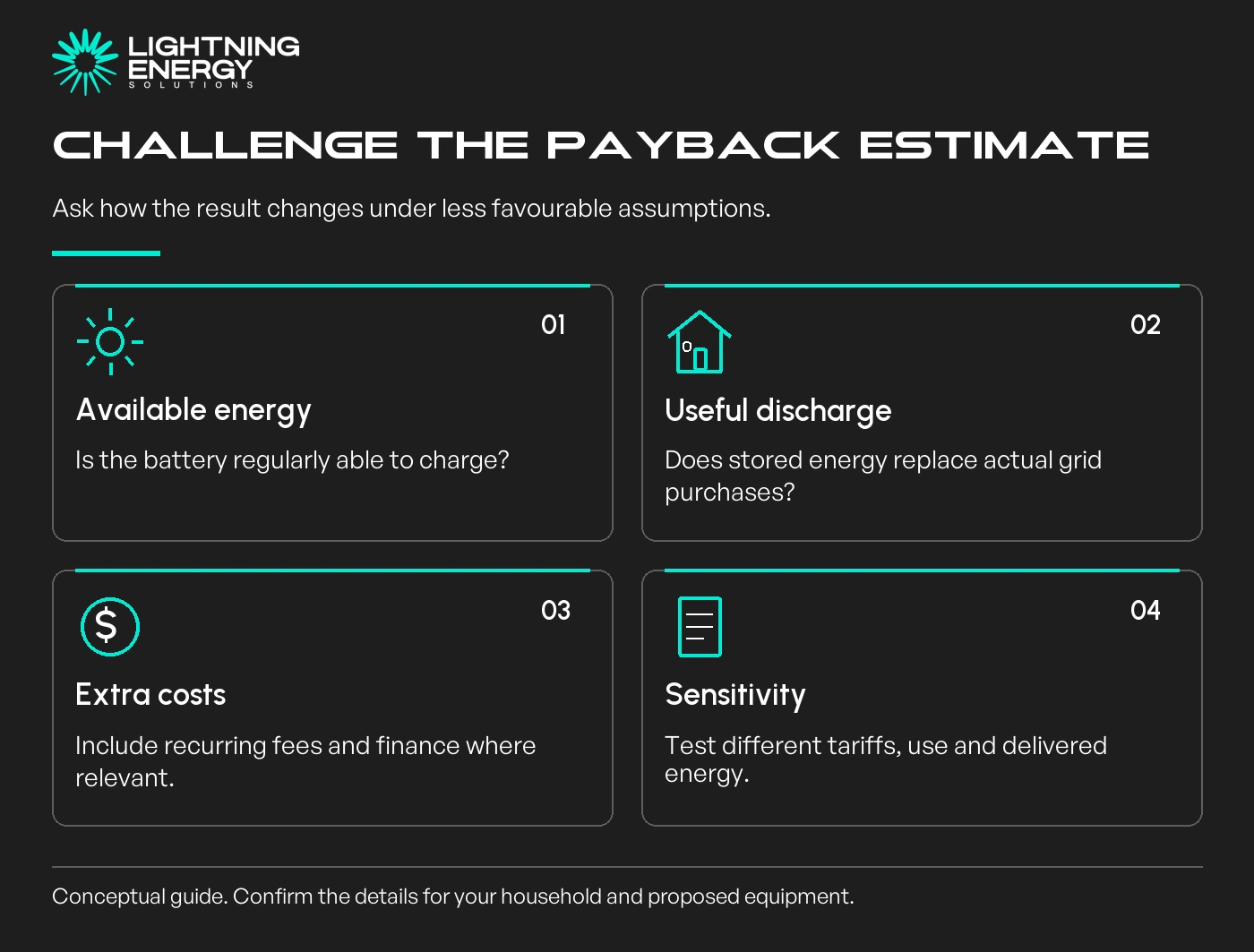
If a household uses 5 kWh from a battery with 15 kWh usable capacity in one evening, that is one-third of the capacity. It does not measure the fraction of time the battery is idle. Check regular energy use, charging availability and backup reserve before paying for additional capacity.

Size the battery to your actual evening usage gap, not to the biggest number the rebate makes palatable.

The costs that don't show up in the pitch

A few things quietly change the real-world return that don't get much airtime in a sales conversation.

  • Degradation: batteries lose some capacity over their life. Check your specific model's warranty documentation for its capacity retention guarantee at year 10, since this varies by brand and chemistry and directly affects how much value you're still getting once you've reached payback
  • Warranty and support quality: a cheaper battery from a brand without solid local backing can turn a fault into an expensive, drawn-out headache rather than a quick warranty fix
  • Switchboard and inverter compatibility: older installations sometimes need extra electrical work to accept a battery, which adds to the install cost beyond the battery itself
  • Oversizing for the rebate: as above, a bigger system doesn't automatically mean a better return

None of these are reasons to avoid a battery. They're reasons to ask sharper questions before you sign anything, and to be sceptical of a quote that skips over them entirely.

The Victoria-specific picture in 2026

Victoria doesn't have a state battery rebate stacked on top of the federal one. The old Solar Victoria interest-free battery loan closed in May 2025, and nothing has replaced it.

That's why interstate comparisons can look different: some other states still run their own battery incentives alongside the federal program, while Victoria now has federal-only support.

Some retailers are beginning to pilot cheaper daytime time-of-use windows for 2026-27, sometimes called 'solar soak' tariffs, designed to encourage shifting charging (EVs, batteries, hot water) away from the evening peak. Availability is patchy and structures differ. Ask your retailer directly whether they offer one and exactly when it runs.

If your retailer has one, it can change both when you'd want your battery charging and your payback, since more of your usage shifts into a cheaper window.

For now, the practical takeaway is this: check what tariff structure you're actually on before you assume the standard payback numbers apply to you. A flat tariff charges the same rate all day regardless of when you use power, so shifting usage with a battery earns you nothing on a flat plan. If your bill shows one rate around the clock, you're likely on flat. If it shows different rates for different times of day, you're on time-of-use, where a battery has room to work.

Who I'd tell to buy now, and who I'd tell to wait

If you already have solar, you're exporting into a near-zero tariff, and you use a solid chunk of power after 4pm, the case is genuinely there.

Any bill saving should be assessed separately from backup. Blackout supply requires a supported installation, suitable switching equipment and specified circuits and operating limits.

Without solar, a supported battery may charge from the grid under a suitable tariff, but the costs, losses and applicable incentive conditions need separate assessment. The government battery guide explains the different operating arrangements; it does not establish one universal payback.

If you're on a flat tariff, or planning to move house in the next couple of years, I'd hold off. The payback horizon is long enough that you want to be reasonably settled to see the benefit.

A battery bolted onto a mismatched setup won't produce the savings it's being sold on. Fix the setup first.

Luke Cove

An honest yes or no on timing

If the numbers already work for your household, I wouldn't wait around for a better deal to appear.

The published federal schedule reduces the applicable factor over time. Check the actual installation date and current rules. This schedule does not predict future hardware prices.

What to do next

Pull your last three bills and check your export credit against your evening import rate. That single comparison tells you more about whether a battery is worth it than any brochure will.

Send through your last few bills and we'll model the payback for your actual usage and tariff, or simply get in touch to talk through whether timing makes sense for your situation, against a properly sized home battery rather than a rebate-maximised one.

Want the real numbers for your place?Send through your last few bills and we'll model whether a battery actually stacks up for your household, honestly, with no pressure to buy bigger than you need.Get a free assessment

Available times

Ready to talk about your own home?

Book a consultation and we'll map solar, storage, hot water, and the rebates around your bills and your goals.

Loading consultations…