
Choosing a heat pump installer: what matters beyond the brand
Choose a heat pump hot water installer by checking the site survey, appropriate trades, model knowledge, complete scope, commissioning and local support.
Choose a heat pump hot water installer by checking the site survey, appropriate trades, model knowledge, complete scope, commissioning and local support.

The heat pump brand is only one part of a good hot water installation. The installer must match the system to your household, choose a suitable location and coordinate the required plumbing, electrical and any gas work.
Ask who takes responsibility for the completed result, including controls and aftercare. A low equipment price is not enough if the site or installation scope remains unclear.
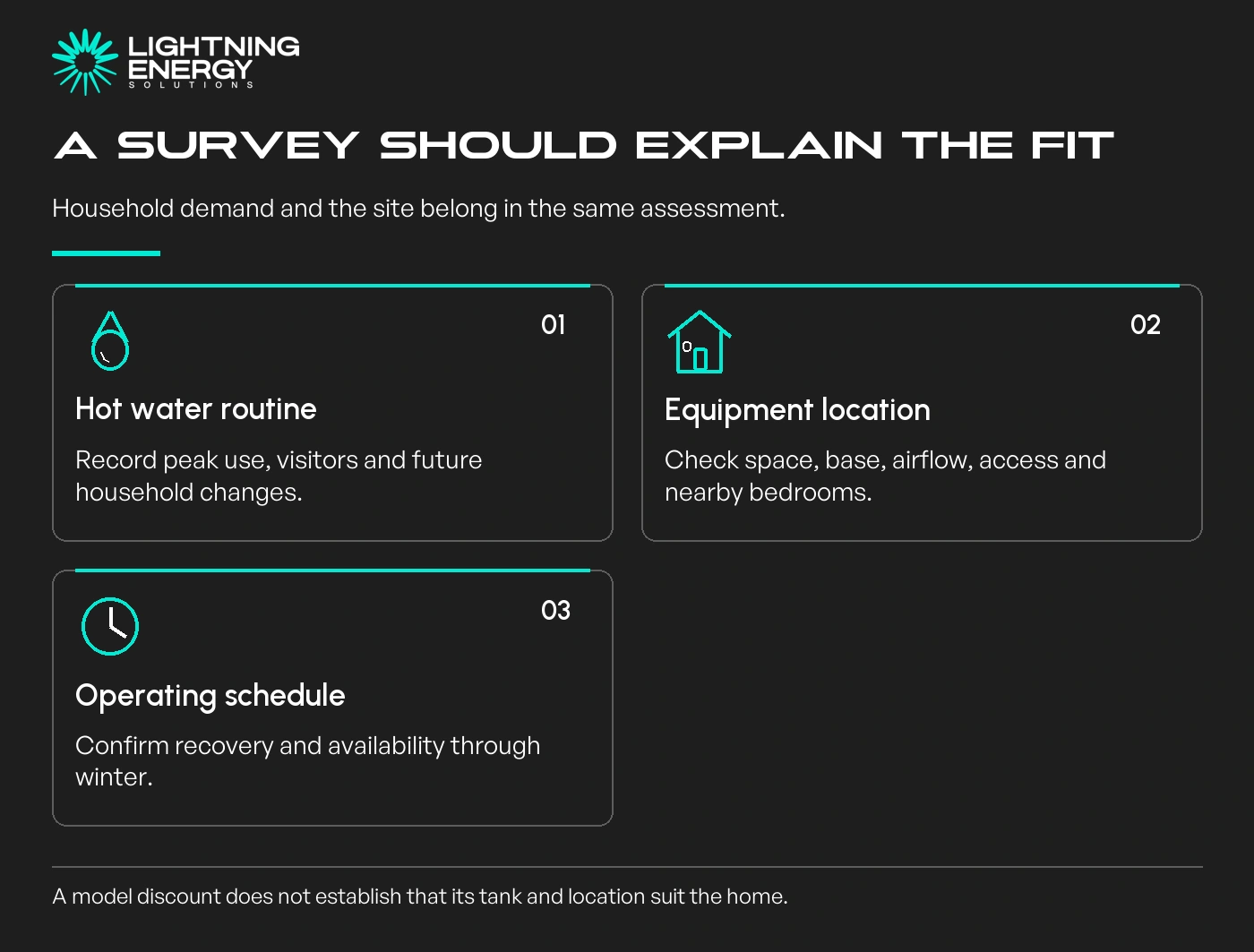
Describe normal shower times, baths, visitors and any change in household size. Ask how tank capacity, recovery and the proposed operating schedule meet that demand through Melbourne winter conditions.
Have the installer inspect the proposed location, access, base, airflow, drainage and nearby bedrooms. An integrated unit and a split arrangement can have different placement options.
Solar Victoria’s planning guide discusses layout, siting and operating considerations.
For an illustrative household replacing a wall-mounted instantaneous gas heater, the survey needs to find a suitable tank location rather than assume the old appliance footprint is adequate.
Our heat pump options should be narrowed after that assessment. Ask why the selected model suits the site and routine, not only whether it is currently discounted.
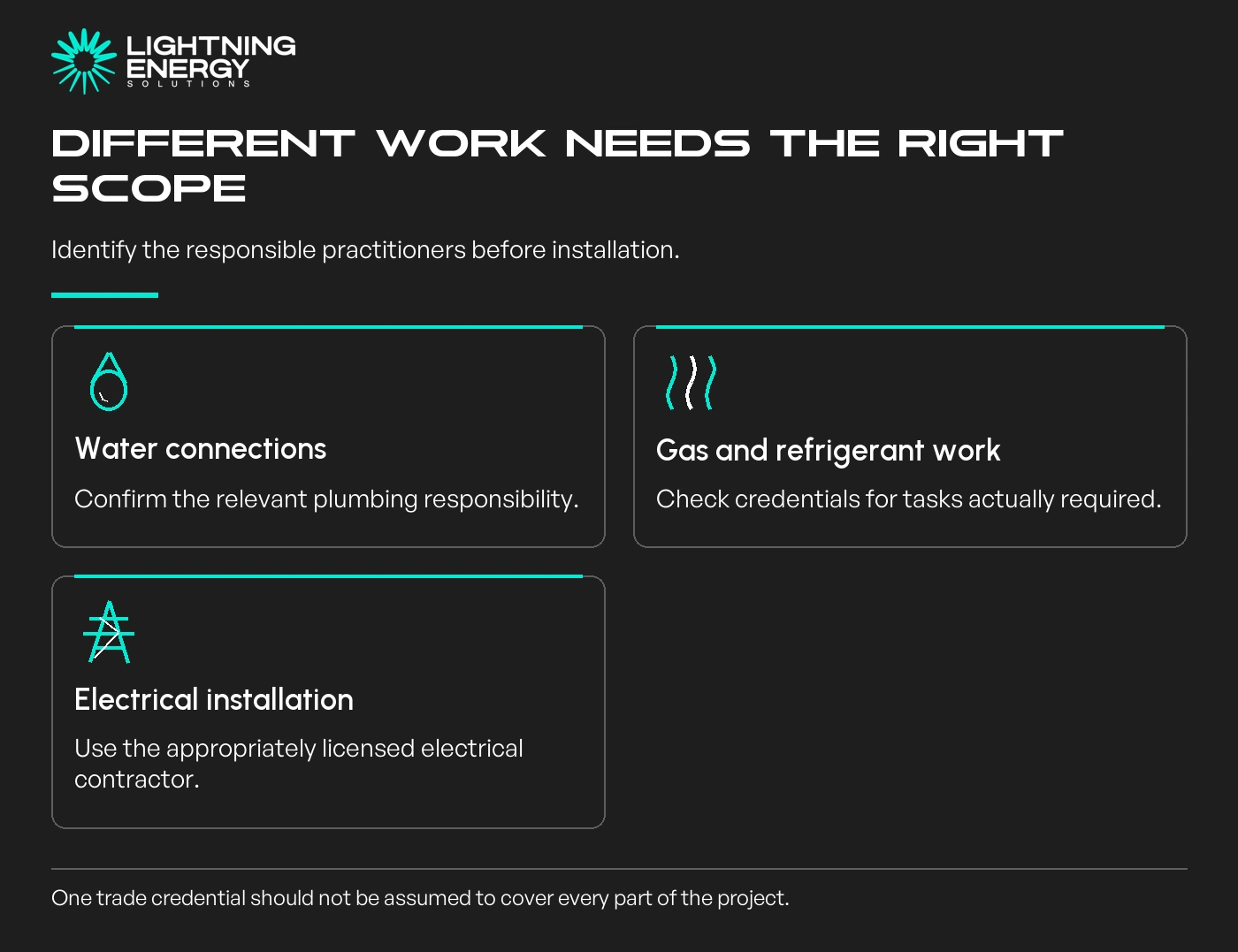
Ask who carries out water connections, gas decommissioning, electrical work and any refrigerant-related work. Confirm relevant licensing and scope for the actual system rather than assuming one credential covers every task.
The Building and Plumbing Commission distinguishes split heat pump installation from additional water-supply and gasfitting work, and identifies the need for an appropriately licensed electrician for electrical work.
Ask about experience with the proposed model and access to its current installation and service information. Installation familiarity should include commissioning and fault diagnosis, not merely carrying the tank into place.
Coordinate the electrical supply assessment where other large appliances are planned, so the hot water circuit is considered in the household context.
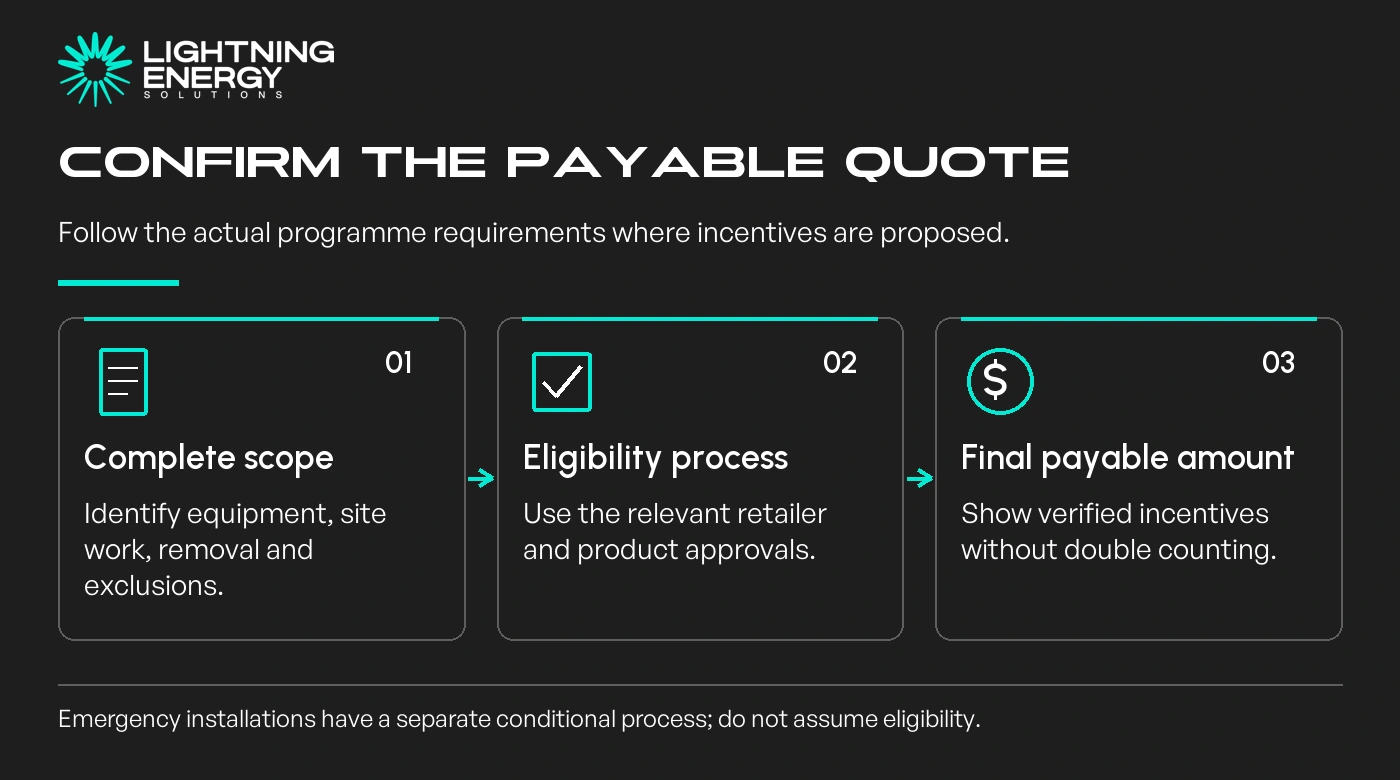
The written scope should include exact equipment, tank base, pipework, insulation, valves, drainage, electrical work, old-system removal and disposal. Ask which site-dependent items remain allowances or exclusions.
Solar Victoria recommends comparing installer experience, complete costs, maintenance and component warranties when selecting a supplier.
Solar Victoria’s installer guide.
If applying for its hot water rebate, use the authorised retailer and eligible-product process. Ordinary applications require eligibility confirmation before installation; the programme has a separate emergency process with conditions.
Current hot water rebate process.
Do not deduct a generic rebate from the quote yourself. Ask the provider to confirm each applicable incentive and show the final payable total without double counting.
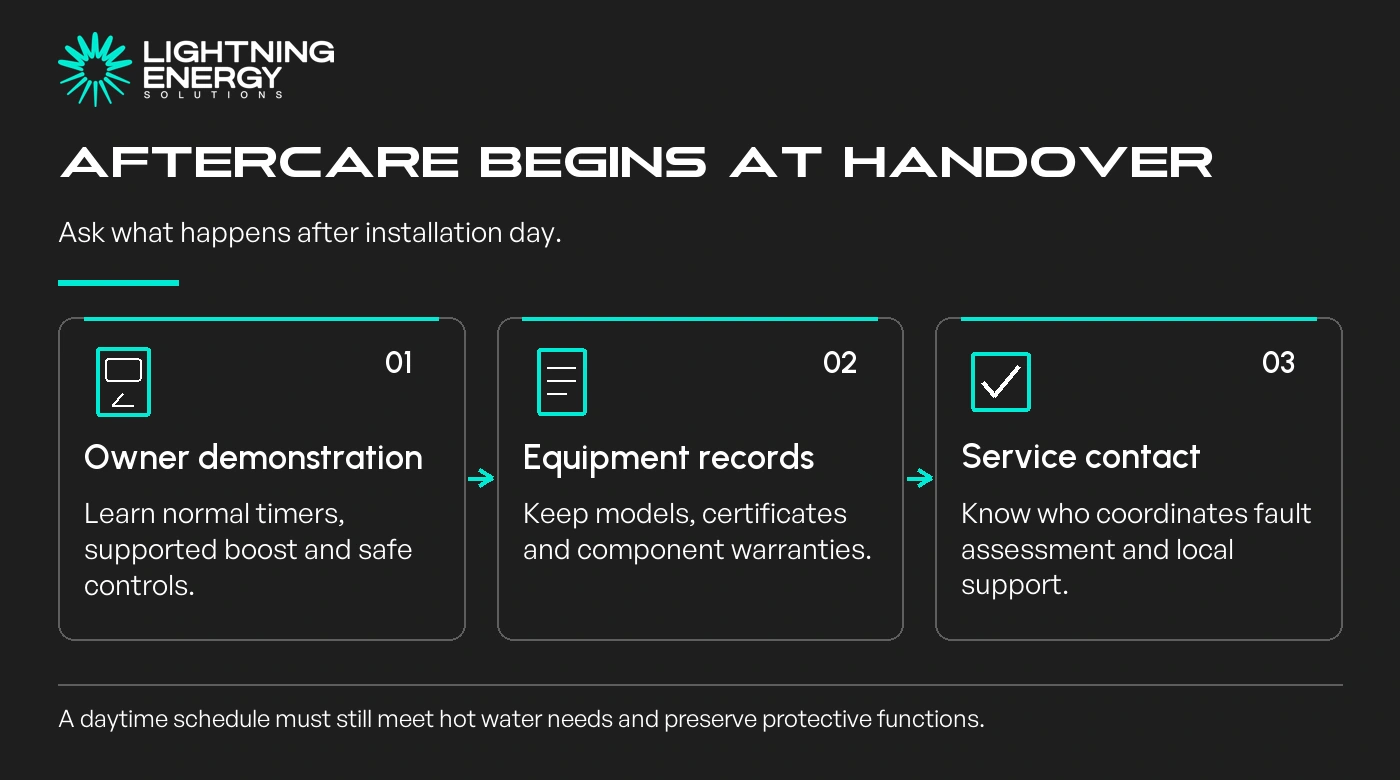
Agree a handover demonstration covering the normal timer, any supported boost function and the safe owner controls. Ask how required hygiene and protective functions remain enabled within the operating schedule.
If you have solar panels, discuss practical daytime operation without promising that every heating cycle will use only solar. The schedule still has to deliver enough hot water.
Ask who handles a fault, how local service is arranged and which component warranties apply. Keep a lead contact even if several trades attend the installation.
Confirm the required certificates, equipment records and maintenance instructions will be supplied. Ask how to report an issue if the retailer or original installer later stops operating.
Do not choose solely from online star ratings or a brand badge. Seek a clear design explanation, verified credentials and written responsibilities for the property you are actually upgrading.
Send household-use details and site photos when you request a hot water assessment. A useful quotation explains the equipment, installation and support as one complete service.
Available times
Book a consultation and we'll map solar, storage, hot water, and the rebates around your bills and your goals.
Question 1 of 6
