
Choosing a Quiet Bedroom Split System: Reading Noise Specifications
Compare bedroom split-system noise specifications on the same basis, then consider fan modes, airflow direction, heating needs and the installed location.
Compare bedroom split-system noise specifications on the same basis, then consider fan modes, airflow direction, heating needs and the installed location.

For a bedroom split system, compare the indoor sound figures for equivalent operating conditions and ask whether those conditions deliver the heating or cooling you need. The smallest advertised decibel number is only part of the decision.
Also consider air movement at the bed, outdoor-unit position and the way the system behaves overnight. “Quiet” is not a guarantee that no occupant will hear it.
Separate indoor and outdoor figures, then check whether the document reports sound pressure or sound power. Both may use decibel notation, but they are not interchangeable measurements.
Daikin’s acoustic guidance explains that these measures describe different things. A sound-pressure figure also needs its measurement conditions to be understood.
Daikin’s sound-rating explanation.
Make a comparison sheet with the exact indoor and outdoor model pair, heating or cooling mode, fan setting and acoustic measure. Leave missing information blank and request it rather than assuming equivalence.
Our air conditioning options can be narrowed after the bedroom’s actual size, exposure and overnight requirements have been assessed.
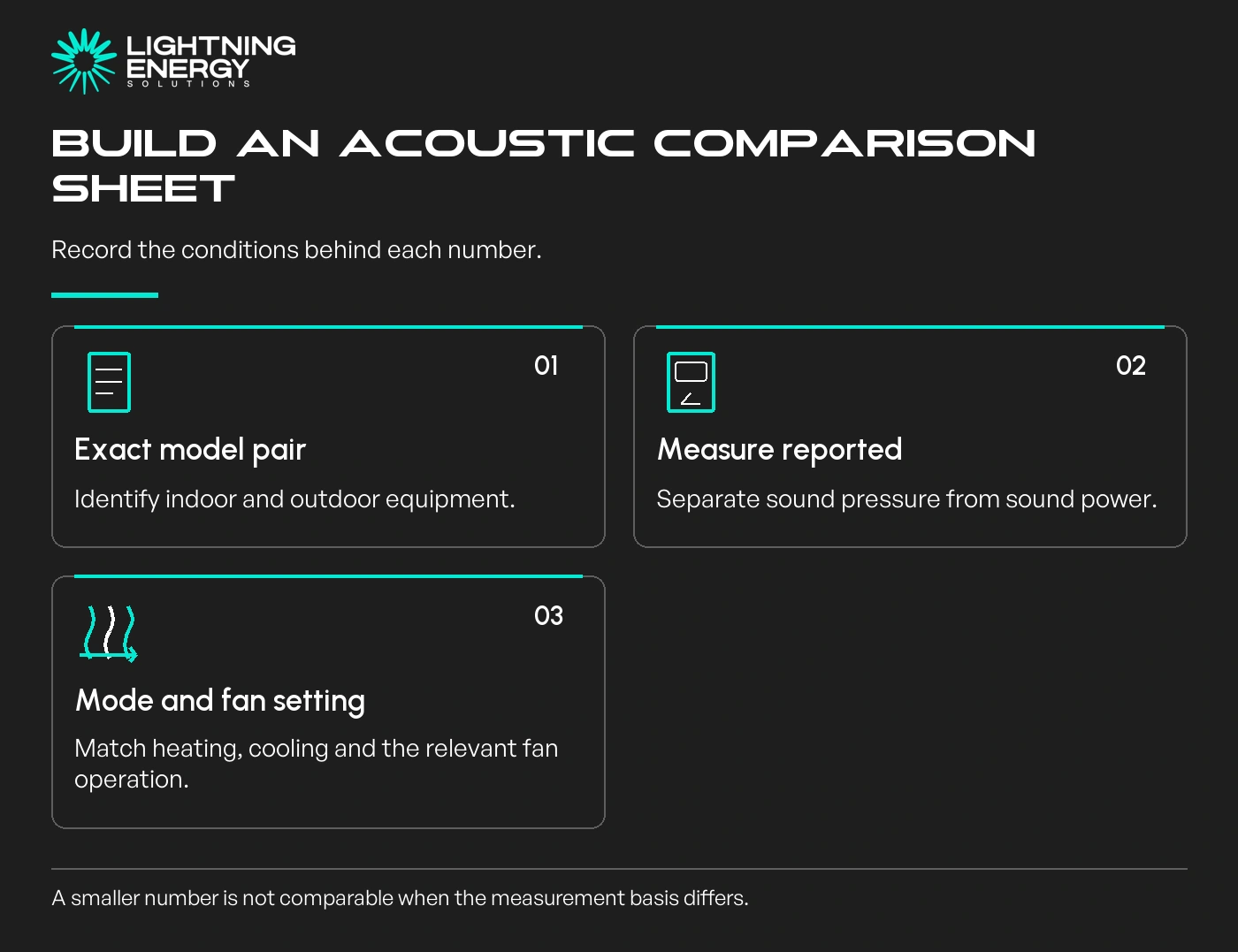
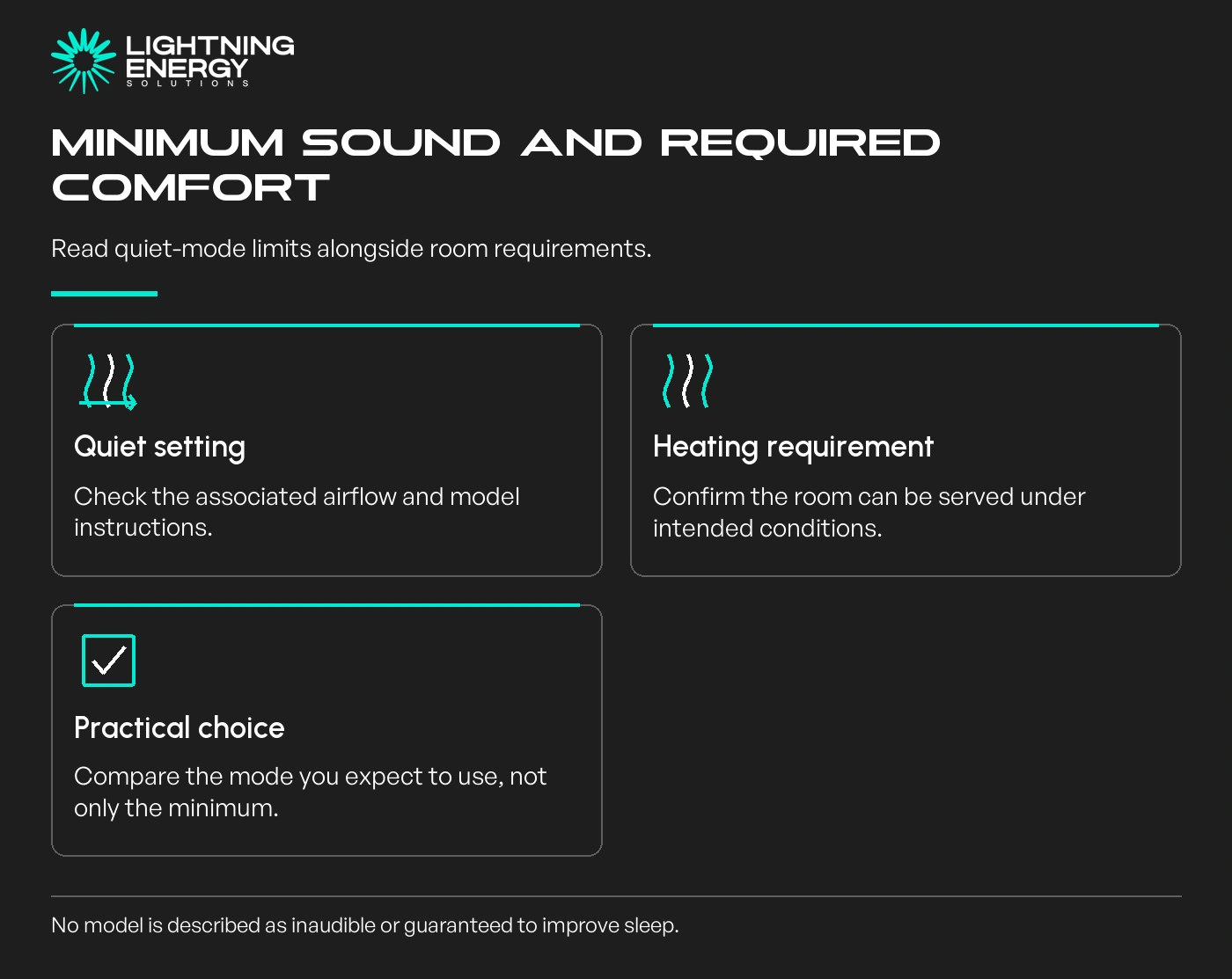
A quiet or low-fan mode may have a different sound figure from a higher setting. Ask which airflow and operating limitations apply to that mode on the selected model.
Daikin’s published multi-split material distinguishes quiet, low and higher fan settings. It also notes that outdoor quiet operation can affect available capacity on the systems described.
Manufacturer fan-mode information.
That is an example of why the footnotes matter, not a claim that every current bedroom split behaves identically. Read the exact candidate’s Australian specification and owner manual.
For an illustrative comparison, a unit with a lower minimum-fan figure is not automatically preferable if that mode cannot meet the room’s required winter operation.
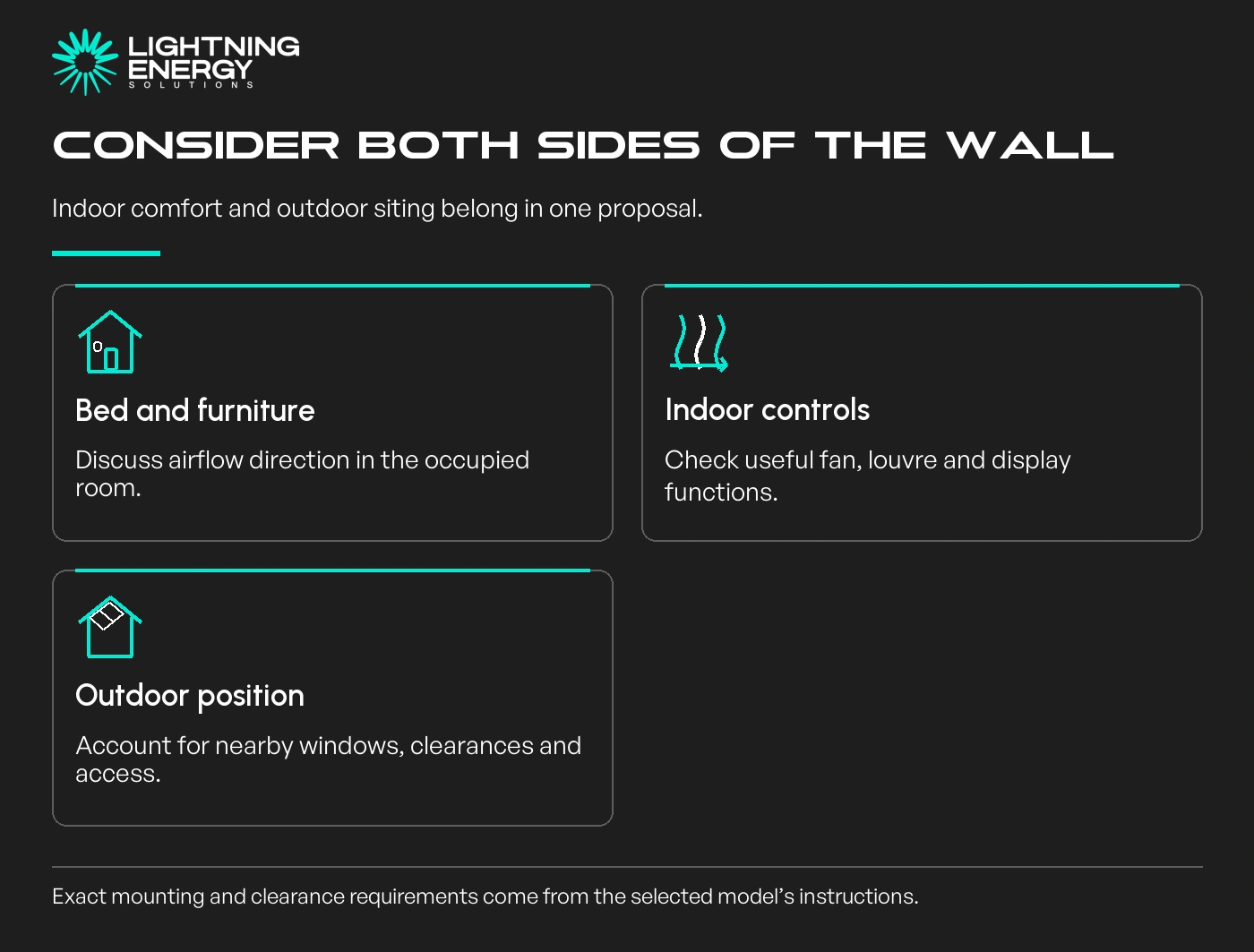
Discuss the bed location, normal sleeping position and furniture before agreeing to the indoor position. Ask how supported louvre settings direct air in heating and cooling without blowing uncomfortably across the bed.
Consider the controller lights, audible prompts and normal temperature-control behaviour that matter to the occupant. Verify which functions can be adjusted through ordinary owner controls.
Outside, consider nearby bedrooms and neighbours as well as manufacturer clearances. EPA Victoria’s guidance requires residential noise to be reasonable, including outside specified prohibited times.
Victorian residential noise guidance.
If a heat pump water heater may share the outdoor area later, include its proposed position in the discussion. Do not reserve the same service space for two incompatible layouts.
Request the heating assessment, model data and installation scope together. Acoustic comfort should be considered alongside adequate heating, service access and an appropriate physical installation.
During handover, ask for a demonstration of the modes you expect to use and the permitted fan settings. A brief demonstration cannot reproduce every winter night, but it can reveal misunderstandings about controls.
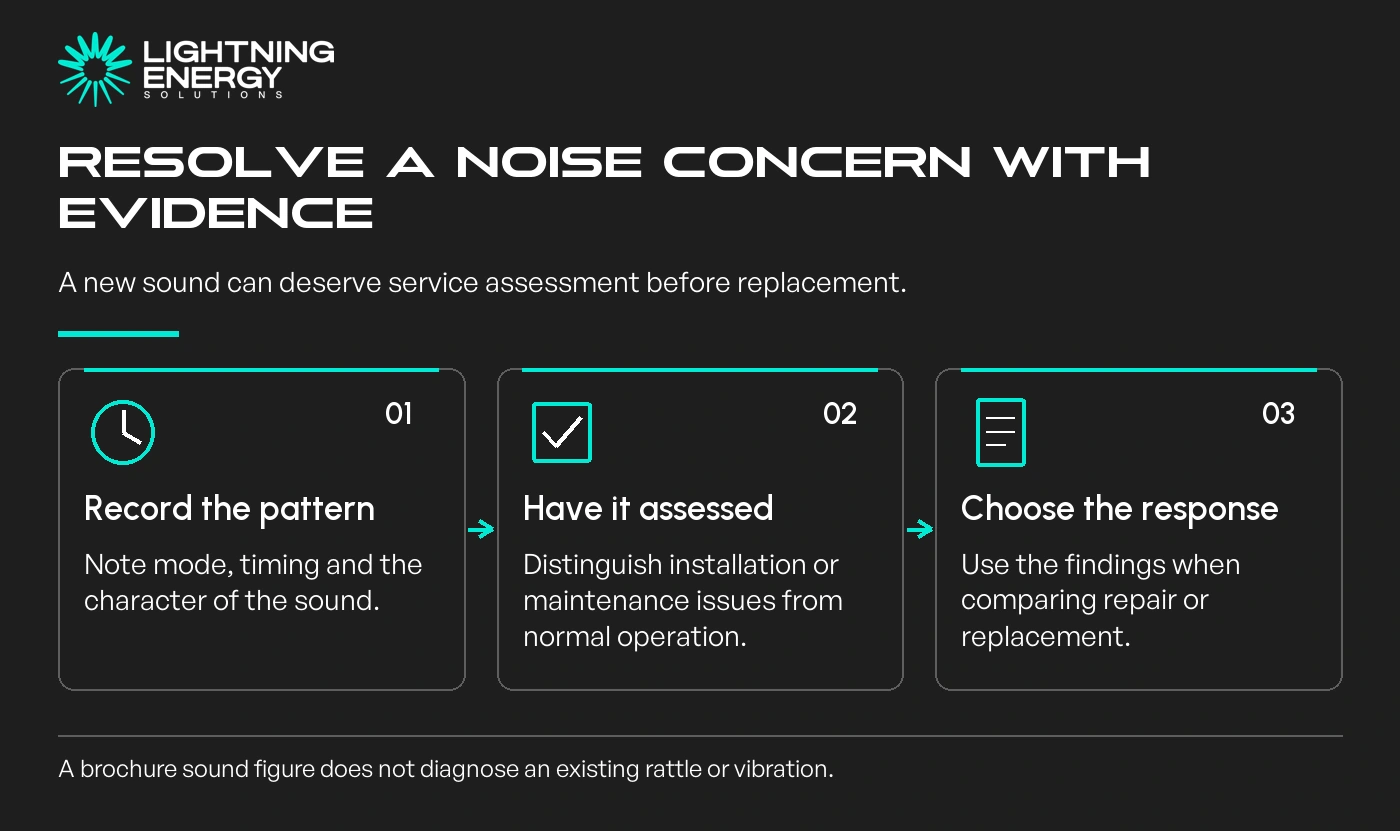
If an existing system has developed a new rattle or vibration, seek diagnosis before replacing it solely because a newer brochure quotes a lower number. Record when the sound appears and which mode is active.
Keep that decision within your household upgrade plan, including how often the room is used and whether present heating already meets its needs.
Bring the bedroom plan and competing model data to a quote discussion. Ask which sound figures are genuinely comparable and whether the quiet operating modes suit the room’s heating and cooling task.
Available times
Book a consultation and we'll map solar, storage, hot water, and the rebates around your bills and your goals.
Question 1 of 6