
Do You Need More Solar Before Replacing Gas Heating?
Decide whether to expand solar before replacing gas heating by comparing winter demand, daytime surplus, roof options and the urgency of the heating upgrade.
Decide whether to expand solar before replacing gas heating by comparing winter demand, daytime surplus, roof options and the urgency of the heating upgrade.

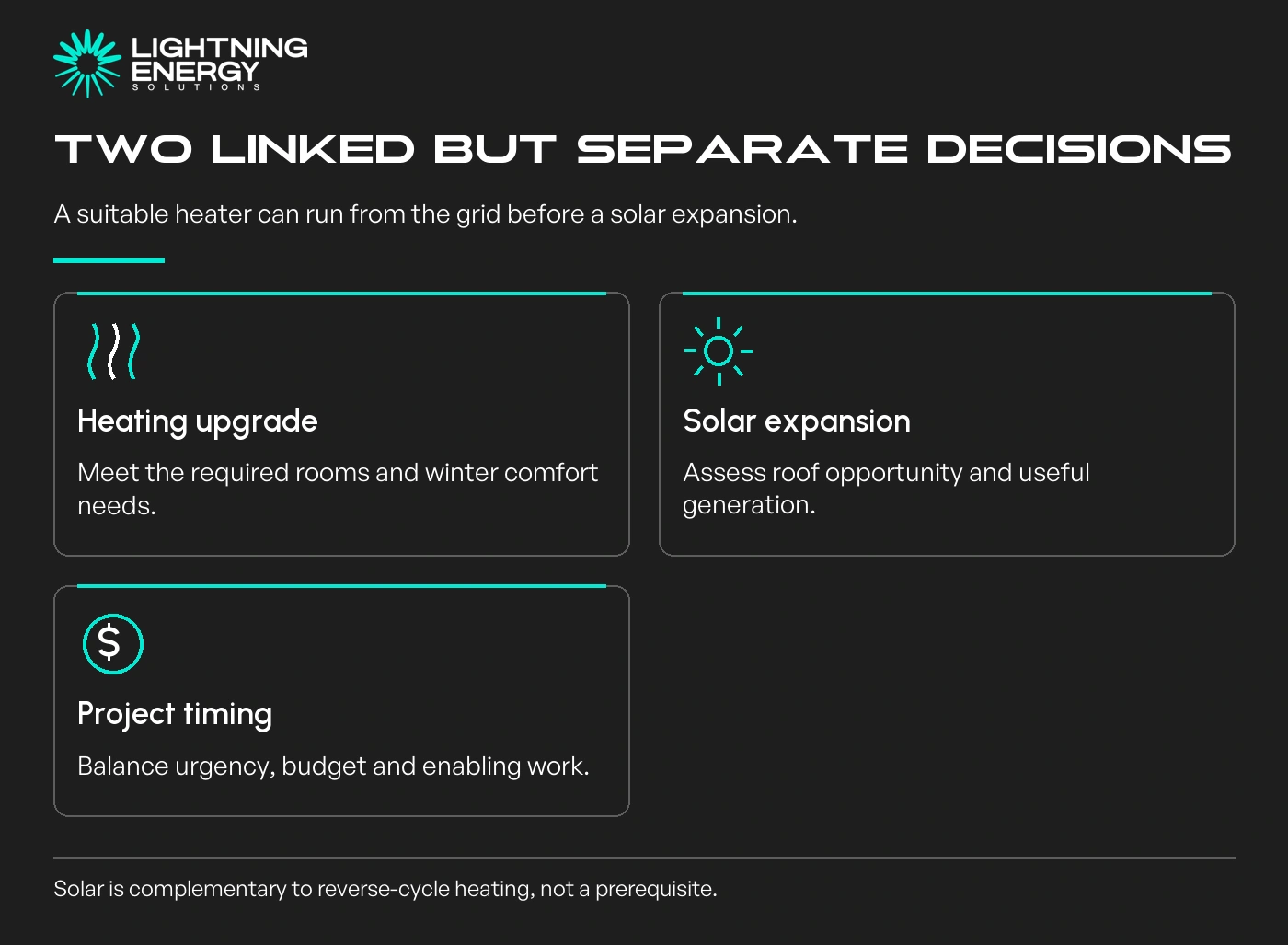
You do not need rooftop solar before installing reverse-cycle heating. A suitable system can operate from grid electricity, while solar may reduce purchased electricity when generation overlaps with heating use.
Whether more panels belong in the same project depends on your roof, winter demand, budget and the condition of the existing heater. Start with those facts rather than a fixed upgrade order.
Reverse-cycle heating transfers heat using electricity. The Australian Government identifies efficient electric heating as part of home electrification and solar as a complementary way to reduce purchased energy.
Government electrification guidance.
First establish which rooms need heating, how the building performs and which equipment meets that requirement. Then assess the additional electricity use within the whole household.
If the gas heater has failed or is unsafe, delaying a suitable replacement until a solar expansion is ready may not be sensible. Discuss urgency and safe temporary arrangements with qualified professionals.
Our air conditioning assessment and solar design can be coordinated while remaining separate decisions with their own costs and benefits.
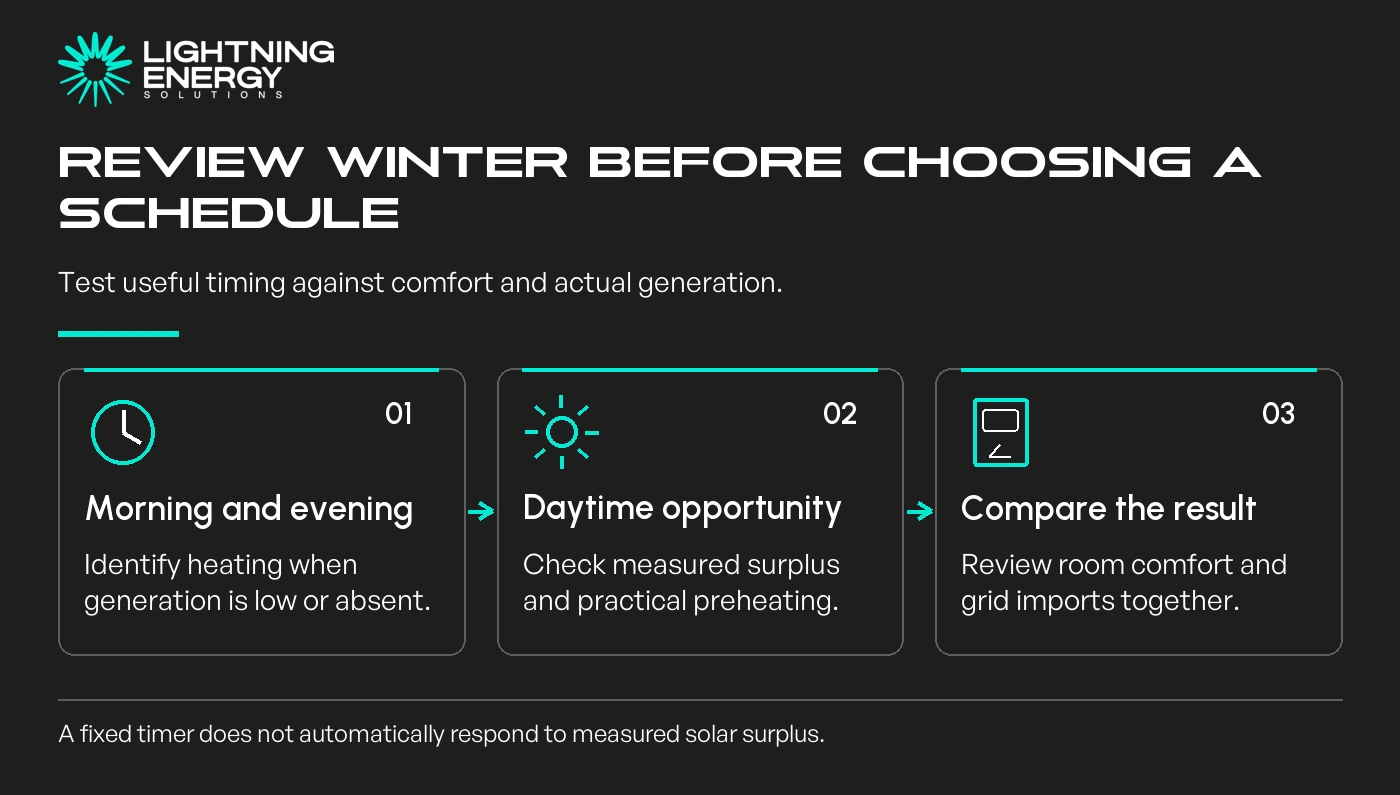
Heating often matters most in the morning and evening, when rooftop generation may be low or absent. A large annual solar total does not establish how much heating electricity will be supplied at those times.
Review monitoring and interval data across winter days, including cloudy periods. Identify electricity already used by the home before counting any remaining generation as available for heating.
The winter solar guide explains why seasonal output needs its own assessment.
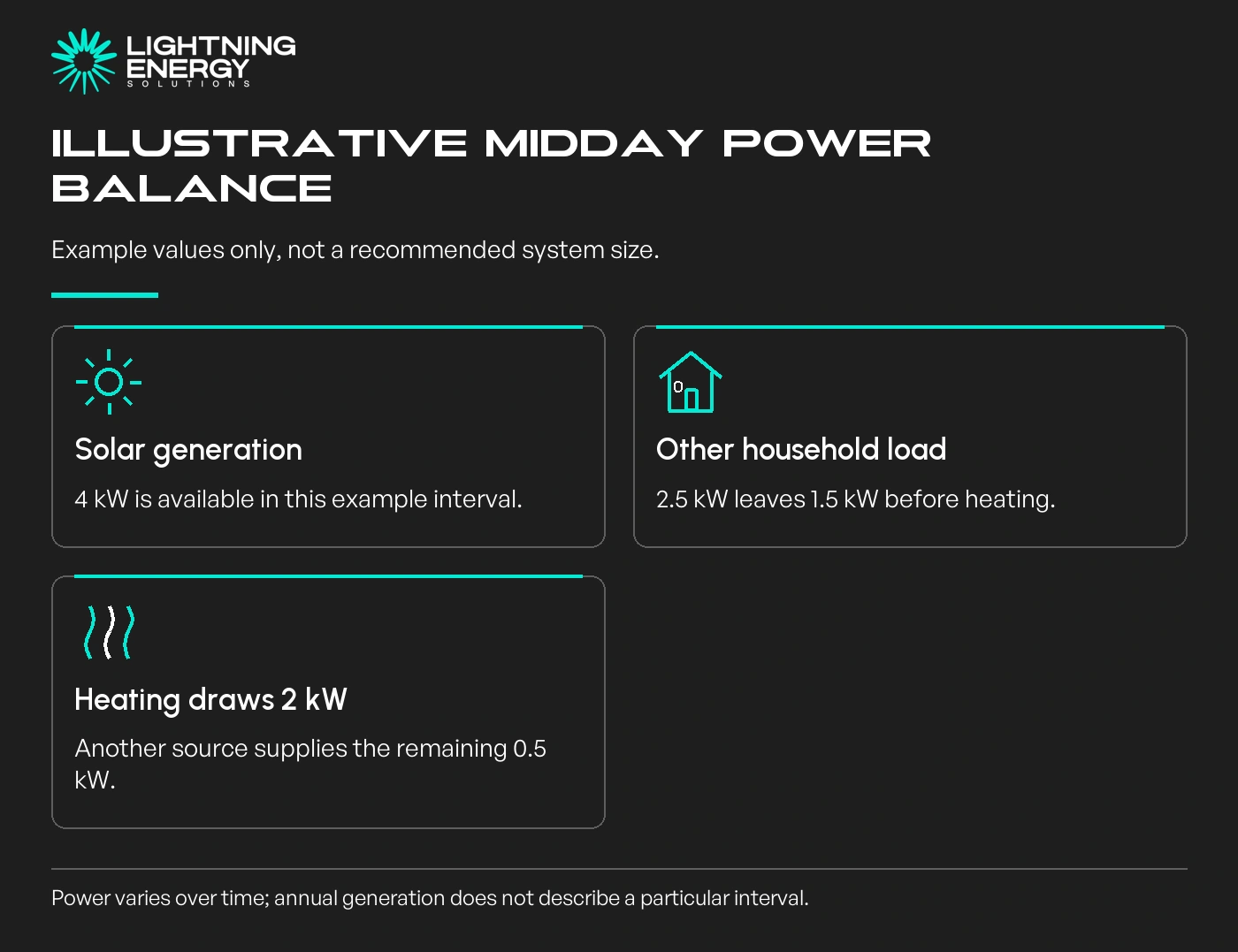
For an illustrative midday interval, 4 kW of solar output with 2.5 kW of other household load leaves 1.5 kW before additional loads. If heating then draws 2 kW, the remaining 0.5 kW must come from another source.
Those numbers are a simple power-balance example, not a system recommendation. Real consumption, cloud cover and inverter reporting vary throughout the day.
The government’s solar guidance recommends using appliances during generation where practical and checking the monitoring app for the household’s actual pattern.
Some homes can shift part of their heating earlier without overheating rooms or wasting energy. The benefit depends on comfort needs, building heat retention, available surplus and the electricity tariff.
Do not assume a fixed timer responds to real-time surplus or that preheating will cover the whole evening. Compare the resulting room comfort and grid use rather than only the daytime generation graph.
Ask the solar designer to assess roof space, shading, existing equipment and connection requirements before quoting an expansion.
More panels are not automatically the best next purchase if the roof or existing system makes that option poor value.
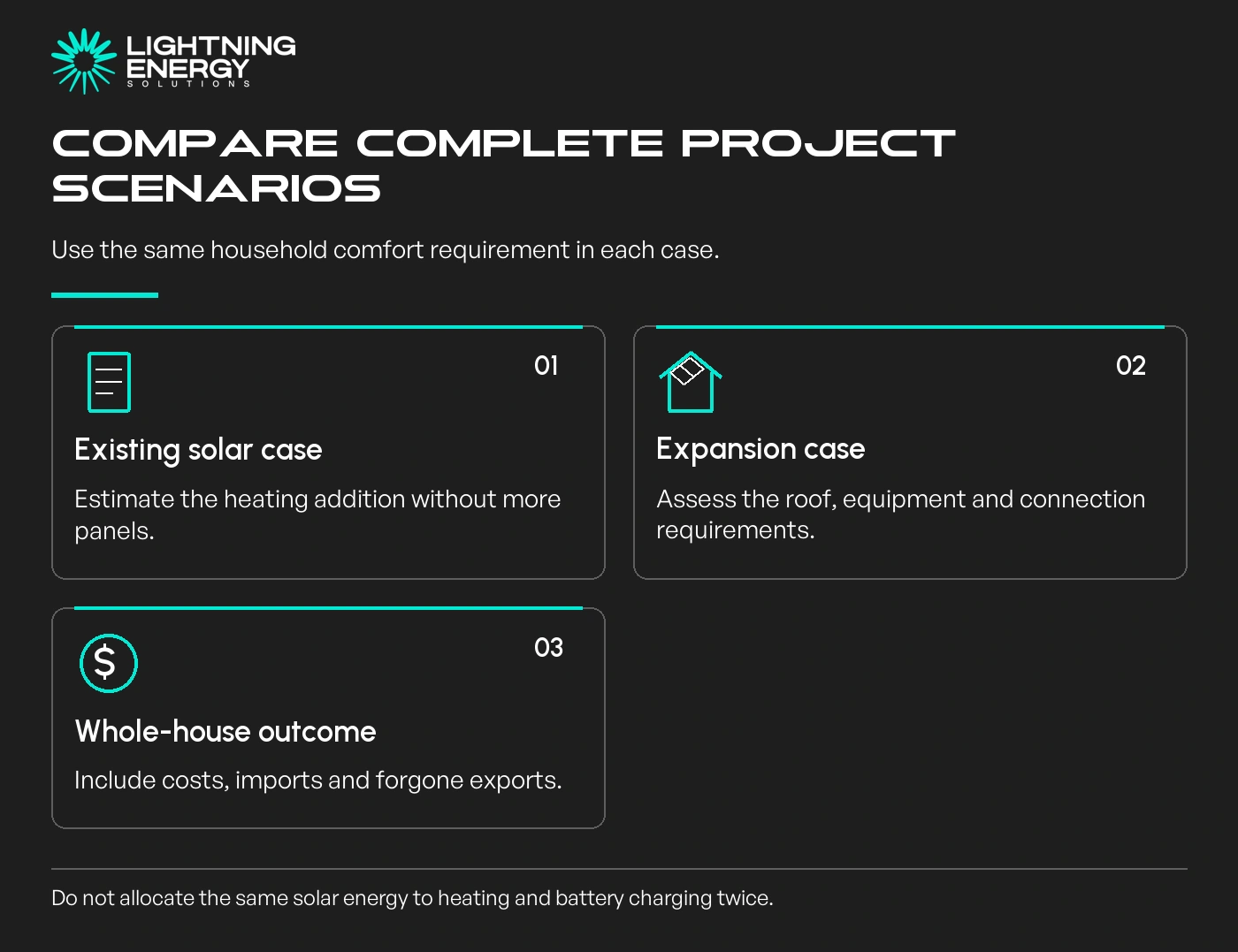
Compare at least two complete scenarios: suitable heating with the existing solar setup, and suitable heating with the proposed solar expansion. Use the same comfort assumptions in both.
Include installation costs, expected timing of grid imports, export opportunity cost and any necessary enabling work. Do not count the same solar surplus as serving heating and charging a battery simultaneously.
If a home battery is also considered, compare its usable energy and power limits with the planned loads. Storage does not create the winter solar energy needed to recharge it.
Consider building improvements that reduce the heating requirement. They may improve comfort even when the roof cannot supply much additional winter electricity.
Proceed with more solar when the assessed household case supports it. Keep it as a later stage when the heating problem is urgent or the expansion needs further design.
Bring twelve months of bills, available interval data and your heating priorities to a combined planning discussion. The right sequence follows the home’s needs and evidence, not a rule that panels must always come first.
Available times
Book a consultation and we'll map solar, storage, hot water, and the rebates around your bills and your goals.
Question 1 of 6
