
Exporting More Solar Than You Import: Why the Electricity Bill Can Stay High
Understand why a solar home can export more electricity than it imports and still receive a sizeable bill, then identify the charges worth checking.
Understand why a solar home can export more electricity than it imports and still receive a sizeable bill, then identify the charges worth checking.

Exporting more kilowatt-hours than you import does not necessarily produce a credit bill. Imported electricity and exported solar are priced separately, and other charges can remain.
Start with the dollars attached to each flow, not the annual energy balance alone. A home can be a net exporter of electricity while still paying a positive amount to its retailer.
An export earns the feed-in rate in your offer. An import costs the applicable usage rate at that time. Those rates need not match, so one exported unit may not pay for one imported unit.
Government guidance on solar tariffs distinguishes these charges.
Treat the comparison as two transactions rather than electricity being stored in the grid for you to retrieve free later.
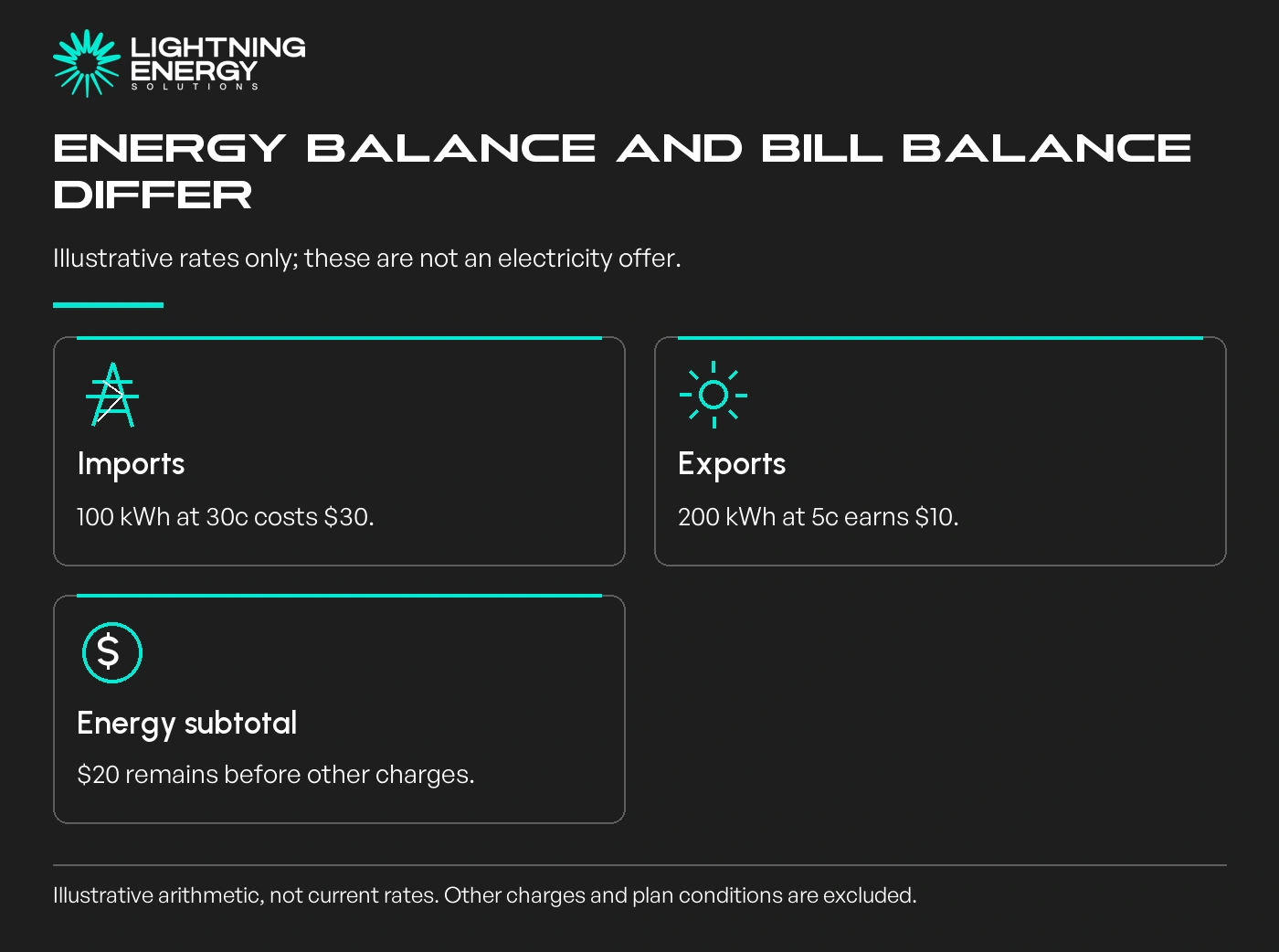
Imagine a purely illustrative bill with 100 kWh imported at 30 cents and 200 kWh exported at 5 cents. Usage costs $30 and exports earn $10, leaving $20 before other charges.
These are invented rates, not a current offer.
Your solar system can still have reduced that bill by supplying some daytime demand directly. That electricity never appears as a grid import or an export on the retailer's meter.
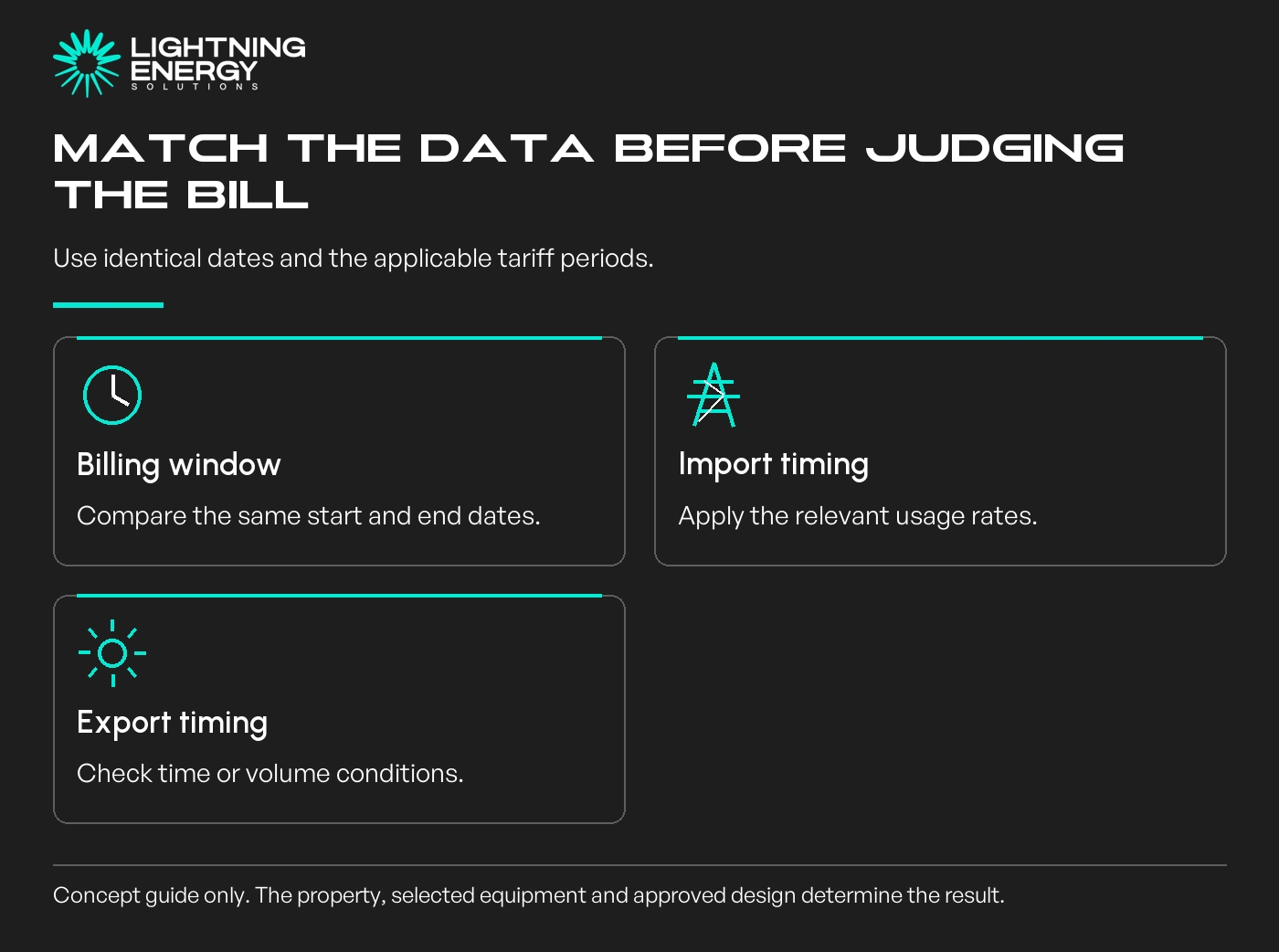
Use the same billing dates for import and export. Comparing one calendar month in an app with a bill spanning different dates creates an apparent discrepancy that may have nothing to do with system performance.
If your offer uses time-of-use rates, identify when imports occurred. Evening heating, cooking and charging can cost a different amount from daytime electricity under the same contract.
If export rates vary with time or volume, apply the relevant conditions too. An advertised headline rate may not apply to every exported unit.
Our winter solar guide explains another mismatch: annual exports can hide winter periods with more grid dependence.
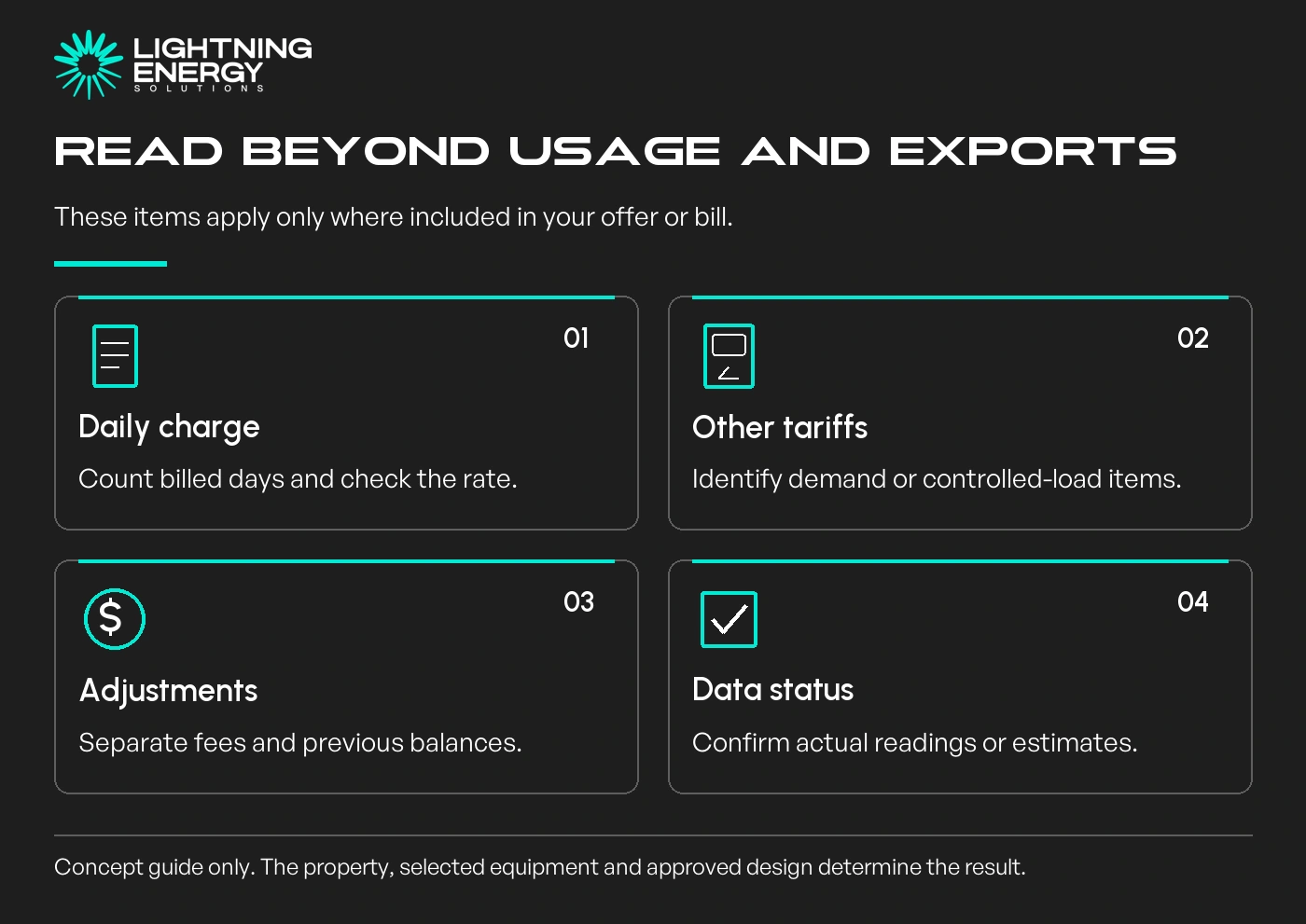
A daily supply charge pays for connection and service under the offer. Exporting more energy does not automatically remove it. Check the number of billed days and the daily rate.
Other possible items include demand charges, controlled-load usage, fees, adjustments and previous balances. Only include a charge in your explanation if it actually appears in the applicable plan or bill.
EWOV's Victorian billing guidance can help you identify the information a retailer should explain. Ask about unclear line items rather than assuming they are all caused by solar exports.
Also check whether data is actual or estimated and whether the correct feed-in offer has been applied. A meter configuration or account issue needs a different response from an expensive but correctly billed tariff.
If expensive evening imports dominate, shifting a flexible load into genuine daytime surplus may help. Do not run unnecessary appliances merely to reduce the export number.
Battery storage may move some available energy to later use, but purchase cost, losses, capacity, controls and seasonal charging all matter. It does not erase every bill component.
If the daily charge or import rate dominates, compare complete offers using your own usage data. A higher feed-in rate can be outweighed by higher usage or supply charges elsewhere in the offer.
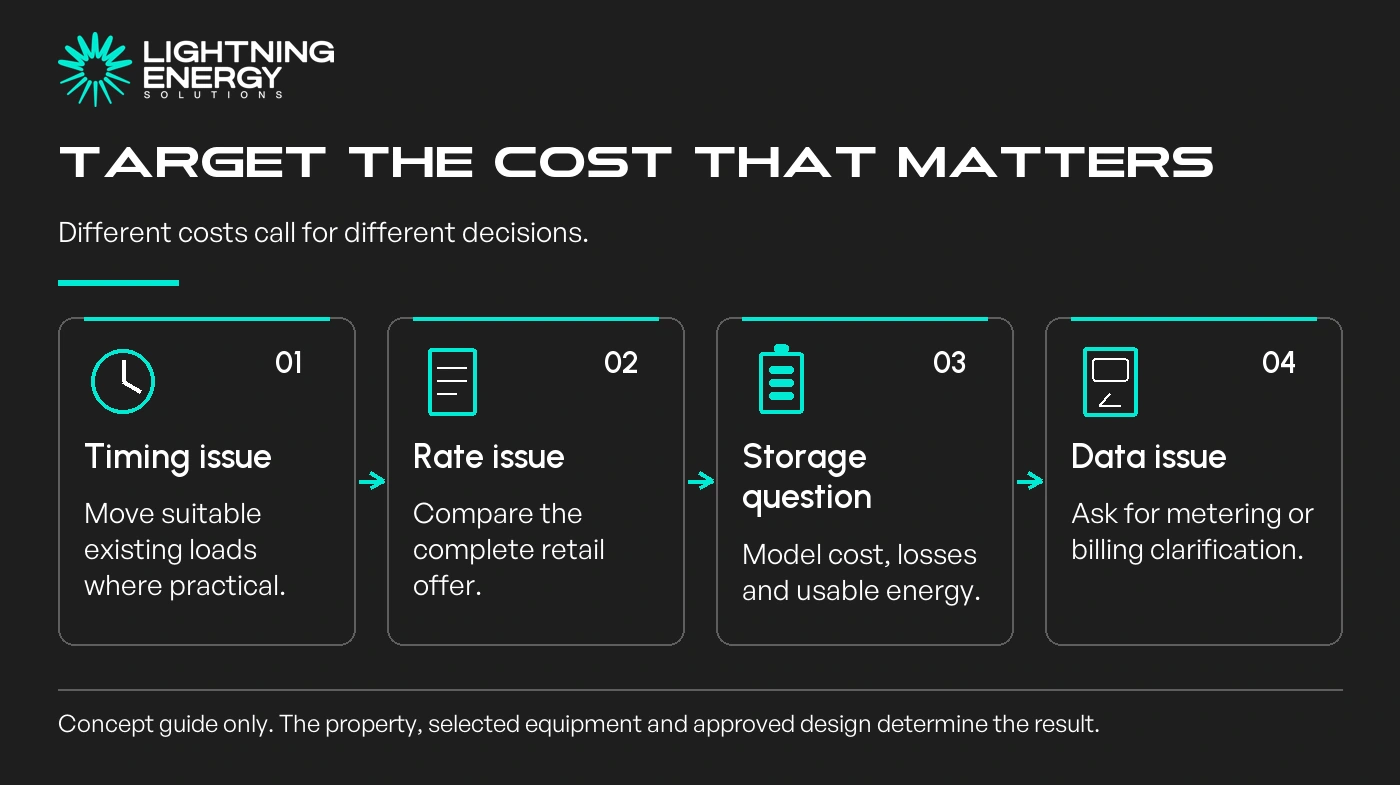
Take a complete bill, matching meter data and the current offer terms. Calculate imports, exports and fixed charges separately before evaluating a changed schedule or a different plan.
Use measured consumption where available. Solar generation less grid exports can indicate on-site use in a simple system, but batteries and monitoring boundaries can complicate that calculation.
There may be nothing wrong with the panels. A net-energy surplus and a positive bill can coexist quite normally; the important question is whether the system and tariff suit how the home uses electricity.
If you want help connecting the bill to future equipment choices, contact us with the bill and monitoring records. That evidence is more useful than the export total alone.
Available times
Book a consultation and we'll map solar, storage, hot water, and the rebates around your bills and your goals.
Question 1 of 6
