
Heat-Pump Hydronic or Ducted Reverse-Cycle: Choosing Whole-Home Heating
Compare heat-pump hydronic and ducted reverse-cycle heating through comfort, existing emitters, renovation access, response time and the separate cooling requirement.
Compare heat-pump hydronic and ducted reverse-cycle heating through comfort, existing emitters, renovation access, response time and the separate cooling requirement.

Heat-pump hydronic and ducted reverse-cycle systems can both heat a home using electricity, but they deliver warmth differently. The better fit depends on the building, comfort preferences and the work needed to distribute that heat.
Compare complete designs, including summer cooling. Replacing a gas boiler is not automatically a straightforward equipment swap, and installing ducts is not practical in every building.
Ducted reverse-cycle heating circulates conditioned air through room outlets. Hydronic heating supplies heat through suitable radiators, floor circuits or other emitters using a fluid circuit.
YourHome describes these distribution methods and the importance of matching systems to the home.
YourHome heating and cooling guidance.
Discuss air movement, furniture placement, visible emitters and the rooms occupied at different times. Neither technology label guarantees perfect comfort without appropriate sizing and controls.
For an illustrative renovation, a household retaining radiator walls may value a hydronic design. Another may prioritise one ducted system providing heating and summer cooling through planned ceiling outlets.
Our air conditioning assessment can define the air-based option; obtain a suitably qualified hydronic specialist’s design for a fair comparison.
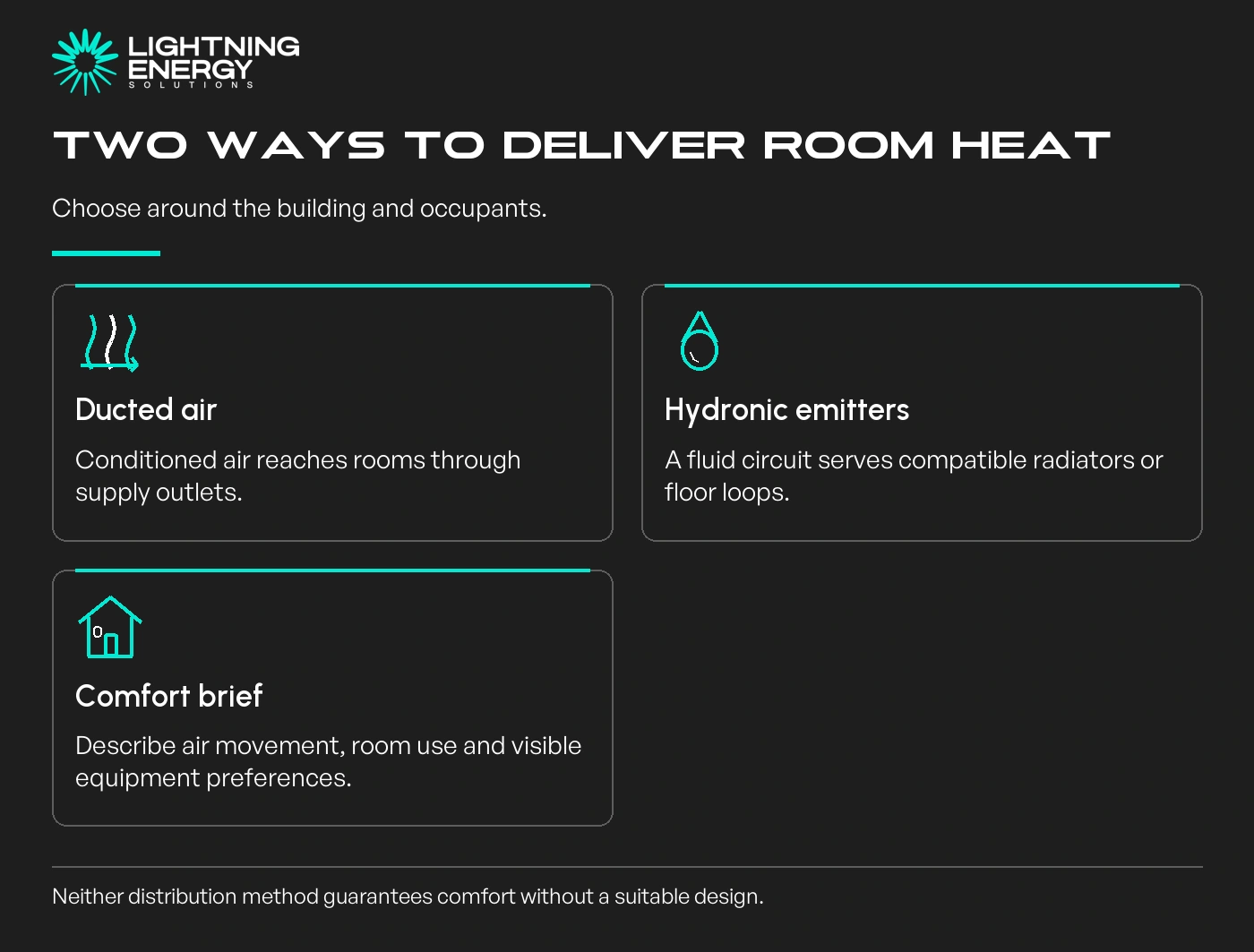
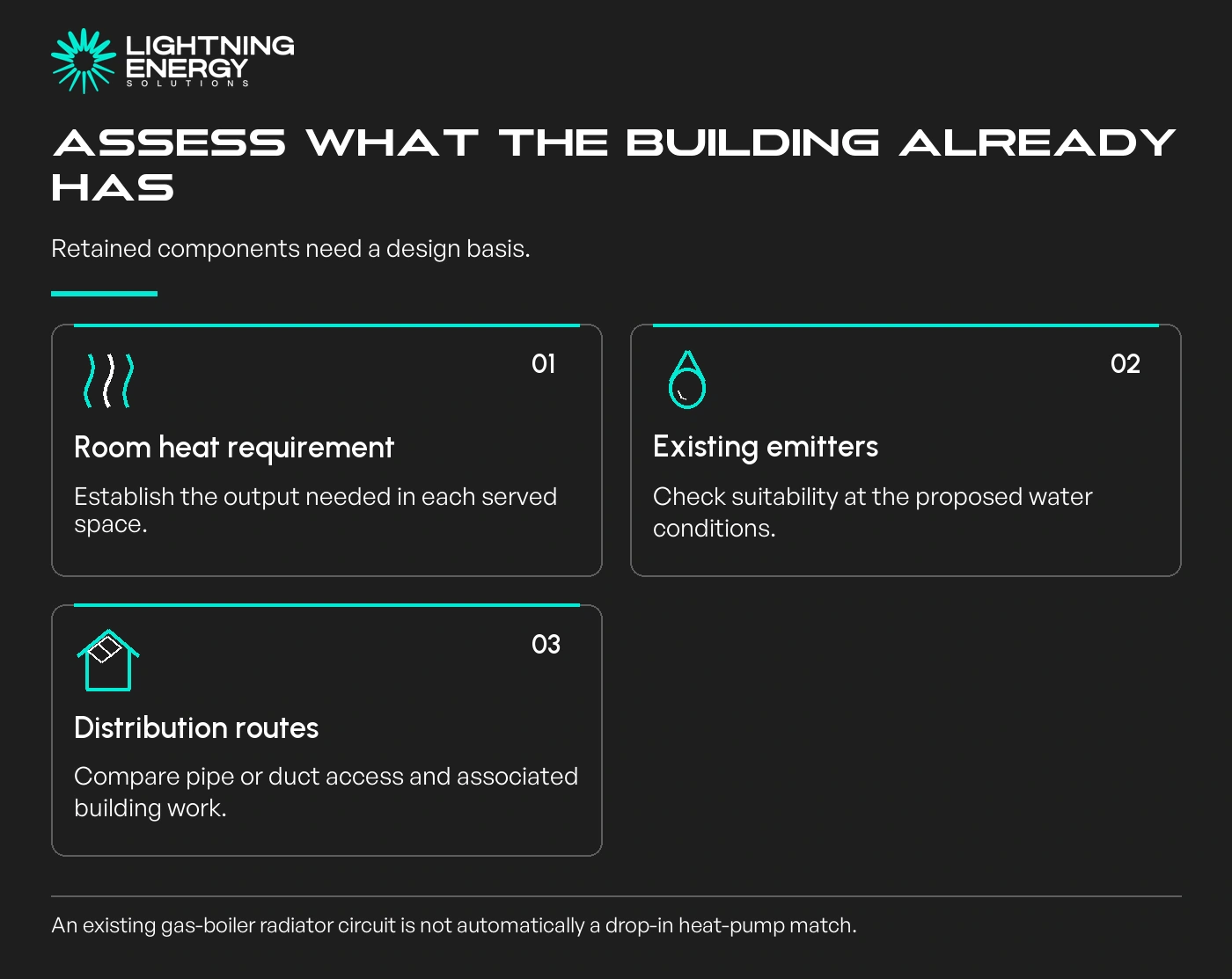
A proposed heat-pump conversion needs the existing hydronic circuit and emitter output assessed at the new design conditions. Do not assume every radiator selected for a gas boiler will suit a different water-temperature arrangement.
Ask for the required room heat output, proposed operating temperatures and any emitter or pipework changes. The quote should explain how the complete system meets the cold-weather requirement.
Daikin’s Australian Altherma range illustrates that heat-pump hydronic equipment is paired with compatible emitters and controls.
For ducted proposals, assess roof or subfloor space, access, outlet positions and return air. Compare the building work required by each option, not only the price of the outdoor equipment.
Coordinate the electrical capacity assessment with the exact selected equipment, pumps, any backup element and other household loads.
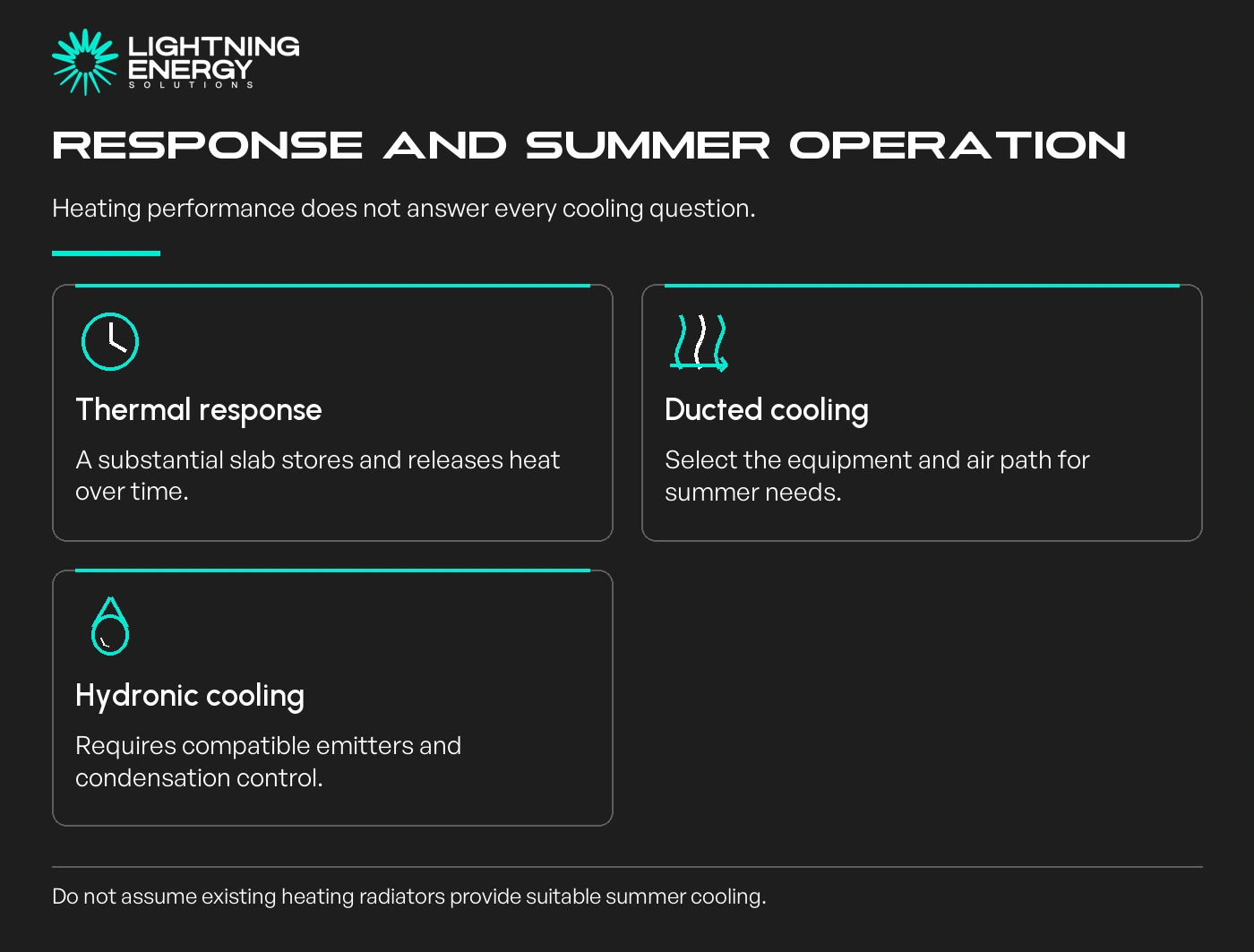
A substantial heated slab stores heat and responds differently from direct air delivery. The appropriate schedule depends on the floor construction, insulation and household routine rather than a universal warm-up time.
YourHome’s thermal-mass guidance explains how heavy materials absorb and release heat over time.
Ask how the system will serve occasional rooms and changing occupancy. A design intended to maintain steady comfort may need different control expectations from one used briefly after work.
Ducted reverse-cycle equipment is selected for both heating and cooling. Hydronic cooling requires a suitable reversible source, compatible emitters and condensation control; ordinary heating radiators are not an automatic cooling solution.
Check the selected system’s cooling instructions with its designer.
Daikin’s Australian Altherma range includes different configurations.
The presence of a heat pump does not establish that every connected emitter is suitable for cooling.
Include a separate cooling system in the comparison if the proposed hydronic installation only provides heating.
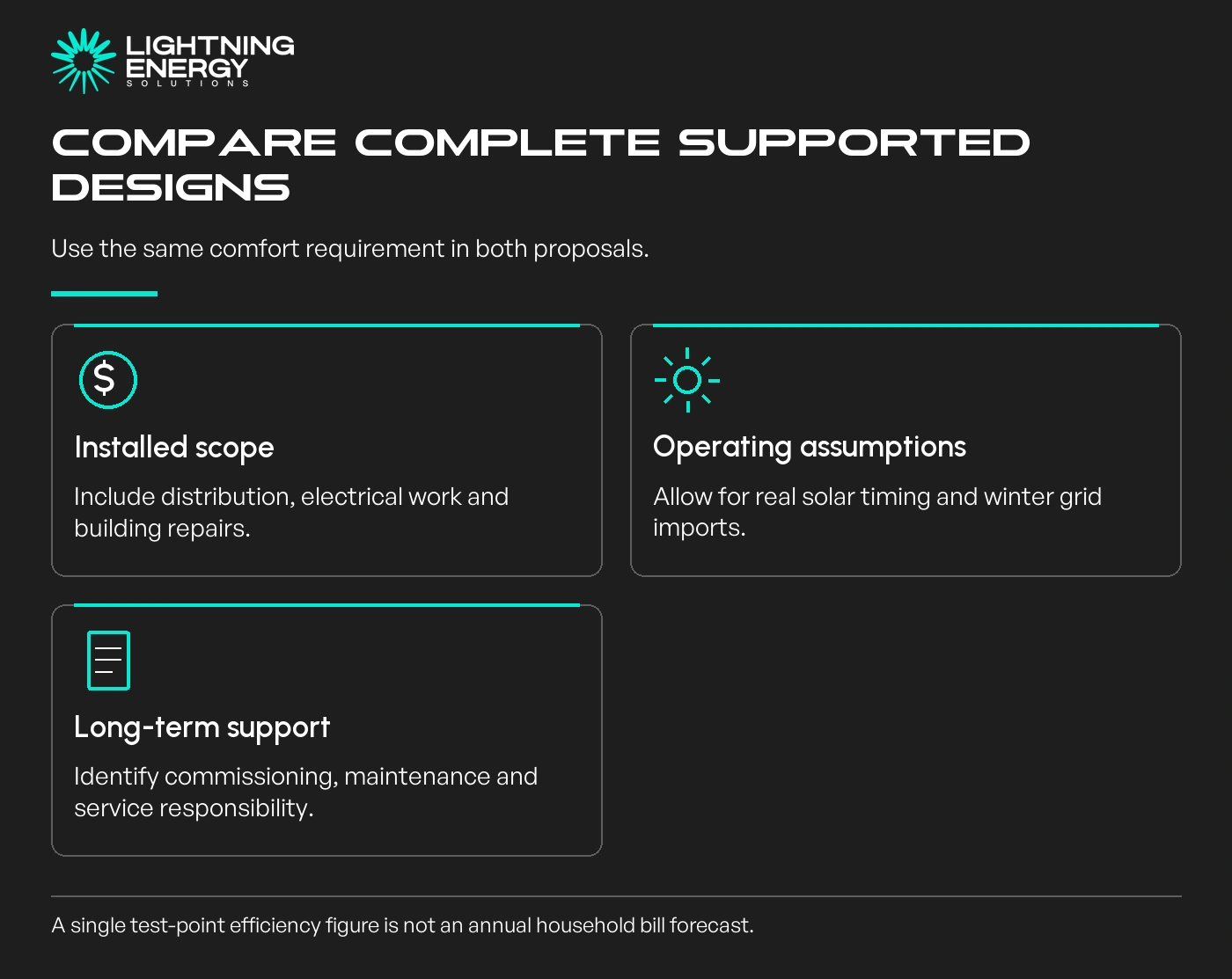
Request itemised costs for equipment, distribution, controls, electrical work, removal and building repairs. Identify which existing parts remain and who is responsible for their suitability.
Assess running costs using the same room comfort and occupancy assumptions. A nameplate efficiency figure under one test condition is not a household annual bill forecast.
Consider how available solar generation overlaps with operation, while allowing for winter imports and the building’s response. Do not assume either distribution method eliminates grid use.
Ask who commissions the system and provides local servicing for the heat source, controls and distribution circuit. Keep manufacturer cover and installation workmanship terms visible.
If the existing system works well, a complete conversion may not be the immediate priority. Building improvements or a planned staged replacement can be more appropriate than changing technology without a defined benefit.
Bring the floor plan, existing-system details and renovation scope to a whole-home discussion. Compare supported designs that provide the same required services before deciding which approach fits.
Available times
Book a consultation and we'll map solar, storage, hot water, and the rebates around your bills and your goals.
Question 1 of 6
