
Heat Pump, Reverse-Cycle or Hydronic Heating: What the Terms Mean
Understand heat pumps, reverse-cycle air conditioning and hydronic heating by separating the heat source from the way warmth reaches rooms or household water.
Understand heat pumps, reverse-cycle air conditioning and hydronic heating by separating the heat source from the way warmth reaches rooms or household water.

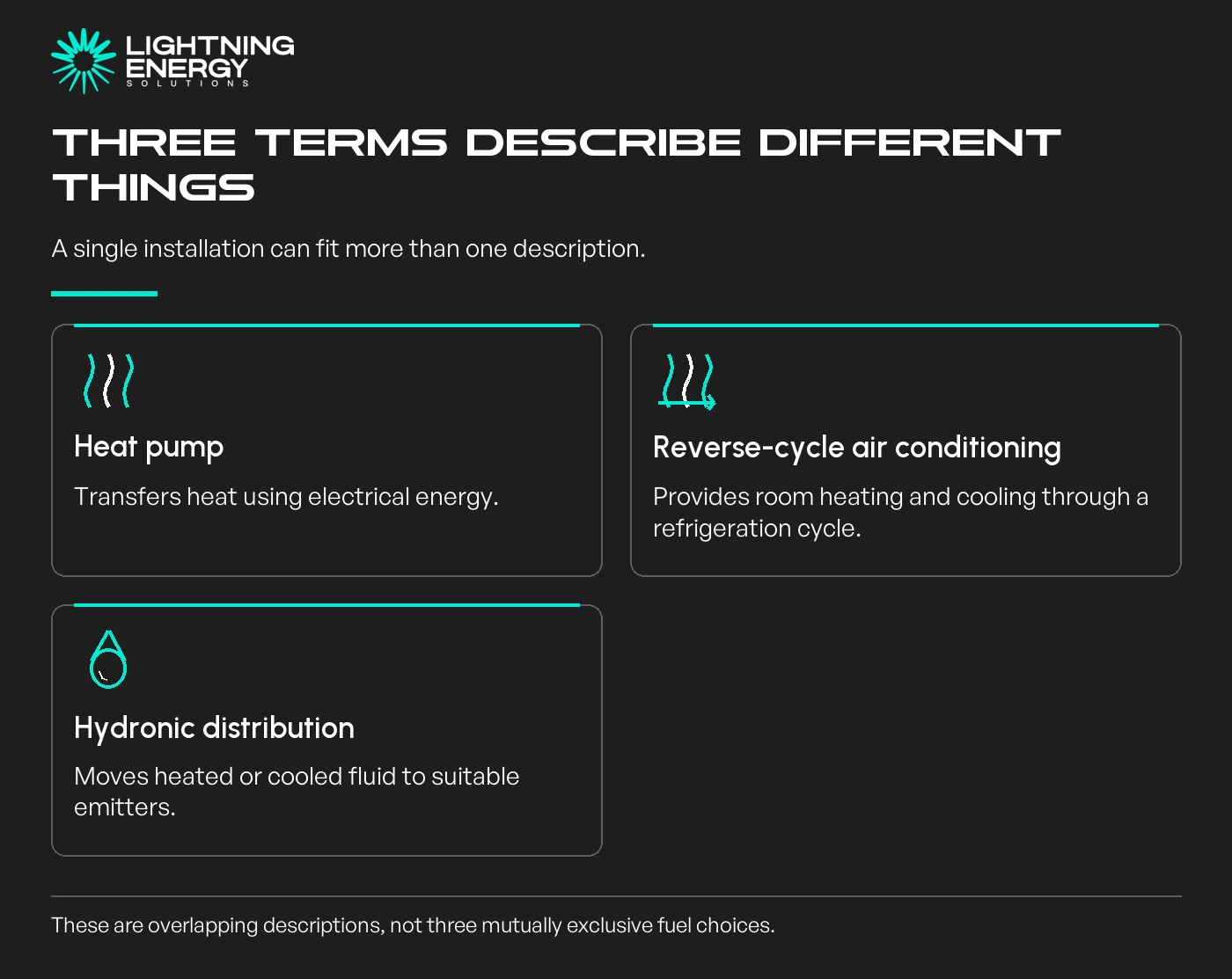
“Heat pump” describes a way of moving heat. “Hydronic” describes heat distribution using water or another fluid. Reverse-cycle air conditioning is a heat-pump application that can heat and cool indoor spaces.
These terms overlap rather than naming three mutually exclusive products. The useful question is what the proposed equipment heats, how it distributes that heat and whether cooling is included.
A heat pump uses electricity to transfer heat between places. For home heating, an air-source system draws heat from outdoor air and delivers it to the intended indoor or water-heating application.
The Australian Government explains the process in its heating and cooling guidance.
A product’s efficiency depends on the equipment and operating conditions. The term heat pump alone does not establish a fixed bill reduction, a particular output or suitability for every Melbourne home.
For an illustrative shopping question, a request for “a heat pump” could lead to a room air conditioner or a hot water system. Naming the required service prevents an irrelevant quote.
Our electrification guide considers these appliances separately because room comfort and shower water are different household needs.
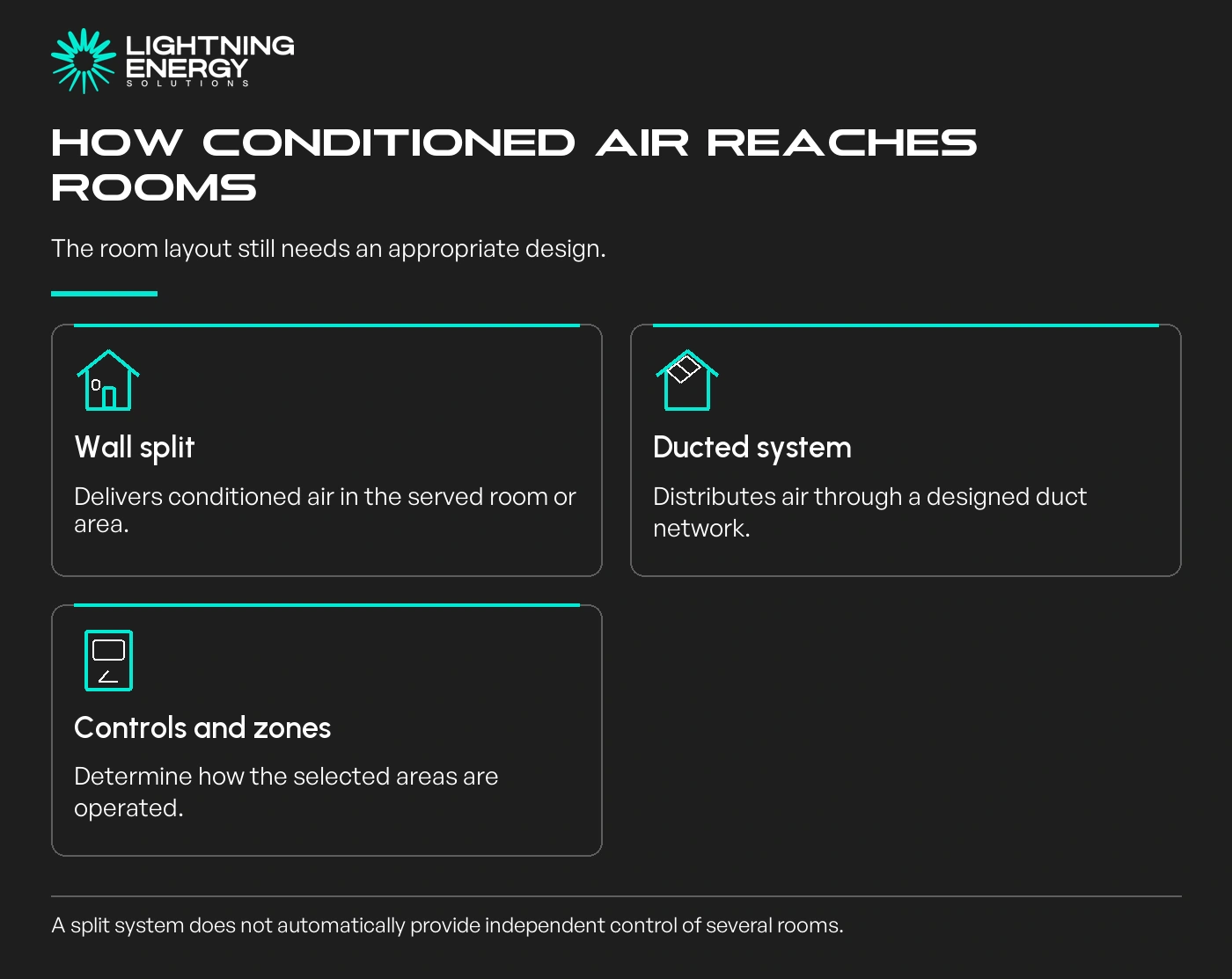
A conventional reverse-cycle split or ducted air conditioner uses the refrigeration cycle to transfer heat into rooms in heating mode and out of them in cooling mode.
A wall split delivers conditioned air locally. A ducted arrangement distributes it through a designed network serving the selected rooms. Neither description alone determines how many areas can be controlled independently.
The air conditioning options should therefore be compared by capacity, room coverage, zoning and the building’s needs, not by whether the word heat pump appears in the brochure.
“Split system” describes separated indoor and outdoor equipment; it does not mean every split system serves several rooms. Multi-split and ducted layouts need their own design explanation.
Ask the quote to state heating and cooling functions explicitly. Some product ranges also contain cooling-only variants, which would not satisfy a winter heating brief.
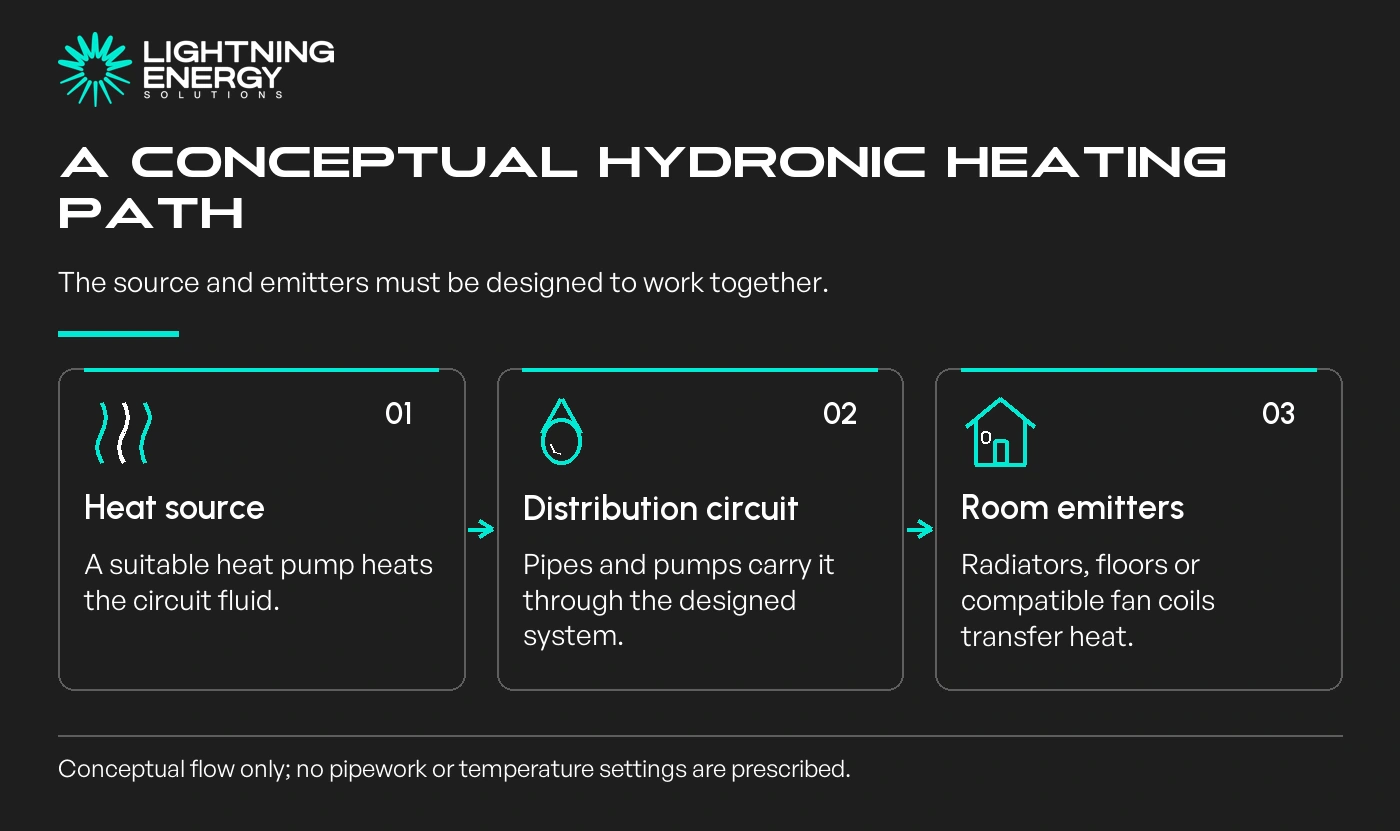
Hydronic systems circulate heated fluid through emitters such as radiators or floor pipes. The heat source can be a gas boiler or a suitable electric heat pump, among other arrangements.
YourHome’s heating guide separates the fluid distribution method from its possible energy sources.
A heat-pump hydronic proposal should identify the heat pump, design water temperatures, emitters and controls. Existing radiators or floor circuits need assessment before being paired with replacement equipment.
Daikin’s Altherma range is one Australian example of air-to-water equipment designed for compatible hydronic emitters.
Do not assume ordinary existing radiators can provide useful summer cooling. Cooling needs compatible equipment, suitable emitters and a design that manages moisture and condensation.
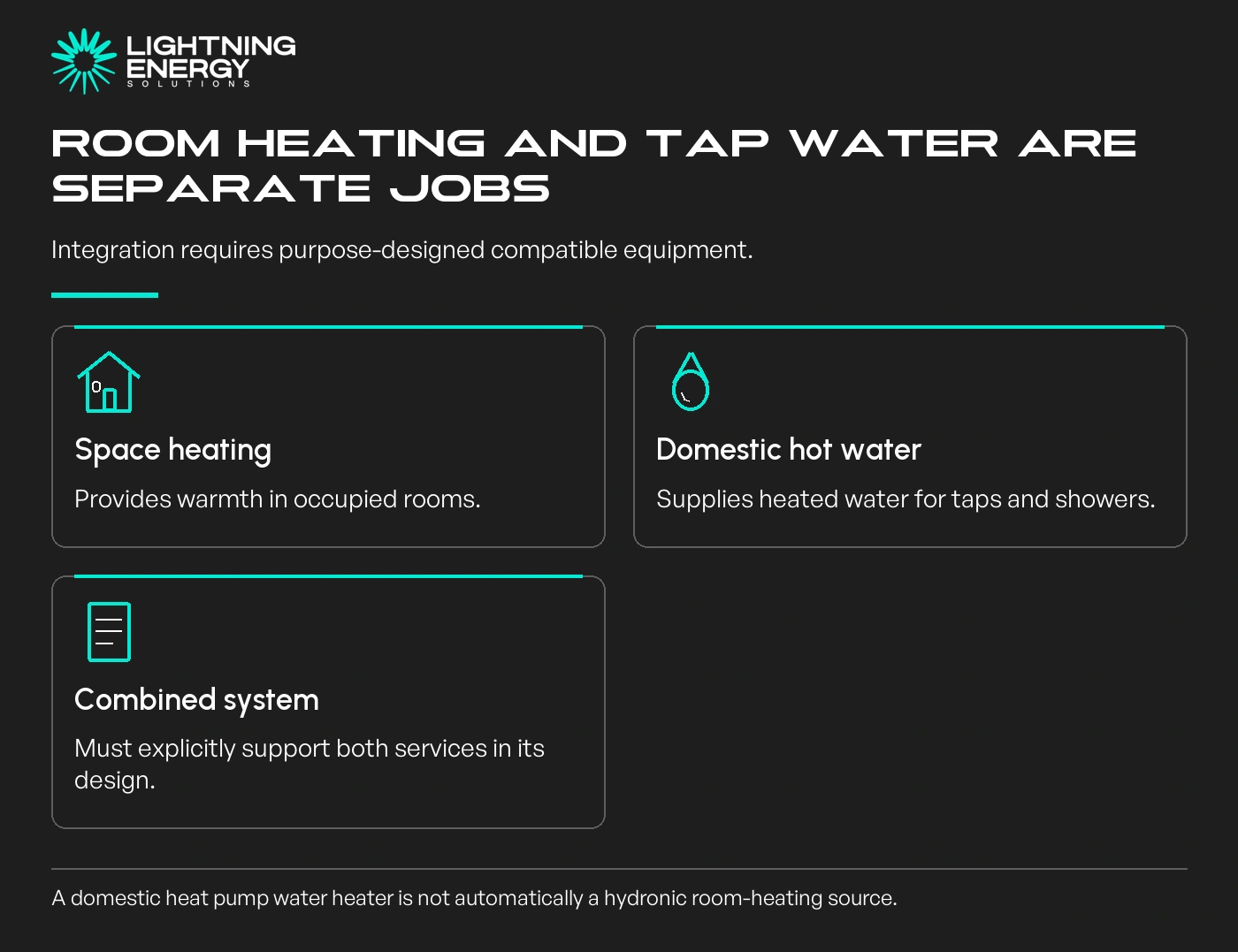
A heat pump water heater heats stored water for taps and showers. It is not automatically a source for room radiators or underfloor heating.
Government hot water guidance distinguishes integrated and split heat pump water heaters from other hot water technologies.
Some engineered systems can combine services using appropriate components. That must be an explicit, supported design rather than an assumption that any hot water tank can serve central heating.
Our heat pump hot water page concerns domestic water heating. When discussing hydronic room heating, identify that requirement separately and obtain appropriate specialist design advice.
Before changing a working system, state the actual problem: room comfort, hot water availability, summer cooling or gas use. A familiar technology label is not itself a reason to replace equipment that already suits its job.
When you discuss your home, name the services you need and the rooms or water demand involved. That turns overlapping terminology into a clear equipment and design brief.
Available times
Book a consultation and we'll map solar, storage, hot water, and the rebates around your bills and your goals.
Question 1 of 6
