
How Long Might a Home Battery Last in Australian Conditions?
A battery warranty is not its expiry date. Assess likely service life through capacity, operating conditions, documented evidence and practical support.
A battery warranty is not its expiry date. Assess likely service life through capacity, operating conditions, documented evidence and practical support.

A home battery does not necessarily stop working when its warranty ends, and a long warranty does not promise fault-free operation until that date.
Useful service life depends on the equipment, its condition and what the household needs it to do.
There is no defensible single lifespan for every battery in Australian homes. Compare documented performance, operating conditions and support rather than treating a quoted number of years as an expiry date.
Warranty terms define particular promises and remedies under stated conditions. They may cover defects, retained capacity or specified usage limits, with different obligations for each.
Tesla's Australian Powerwall warranty, for example, includes a conditional energy-retention promise. That is neither a forecast that every unit will fail at the end of the term nor a promise that it retains all original capacity.
Example Australian battery warranty.
Our battery quote checklist helps record the exact warranty documents and service responsibilities at purchase.
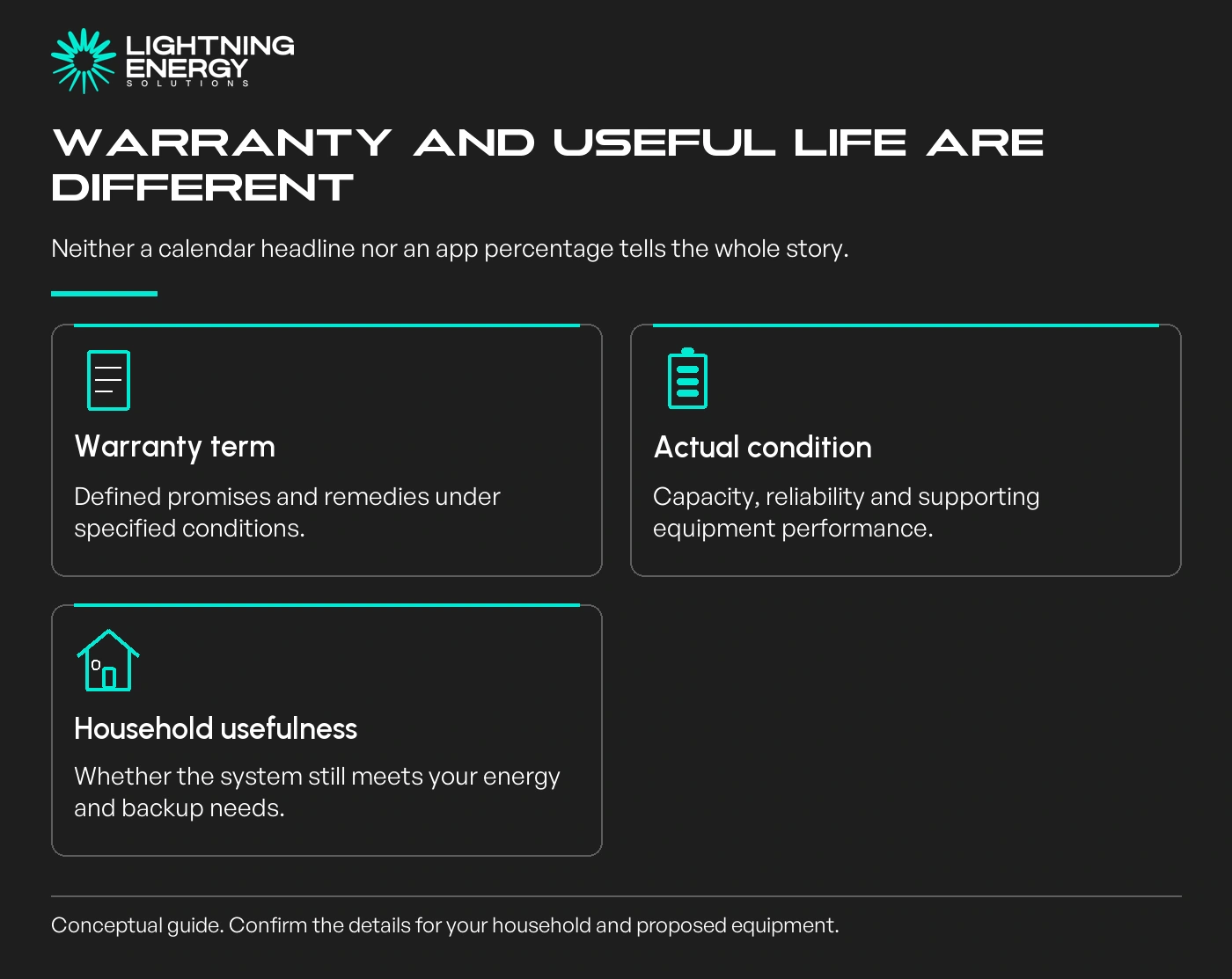
A battery can remain operational while storing less usable energy than when new. Whether that is still sufficient depends on later demand, backup needs and the original design margin.
Imagine a hypothetical household that needs 5 kWh of stored energy on a typical evening. A battery delivering 7 kWh under the relevant conditions may still meet that need, even if it originally delivered more.
Another household needing substantially more evening energy could find the same remaining capacity limiting. That does not itself prove either battery has breached its warranty.
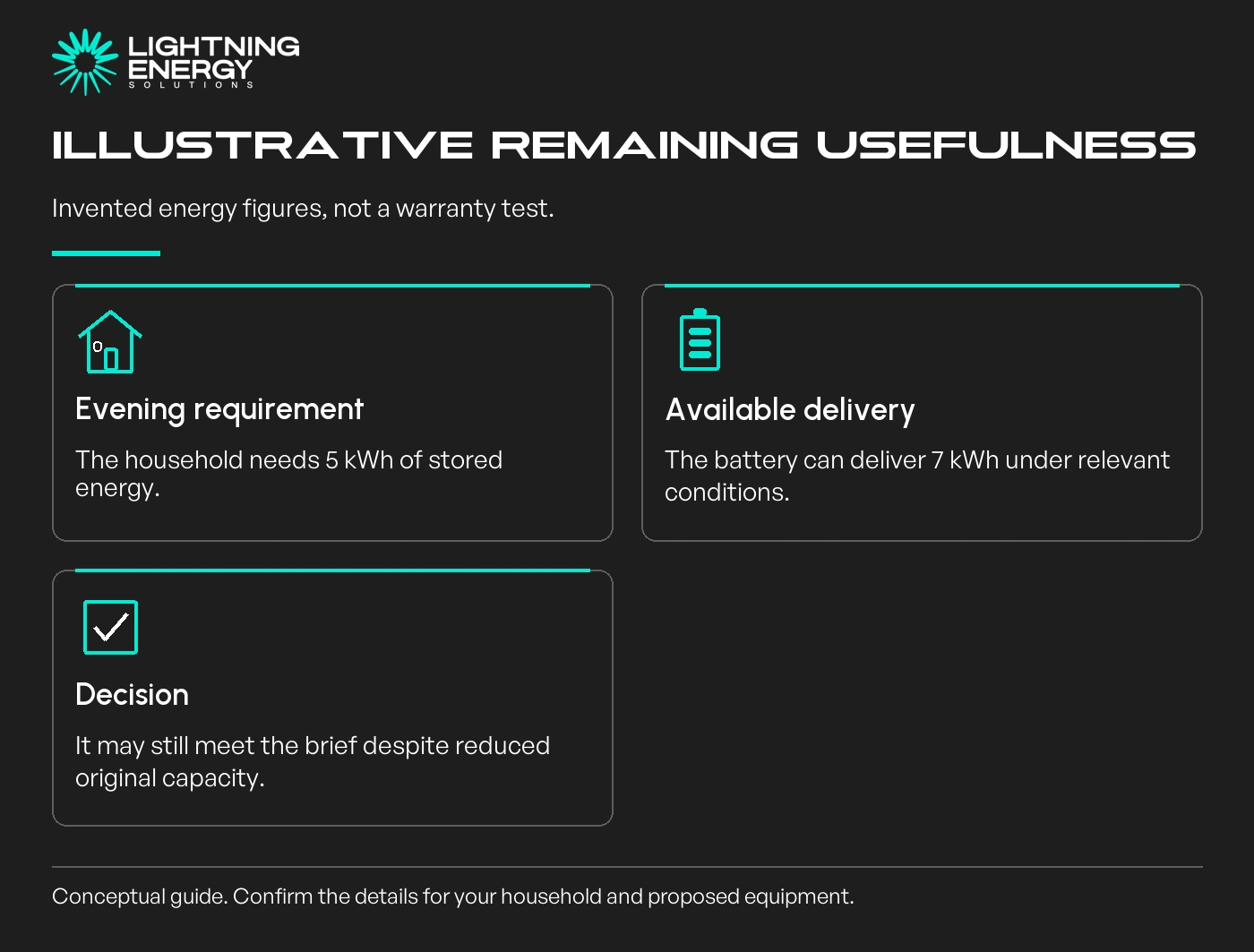
Do not confuse an app's present charge percentage with a tested capacity measurement. Use the manufacturer's assessment process if performance appears to have fallen materially.
Temperature, usage patterns and the product's operating limits belong in the assessment. So do installation quality, ventilation, firmware and faults in supporting components such as the inverter or controller.
Follow the actual owner's maintenance instructions. Tesla's APAC care guidance, for example, requires appropriate ventilation and access. Do not build a cover or enclosure around equipment without professional approval.
A battery assessment should consider a suitable location and access for future service, not only where a unit looks tidy on installation day.
ARENA hosts ITP's battery testing reports, including the March 2022 final report. The project provides useful evidence about the performance and reliability of the products tested under its programme.
ARENA battery testing report library.
The final report concerns selected products and accelerated testing. It cannot establish the lifetime of every current model, particularly generations introduced after testing ended.
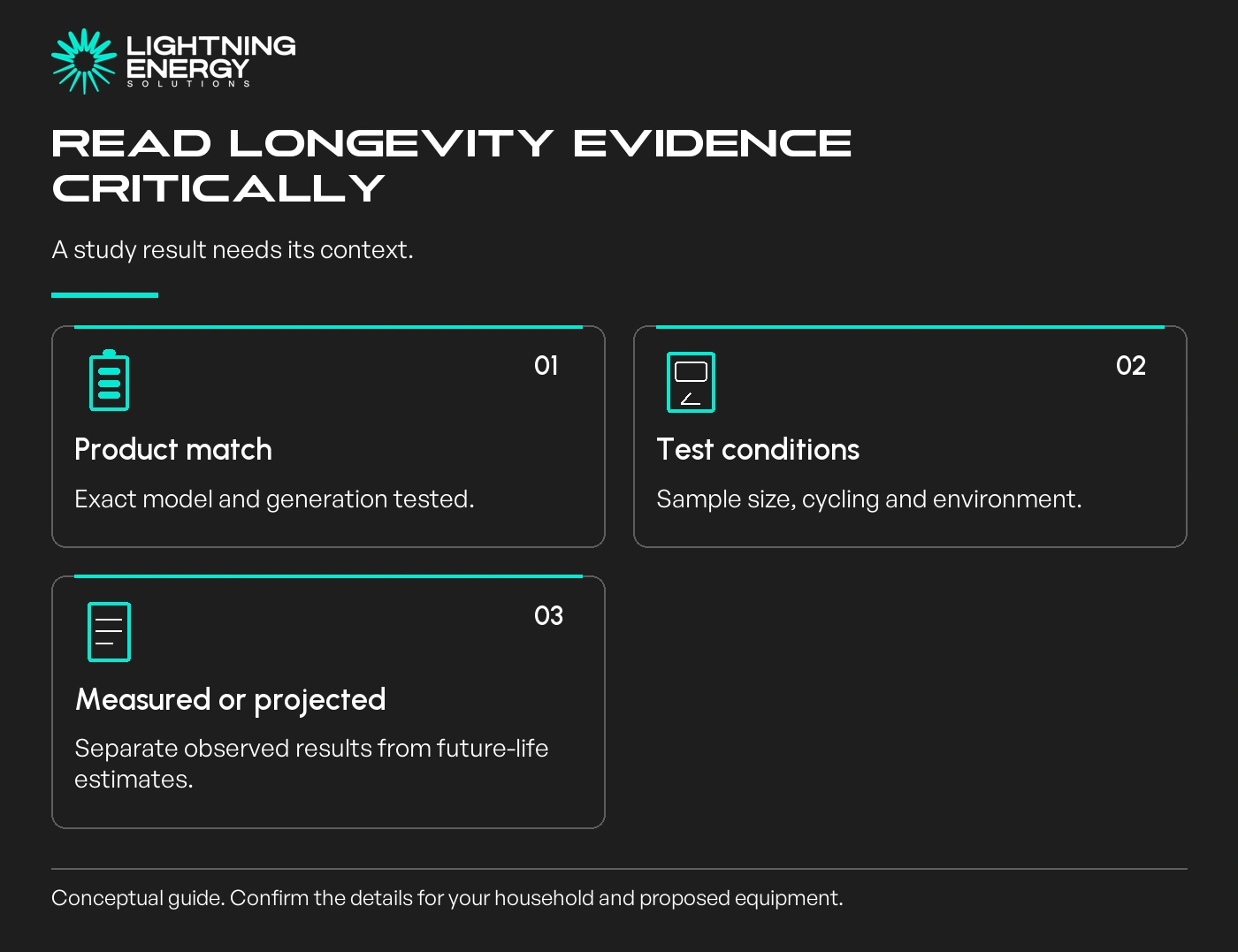
When reading a longevity claim, ask which exact model was tested, how many samples were involved, under what conditions and whether the claim is measured or projected. Avoid turning one owner's experience into a brand-wide failure rate.
Keep operating records and resolve faults promptly through the support pathway.
A serviceable battery with adequate capacity may be worth retaining; an unsuitable replacement purchase should not be triggered solely by a warranty anniversary.
The battery value guide should use realistic replacement and maintenance assumptions, with sensitivity to a shorter useful life rather than one guaranteed outcome.
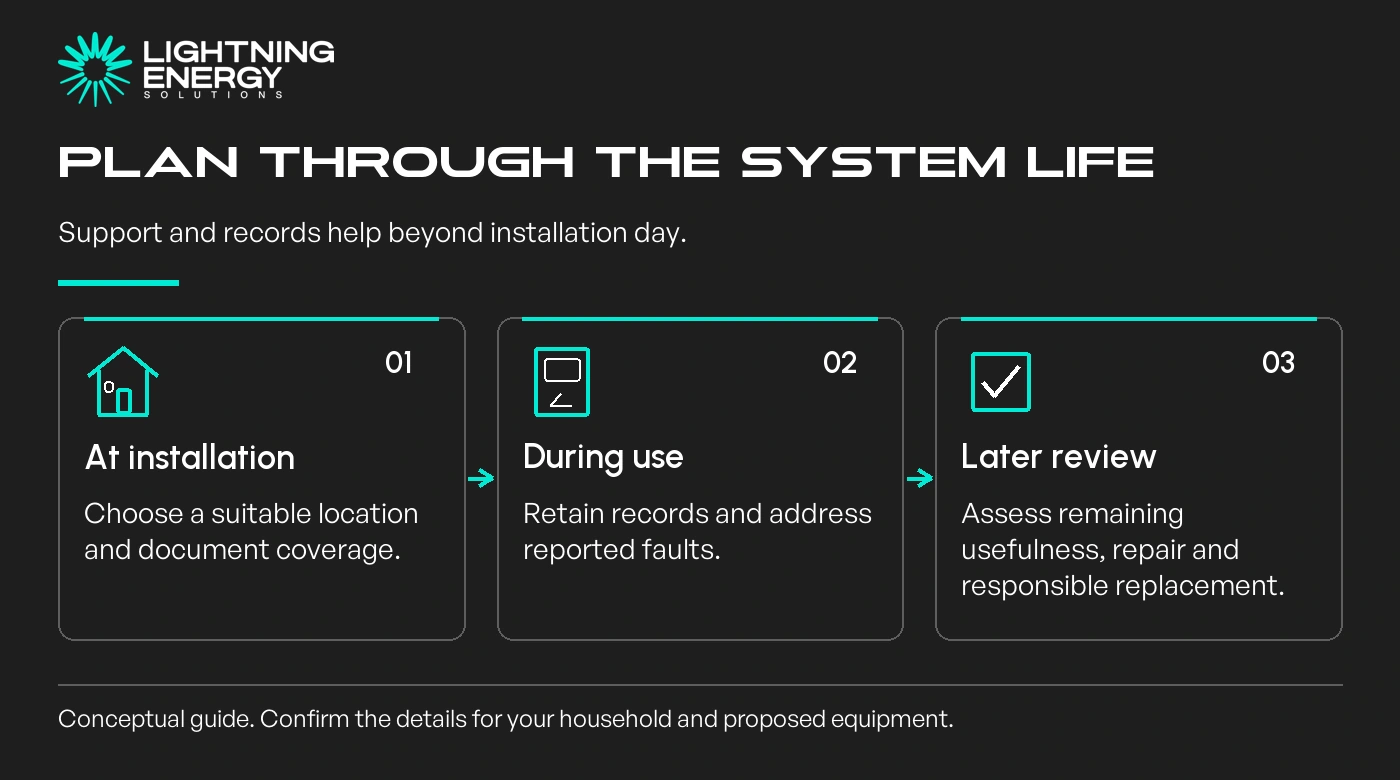
Ask about parts availability, compatible replacement options and professional recycling when the system eventually reaches end of service. Treat those future costs as planning questions rather than pretending they are known precisely today.
Plan your battery upgradeBring the product documents, current performance records and your changing household needs. We can distinguish a capacity concern from a fault and assess whether the existing system still meets its purpose.Available times
Book a consultation and we'll map solar, storage, hot water, and the rebates around your bills and your goals.
Question 1 of 6
