
Measuring Heat Pump Savings in a Solar and Battery Home
Measure heat pump hot water savings with appliance data, comparable household use and current tariffs, while separating solar exports and battery effects.
Measure heat pump hot water savings with appliance data, comparable household use and current tariffs, while separating solar exports and battery effects.

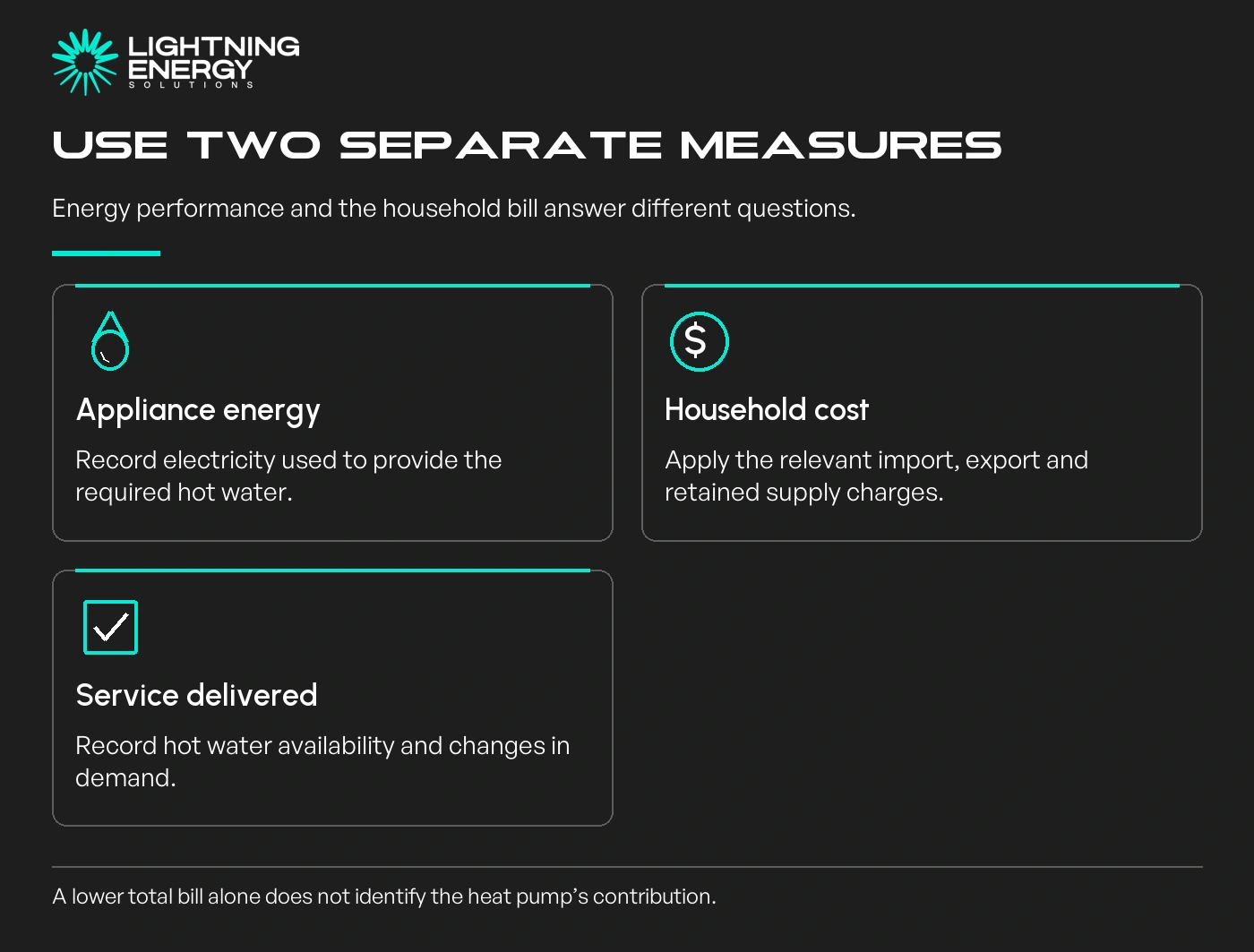
A smaller electricity bill does not, by itself, measure the savings from a new heat pump. Solar output, battery operation, tariffs, weather and household routines may all have changed at the same time.
Use two comparisons: how much energy the water heater needs, and what that energy costs the household. Keep your comfort and hot water availability in the record as well.
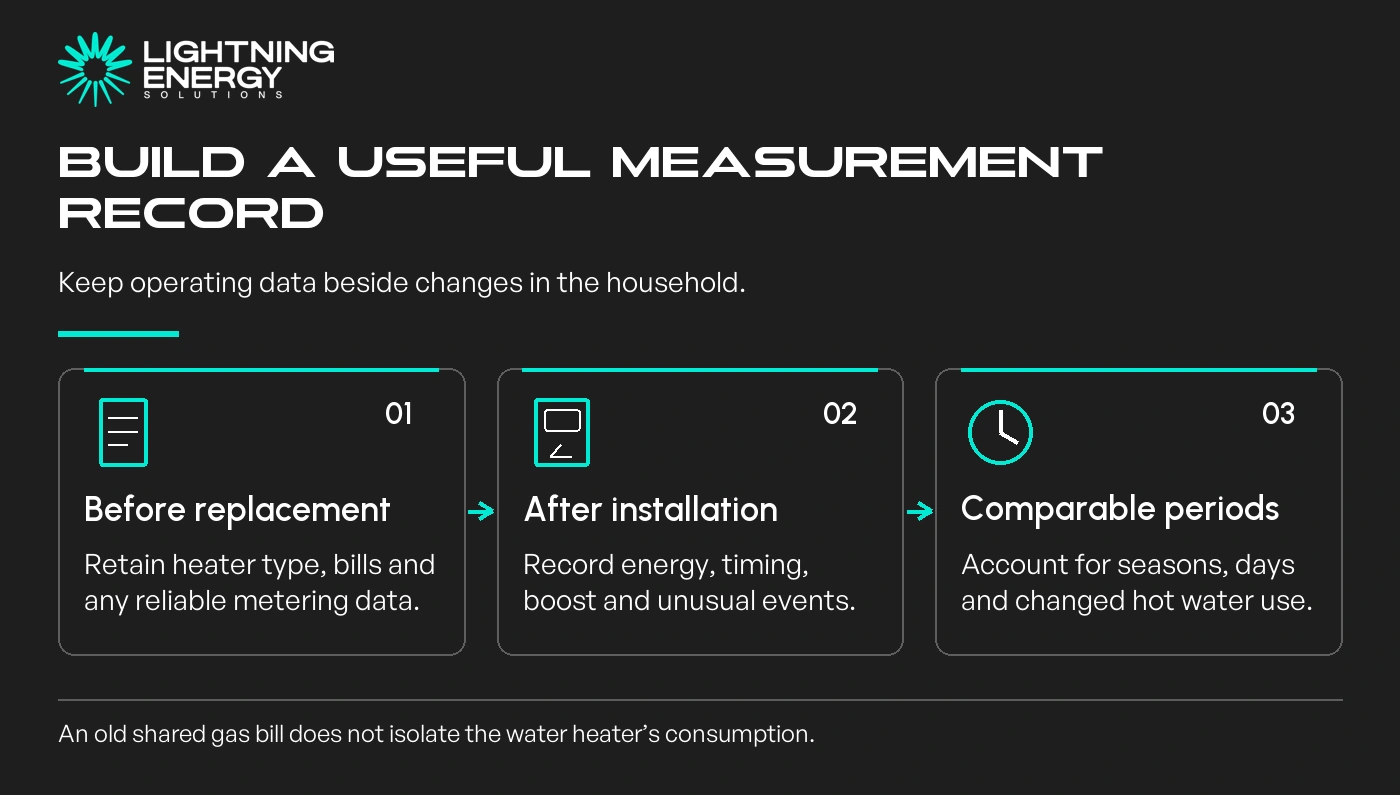
Keep the old heater’s type, operating schedule, bills and installation date. Record occupancy and unusual use, such as visitors, long absences or a new daily bath routine.
If the previous gas bill also included cooking and heating, its entire consumption cannot be assigned to hot water. Note that limitation instead of presenting a precise appliance saving from incomplete data.
For a previously separately metered electric heater, check whether the reading covers that appliance alone. A tariff label is useful evidence, but ask the retailer to confirm the actual metering arrangement.
Our heat pump guide explains the equipment choice. Measurement begins with an honest baseline, including what the available records cannot tell you.
Do not compare one summer bill with one winter bill and call the difference an annual result. Keep season and billing-period length visible in the comparison.
Ask which monitoring figures are measured and which are estimated. A controller’s remaining-water estimate is not necessarily an electricity meter reading.
Where appropriate, an electrician can assess dedicated energy monitoring. Do not fit monitoring inside a switchboard or alter the hot water circuit yourself.
Record daily electricity use, operating times, boost events and any hot water shortage. Read these alongside the household diary rather than labelling every higher-use day a fault.
Solar Victoria recommends useful monitoring features for eligible systems, but not every listed feature is mandatory or available on every product.
Current hot water programme requirements.
Review daytime hot water settings with the installer. Change one setting at a time so its effect can be distinguished from other changes.
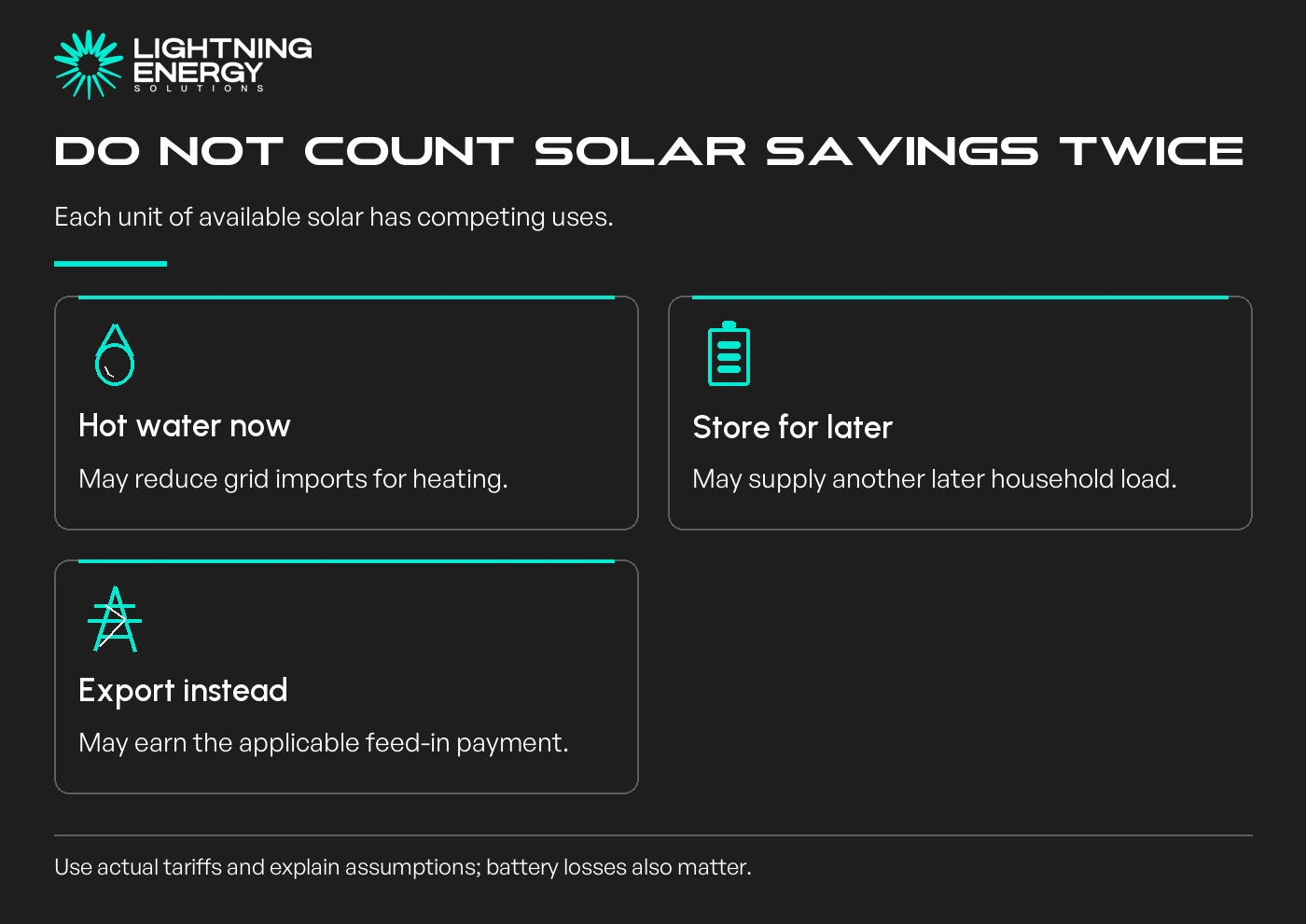
Grid energy has the relevant import price. Direct solar use can reduce exports, so its opportunity cost includes the export payment you otherwise could have received.
With a home battery, the comparison also depends on what stored energy would otherwise have supplied, plus storage losses. Do not count the same solar kilowatt-hour as both a hot water saving and a battery saving.
The government’s financial guide explains the import and export trade-off.
For illustration only, suppose 2 kWh used for hot water would otherwise have been exported at 5 cents per kWh. The foregone export income is 10 cents, rather than a claim that those 2 kWh had no value.
That example is not a consumption forecast or a current tariff offer. Use your actual rates and measured allocation where available; label assumptions where the monitoring cannot distinguish energy sources.
Compare equivalent periods using the same tariff assumptions first. Then show separately how a changed electricity plan affected the actual bill.
Include servicing and any retained gas supply charge when assessing household cost. Only remove the gas charge from the estimate when the final gas account and connection arrangements actually permit it.
A useful summary might show observed daily energy, estimated annual cost range and whether the household consistently had enough hot water. Explain the seasonal and usage assumptions behind annualisation.
If consumption rises unexpectedly, check changed water use, timing, boost operation and error messages with the installer. Do not suppress necessary heating simply to improve the chart.
Hold off on purchasing extra monitoring if the system already supplies reliable data for the decision you need. Better records are valuable when they answer a specific question.
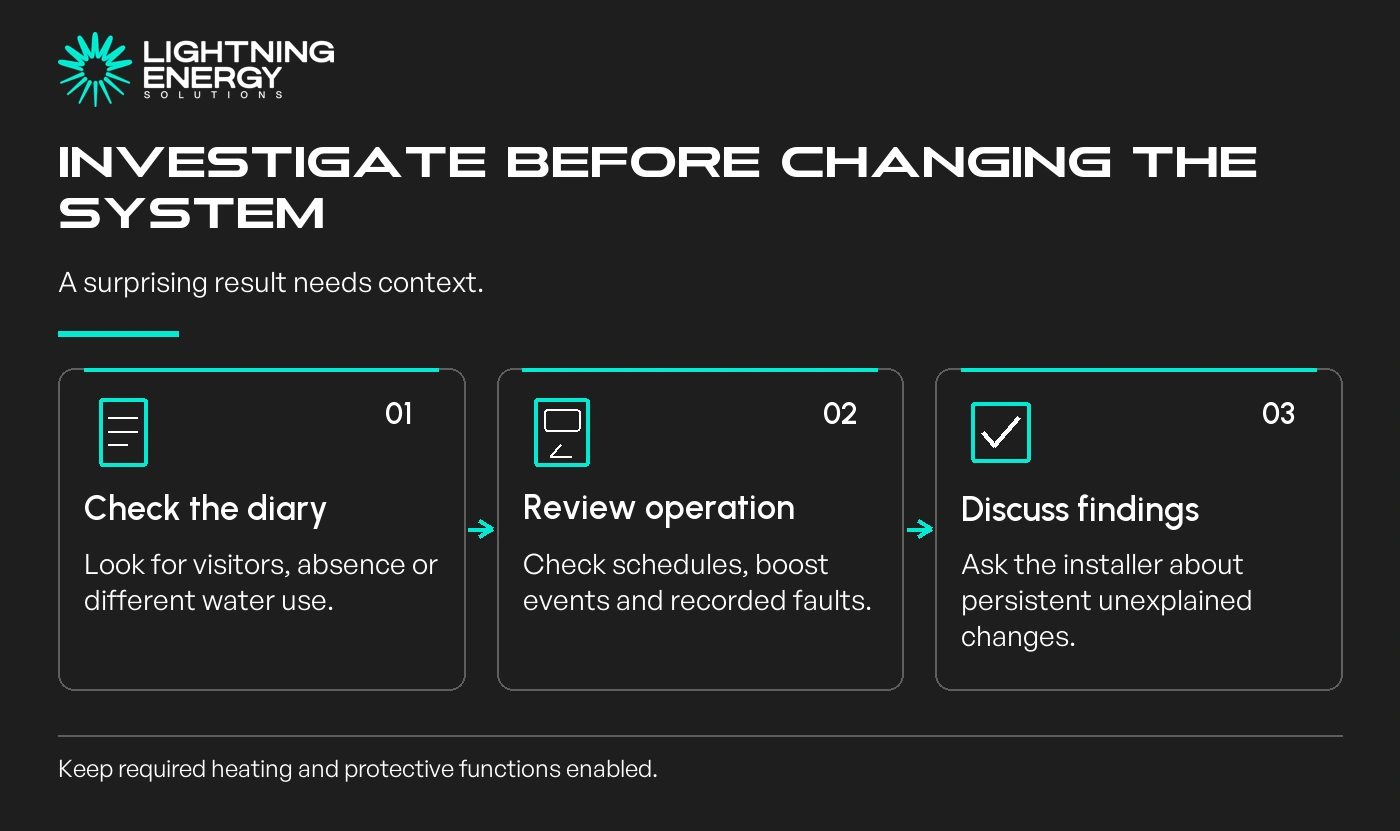
Bring bills, operating data and a short usage diary when you request a performance review. The aim is a defensible comparison and reliable hot water, not the lowest isolated number.
Available times
Book a consultation and we'll map solar, storage, hot water, and the rebates around your bills and your goals.
Question 1 of 6
