
Keep Evaporative Cooling or Remove It When Adding Reverse-Cycle Heating?
Decide whether to retain evaporative cooling when adding reverse-cycle heating by reviewing summer comfort, maintenance, winter draughts and the removal scope.
Decide whether to retain evaporative cooling when adding reverse-cycle heating by reviewing summer comfort, maintenance, winter draughts and the removal scope.

You can assess a working evaporative cooler separately from a new reverse-cycle heating system. Keeping it may preserve a cooling option you like, while removing it can simplify equipment, roof openings and maintenance.
The decision depends on its condition and actual usefulness through Melbourne summers. There is no requirement to keep two systems merely because both already have ducts.
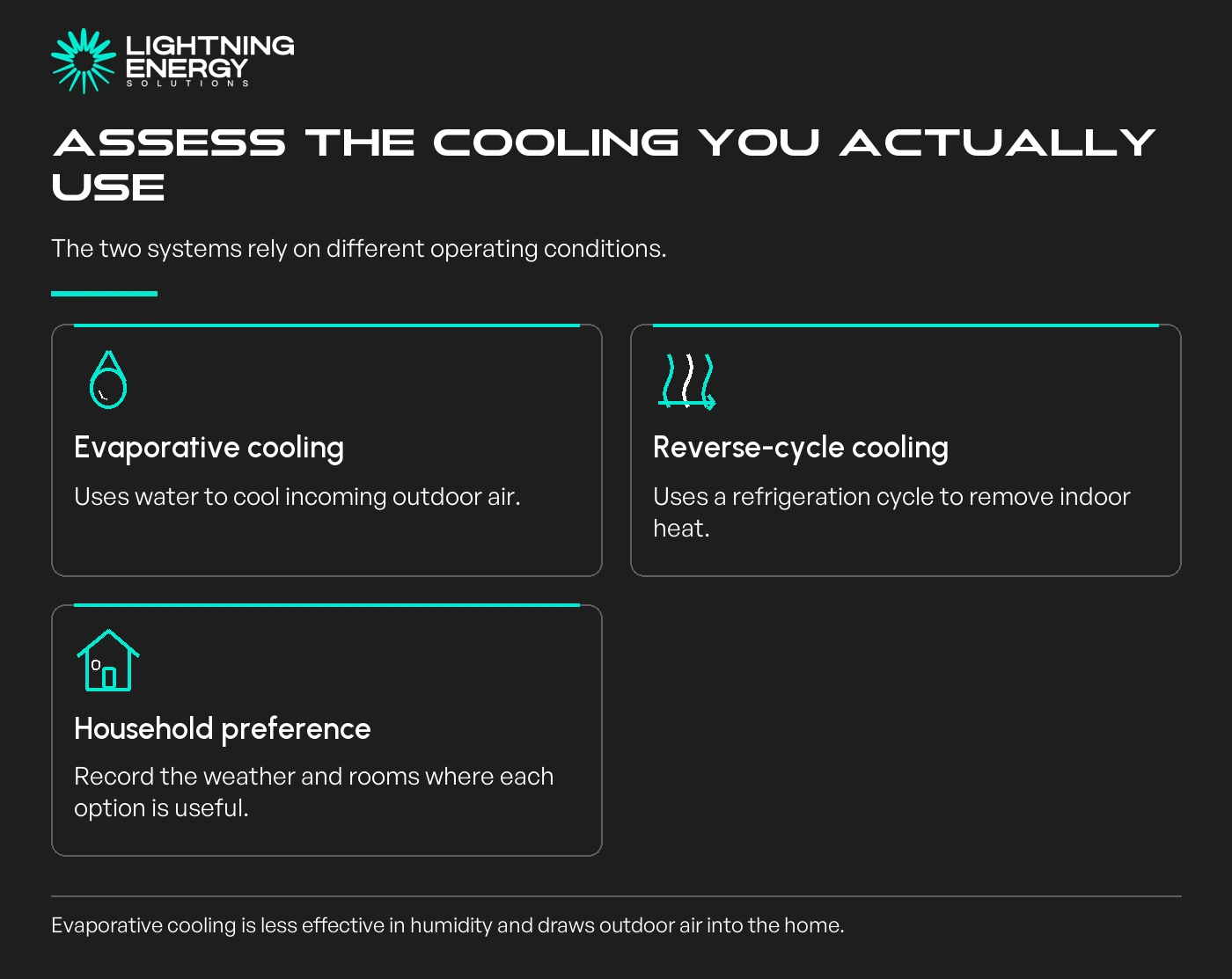
Evaporative cooling uses water evaporation to cool incoming outdoor air. It performs differently from refrigerated reverse-cycle cooling and is less effective in humid conditions.
Evaporative cooling needs suitable openings for moist air to leave the home. Because it draws outdoor air inside, check the manufacturer’s instructions and current public-health advice before using it during smoke events.
YourHome heating and cooling guidance.
List the days and rooms where it provides satisfactory comfort, and the circumstances where it does not. Use that history when setting the new air conditioning brief.
For an illustrative household, a well-maintained cooler may be useful in dry weather, while occupants still want refrigerated cooling for humid periods. Another household may prefer one system with a simpler operating routine.
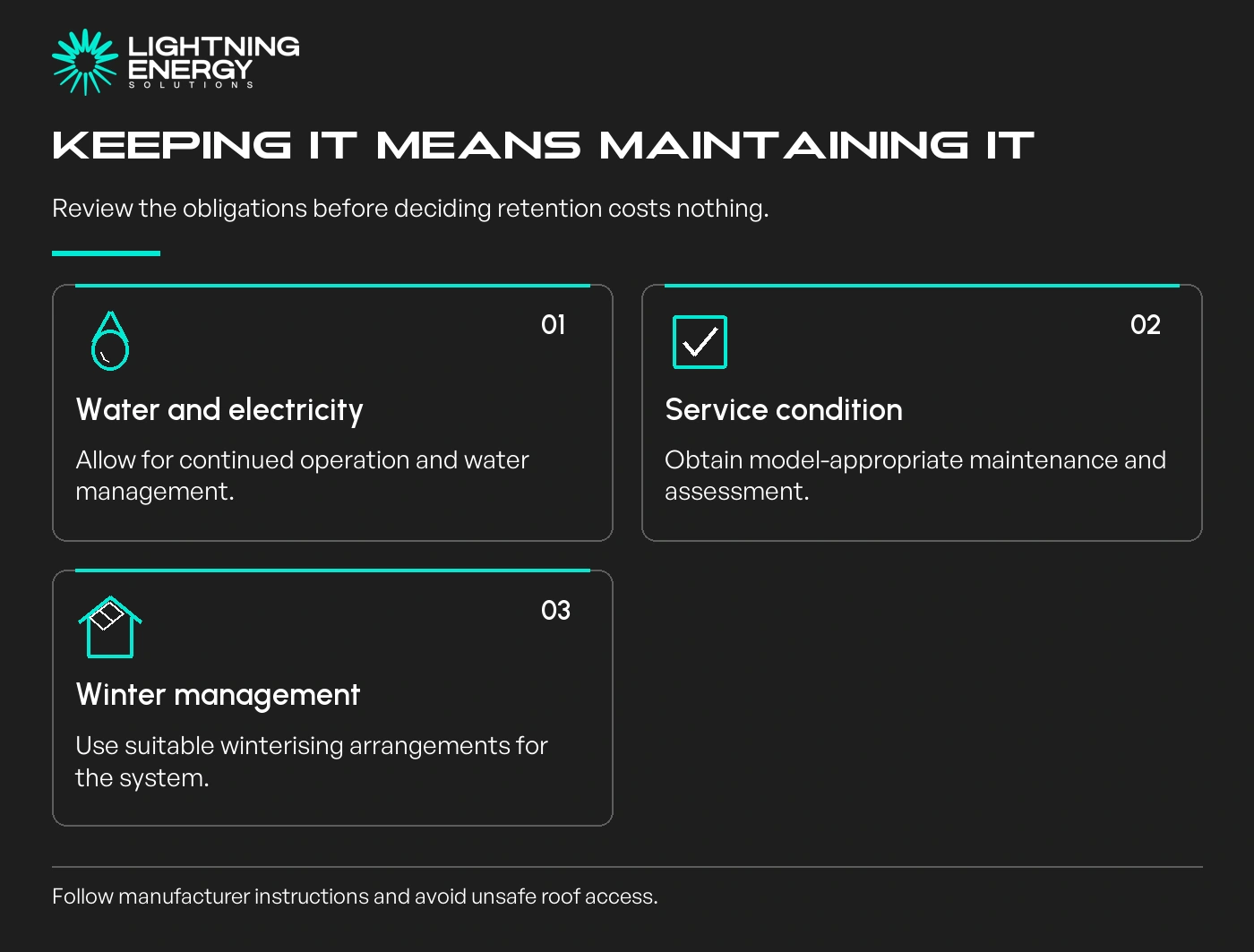
A retained evaporative cooler continues to use water and electricity and needs maintenance according to its instructions. Low purchase cost today does not mean there is no ongoing obligation.
Ask a qualified service provider about its condition and likely near-term work. Avoid deciding from appearance alone when the unit or water-management components have not been assessed.
Unused evaporative outlets and roof equipment can contribute to winter heat loss if not properly managed. Suitable winterising arrangements need to match the system and remain safe to use.
YourHome heating and cooling guidance.
Do not climb onto the roof or improvise permanent outlet seals as part of this decision. Ask the service provider to explain the appropriate owner routine and any professional work required.
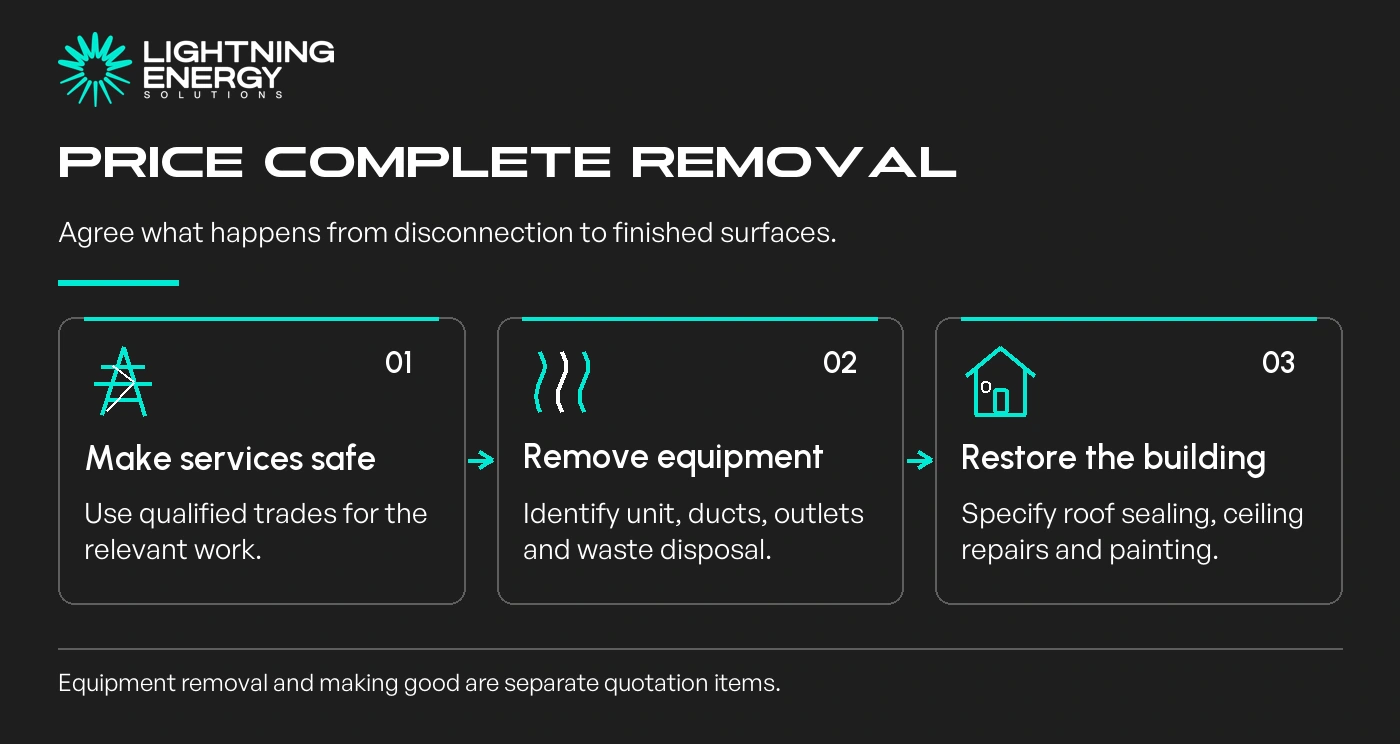
Request separate scopes for keeping the cooler operational and removing it. The removal option should identify the roof unit, ducts, outlets, water and electrical services, waste disposal and building repairs.
Ask who seals the roof opening and patches affected ceilings. A quote that only says “remove cooler” may not describe a finished, weather-tight and visually completed result.
The new ducted package needs its own designed supply and return arrangement. Do not assume old evaporative ducts become suitable reverse-cycle ducts because both move air.
YourHome describes the different operating principles and distribution requirements of household cooling systems.
YourHome heating and cooling guide.
Coordinate roof work with existing or planned solar panels, including safe access and any building repairs. The installer should assess the actual roof rather than promise that removal has no interaction with other equipment.
If both systems remain, ask for clear instructions on which one to use and the required window or door arrangement. Do not combine them under an improvised strategy that works against either design.
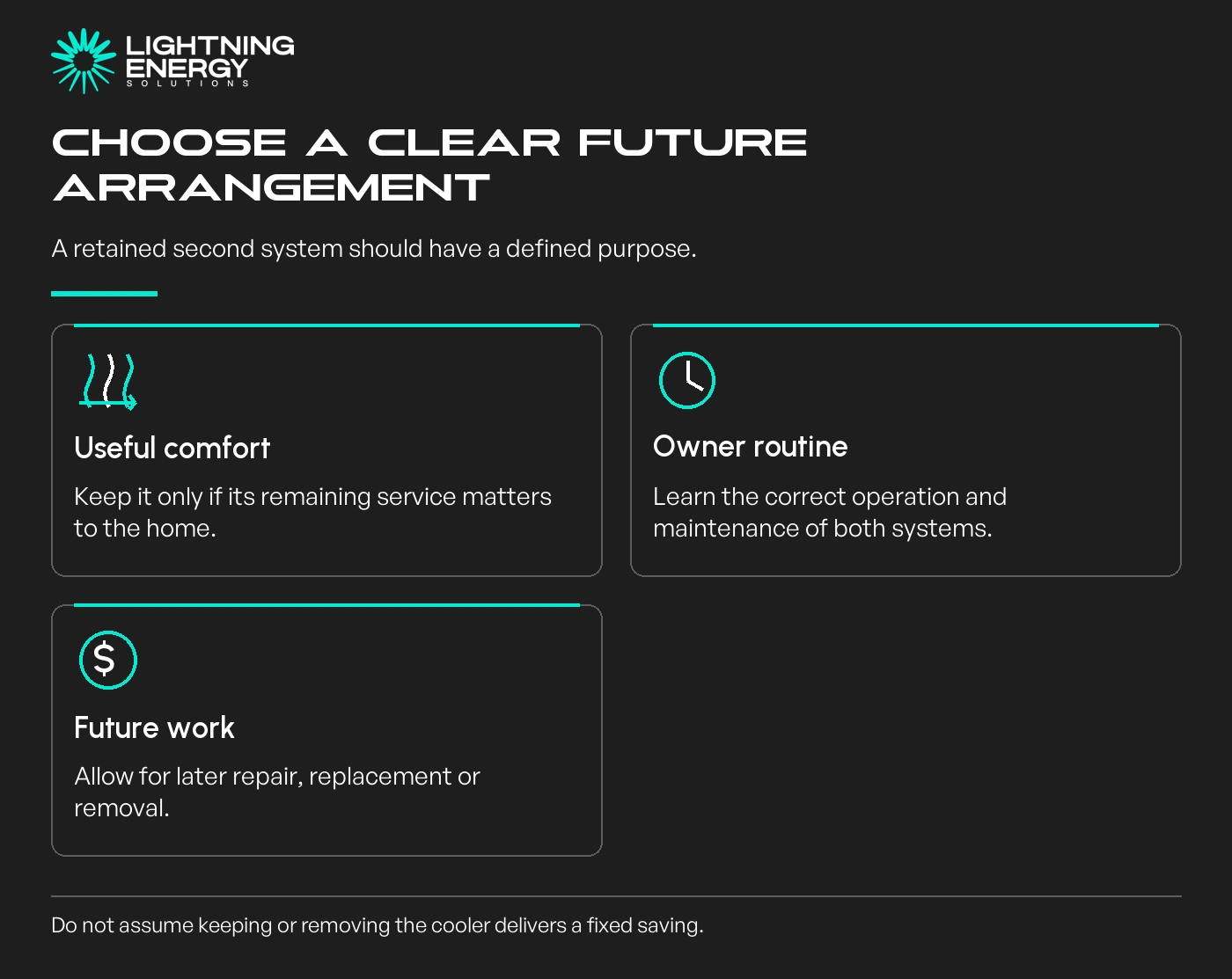
Record the retained cooler’s maintenance responsibility and consider what happens when it reaches replacement time. Keeping it now should not conceal a foreseeable removal job from the household budget.
If reverse-cycle cooling already meets the complete summer brief, retaining an unreliable evaporative system may add little value. Conversely, removing a sound useful cooler simply to make the project feel complete may be unnecessary.
Compare comfort, simplicity, maintenance and total project cost together. There is no universal saving from keeping or removing the second system.
Before accepting a discount-linked upgrade, confirm whether its rules impose any particular decommissioning requirements on the appliances in your actual scenario.
Bring the cooler’s model, service history and summer comfort notes when you request a changeover discussion. Choose retention or removal deliberately, with the remaining work and responsibilities written down.
Available times
Book a consultation and we'll map solar, storage, hot water, and the rebates around your bills and your goals.
Question 1 of 6
