
Choosing an Outdoor Air Conditioner Location Around Neighbours and Bedrooms
Choose an outdoor air conditioner location with neighbours, bedrooms, airflow and service access in mind, and check Victoria’s residential noise rules.
Choose an outdoor air conditioner location with neighbours, bedrooms, airflow and service access in mind, and check Victoria’s residential noise rules.

Choose the outdoor-unit location before installation day. The best available space must work for airflow, servicing and neighbours as well as looking tidy beside the house.
A low brochure noise figure does not guarantee that a unit will be unobtrusive outside a bedroom window. Position, surrounding surfaces, operating mode and mounting all deserve attention.
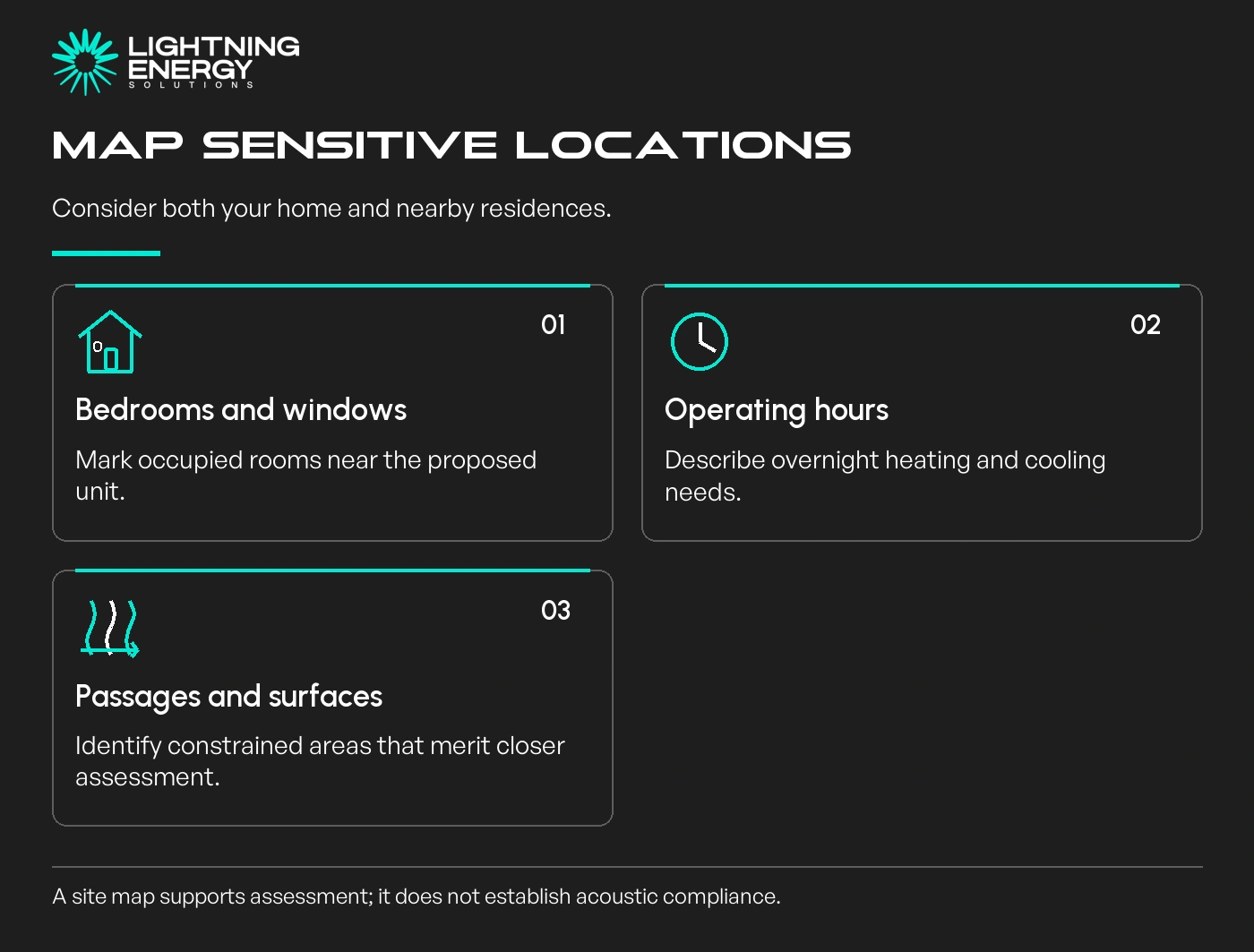
On the site plan, mark your bedrooms, the neighbour’s nearby windows, outdoor sitting areas and narrow side passages. Describe overnight heating and cooling use, not only daytime operation.
Ask the installer to compare feasible locations and explain the trade-offs. Moving farther away may change pipe routes or access, while a convenient wall may transmit vibration into an occupied room.
Bring these priorities into the air conditioning design before equipment and pipe routes are fixed. Ask for the selected position to be marked on the accepted scope.
For an illustrative terrace-style site, a narrow passage beside two bedroom windows may deserve closer assessment than a more open service area, even if both fit the unit’s footprint.
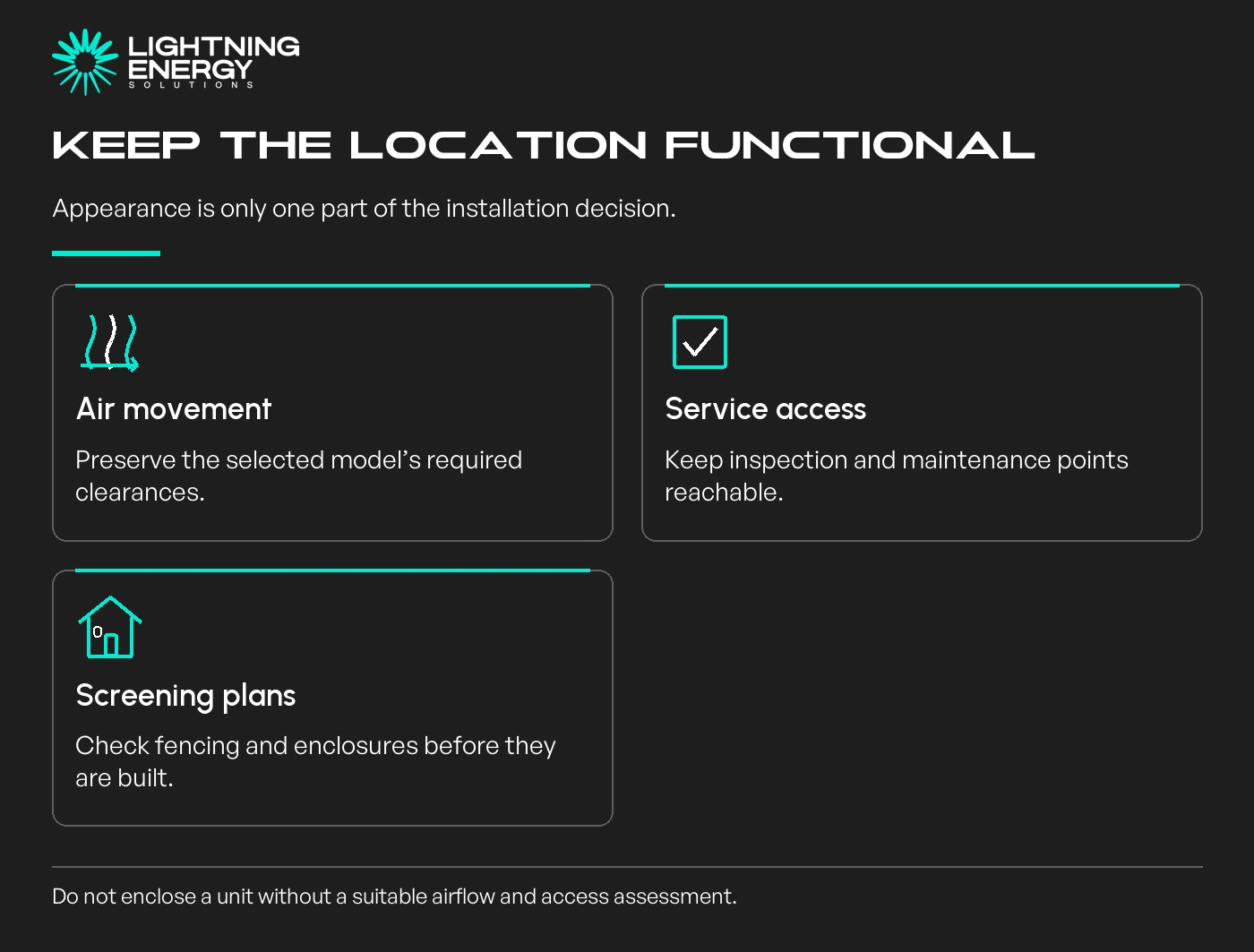
Manufacturer installation instructions specify required clearances and permitted arrangements for the exact model. Do not apply a single generic boundary distance to every unit and property.
Ask how discharged air can move away and how the technician will reach service points. Future fencing, screening and landscaping should be considered before they restrict the agreed location.
EPA Victoria identifies unit location, barriers and maintenance as factors in reducing household air conditioner noise.
EPA’s household noise guidance.
If a screen or acoustic treatment is proposed, have the design checked against airflow and access requirements. Do not build an improvised enclosure around an operating unit to hide it or suppress sound.
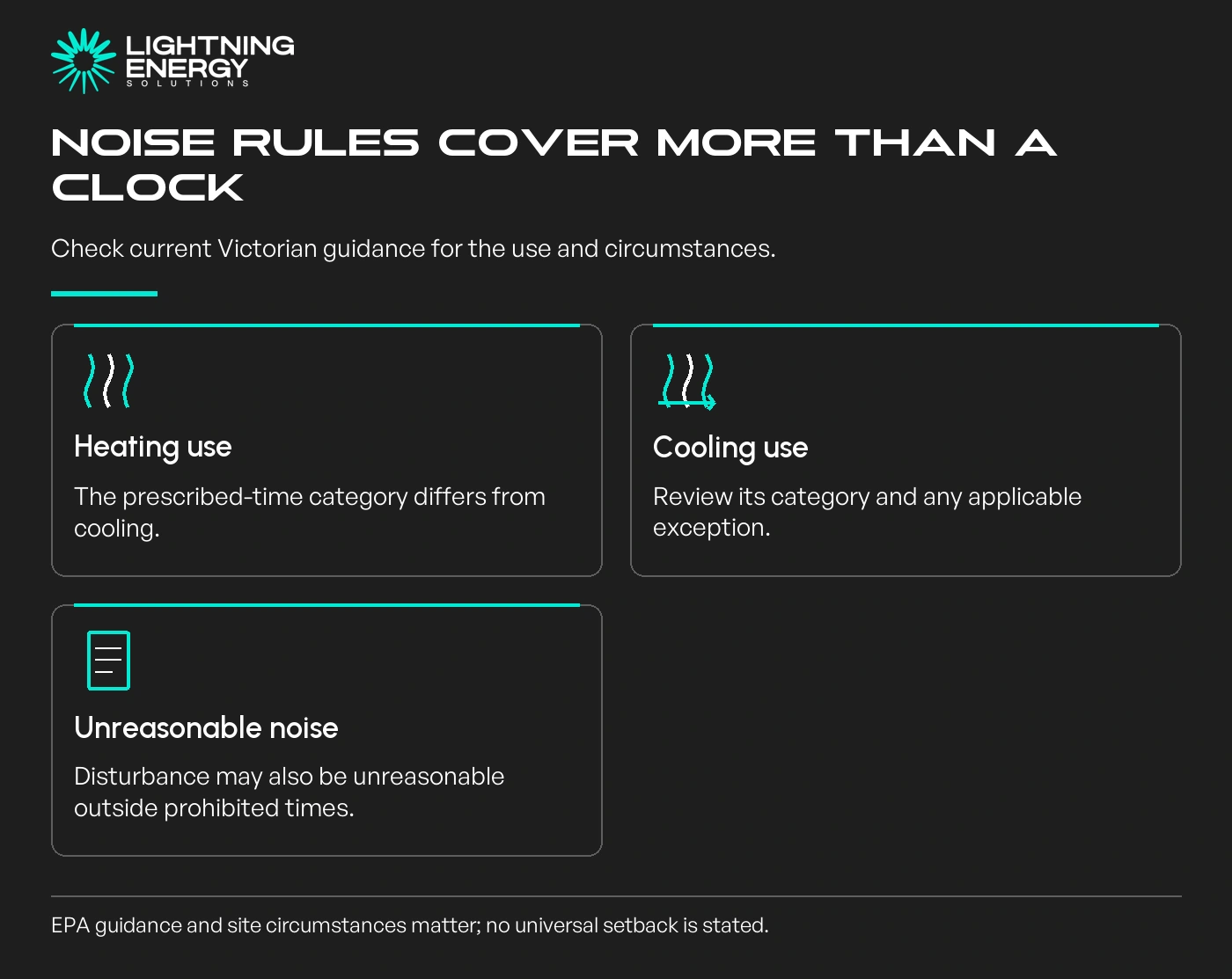
EPA Victoria treats air conditioning used for heating and cooling in different prohibited-time groups. Noise heard in a habitable room of another residence during the relevant times can be unreasonable.
Noise can also be unreasonable outside those times. A timetable is therefore not permission to create excessive disturbance during the day.
EPA’s current residential noise rules.
The guidance includes a heat-health-warning exception to prohibited times, while retaining the possibility of unreasonable noise. Read the current conditions rather than relying on a simplified social-media summary.
For a constrained site, ask the installer whether specialist acoustic input or relevant council checks are needed. A compliant product specification alone does not settle the effect of a particular installation.
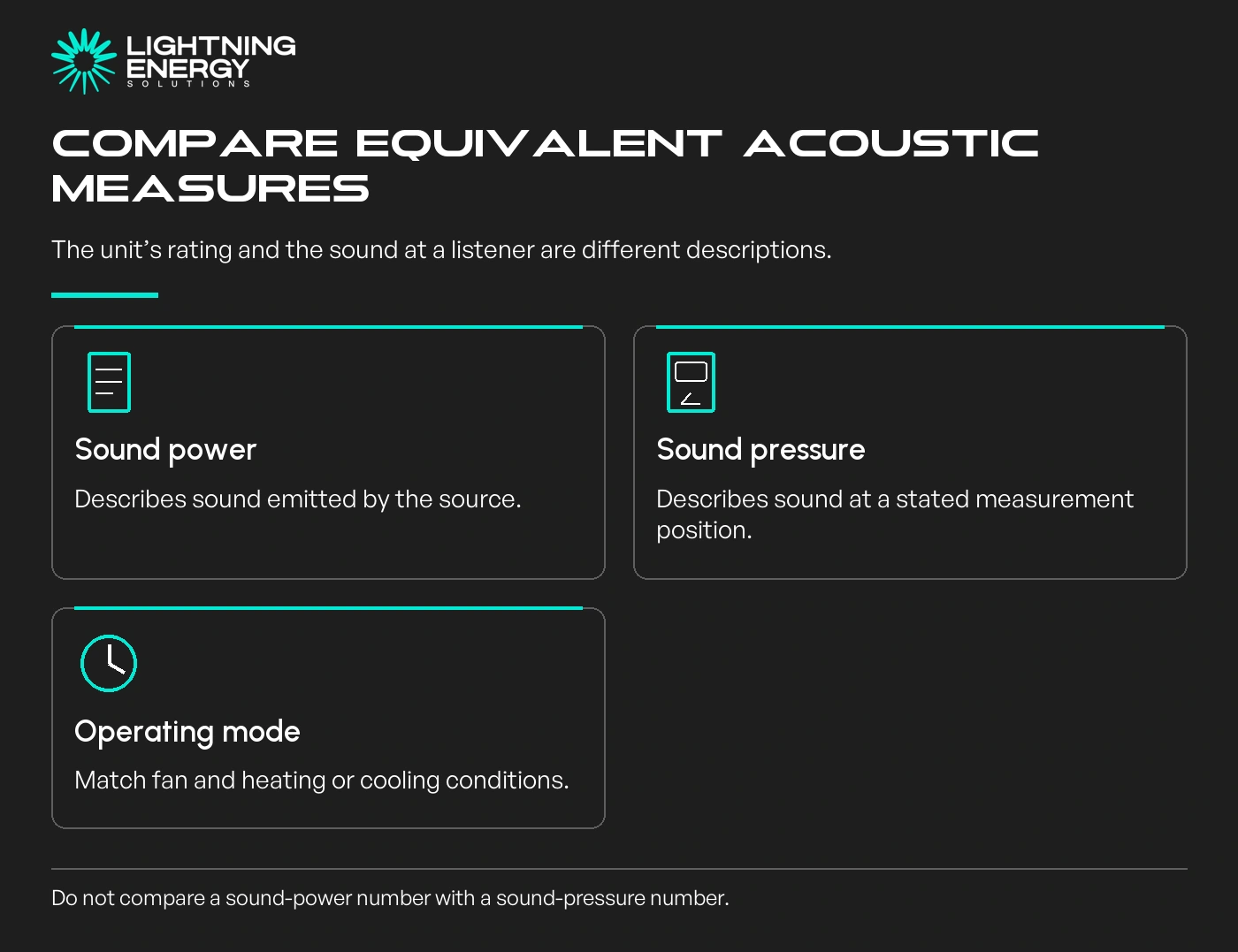
Sound power describes the sound emitted by a source. Sound pressure describes sound at a measurement position and is affected by conditions. Compare like measures under equivalent operating conditions.
Daikin explains the two sound measures.
Ask which heating and cooling modes the quoted values represent, and what any quiet setting changes. Avoid judging a full-output night-time requirement solely by a minimum-fan advertising number.
Coordinate outdoor space with a future heat pump water heater, and discuss combined positioning within your electrification plan.
If a working unit already causes concern, request inspection of the installation and operating pattern before deciding replacement is the only remedy. Record where and when the sound is most noticeable.
Take a marked site plan and your expected operating hours to a location assessment. Resolve neighbours, clearances, vibration and access while alternative positions are still practical.
Available times
Book a consultation and we'll map solar, storage, hot water, and the rebates around your bills and your goals.
Question 1 of 6