
Running Heat-Pump Hot Water and Reverse-Cycle AC on Solar Without a Battery
Use daytime solar for heat-pump hot water and reverse-cycle AC without a battery, while accounting for shared loads, cloudy weather and safe controls.
Use daytime solar for heat-pump hot water and reverse-cycle AC without a battery, while accounting for shared loads, cloudy weather and safe controls.

You do not need a home battery for solar to help run heat-pump hot water or reverse-cycle air conditioning. In a suitable grid-connected installation, solar can supply part of their demand while it is being generated.
The limitation is timing and available power. If combined household demand exceeds solar output, the grid normally supplies the difference; scheduling alone does not guarantee solar-only operation.
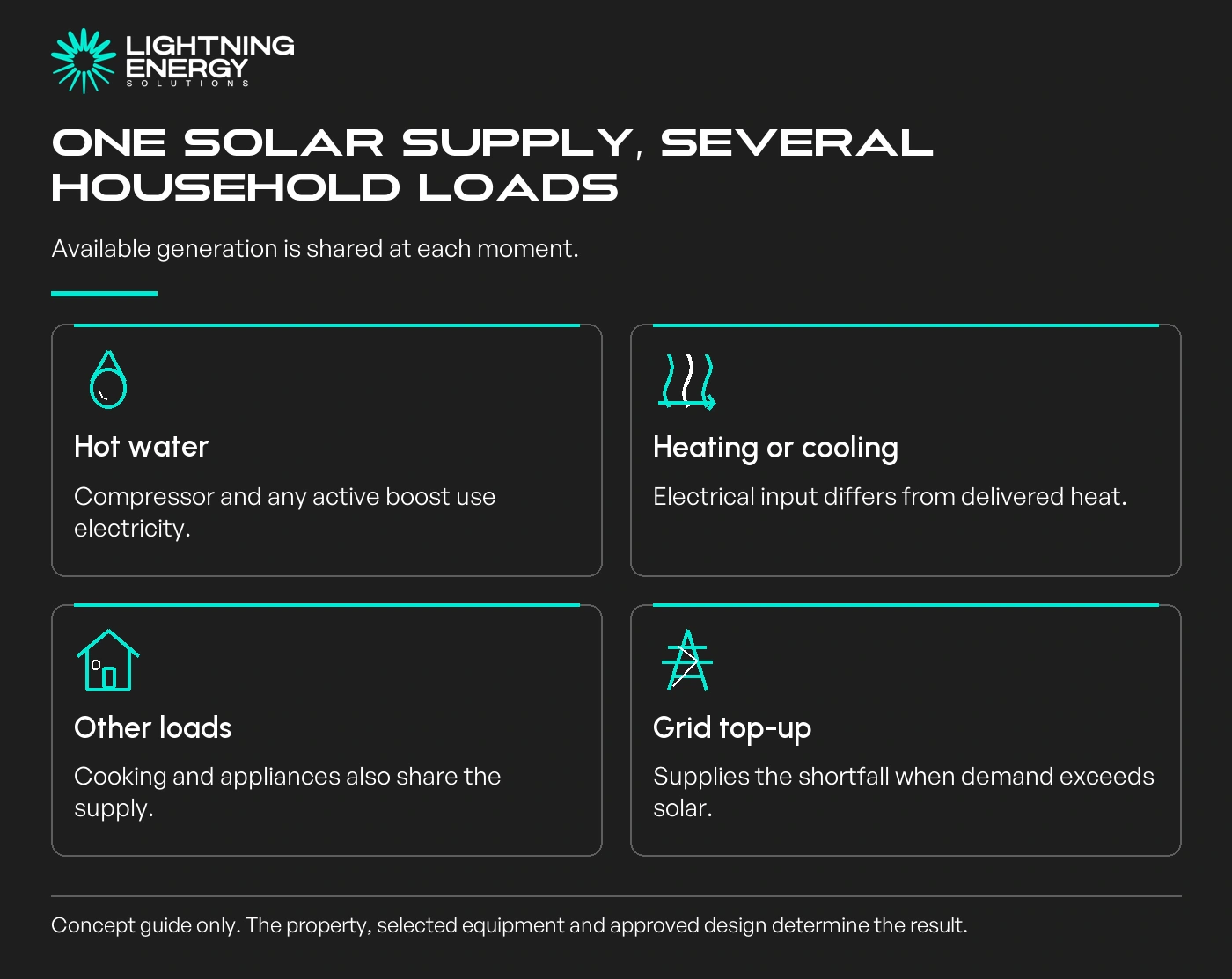
Check generation alongside whole-home consumption where suitable monitoring is installed. Hot water, air conditioning, cooking and other appliances share the same available supply.
An air conditioner's advertised heating capacity describes heat delivered, not its electrical input. Use the selected equipment's electrical information when assessing simultaneous demand.
Likewise, a hot-water tank's capacity does not tell you the compressor's power draw or whether a boost element is operating. The selected model and operating mode matter.
Government solar-use guidance recommends matching suitable existing loads with generation.
The relevant window is your roof's actual output, not an assumed midday surplus on every day.
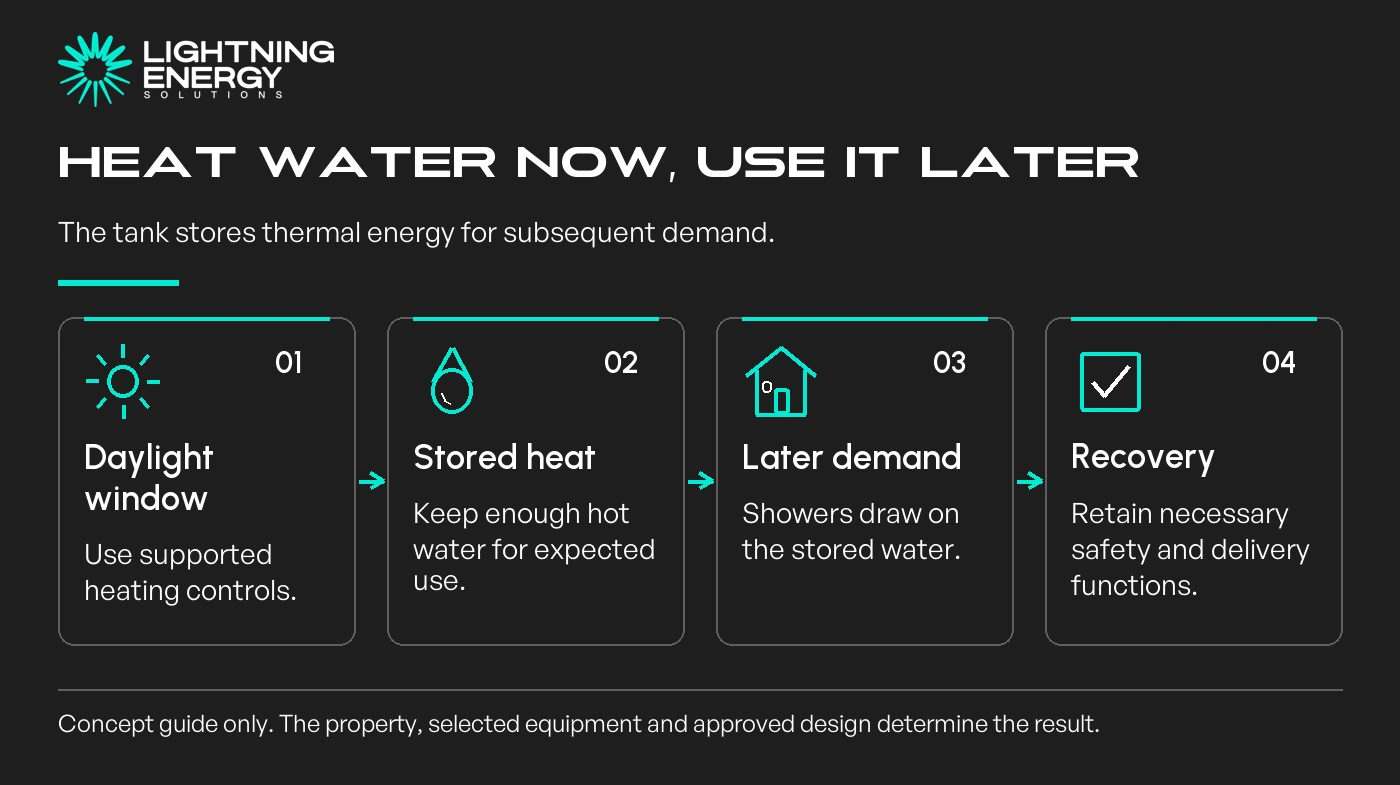
A suitable heat-pump system can heat stored water during daylight for later use. The tank stores heat, so the water does not need to be reheated at the exact moment every shower starts.
However, the heating window must allow recovery after the household's real demand. Colder conditions, incoming water temperature and consecutive showers can affect how much recovery is needed.
Use supported timer settings and retain manufacturer-required hygiene, frost protection and recovery functions. Do not isolate the electricity supply with an improvised timer to force a solar-only schedule.
Solar Victoria's current programme hot-water requirements explicitly preserve necessary operation outside a normal heating window.
This is not permission to override the selected product's controls.
Reverse-cycle air conditioning can take advantage of daylight generation when heating or cooling is actually needed. Occupancy, room use and the building's ability to retain temperature determine the value.
Preconditioning may shift some demand, but heating or cooling an empty house excessively can waste energy. Choose a comfortable, proportionate schedule rather than maximising the app's self-consumption percentage.
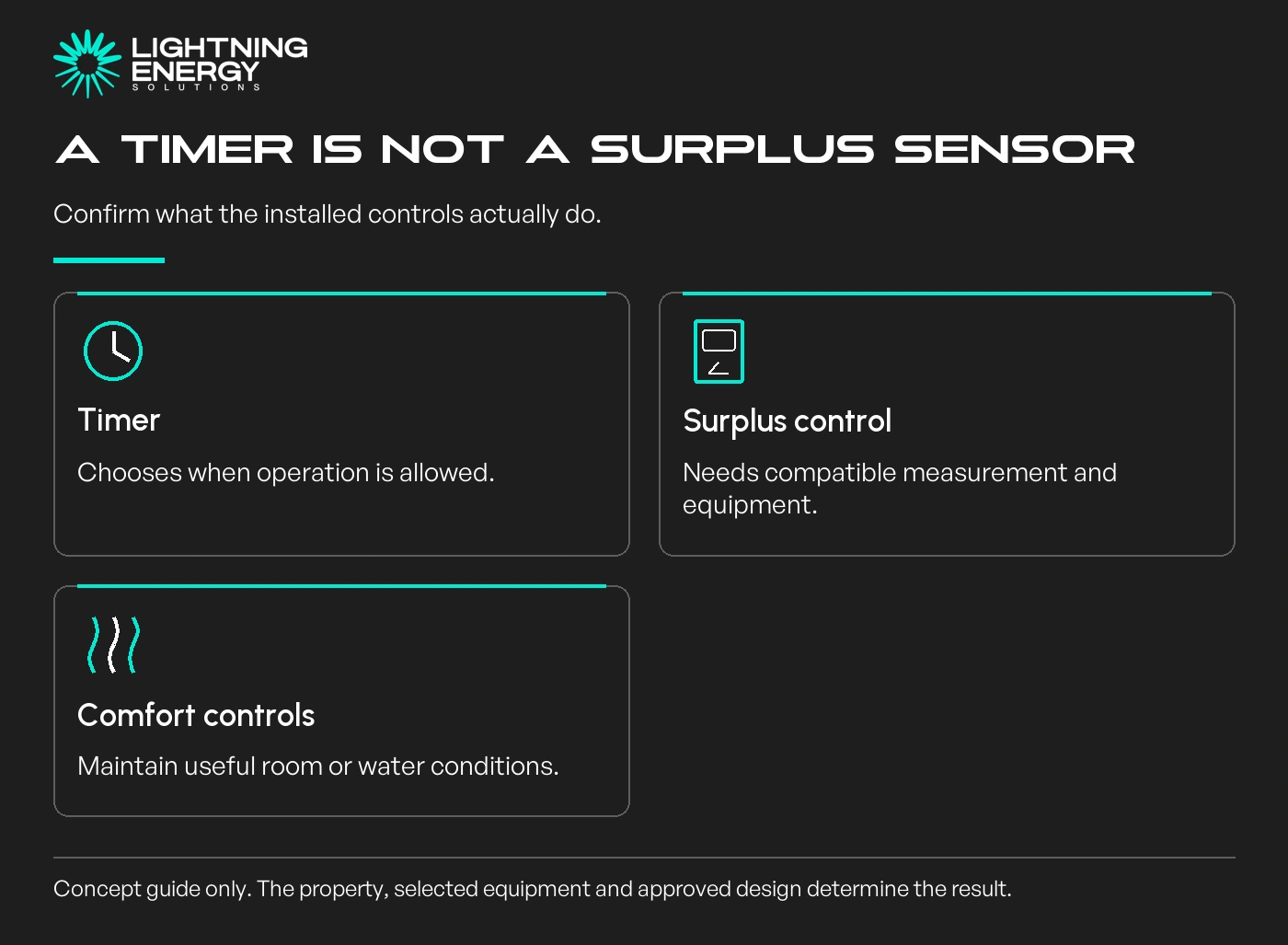
The government smart-home guide describes scheduling options. Compatibility varies, and a Wi-Fi app does not necessarily measure solar surplus or coordinate with another appliance.
Our solar service guide explains the generation side. A timer chooses an operating window; a compatible energy-management system may respond to measured conditions. Those are different functions.
Imagine a household heating water while cooling occupied rooms on a sunny afternoon. If a cloud passes or cooking begins, grid imports can increase even though both appliances are running inside the chosen solar window.
That is not necessarily a fault. The schedule may still reduce imports over the day, but you need measured data to see whether the change helped.
Staggering flexible tasks may reduce overlapping demand. Keep hot-water availability, comfort and safe appliance use ahead of an attempt to make every minute look perfect in the monitoring app.
Where hot water is on a separate controlled-load arrangement, ask an electrician and retailer how it is connected before assuming rooftop solar can supply it directly.
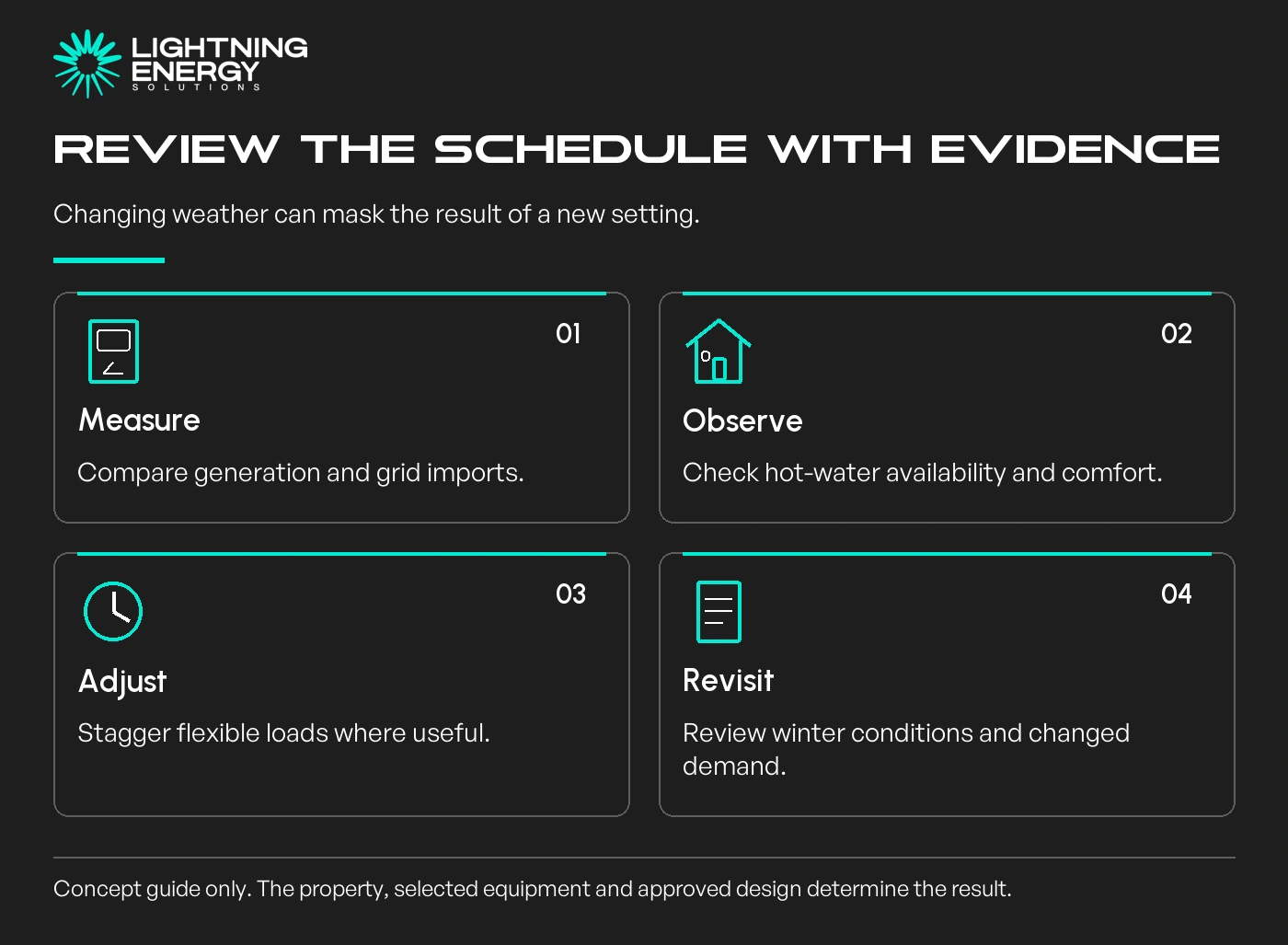
Record the previous schedule, then make a supported adjustment with appropriate installer guidance. Compare useful periods of generation, imports and comfort, allowing for different weather and household use.
Our hot-water timer article looks more closely at winter recovery. A summer setting may need reassessment when days shorten and demand changes.
A battery may be considered later if the remaining evening demand justifies it. First understand what the existing solar and appliances can achieve together without adding another investment.
The objective is reliable hot water and comfortable rooms with sensible electricity use. Some grid top-up is a normal outcome when available solar and household needs do not coincide.
Available times
Book a consultation and we'll map solar, storage, hot water, and the rebates around your bills and your goals.
Question 1 of 6
