
Sizing Solar for Future Electric Heating, Hot Water, a Battery and an EV
Plan solar around future heating, hot water and EV use with realistic timing, winter demand and roof constraints, rather than one inflated annual total.
Plan solar around future heating, hot water and EV use with realistic timing, winter demand and roof constraints, rather than one inflated annual total.

Size a future-ready solar system around appliances you genuinely expect to install and when they will use electricity. A list of possible upgrades is useful, but it is not yet a demand forecast.
Separate committed changes from ideas. Then compare a suitable system for today's home with a larger option and a staged expansion pathway, using the same assumptions for each.
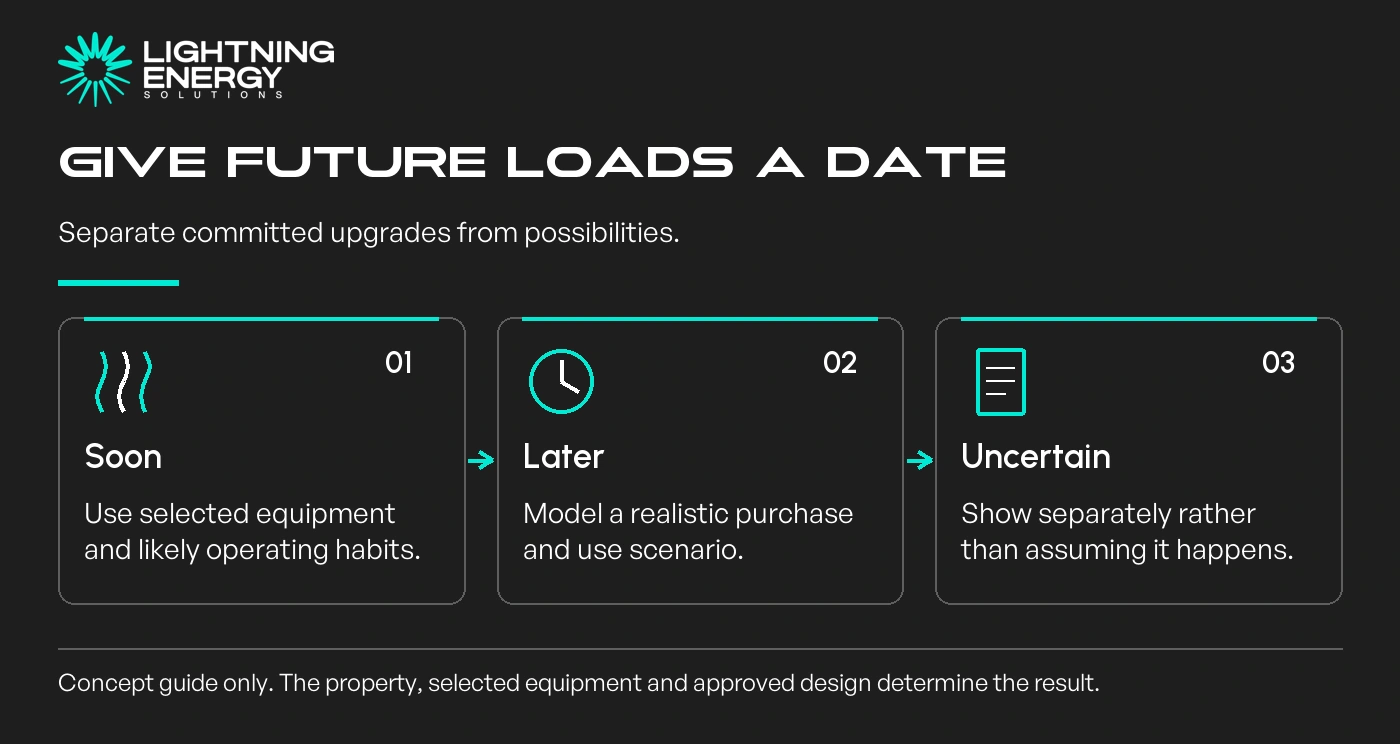
Record each appliance, its likely purchase date and how it will operate. An EV parked at home during the day presents a different solar opportunity from one that returns after sunset.
For electric heating, ask for a home-specific assessment. A gas bill cannot be converted directly into future electricity use without considering the replacement equipment, building and heating habits.
Our whole-home electrification guide helps organise the changes. The important input is a plausible usage pattern, not the biggest appliance catalogue number.
The government sizing guide explains why household consumption is central to design.
Include planned changes explicitly so the designer does not assume your latest electricity bill represents the finished home.
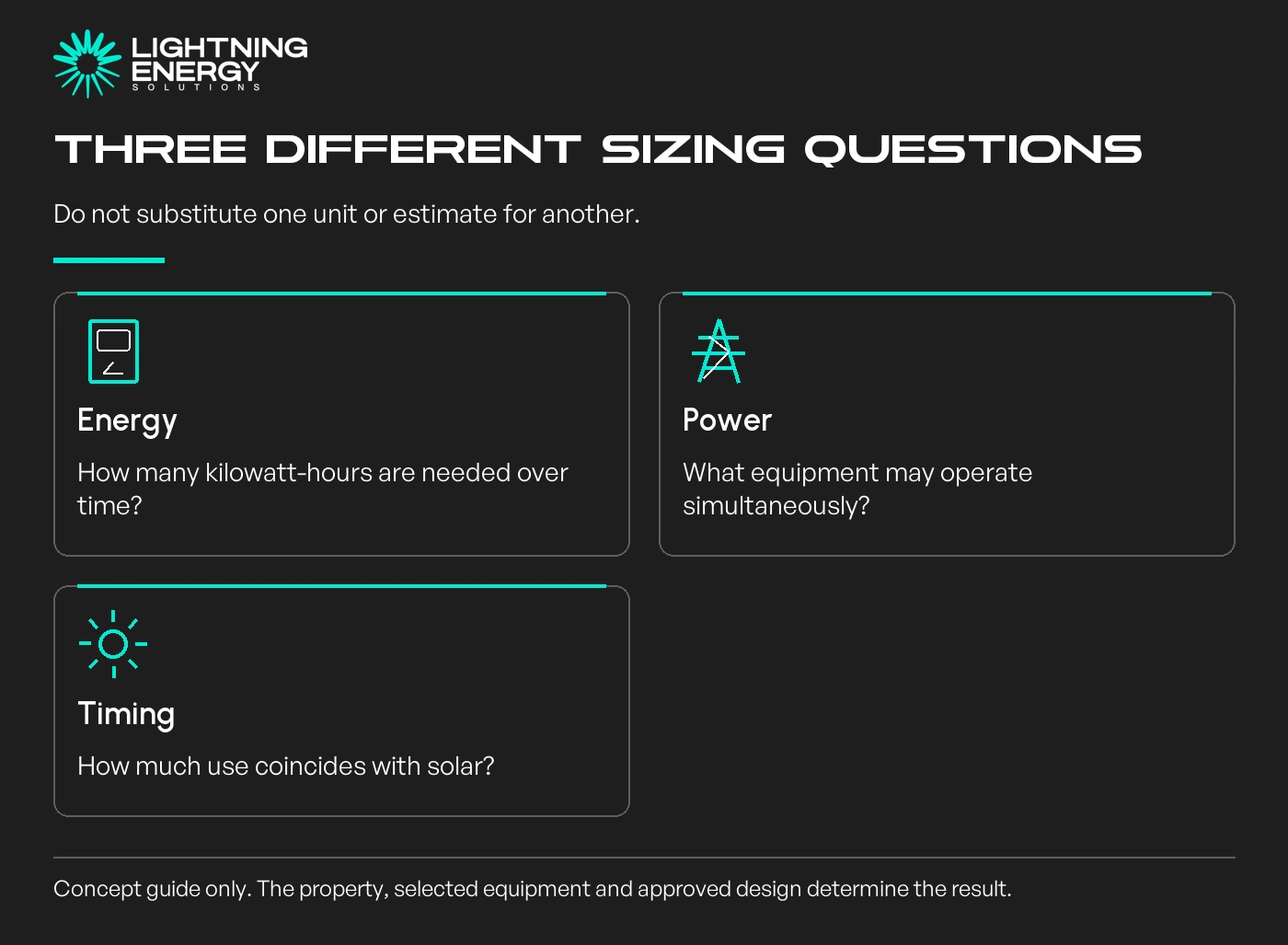
Annual kilowatt-hours estimate how much electricity is used. Kilowatts describe demand at a moment. Neither alone tells you how much future use will coincide with solar generation.
An air conditioner's heating capacity is not its electrical input. Likewise, an EV charger's maximum rating does not establish how much energy the car needs each day.
A battery moves electricity between times and incurs losses; it does not generate additional energy. Avoid counting its charging requirement as an unrelated appliance load and then counting the same delivered energy again.
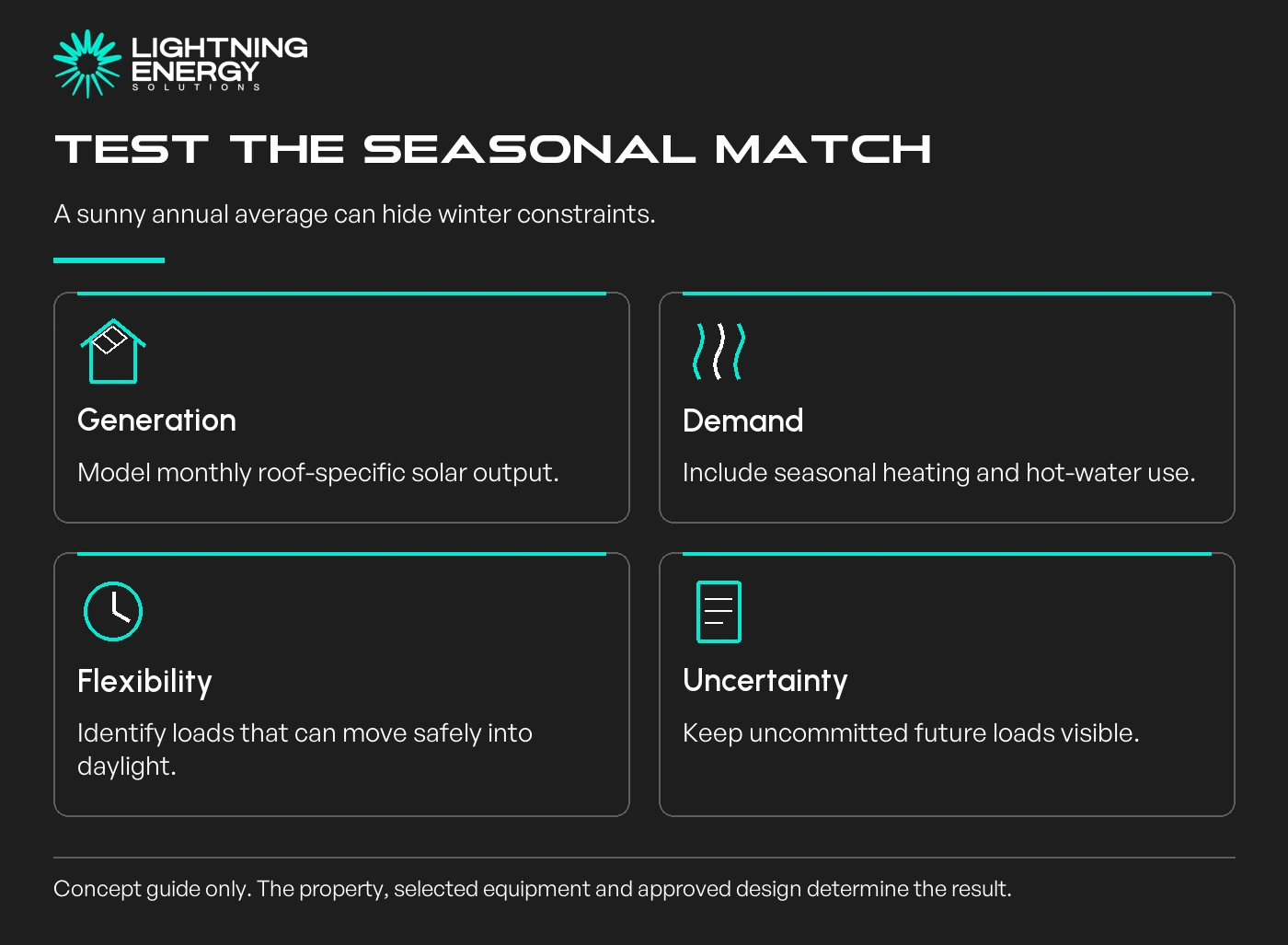
For reverse-cycle heating, winter operation and evening comfort matter. A strong summer export result does not prove that winter heating can run entirely on solar.
Ask for monthly generation estimates using the proposed layout and shading. Compare those with realistic seasonal loads rather than dividing annual generation evenly across the year.
Imagine a family replacing gas hot water soon but considering an EV several years away. A supported daytime hot-water schedule is a near-term input; daily EV charging is still an uncertain future scenario.
Heat-pump hot water can store heated water for later use, within the system's design. The schedule must still allow sufficient recovery and preserve its safety controls.
Record whether each future load is flexible, essential at a fixed time, or uncertain. That distinction is often more useful than assuming every appliance will run during the same sunny midday period.
Roof space, access, shading, inverter inputs, electrical supply and approved network conditions can constrain both the initial design and an extension. Leave decisions about those constraints to the designer and electrician.
A larger initial inverter is not automatically a guaranteed expansion pathway. Future panels, batteries, communications and approvals must remain compatible with the exact installed equipment.
Ask for the cost difference between two complete designs, including any foreseeable repeat labour or replacement equipment. Compare the extra useful generation with the extra cost, not just total installed kilowatts.
The design considerations guide provides the site factors behind that comparison. A staged plan should document what is reserved and what remains unconfirmed.
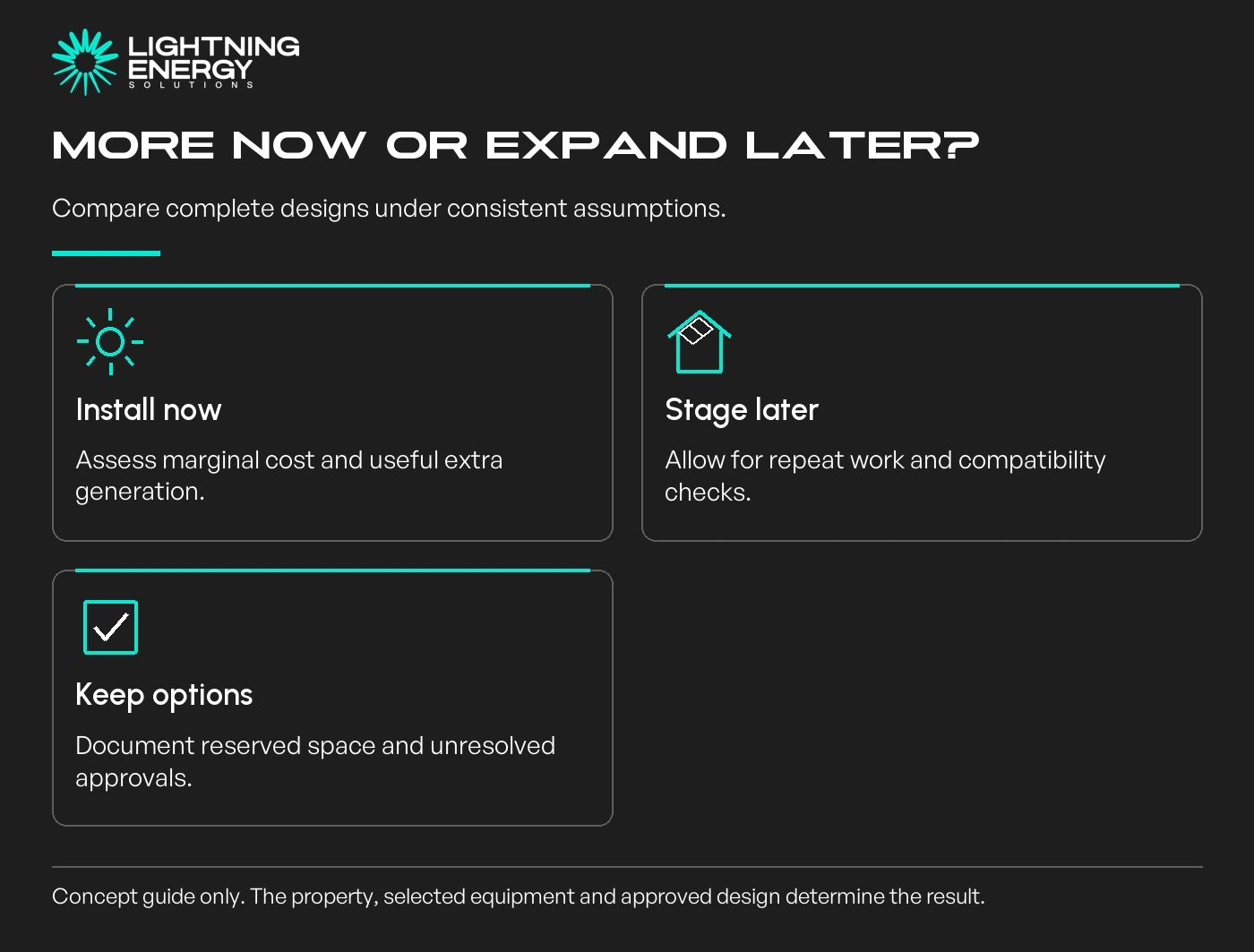
There can be a good case for more solar now when the roof and approvals suit it and new daytime loads are genuinely planned. There can also be a good case for waiting when the future load is uncertain.
Do not assume a larger system will eliminate the grid bill, qualify for every future incentive or charge an unspecified battery through every winter day.
Ask us for a solar assessment with recent bills, planned appliance changes and a realistic timetable. Request a current-home case and a future-home case so you can see which assumptions drive the recommendation.
Available times
Book a consultation and we'll map solar, storage, hot water, and the rebates around your bills and your goals.
Question 1 of 6
