
Switching Electricity Retailers With Solar: What Happens to Your Feed-in Offer?
Check solar feed-in terms, meter details and transfer dates before changing electricity retailers, then confirm the new offer on the first bill.
Check solar feed-in terms, meter details and transfer dates before changing electricity retailers, then confirm the new offer on the first bill.

When you change electricity retailers, your export payment follows the new offer's terms. Do not assume the previous feed-in rate, bonus or credit arrangement transfers with the account.
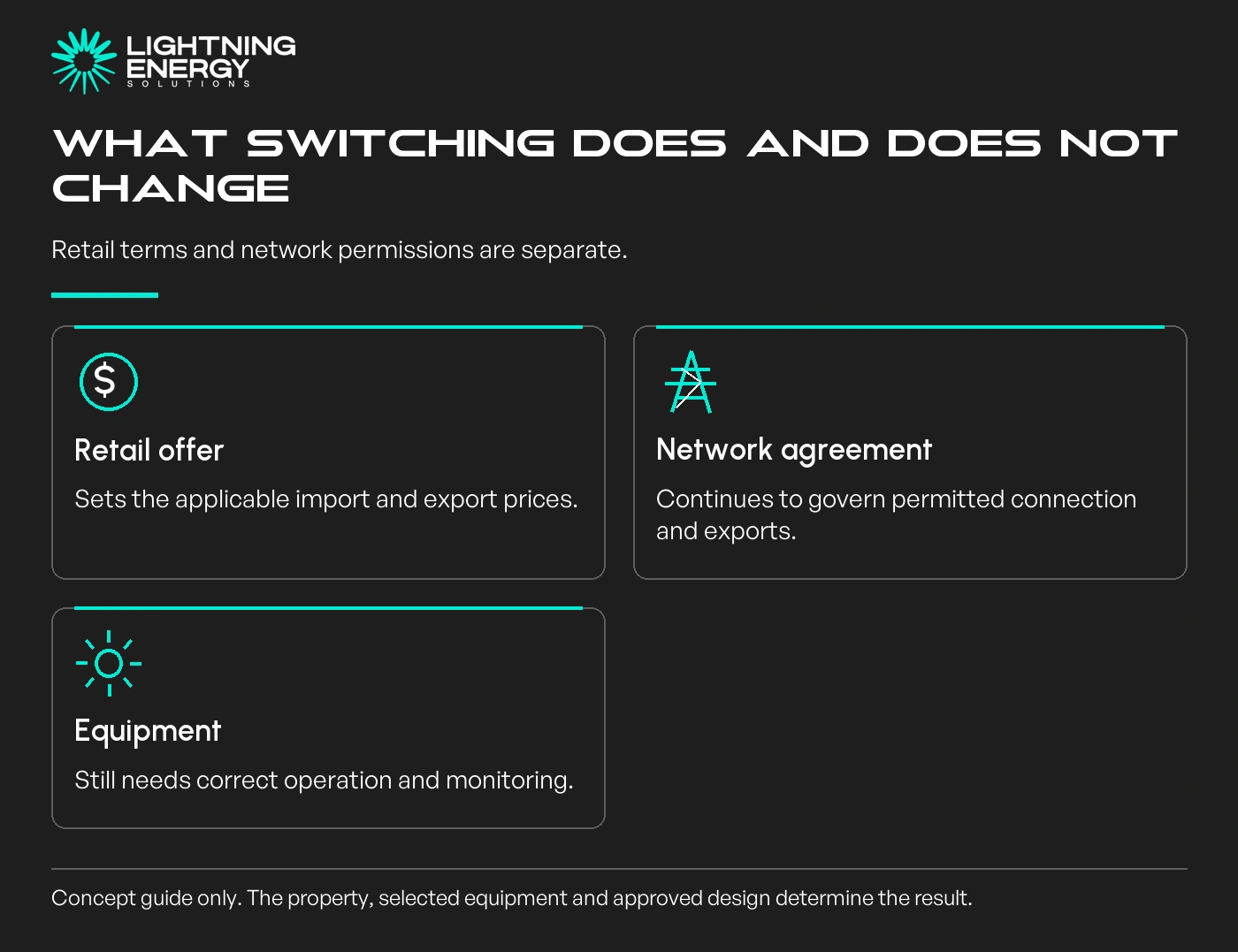
The solar equipment and local distribution network usually remain in place. What changes is the retail contract, billing relationship and any linked services included in the offer.
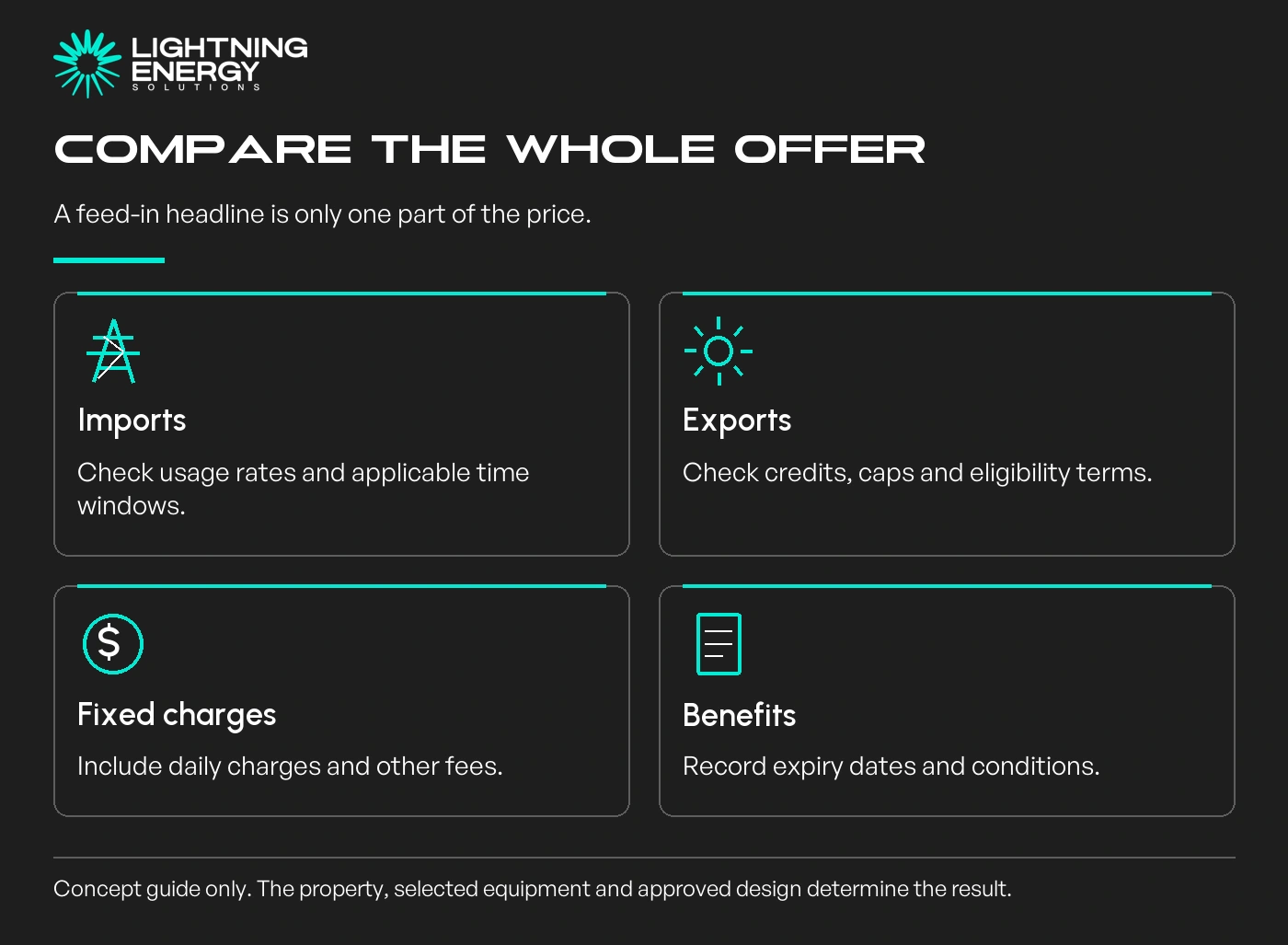
Check import rates, daily supply charges and export rates together. Include time windows, export thresholds, eligibility rules and the end date of any introductory benefit.
A higher headline feed-in rate is not automatically cheaper overall. A home with substantial evening imports can lose more through expensive usage rates than it gains through a better export payment.
Victorian Energy Compare is the government's comparison service. Use recent bills and the best available usage data, especially if heating, hot water or an EV has changed the household's demand.
Our solar information helps explain the equipment, but retailer pricing needs a separate comparison. Retain the offer summary and full terms that apply when you sign up.
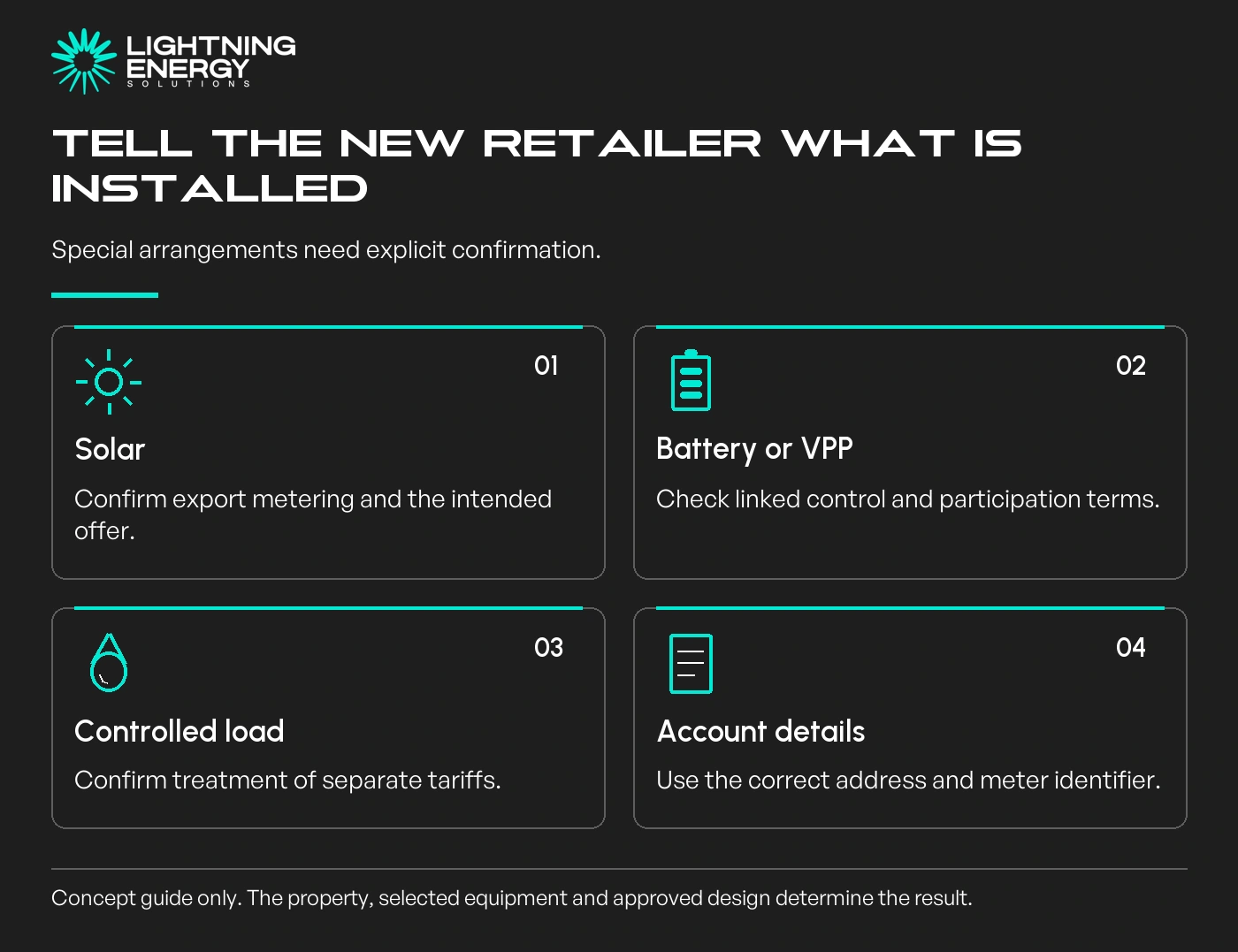
Tell the new retailer that the property has solar. Provide the correct address and National Metering Identifier from the bill, and ask whether it needs further details to apply the export offer.
If a battery is enrolled in a retailer-linked virtual power plant, check the agreement separately. Switching may affect participation, incentives or remote-control services even when the physical battery remains unchanged.
Our VPP guide identifies the terms to examine. Do not assume retail switching automatically cancels every linked agreement without cost or notice.
Ask how controlled-load tariffs or other specialised arrangements will be treated. An account that looks straightforward can still have more than one charging component.
Victorian switching guidance says the new retailer coordinates the transfer and your electricity supply is not interrupted simply by changing retailer.
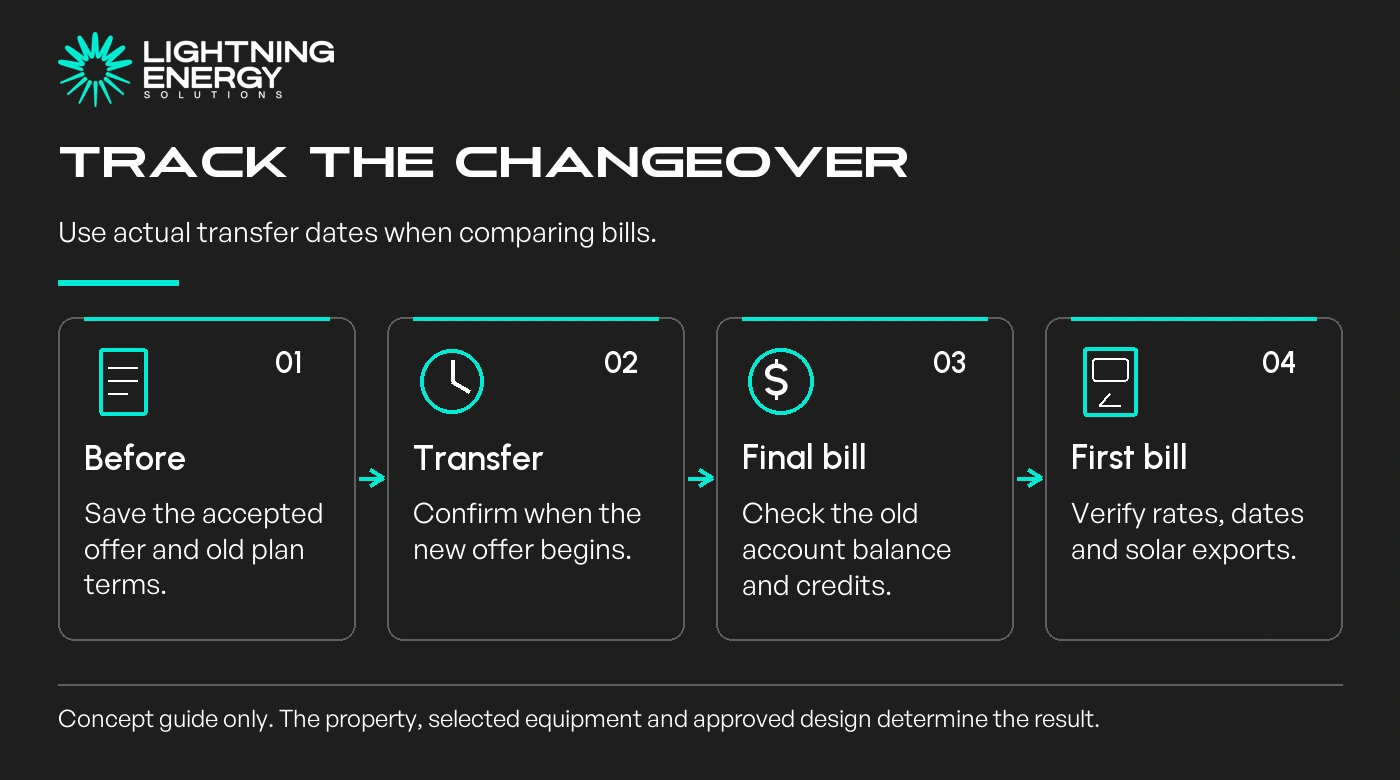
Confirm the expected start date and keep the previous retailer's final bill. Look for the closing reading period, any remaining balance or credit, and the process for returning a credit if applicable.
The exact transfer timing and account treatment depend on the circumstances. Do not assume that submitting an online form instantly changes the tariff on every interval that day.
Imagine a switch partway through a billing period. The old and new offers apply to their respective periods; comparing one whole month's exports with only the new retailer's shorter bill will be misleading.
Changing retailer does not itself authorise a higher network export limit. The distributor's connection conditions and the system's approved settings still apply.
Our export-limit guide explains that separation. A retailer advertising a generous rate cannot promise your roof will be able to export more electricity.
Likewise, switching plans does not repair an inverter fault or supply missing consumption sensors. Equipment behaviour and account configuration should be investigated through the appropriate contacts.
Government feed-in guidance explains the role of current retail offers.
Recheck the terms at the actual transfer date rather than relying on an old comparison screenshot.
Confirm the new offer name, starting date, import rates, daily charges and export credits. Check whether readings are actual or estimated and whether the billed period matches your comparison.
If exports are missing, contact the retailer with the meter details, transfer date and relevant records. A zero credit might reflect the offer, incomplete account configuration or a data issue; it needs an explanation.
Review the overall result over a useful period. A seasonal fall in solar output can coincide with a switch, so one higher bill does not prove that the new plan alone caused the increase.
If future battery storage is being assessed, use the new tariff in its modelling. A storage recommendation based on the old import and export prices can become outdated immediately after the change.
Available times
Book a consultation and we'll map solar, storage, hot water, and the rebates around your bills and your goals.
Question 1 of 6
