V2L, V2H and V2G in Australia: Three Different Things to Check
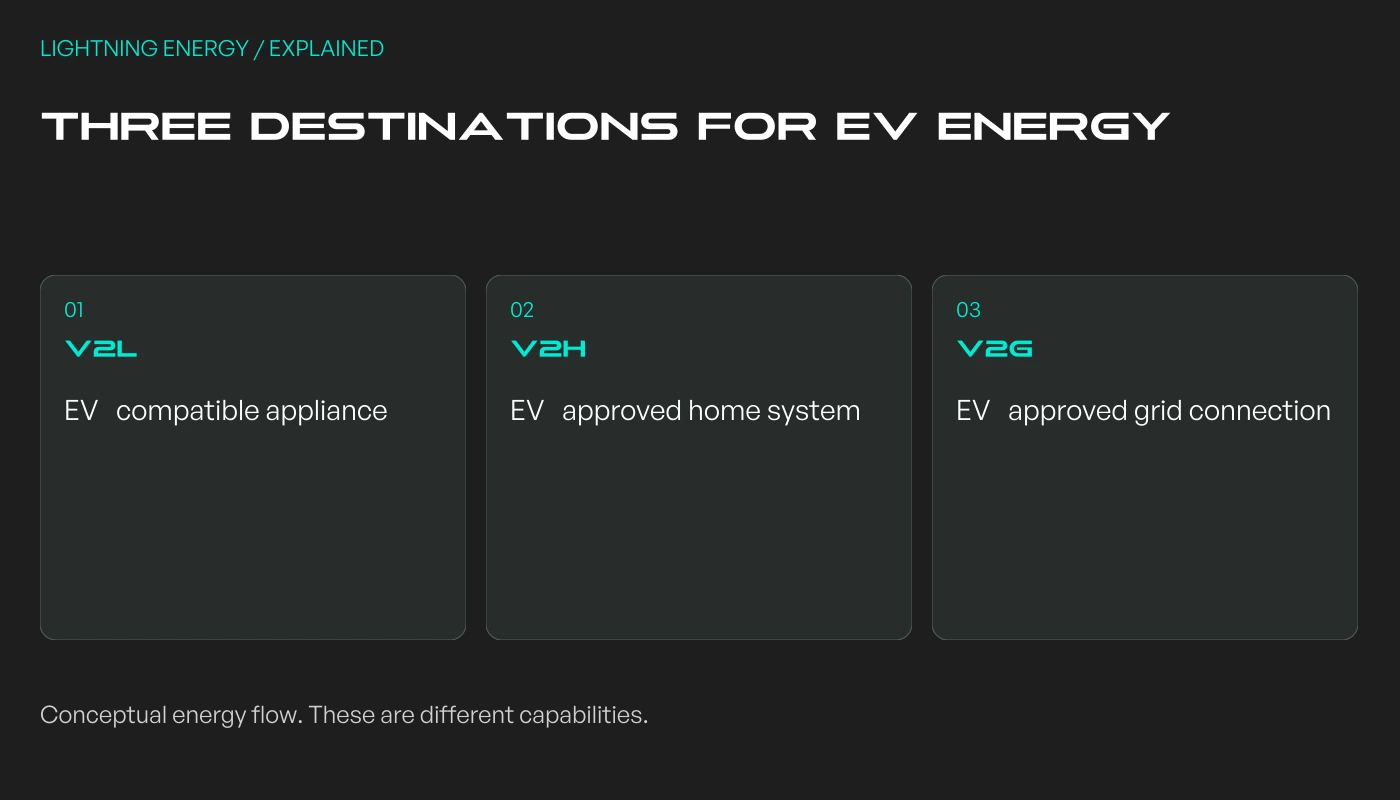
An electric car can hold a useful amount of energy, but the ability to run a kettle does not establish that it can run your house or export to the grid. V2L, V2H and V2G describe different jobs.
LLightning Energy TeamLightning Energy31 October 2026 · 5 min read
An electric car can hold a useful amount of energy, but the ability to run a kettle does not establish that it can run your house or export to the grid.
V2L, V2H and V2G describe different jobs.
This guide explains the distinction using Australian government and network sources checked on 30 October 2026.
It is a planning guide, not an installation design or a claim that every advertised feature is available at your address.
V2L: electricity for a connected appliance
Vehicle-to-load, or V2L, supplies individual appliances through the vehicle's supported outlet or adapter.
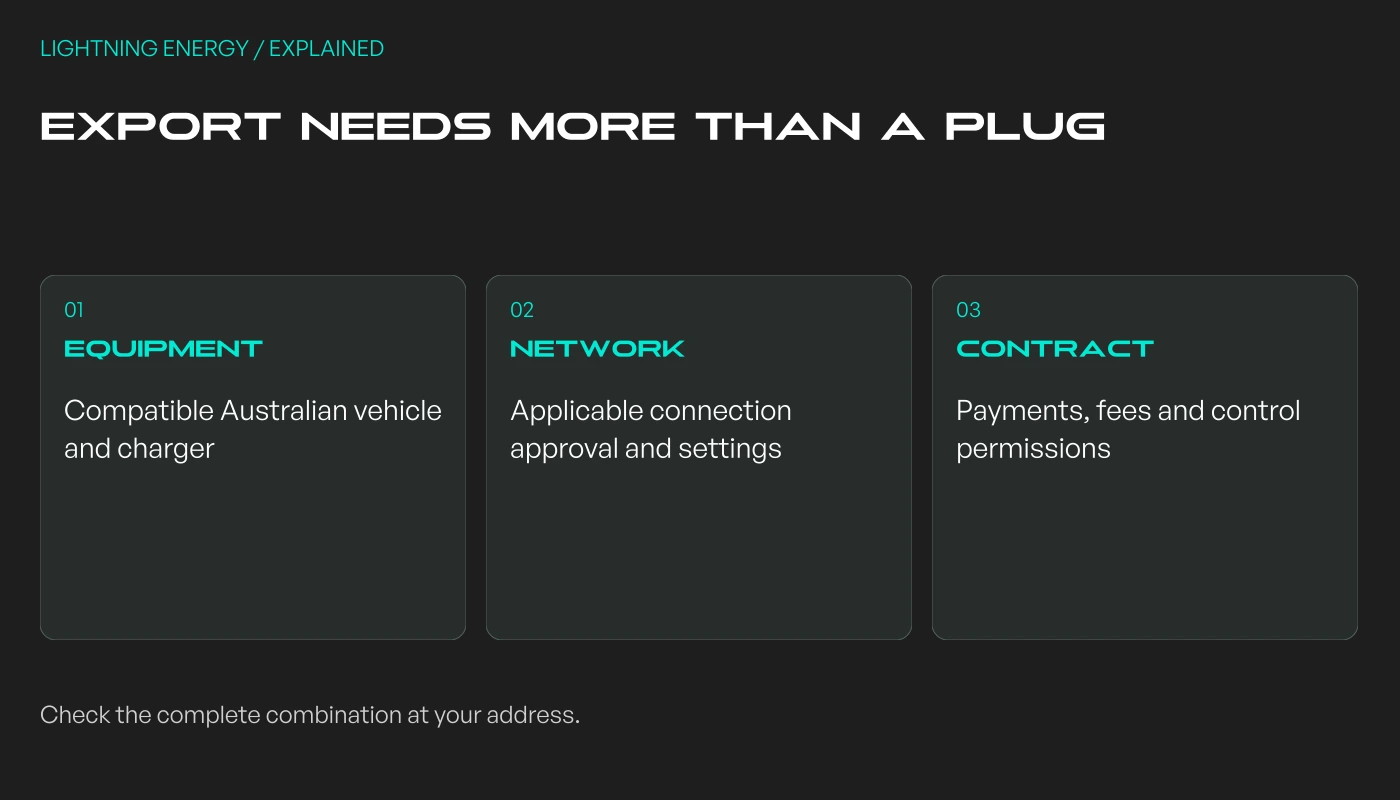
Check the requirements of the distributor serving your address and the exact equipment proposed.
Read the retailer or aggregator contract before assigning a value to exports.
Ask about import charges, export payments, fees, control permissions and exit conditions.
A wholesale price headline is not your guaranteed return.
Check the complete combination at your address.
Confirm the complete combination
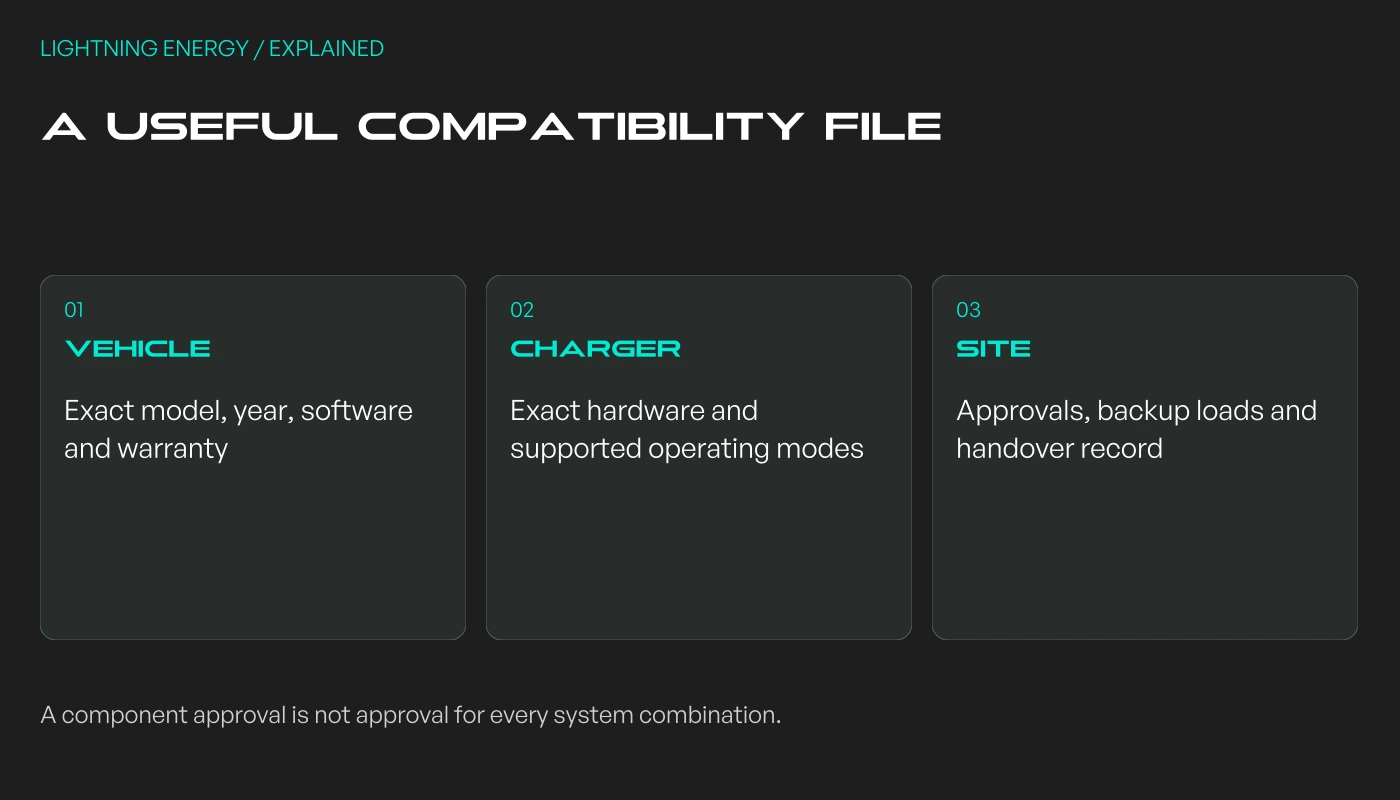
The federal V2X guide advises checking manufacturer confirmation, vehicle and charger compatibility, and the warranty implications of bidirectional use.
Keep the relevant documents with the quote rather than relying on a salesperson's summary.
Request the Australian vehicle model and year, charger model, supported software, network application and written description of the operating modes.
If one part is awaiting approval or release, ask for that dependency to be clearly identified.
The claim to test is specific: this vehicle, this charger and this control arrangement can perform this function at this property.
Approval of one component does not answer every part of that statement.
A component approval is not approval for every system combination.
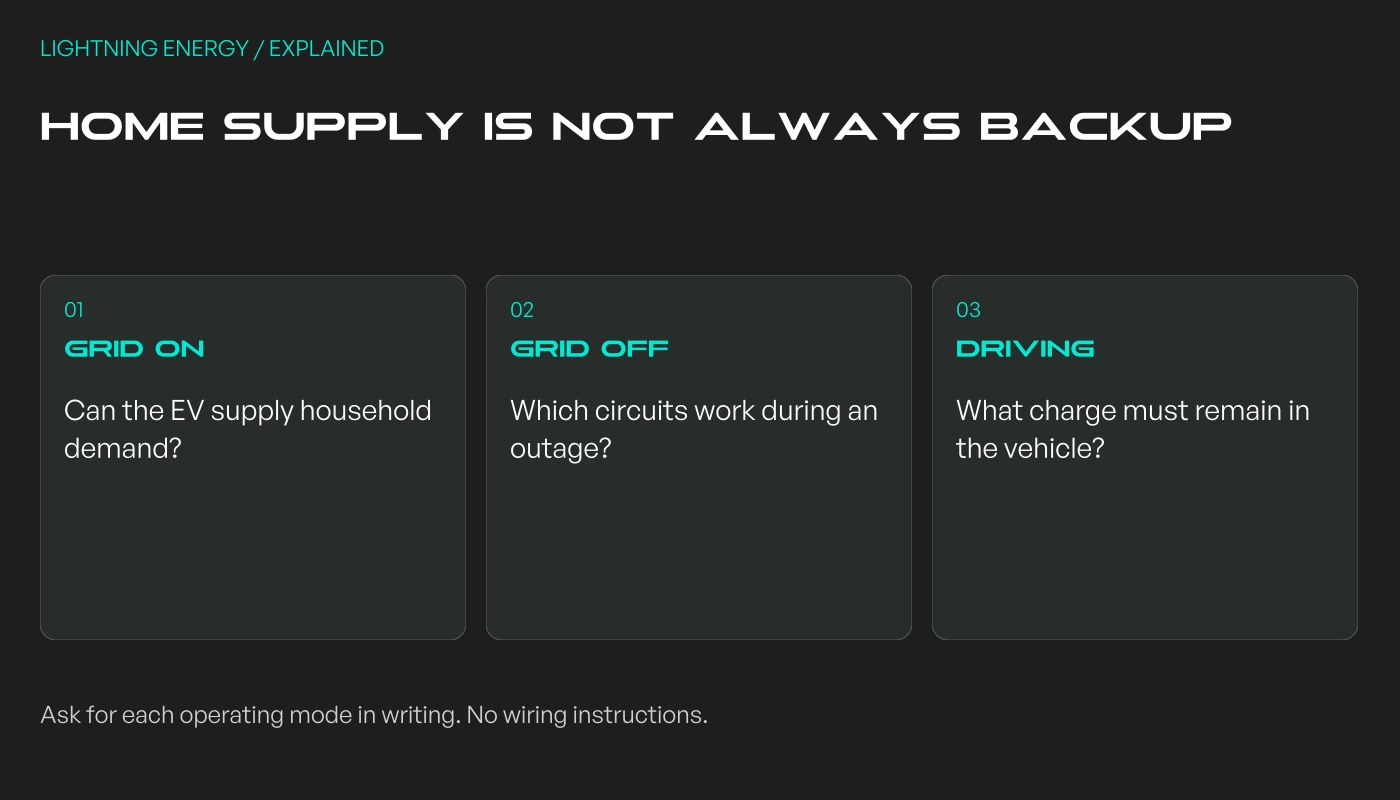
The car still needs to be available for driving
A home battery normally stays at home.
A car does not.
Write down when the EV is parked, the minimum charge needed for an unexpected trip and who can change the reserve setting.
For illustration, if a 60 kWh battery is at 70% and you retain 40% for driving, the difference is 18 kWh before losses and operating limits.
This arithmetic is not a prediction of usable backup from a particular car.
If the vehicle leaves at 7 am every weekday, an energy plan must accommodate that departure.
A system that earns exports but leaves the car inconveniently low is not a good fit for the household.
Book a consultation and we'll map solar, storage, hot water, and the rebates around your bills and your goals.
Loading consultations…
Lightning EnergyPlan your next energy upgrade.
⚡
Hi, I’m Lightning Energy’s project guide. I’ll ask a few practical questions, explain what usually matters for your project, and help you decide on a useful next step — no guesswork or sales pressure.
First, what kind of property are we planning for?