Victorian Solar Rebate 2026: What's Actually On Offer Right Now
The income cap already dropped to roughly $150,000 and the old deadline has passed. Here's the real, current state of Victoria's solar rebate, layer by layer, with no blended marketing numbers.
LLukeLightning Energy21 September 2026 · 9 min read
This is a question I hear often: is the Victorian solar rebate still tied to a roughly $210,000 income cap and worth chasing before a deadline? Look, that information is out of date.
The rules changed, and a lot of what's floating around online hasn't caught up. Here's what's actually true in September 2026.
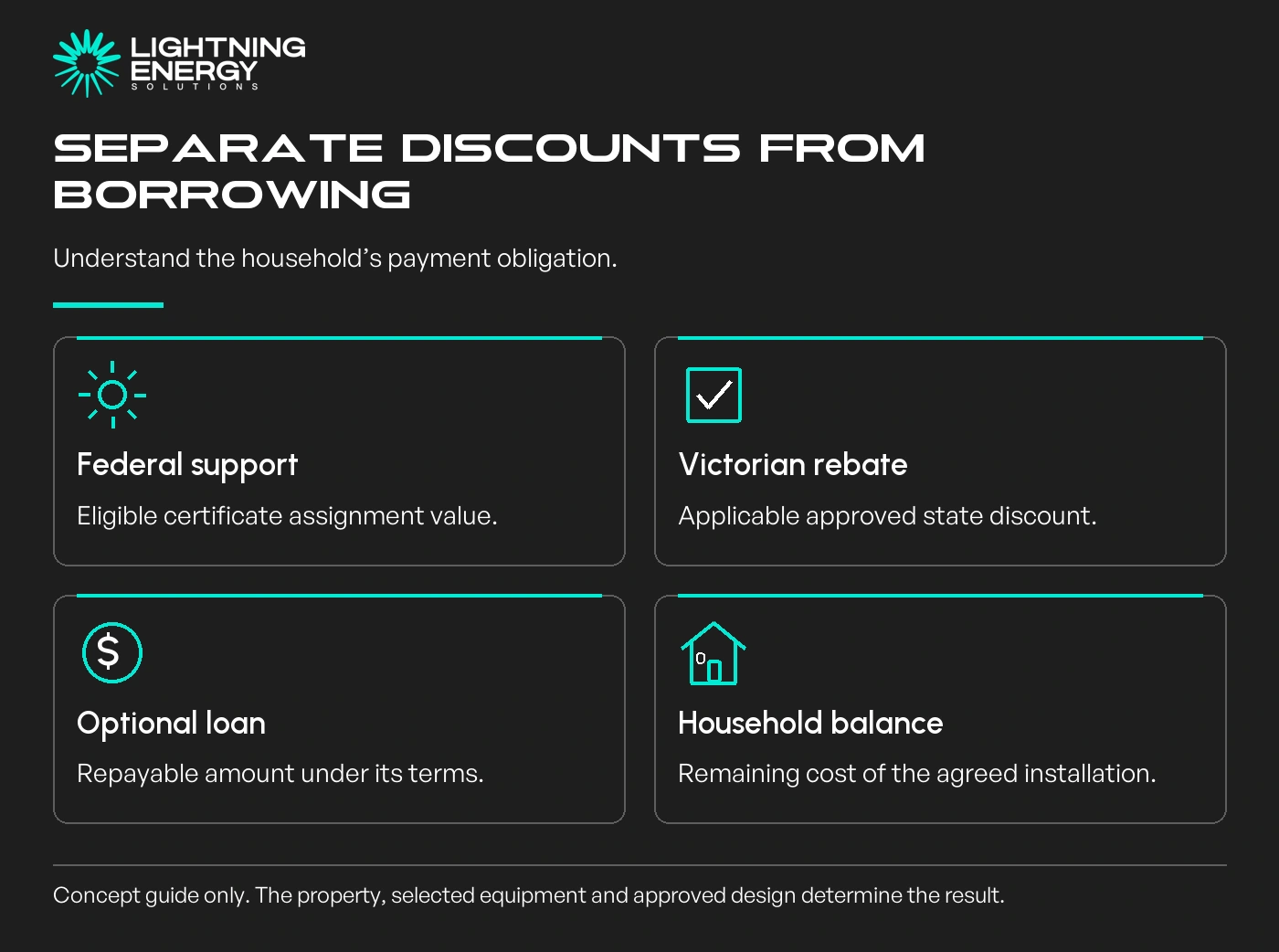
There are genuinely three separate discounts stacked on top of each other here, and confusing them is how people end up disappointed with their quote.
The three layers, in plain language
An eligible system can create federal STCs, which a retailer may offer to acquire in return for an upfront discount. Ask the quote to show that calculation separately; do not assume every offer includes the same amount.
The Solar Homes PV rebate is capped at $1,400, with an optional interest-free loan of up to $1,400, subject to the current program requirements.
Third, if you're adding a battery, there's the separate federal Cheaper Home Batteries Program. I've covered that one in detail elsewhere, and I won't re-litigate it here.
Does this apply to you? The current eligibility checklist
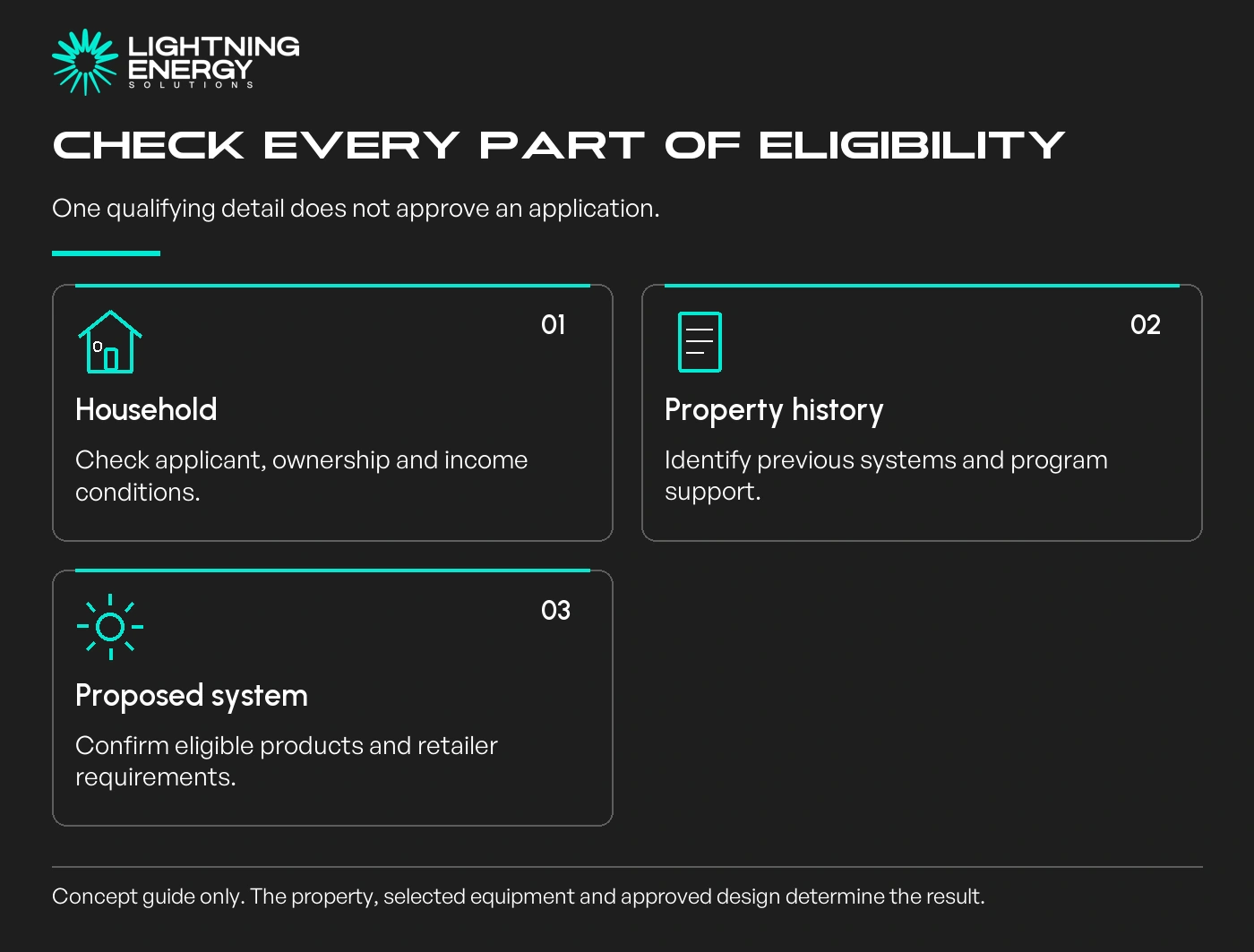
Here's the checklist as it stands today, not as it stood six months ago. To get the Victorian PV rebate, you generally need to tick all of these:
You're the owner (owner-occupier for your own home, or owner of a rental property)
Combined household taxable income across all owners is under $150,000 a year
The property is valued under $3 million
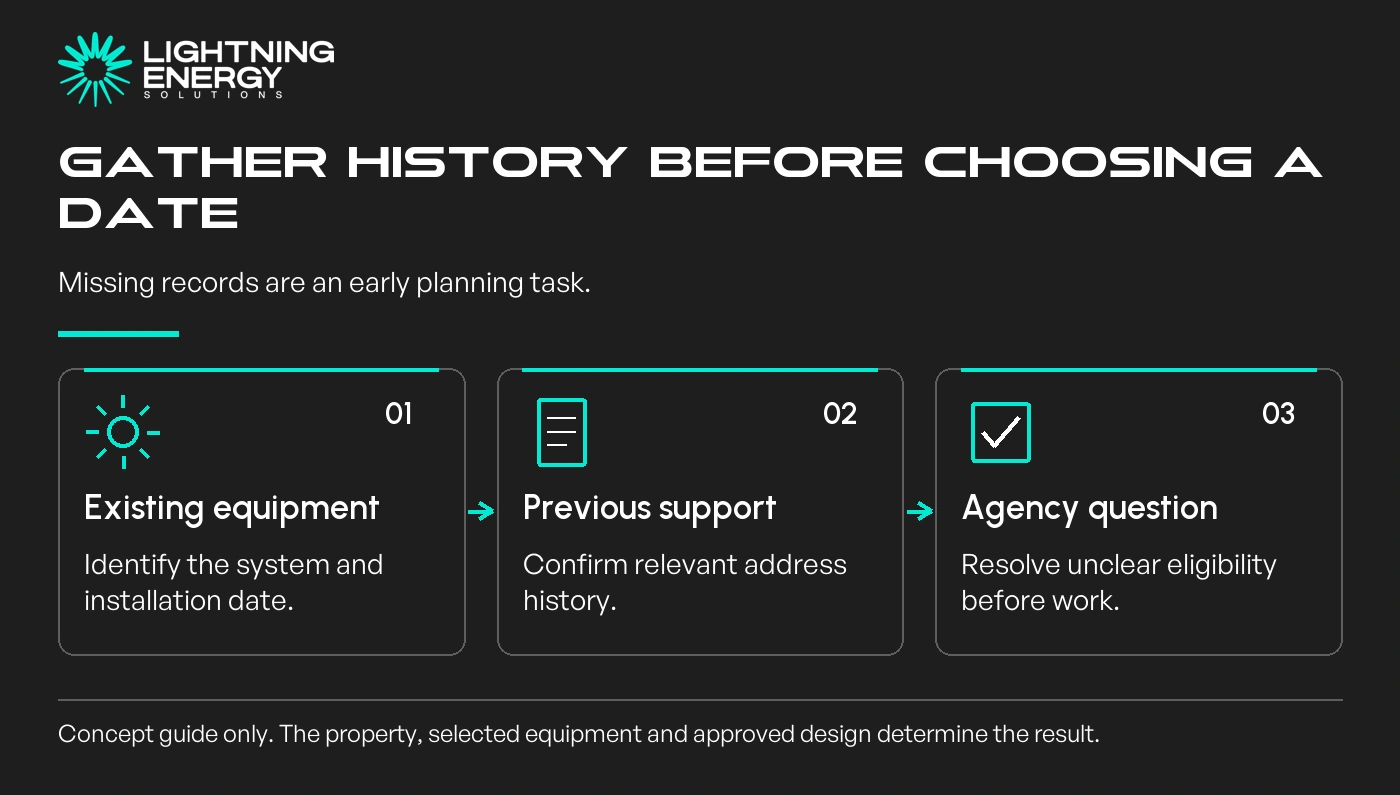
The address hasn't received a PV or battery rebate before
No PV system has been installed at the address in the last 10 years
You use an authorised Solar Victoria retailer and products on the approved list
This is the current eligibility threshold, as stated on Solar Victoria's official rebate page. Check the official Solar Victoria authorised retailer list on that same site before you request quotes, rather than taking a retailer's word for its own authorisation.
It's already the rule, not a future change you need to plan around.
Clearing up the stale advice you may have read
I want to be blunt about this because it matters. A lot of guides still describe a roughly $210,000 income cap and a 30 June 2026 deadline as if you need to rush to beat them.
That window has closed. Solar Victoria confirmed the higher cap applied only to applications submitted in full by 5pm on 30 June 2026.
The current ordinary household income threshold is below $150,000. Solar Victoria also publishes specific exemptions for affected Solstice Energy customers.
Check the current official criteria and any applicable exemption rather than relying on an older income threshold.
What it means for your wallet
The PV rebate covers up to 50% of the eligible cost, capped at $1,400, after other discounts are applied.
It's calculated after your STC discount has already been applied, so it's a genuine top-up, not a separate pool of money sitting alongside the federal discount.
If you want the optional interest-free loan on top, it's typically repaid automatically over 4 years at roughly $29 a month, starting 30 days after your installation is approved.
No collateral required, but it is still a loan you're committing to repay.
The $1,400 rebate matters proportionally more on a smaller system than a large one, because it's a fixed cap regardless of how big your install is.
~$1,400Typical maximum Victorian PV rebateCapped regardless of system size, calculated after STCs and other discounts are already applied to your quote. Treat this as an estimate, not a guaranteed amount.
Who this genuinely isn't for
Not everyone reading this qualifies, and that's worth saying plainly rather than burying it.
Under the ordinary income test, combined owner taxable income must be below $150,000. Check the published Solstice Energy exemption before treating the cap as universal.
The federal STC discount still applies regardless of income, so you're not locked out of all savings, just the state top-up.
Same story if your property is valued over $3 million, if you've already had a PV or battery rebate at that address, or if you had solar installed there within the last 10 years.
If your existing system is close to that 10-year mark, it's worth checking your exact connection date with your distributor or Energy Safe Victoria rather than assuming either way.
Renters and landlords aren't automatically excluded, the rebate is also available for rental properties. Eligibility still runs through the owner's income and the property, not the tenant.
What you actually need to do
Get your paperwork sorted before you start ringing installers. It saves time on both ends.
Confirm your combined household taxable income is under $150,000 and gather recent notices of assessment or payslips to support it
Check your property value estimate sits under $3 million
Find out whether the address has ever had a PV or battery rebate, or a PV system installed in the last 10 years
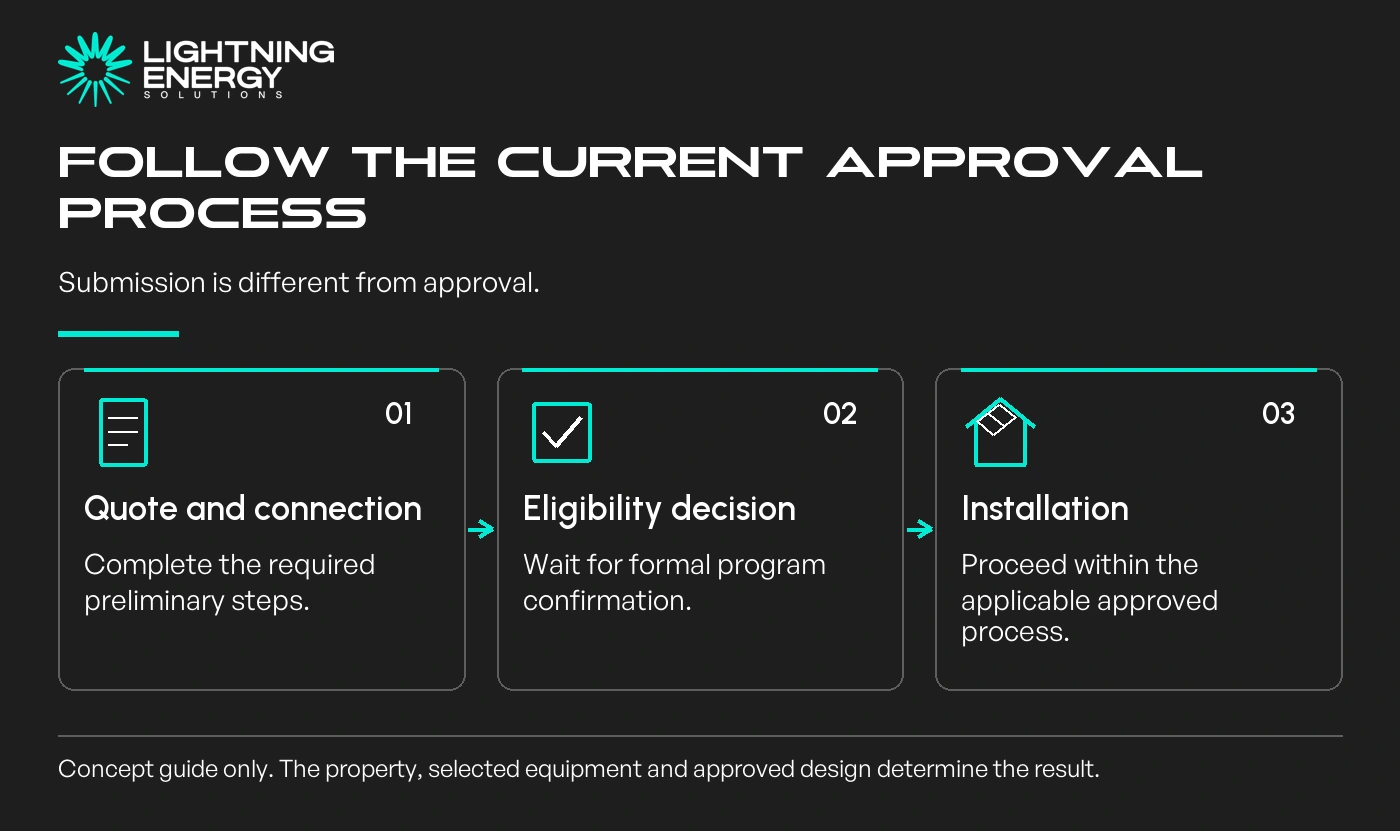
Get a written, itemised quote from a retailer confirmed on Solar Victoria's authorised retailer list, showing the STC discount and the state rebate as separate line items
Follow the Solar Victoria application process and obtain eligibility approval before installation. Check its guidance on accepting quotations and deposits.
Once approved, you'll get a QR code, and installation generally needs to happen within a set window after that
Solar Victoria will specify exactly what documents they need as proof during the application process. Keep recent tax returns, payslips, or notices of assessment on hand, but confirm current requirements before your appointment.
On the '$7,000 rebate' ads you've probably seen
Some retailer marketing bundles the state PV rebate, the federal STC discount, and the federal battery rebate together to arrive at a headline number in the thousands. If you're buying solar only, without a battery, you won't see that full combined figure.
The only fixed Victorian dollar amounts confirmed by government sources are up to $1,400 for the PV rebate and a matching optional $1,400 interest-free loan.
The STC discount value and any battery rebate vary by system size, postcode, and battery capacity. They're real discounts, just not flat numbers you can quote off an ad.
Solar Victoria insists on authorised retailers and approved products for good reason. Use of unauthorised retailers or ineligible products is exactly how rebate schemes get exploited.
A few dates are worth keeping in your calendar even if you're not installing solar this month.
From 1 October 2026, the Victorian Midday Power Saver offers three hours of free electricity in the middle of the day for households who opt in
From 1 January 2027, all new Victorian homes must be built all-electric
From 1 March 2027, existing homes must upgrade end-of-life gas hot water systems to an efficient electric alternative like a heat pump
That last point connects directly to the Solar Homes hot water rebate, typically worth up to $1,400 for a locally made product or up to roughly $1,000 for other eligible systems.
For hot-water replacement planning, see Victoria’s gas-hot-water changes, including the scope and exemptions for the 1 March 2027 requirement.
My honest read on timing
Here's my honest take: if you're under the $150,000 income cap and your property qualifies, there's little reason to hold off applying.
Applying sooner means you start generating your own power earlier. How much that actually saves you on your bills depends on your usage pattern, export tariffs, and system performance, all of which vary by site, so I won't put a number on it here.
The federal STC deeming period drops by one year each January as the scheme winds down: 2026 installs get a 5-year deeming period, 2027 installs get 4 years.
That's a modest shift in discount value, not a reason to rush a bad decision. The exact dollar impact depends on your postcode and system size anyway, so you need multiple quotes to compare, not a deadline.
If you're still deciding between installers, take the time to get a second itemised quote before you sign anything.
If you're over the income cap, don't write off solar altogether.
You still get the federal STC discount, and if a battery is part of the plan, the federal Cheaper Home Batteries Program isn't means-tested either. The state top-up not applying to you doesn't mean nothing applies.
For system sizes, typical costs, and the hot water and PV rebates side by side, our energy rebates overview and solar page are good starting points before you apply.
Book a consultation and we'll map solar, storage, hot water, and the rebates around your bills and your goals.
Loading consultations…
Lightning EnergyPlan your next energy upgrade.
⚡
Hi, I’m Lightning Energy’s project guide. I’ll ask a few practical questions, explain what usually matters for your project, and help you decide on a useful next step — no guesswork or sales pressure.
First, what kind of property are we planning for?