
Choosing a Solar Installer: Licences, Accreditation and Aftercare
Check a solar installer’s electrical licence, accreditation and aftercare responsibilities, with practical questions about the people and businesses doing the work.
Check a solar installer’s electrical licence, accreditation and aftercare responsibilities, with practical questions about the people and businesses doing the work.

Choose a solar provider whose responsibilities you can verify. The company selling the system, the person designing it and the electrician installing it may not all be the same business.
That arrangement can work well when accountability is clear. Ask who is responsible for the agreed design, the installation, commissioning records and a later fault report.
A solar proposal should make that chain understandable before you are asked to sign.
Ask for the relevant installer accreditation details and check them through Solar Accreditation Australia. Its public tool allows searches by accreditation number or installer name.
SAA accreditation status check.
Electrical licensing is a separate check. Energy Safe Victoria provides public searches for licensed electrical workers, registered electrical contractors and other relevant roles.
Energy Safe Victoria public registers.
A logo on a brochure is not the same as verifying the people allocated to your job. If the assigned installer changes, ask how the provider will confirm the replacement holds the appropriate credentials.
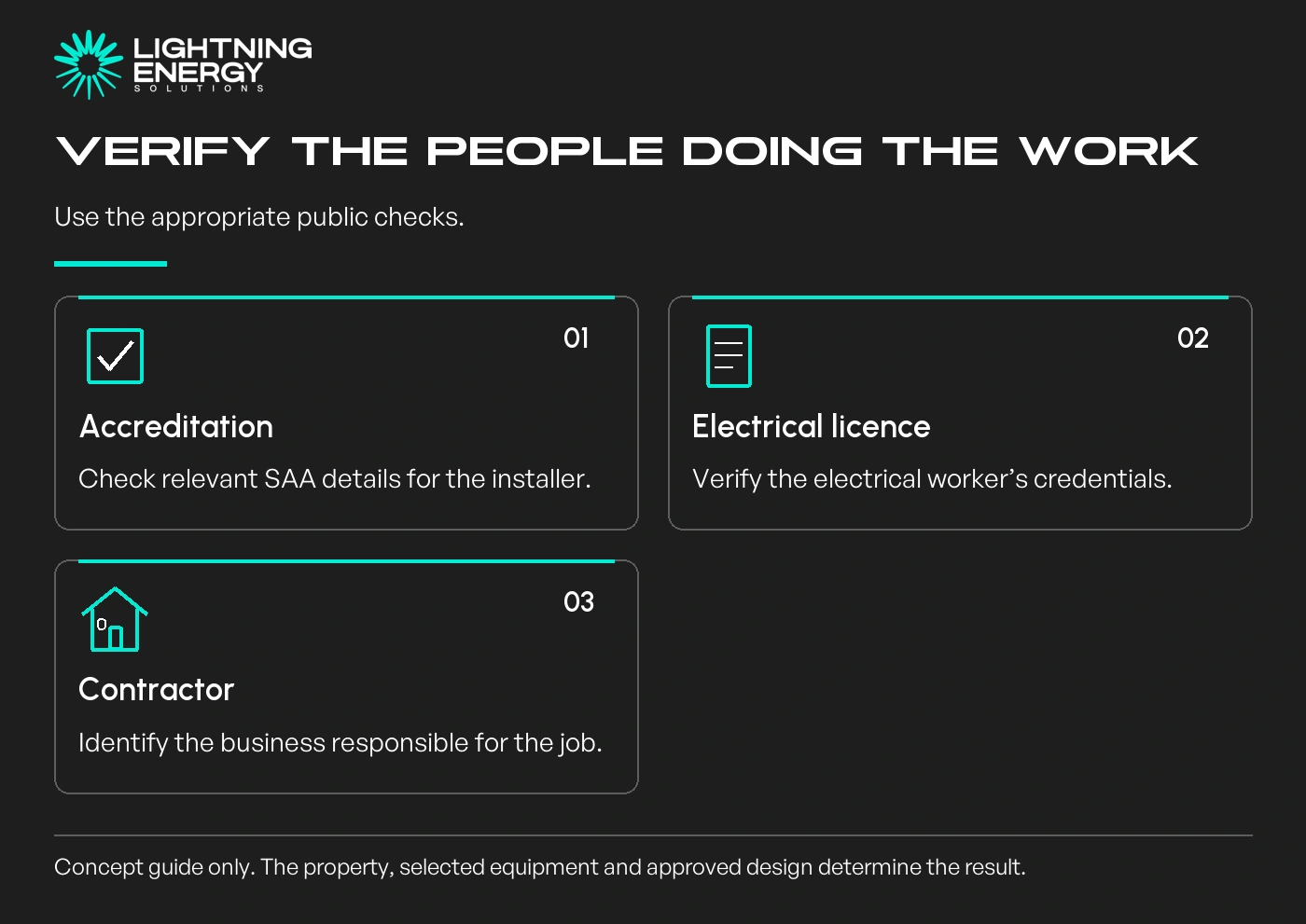
Solar Accreditation Australia operates the installer accreditation scheme. The Australian Government guide records the transition from the Clean Energy Council in 2024.
Government retailer and installer guidance.
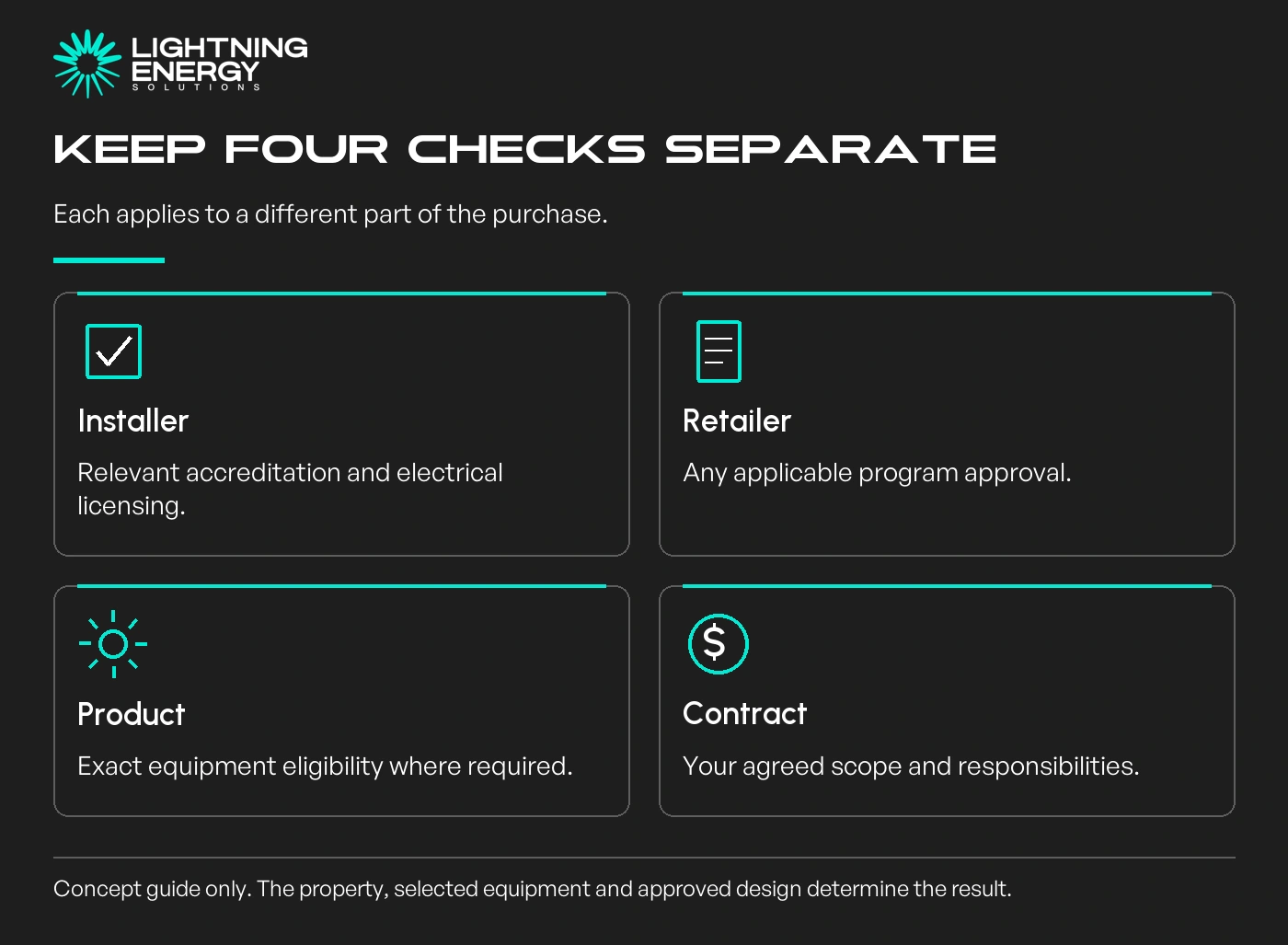
Keep installer accreditation separate from product eligibility, retailer approval under a rebate program and the business’s own marketing claims. One check should not be used as a substitute for the others.
For a supported installation, ask which program requirements apply to the seller, installer and equipment. Get those checked for the exact proposal rather than a general assurance that the company does rebates.
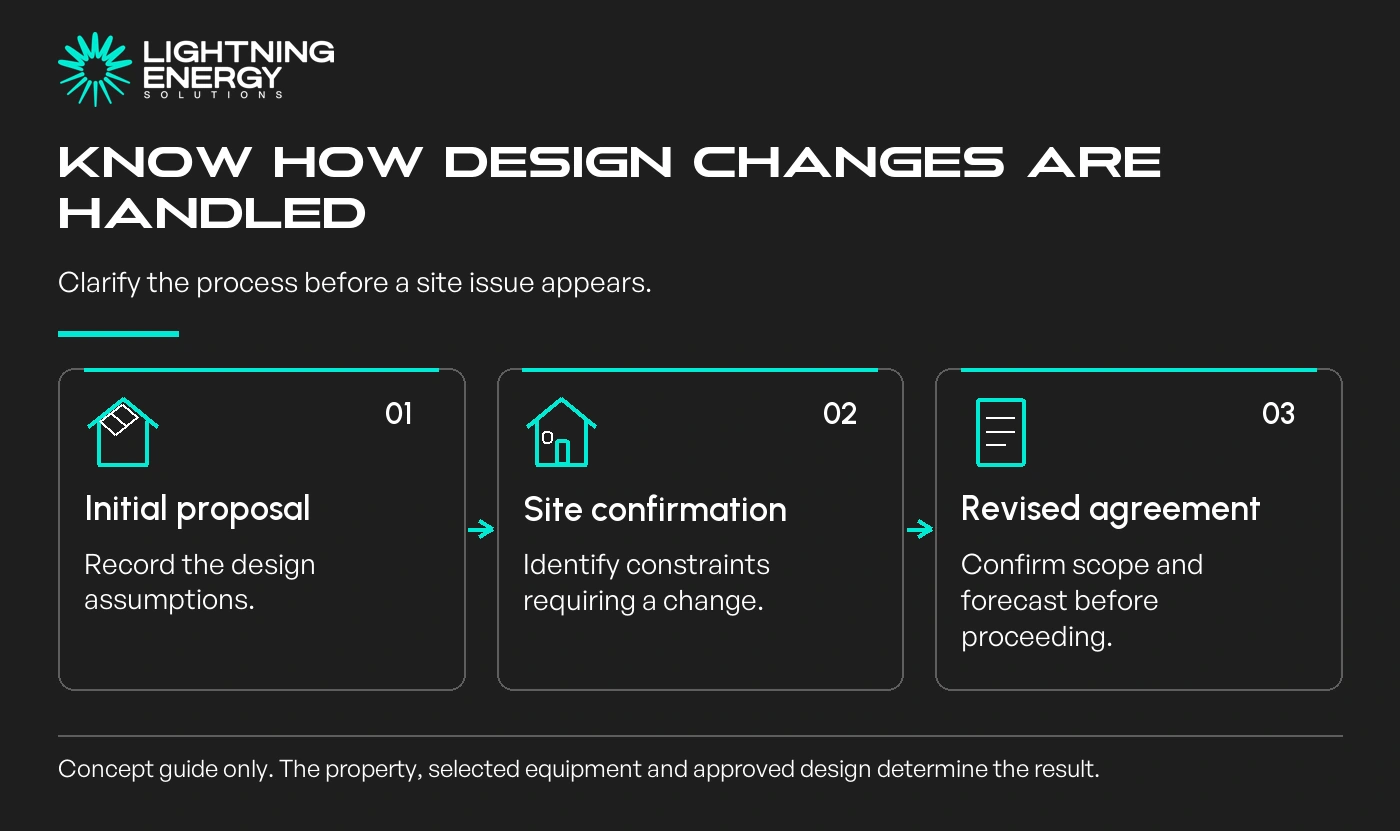
A provider should be able to explain how it assesses your roof, shade and electrical requirements. Ask which assumptions will be confirmed on site and when the design becomes final.
Our shade-assessment guide gives examples of questions that reveal more than a panel count on an aerial image.
Imagine a quote has been prepared remotely and later inspection finds a constraint. Ask who revises the layout, how you approve a variation and whether the forecast is updated with the final design.
This is a process question, not an accusation. A clear answer helps both sides avoid confusion when a genuine site issue appears.
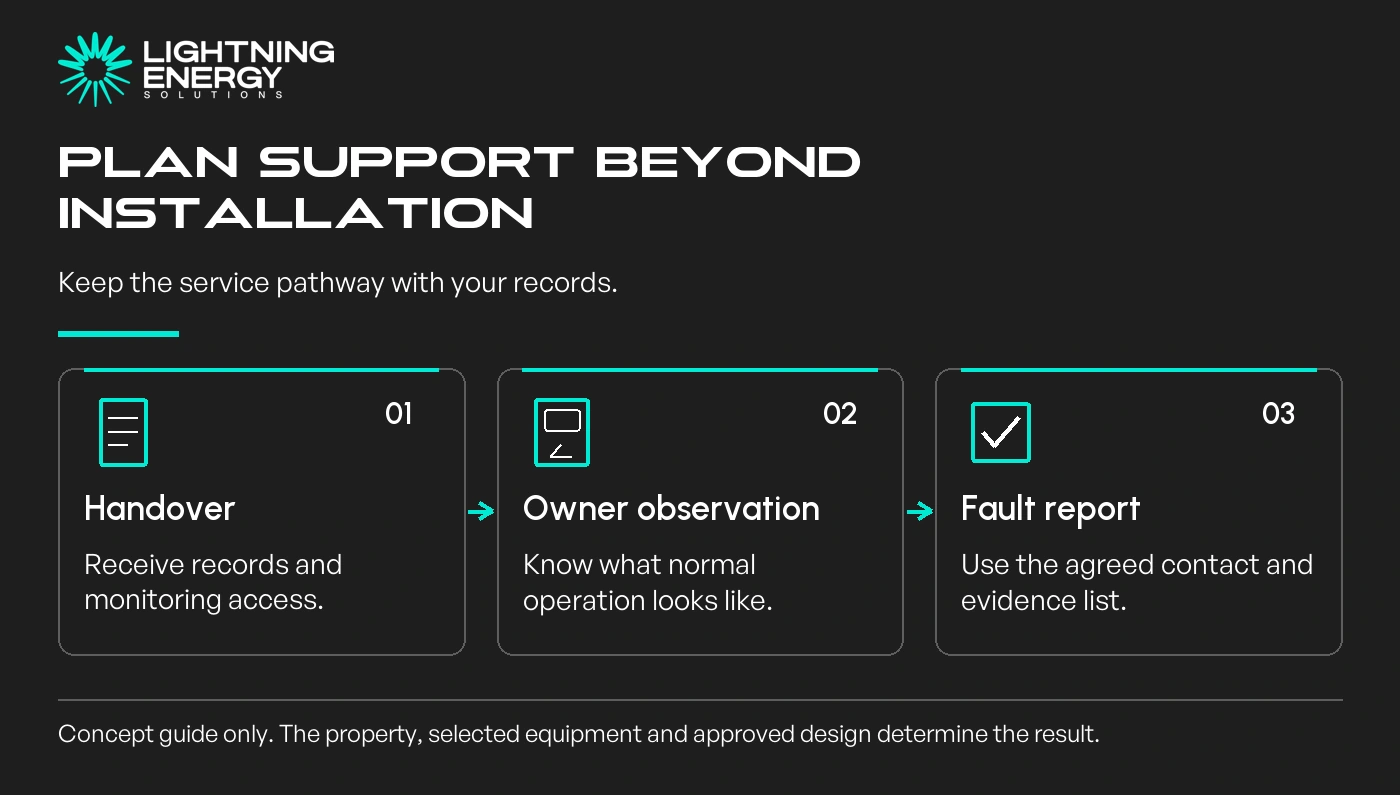
Ask for the contact method for faults, the information the service team needs and the process if the original installer is unavailable. Record the answer with the quotation.
Check which warranty covers equipment, workmanship, access and labour. The solar insurance guide also explains why an insurance policy is a different kind of protection.
Do not mistake a long equipment warranty for a promise that every future visit is free. Request the actual Australian documents and ask about any unclear conditions before purchase.
Reviews can help identify questions, but a single review or a premium price does not prove installation quality. Look for consistent explanations, a complete scope and an accessible service process.
If a provider cannot identify who performs the work or avoids basic credential questions, pause the purchase until the gap is resolved. There is little value in rushing a contract you cannot assess.
Contact Lightning Energy with your property brief and expectations for handover and support. Those conversations belong before installation, while responsibilities can still be made explicit in the agreed scope.
Available times
Book a consultation and we'll map solar, storage, hot water, and the rebates around your bills and your goals.
Question 1 of 6