
Would Setting Solar Export to Zero Reduce Your Electricity Bill?
Before choosing zero solar export, compare actual tariff terms, lost credits and approved controls. Curtailing spare generation does not erase fixed charges.
Before choosing zero solar export, compare actual tariff terms, lost credits and approved controls. Curtailing spare generation does not erase fixed charges.

Setting solar exports to zero does not automatically reduce an electricity bill. On a straightforward offer with a non-negative feed-in rate and no export-linked charge, it removes potential credits without lowering existing imports.
The useful question is which bill item would change. Do that calculation before paying for controls or changing an otherwise functioning system.
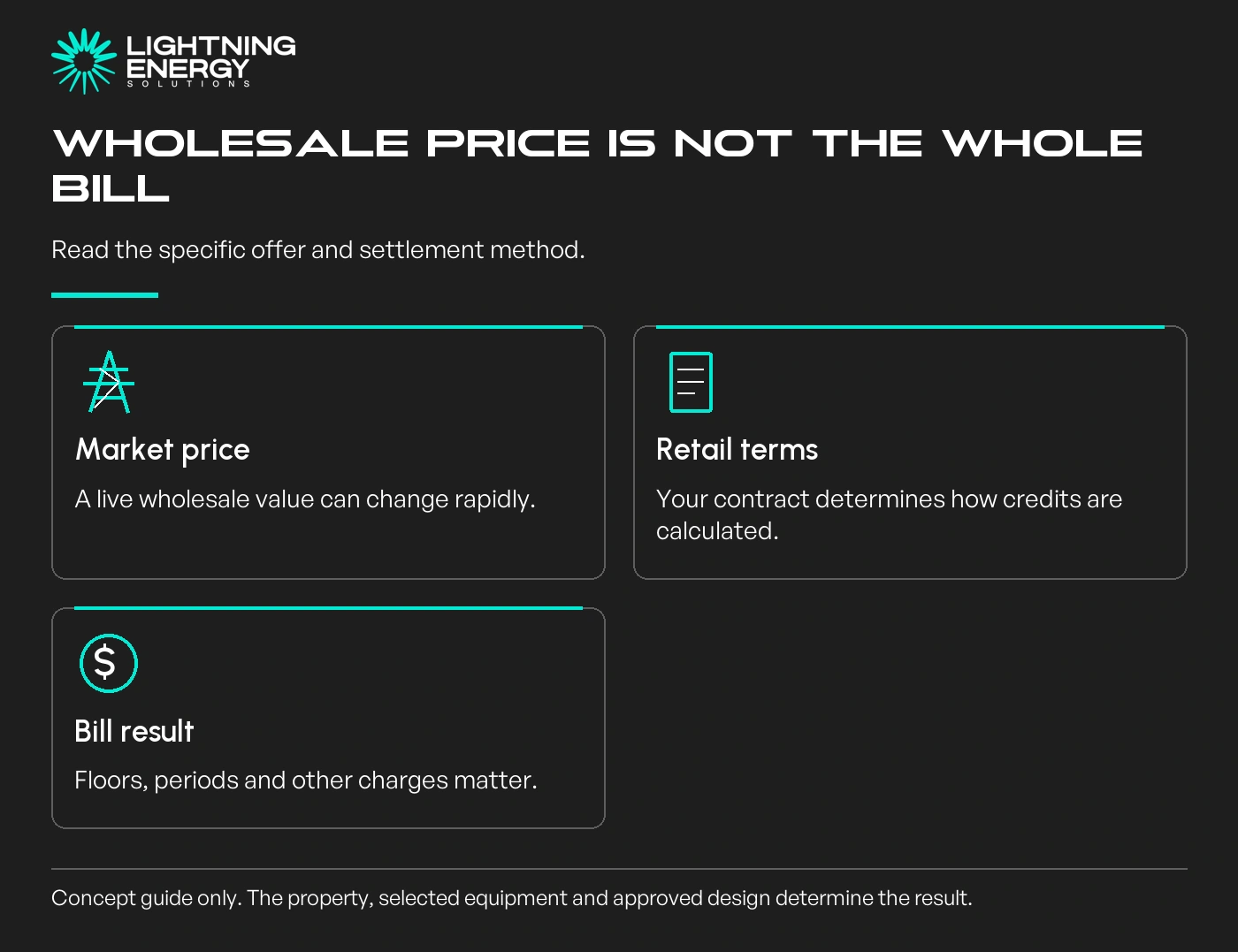
Wholesale electricity prices and your contracted feed-in offer are different things. A negative wholesale price in the news does not prove that your retailer is charging you for every exported kilowatt-hour.
Victorian Government guidance says retailers cannot set their offered feed-in rates below zero.
Read your current offer and ask the retailer to explain any export-related charge or variable calculation.
One retailer's published explanation illustrates the distinction: Amber describes negative live prices alongside a currently stated billing-period floor for solar credits. That policy is expressly subject to change.
This is an example of why settlement terms matter, not a recommendation or an assumption that all variable-price plans work identically.
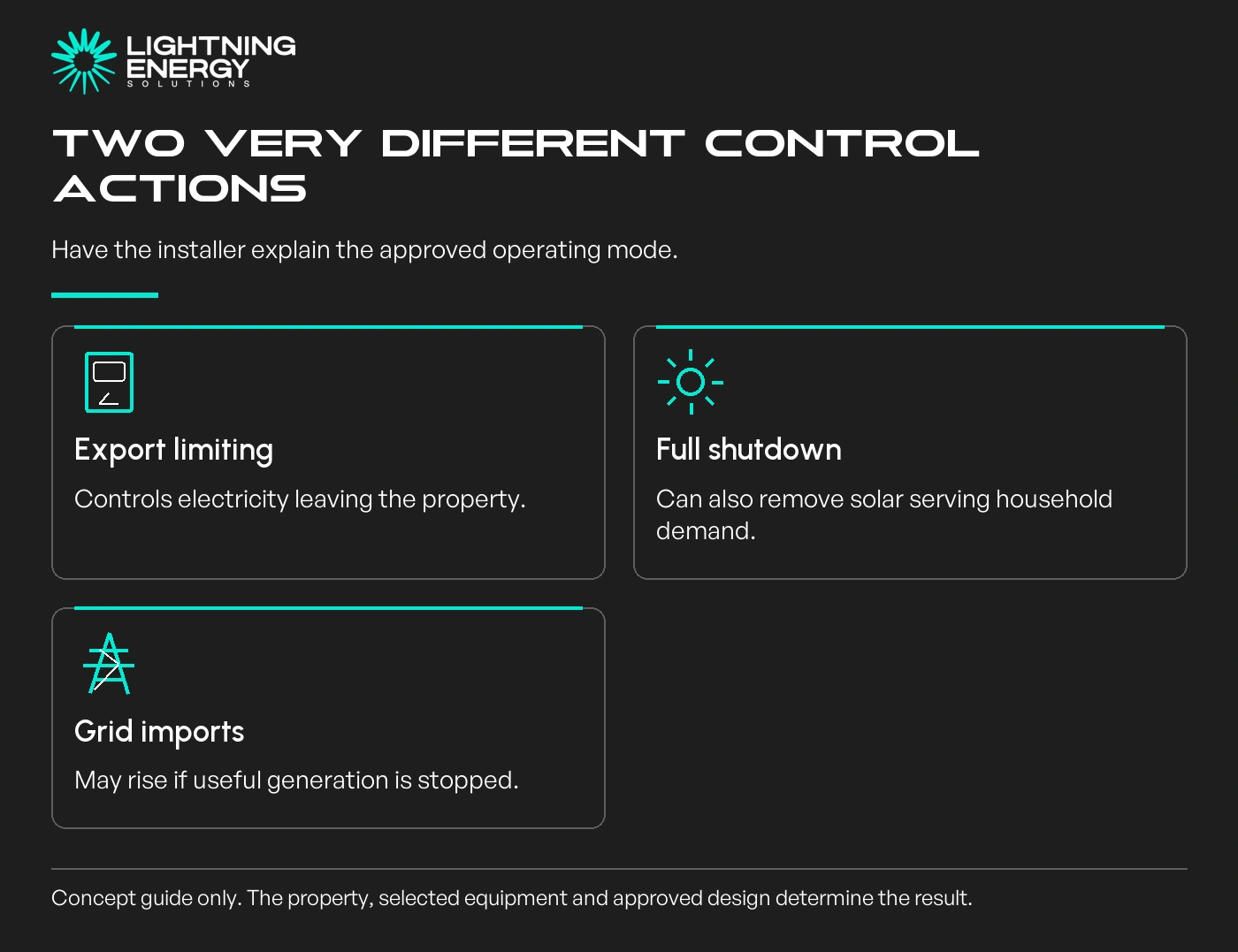
A properly designed export-control system can reduce generation when production would otherwise exceed permitted on-site use and export. The exact behaviour depends on the inverter, measurement and configured controls.
Switching all solar generation off can also remove electricity the house would have consumed. That may increase grid imports, even while exports disappear from the app.
Discuss approved controls with the installer of your solar system. Do not alter grid-protection settings or use an improvised switching routine to respond to prices.
Our export-limit guide explains the distinction between array capacity, inverter output and electricity permitted to leave the property.
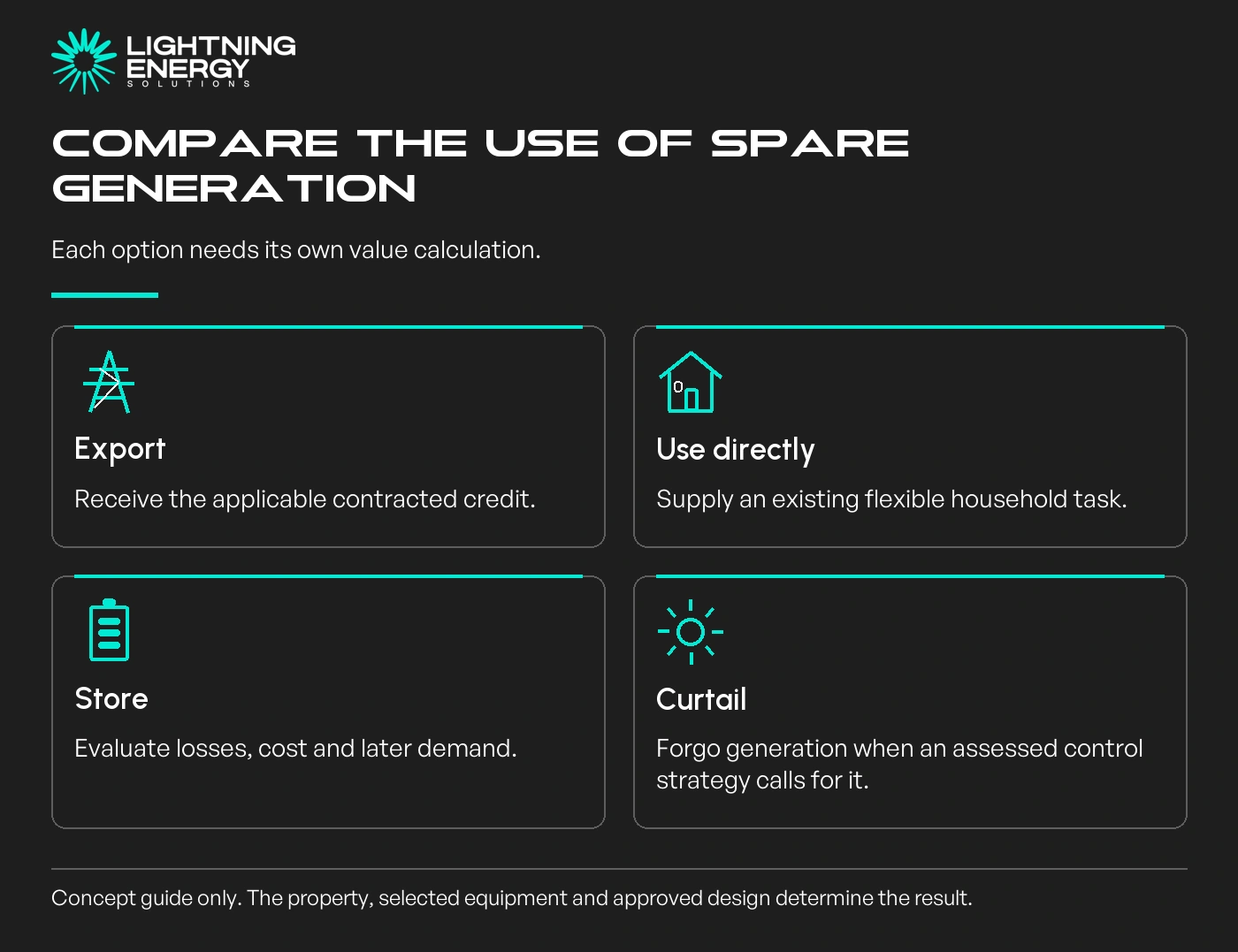
Imagine a household on an uncomplicated flat offer that pays a small positive export rate. On a sunny afternoon, reducing otherwise unused exports to zero gives up that credit. Its evening consumption has not changed.
Using some of that surplus for a necessary, flexible daytime task can be different: it may displace electricity that would otherwise have been bought. Creating unnecessary demand is not a saving.
Adding battery storage is a separate investment. It requires useful charging opportunities, suitable later demand and a financial assessment including losses, equipment costs and operating terms.
A price-responsive control strategy may deserve assessment on a suitable variable offer. Model the full settlement method and any export-related costs, rather than a single dramatic interval in an app.
Daily supply charges generally remain under the contract while the property stays connected. Restricting exports also does not cancel import charges for heating, cooking or charging when solar is insufficient.
The approved network connection still matters. Choosing zero export does not make a connected solar system exempt from electrical requirements, metering processes or applicable control obligations.
Monitoring needs to distinguish generation, home consumption and grid flow. A lower export total alone cannot tell you whether a change saved money or simply discarded useful energy.
Compare equivalent days cautiously because weather and household demand vary. Where possible, use interval data and a model of both settings under the same assumptions.
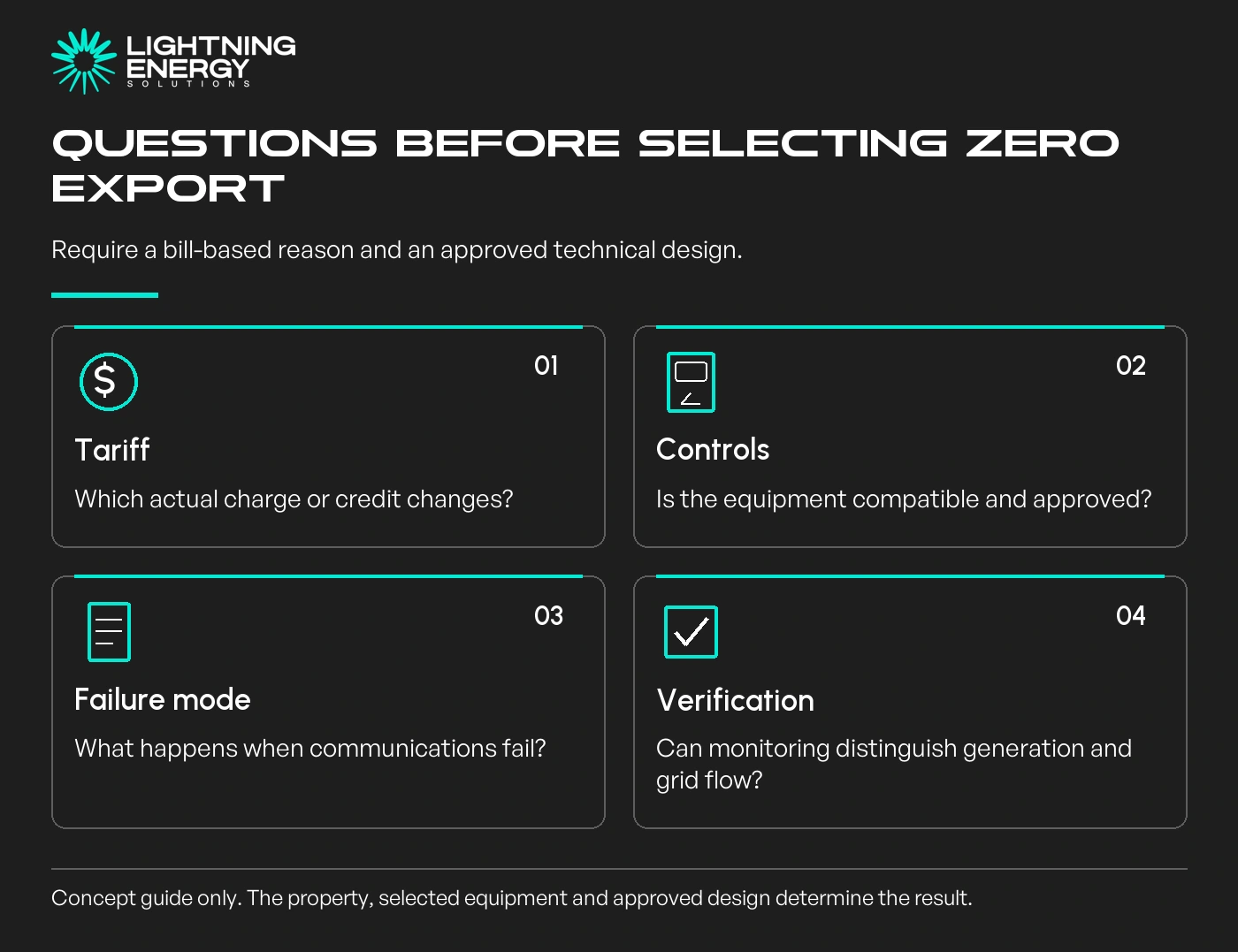
Before changing anything, request a written explanation of the proposed control mode, compatibility, commissioning and ongoing communications requirements. Confirm how it behaves if data or internet connectivity is lost.
Ask what benefit is expected and which tariff conditions create it. If the proposed saving cannot be traced to a bill component, the change is not yet justified.
For many households, reviewing the plan and scheduling suitable existing loads is a more direct first investigation than permanently suppressing exports.
Contact our team with the current tariff and monitoring data if you want the system options assessed. The aim is useful solar and a lower overall cost, not the smallest possible export number.
Available times
Book a consultation and we'll map solar, storage, hot water, and the rebates around your bills and your goals.
Question 1 of 6
