
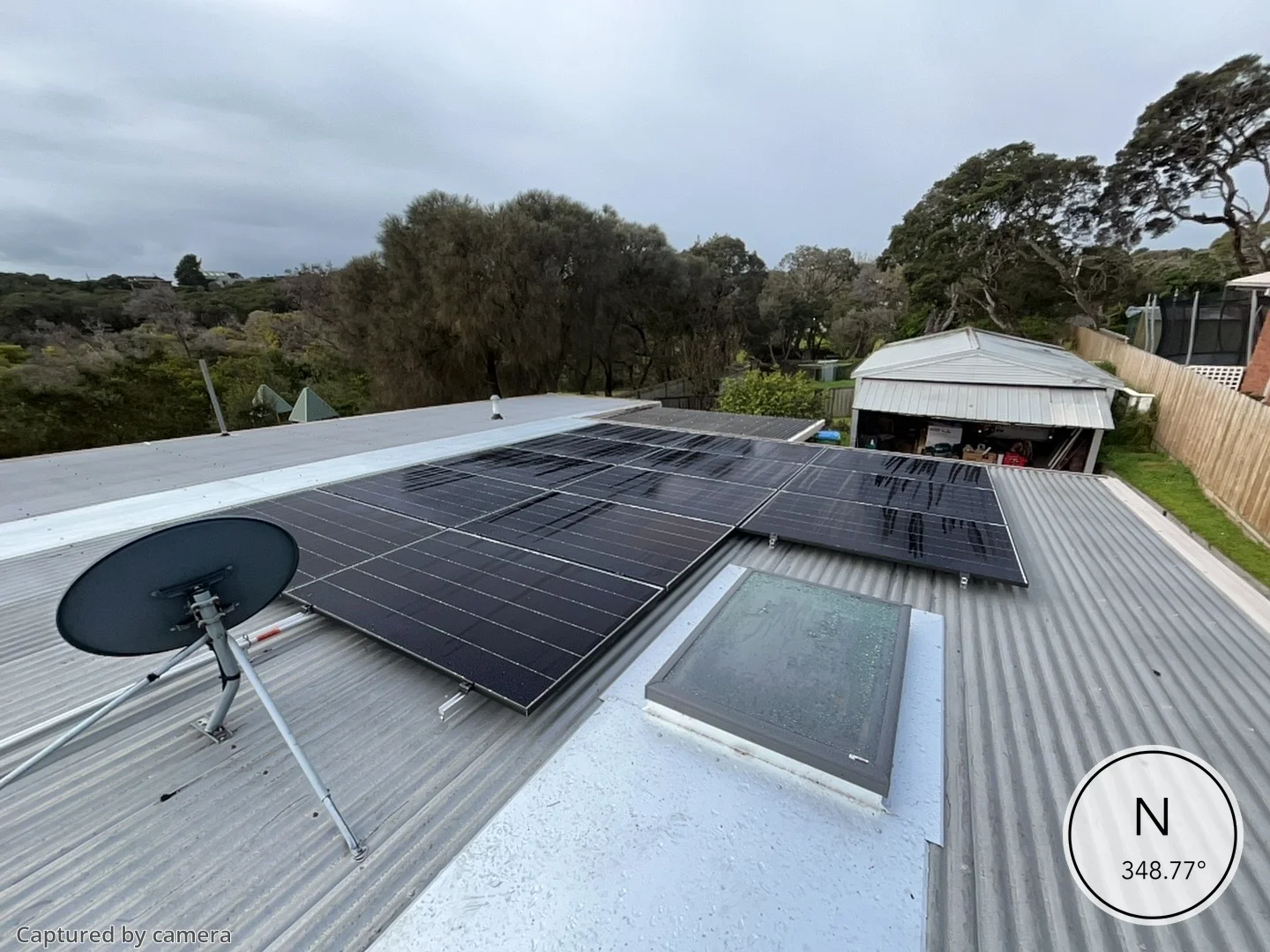
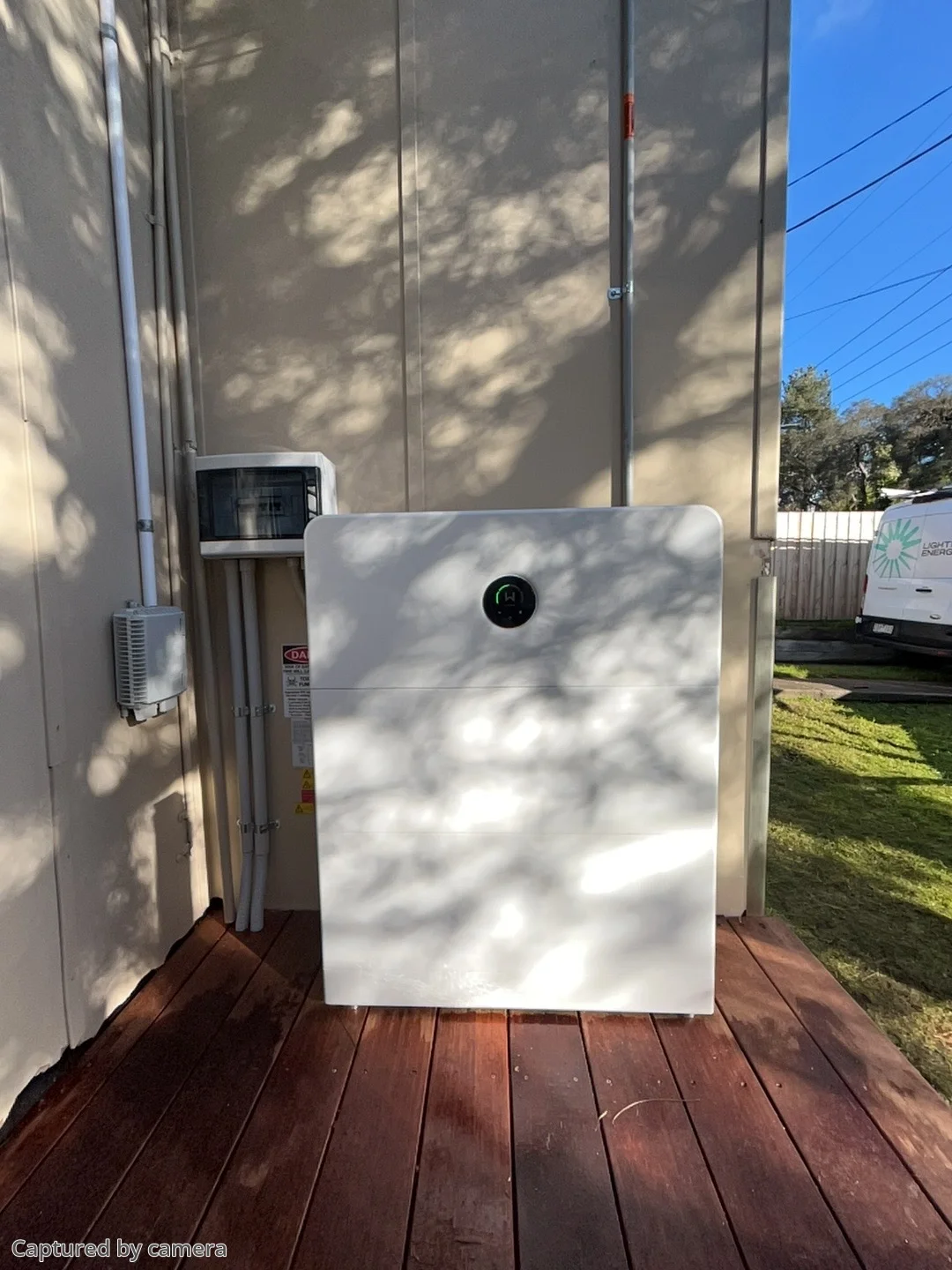
Thirteen AIKO panels sit on this metal roof in Rye. The installation pairs the rooftop array with a GoodWe ESA inverter and two battery modules, with the battery installed outside beside the home.
Installation details checked on 26 November 2026 against the job’s equipment record, photos and completed CRM record.
Installed system details
- Location
- Rye, Victoria
- Solar array
- 6.435 kW · 13 × 495 W panels
- Panel model
- AIKO AIKO-A495-MCE54Mw
- Battery
- GoodWe ESA with two Lynx D G2 modules
- Storage configuration
- 16.64 kWh rated; 16 kWh usable
- Inverter
- GoodWe GW15K-ETA-G20
How solar and storage work together
The panels generate electricity during daylight. The home can use that electricity as it is produced, while compatible storage can retain surplus solar for later use. How much grid electricity this replaces depends on the household’s consumption, weather, shading and system settings.
Battery energy capacity and inverter power are different measurements. Backup coverage also depends on the installed gateway, circuits, power limits and reserve settings; these records do not establish whole-home backup performance.
This is a worked example for understanding the value of solar and storage, not a measured saving or a site-specific forecast for this customer.
See the calculation and assumptions
All amounts are AUD. We assume an import price of $0.30/kWh, export credit of $0.04/kWh and battery round-trip efficiency of 90%. These are modelling inputs, not an electricity offer. Daily energy figures are hypothetical annual averages over 365 days, assuming sufficient solar surplus and household demand.
Direct solar benefit = 8 × $0.30 × 365. Additional battery benefit = 5 × ($0.30 − $0.04 ÷ 0.90) × 365. The battery calculation deducts foregone export revenue and allows for storage losses. The total is rounded after combining the two benefits.
No customer bill or interval-data analysis was used. This excludes remaining solar export income, purchase and finance costs, maintenance, degradation, fixed supply charges, rebates and VPP payments. It is not a payback calculation or guarantee. Seasonal output, tariffs, export limits and household behaviour change the outcome.
Product capacity references: Tesla Australia and GoodWe Australia Lynx D G2 data sheet. Rated capacity differs from usable capacity. Sigenergy is shown by its recorded system configuration.
Request a personalised quote