
43% Solar Efficiency? What the ICFO Breakthrough Really Shows
A promising solar-cell experiment is making headlines. We separate the research from rooftop-panel claims and explain how to compare efficiency when buying solar.
A promising solar-cell experiment is making headlines. We separate the research from rooftop-panel claims and explain how to compare efficiency when buying solar.

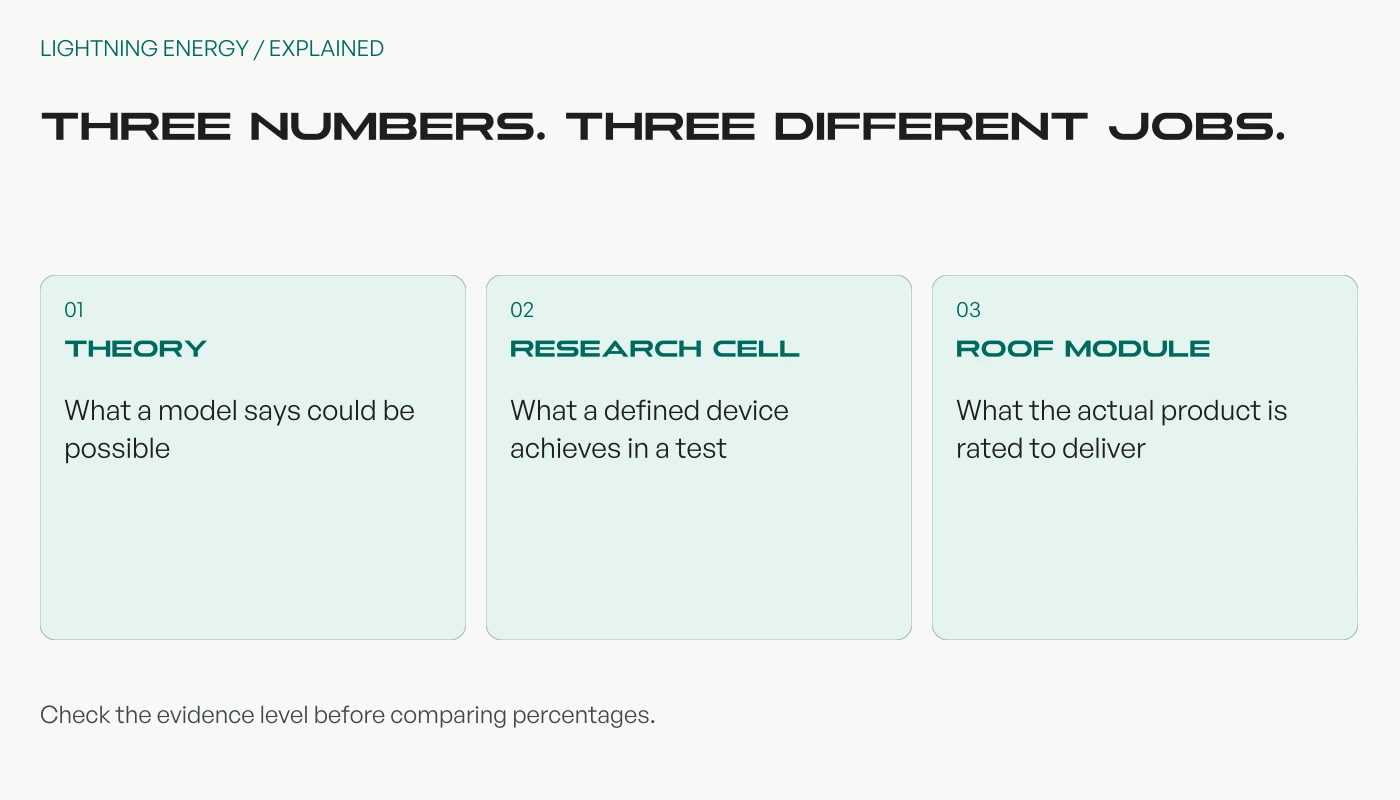
A solar breakthrough headline can make today’s roof look outdated overnight. Before changing your plans, check whether the number describes a theoretical possibility, a laboratory device or a panel available to install.
The latest story concerns research from ICFO in Spain. The distinction between those three stages is the most useful part for Australian homeowners.
This is desk research, checked on 31 October 2026. We have not tested the experimental device or a commercial product based on it.
ICFO says its team improved an experimental organic solar cell by restricting the directions in which it emits light. The device used an optical cavity with silver electrodes to reduce a loss mechanism.
The institute describes a route towards exceeding the standard single-junction limit, which it gives as 33.16%. Its near-43% figure is an in-principle possibility, not a reported rooftop-panel test result.
ICFO’s announcement is dated 5 October 2026.
BGR’s 30 October headline is stronger than that evidence supports. The announcement does not demonstrate a commercially available 43% panel.
The institute cites an Energy & Environmental Science paper, DOI 10.1039/d6ee03772k.
The publisher’s full paper was not accessible during this check. We therefore do not report an experimental efficiency value, device area or independent certification that we could not verify.
The US Department of Energy explains that absorbed light can create charge carriers in a solar cell. When those carriers recombine, some energy can leave again as light. Other losses involve heat, reflection and light passing through.
The Department’s efficiency explainer describes these mechanisms. Improving one loss pathway does not remove every other limit.
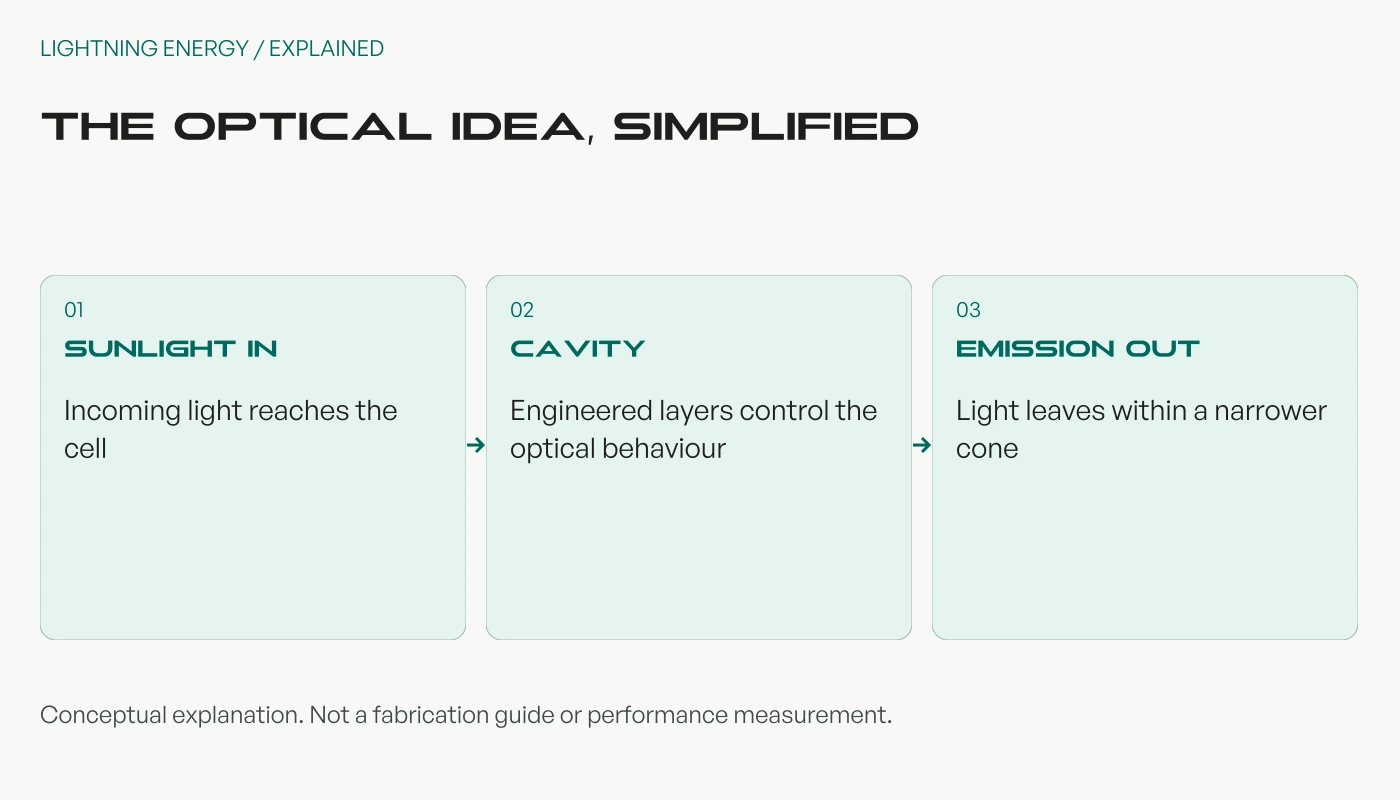
In ICFO’s design, incoming sunlight can enter while emission at larger angles is inhibited. The idea addresses the mismatch between the directions of arriving sunlight and departing light.
That is an optical design principle, not a coating or setting homeowners can add to their existing panels. The announcement does not establish a retrofit product.
A single-junction cell uses one energy-conversion junction. Other research approaches use multiple junctions or additional conversion mechanisms to use more of the solar spectrum.
A research paper on advanced photovoltaic architectures discusses these alternatives and the practical constraints of manufacturing, cost and sensitivity to the incoming light spectrum.
The sensible question is which architecture and test conditions a number describes. A theoretical limit for one model should not be used as a universal limit for every solar device.
Efficiency describes how much incoming solar power becomes electrical power. For two panels with the same area under the same test conditions, higher efficiency means a higher rated output.
The Australian Government’s solar panel guide explains the relationship between panel dimensions, efficiency and rated watts. This matters when usable roof space is tight.
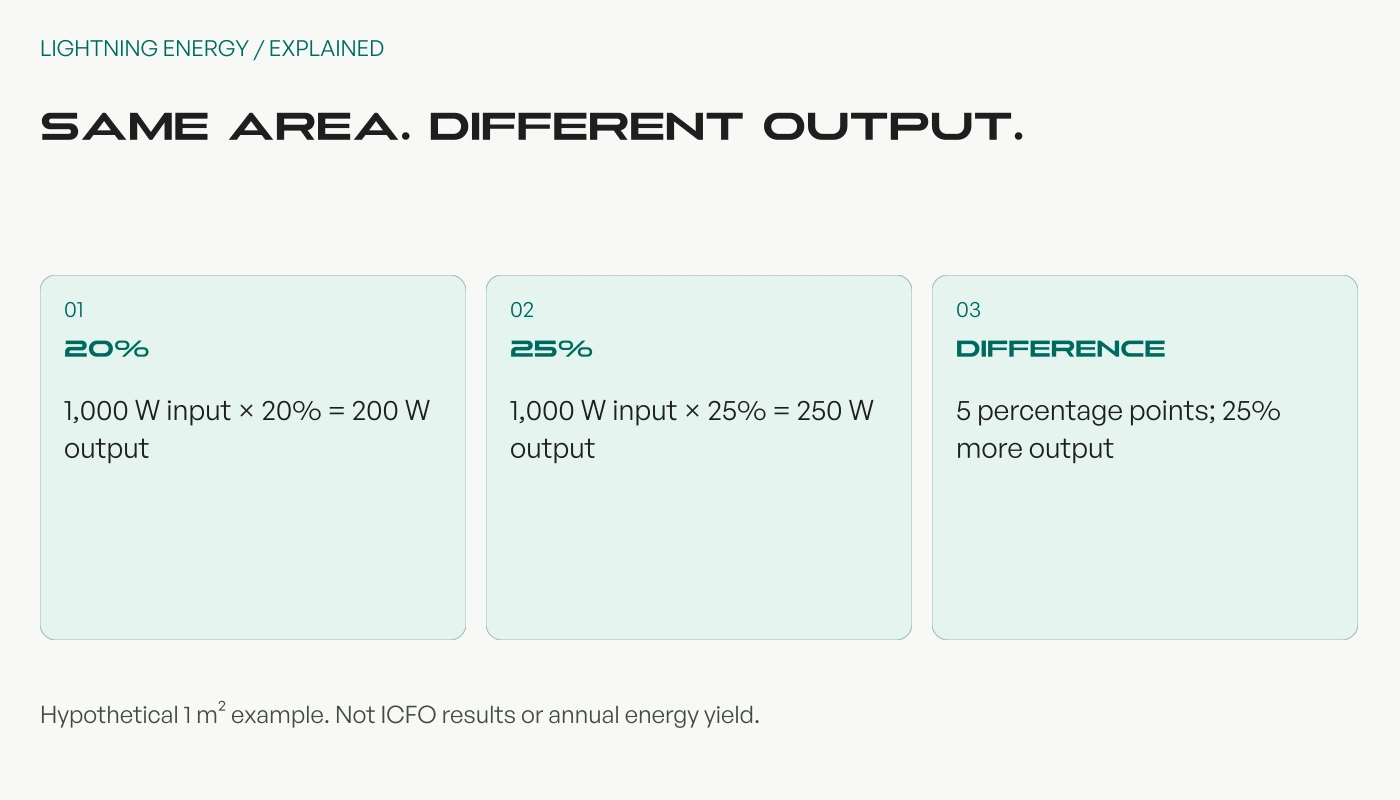
Here is a deliberately simple example. Assume one square metre receives 1,000 watts of sunlight. At 20% conversion efficiency, the electrical output is 200 watts. At 25%, it is 250 watts.
That is five percentage points more efficiency and 25% more power from the same area under the stated conditions. Neither value describes the ICFO device, and this is not an annual generation forecast.
A larger panel can have more rated watts without being more efficient. Compare dimensions alongside the wattage rather than assuming the biggest number is the most suitable roof layout.
Our exact-panel comparison guide explains why model numbers and roof fit belong in the same discussion.
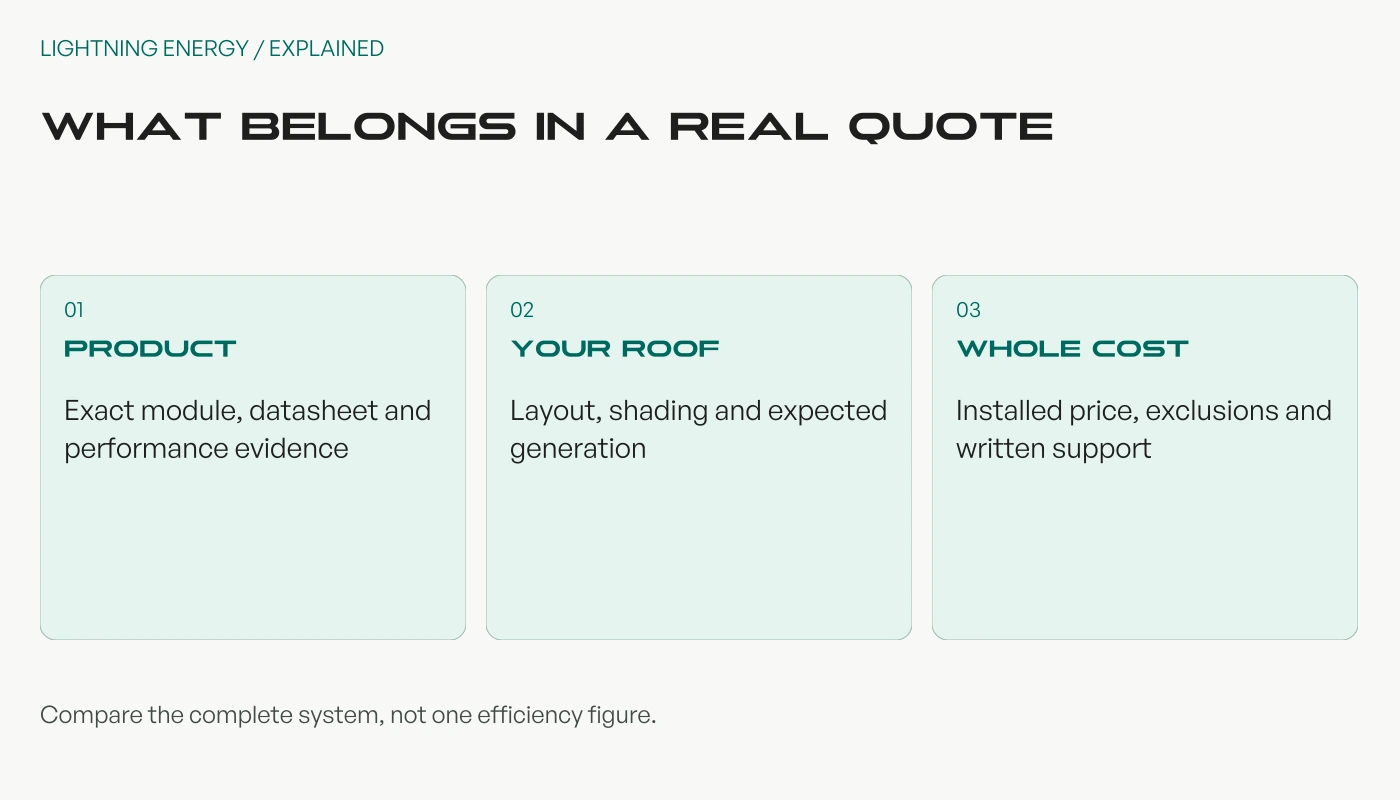
Before relying on a new technology in a proposal, ask for evidence at the level you are buying: the finished module, the installation design and the support arrangements.
Useful evidence would include the exact product datasheet, independently checked performance, durability testing, applicable approvals, written warranty terms and a supplier able to support the Australian installation.
These are the checks we would apply to any emerging product. They are not a claim that the ICFO team has failed a commercial test or announced a release schedule.
Panel output also changes with weather, temperature, shading and orientation. The federal solar guide distinguishes rated power under standard conditions from the energy actually generated over time.
A higher efficiency number cannot tell you how a tree shades the roof at 4 pm. Our shade assessment guide sets out the site evidence to request.
Do not choose an installation date around an unconfirmed commercial launch. Compare the proposals actually available to you, including any genuine reasons to wait such as roof repairs or a planned renovation.
Solar Victoria recommends reviewing household electricity use and obtaining site-specific advice. The amount and timing of your demand help determine a useful system size.
Solar Victoria’s system-planning guide also covers siting and shading. An annual generation estimate should reflect your property, not just a panel label.
Ask competing installers to explain their assumptions on the same basis.
Our solar quote comparison worksheet keeps equipment, installation scope and exclusions visible.
If your existing system is working well, a news story alone is not a reason to remove it. Review its actual production, condition and your changing electricity needs before deciding whether an upgrade is worthwhile.
Talk to Lightning Energy about your roof and electricity use if you want to compare today’s options. Good research expands future possibilities; a good proposal shows what a specific system can do for your home now.
Available times
Book a consultation and we'll map solar, storage, hot water, and the rebates around your bills and your goals.
Question 1 of 6
