
AIKO, Trina and Jinko: Compare the Exact Panels for Your Roof
Compare exact AIKO, Trina and Jinko panel models using roof fit, electrical ratings, warranty terms and installed value, without choosing by brand alone.
Compare exact AIKO, Trina and Jinko panel models using roof fit, electrical ratings, warranty terms and installed value, without choosing by brand alone.

A useful AIKO, Trina and Jinko comparison starts with model codes and the same roof plan. Brand rankings cannot tell you whether a particular panel fits, matches the inverter or justifies its installed price.
The examples below use documented 450 W models. They are a comparison of specifications, not a hands-on test, availability promise or recommendation to replace a working system.
Our solar service starts with the roof and household demand. Keep those inputs unchanged when asking for alternative panel quotations.
AIKO's Australian NEOSTAR 2P54 documentation includes AIKO-A450-MAH54Mw. Trina's Vertex S+ sheet includes TSM-450NEG9R.28. Jinko's Australian catalogue includes JKM450N-54HL4R-V.
AIKO's Australian product page identifies the family and provides its local datasheet.
Trina's Australian product page identifies the relevant Vertex S+ family.
Jinko's model datasheet contains the 450 W option discussed here.
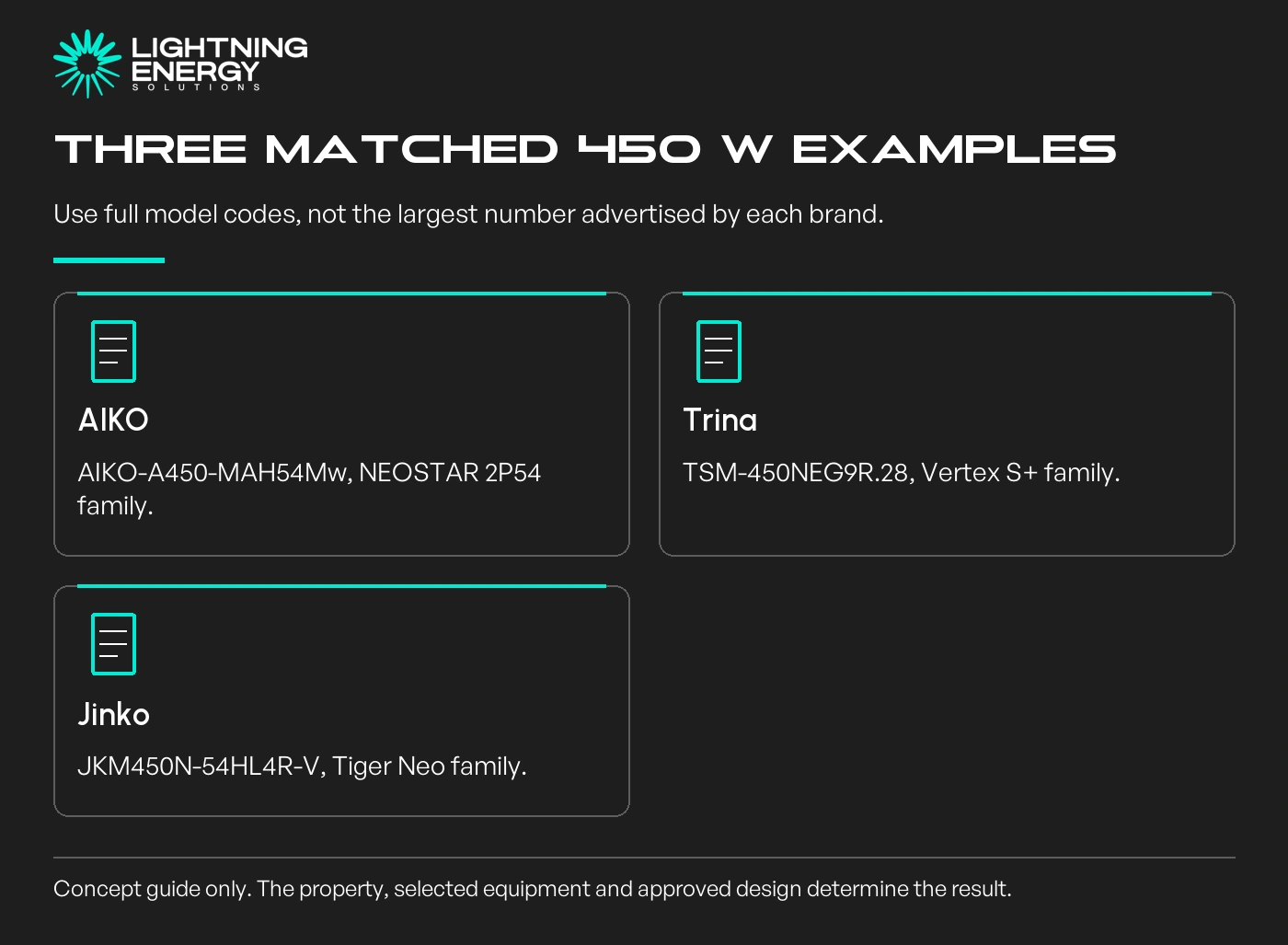
All three selected models have a 450 W standard-test rating. Comparing one brand's highest advertised wattage with another brand's lower power bin would answer a different question.
Retain the complete suffix and document revision in the quote. A similarly named dual-glass, full-black or newer-generation module may have different electrical and mounting requirements.
The AIKO sheet lists 1757 × 1134 × 30 mm. The selected Trina and Jinko sheets list 1762 × 1134 × 30 mm. A five-millimetre length difference is not automatically another usable panel position.
Roof edges, access, mounting zones, obstructions and required spacing still determine the layout. Ask for the panel count on each roof face, not a calculation that simply divides roof area by panel area.
Roof and panel selection explains why usable placement matters more than a brand badge.
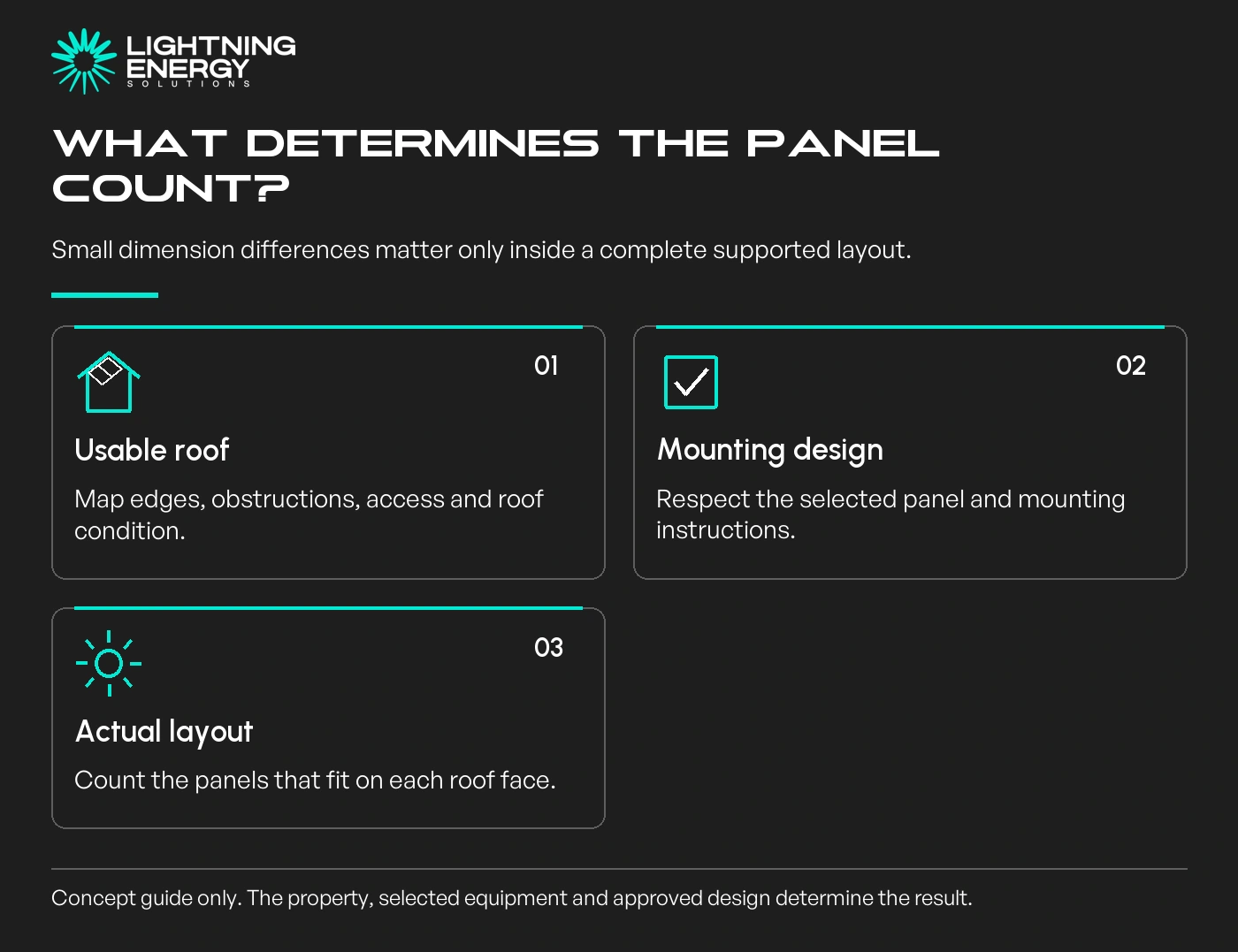
Consider a hypothetical home where all three compliant layouts fit the same number of 450 W panels. Their nameplate array capacity is then identical. Other design features and total installed cost become more important.
If a different model genuinely permits another panel, compare that complete layout separately. Do not attribute the gain entirely to cell technology when the proposed system also became larger.
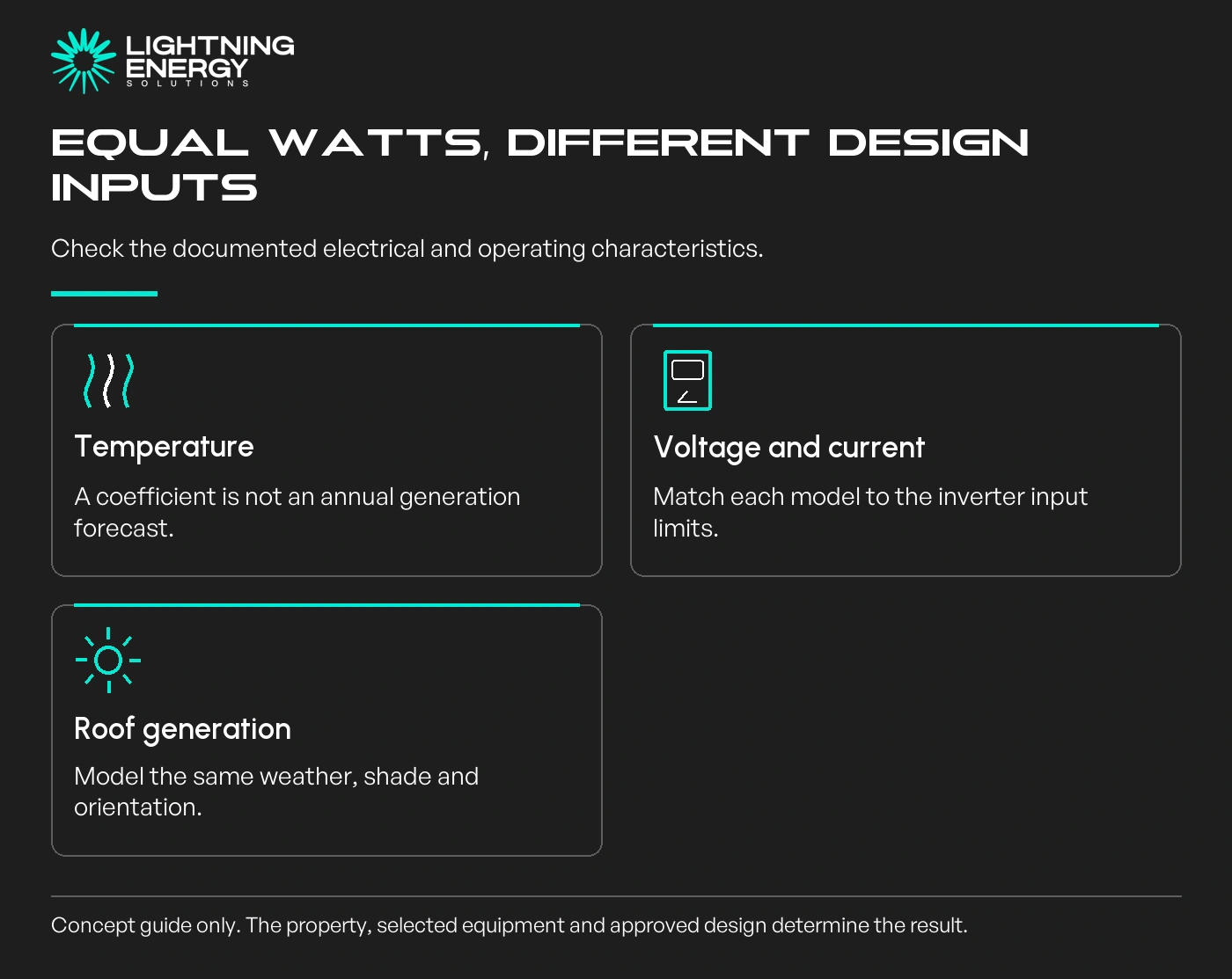
The selected AIKO sheet gives a Pmax temperature coefficient of -0.26%/°C; the selected Trina and Jinko sheets give -0.29%/°C. These describe a temperature relationship, not annual savings.
A less negative coefficient can be favourable as cells heat up, but actual cell temperature, weather, orientation and inverter limits still shape generation. It does not establish a universal percentage advantage in Melbourne.
The designer must also match panel current and voltage to the inverter inputs. Equal watts do not mean electrically interchangeable panels.
Ask for the Australian warranty applying to the supplied model, including claim evidence and any labour, freight or access conditions. Product cover and a power-retention warranty answer different questions.
Our Jinko overview is useful supporting reading, but the supplied model's documents remain the basis of your purchase.
Do not pay a premium solely for an unqualified shading claim. Request the same shade assessment and an explanation of the expected benefit on your roof, including uncertainty.
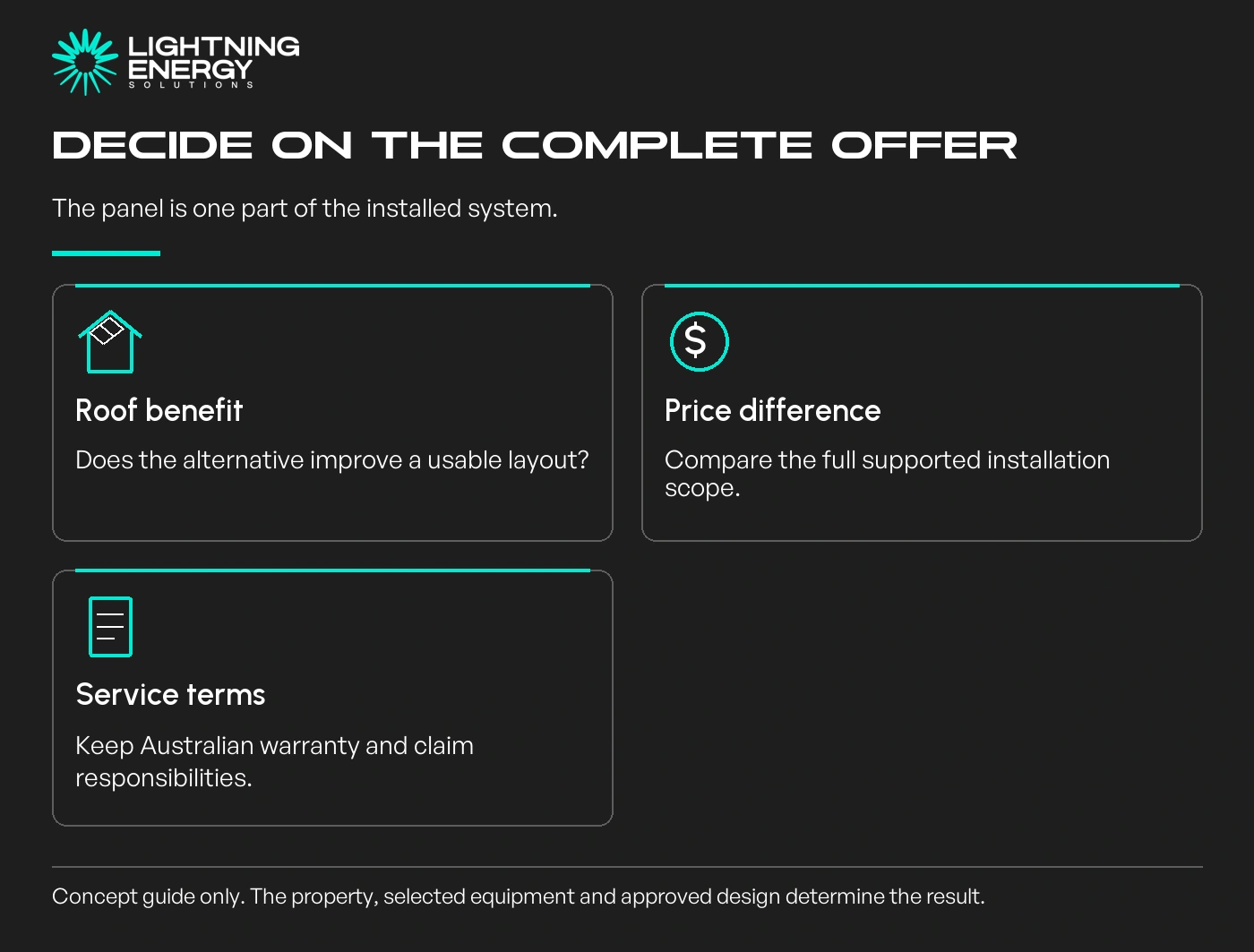
Choose the offer with the strongest combination of supported layout, documented equipment, clear installation scope and accessible after-sales responsibility. A higher specification can be valuable without being necessary for every house.
Send us the competing model codes, roof layouts and itemised quotations. That makes it possible to compare the actual offers instead of declaring a brand winner.
Available times
Book a consultation and we'll map solar, storage, hot water, and the rebates around your bills and your goals.
Question 1 of 6