
What a Solar Shade Assessment Should Show Before You Accept a Quote
Understand what a solar shade assessment should reveal about moving shadows, seasonal losses and layout options before approving panels or extra electronics.
Understand what a solar shade assessment should reveal about moving shadows, seasonal losses and layout options before approving panels or extra electronics.

A shade assessment should explain where shadows fall, when they matter and how the proposed design responds. A roof image with panels drawn over it is not enough to answer those questions.
Start with the obstructions and the layout. Then assess whether additional electronics or another roof face improves the proposal enough to justify its cost.
A solar assessment should make the limits of the site understandable, including where generation cannot be recovered by equipment choices.
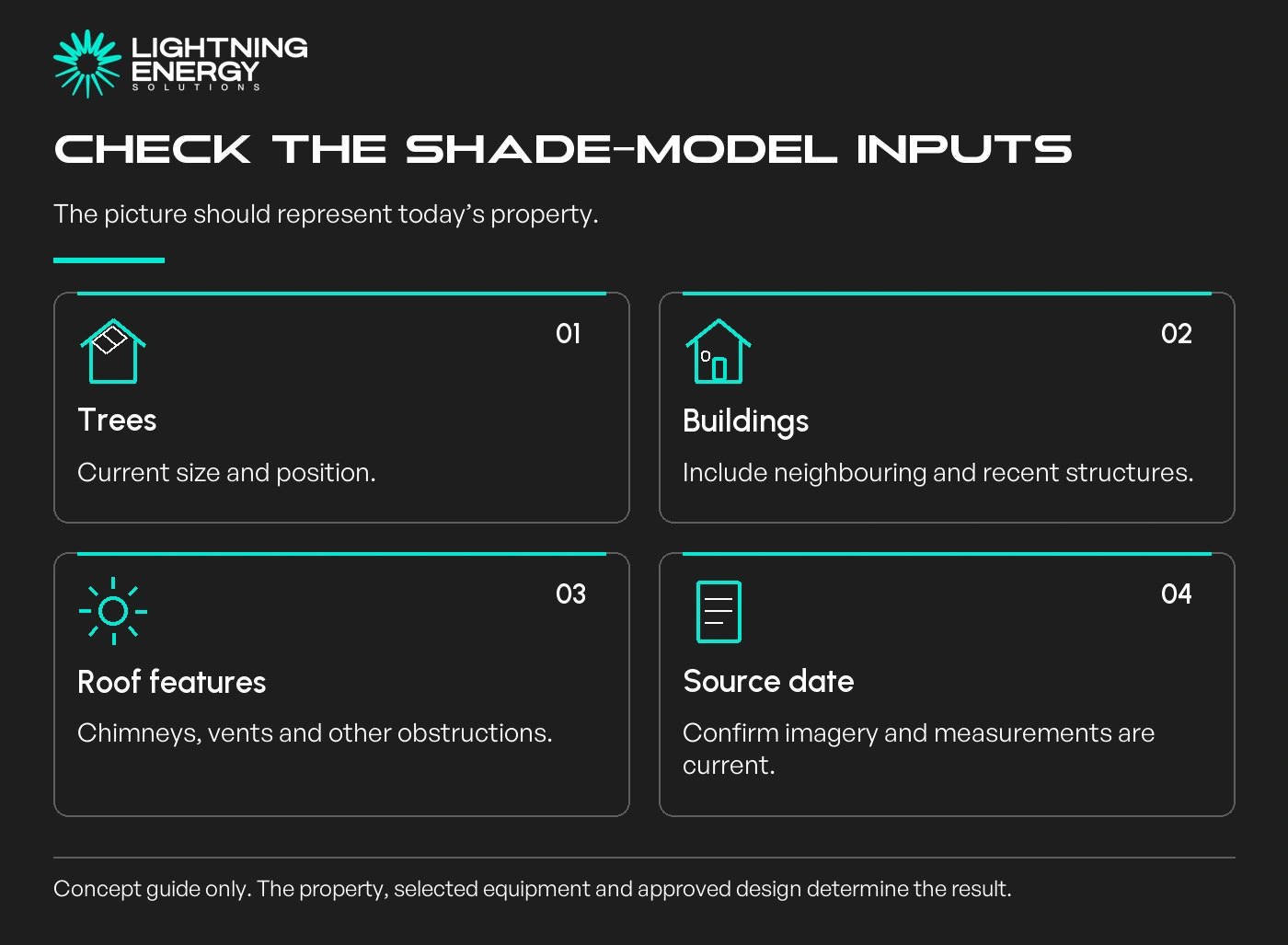
Identify trees, chimneys, neighbouring buildings and roof features. Check whether the imagery and measurements reflect the current property rather than a version before a tree grew or an extension was built.
SunSPOT’s roof-mapping guidance explains how outdated imagery or missing obstructions need to be accounted for when assessing a roof.
SunSPOT roof-mapping guidance.
Ask when the site information was gathered and how uncertain features will be confirmed. A detailed-looking picture can still rest on incomplete inputs.
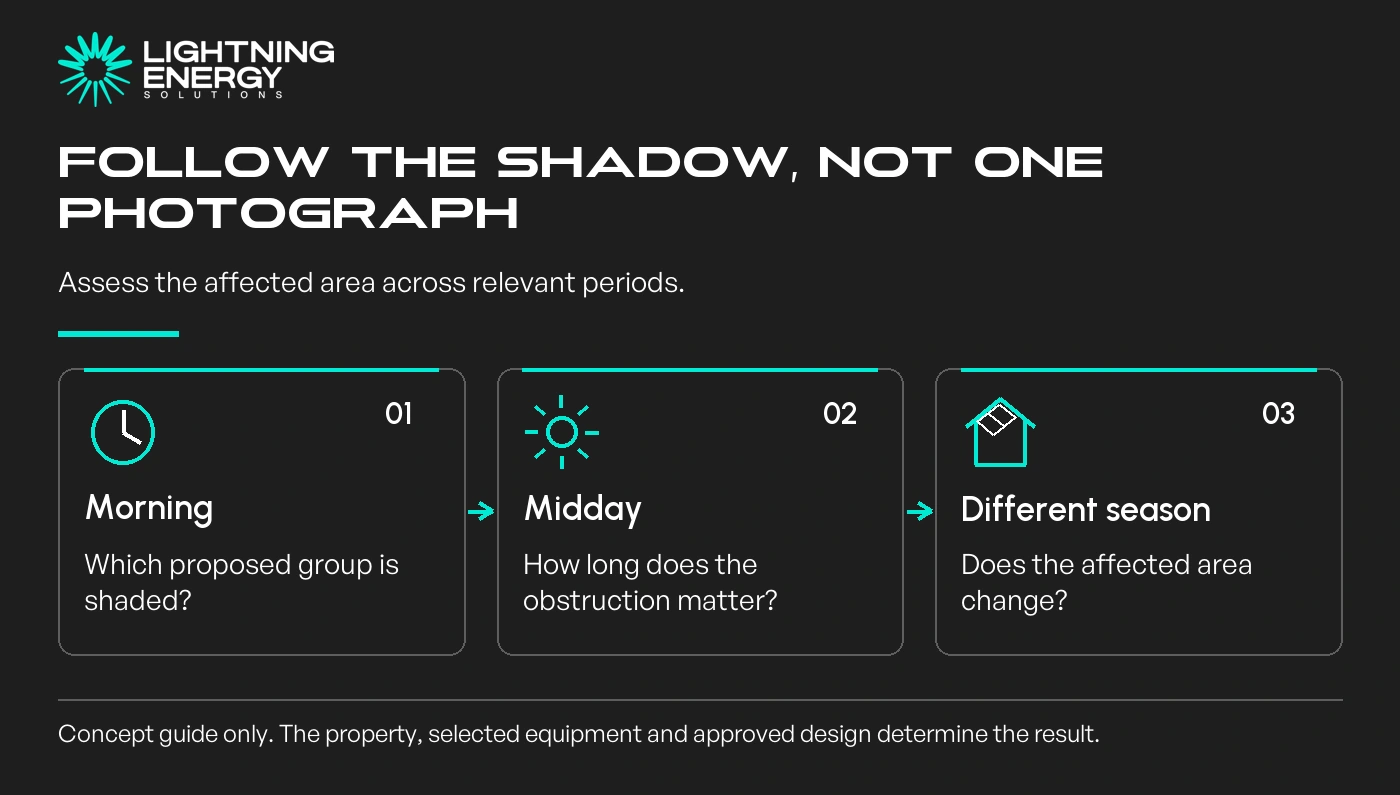
The relevant question is not simply whether a panel is shaded. Duration, season and the time of day all belong in the assessment, alongside the affected panel group.
SunSPOT’s sun-path explanation shows how obstruction profiles and the sun’s seasonal position can be compared. Its estimated group performance can help frame questions for the designer.
SunSPOT sun-path and group details.
Imagine a chimney shading one proposed group in the morning. Ask for the model with that obstruction included and an alternative layout, rather than assuming the entire roof should be rejected.
A tree affecting much of the available area creates a different design problem. Do not treat a small local shadow and prolonged widespread shade as equivalent cases.
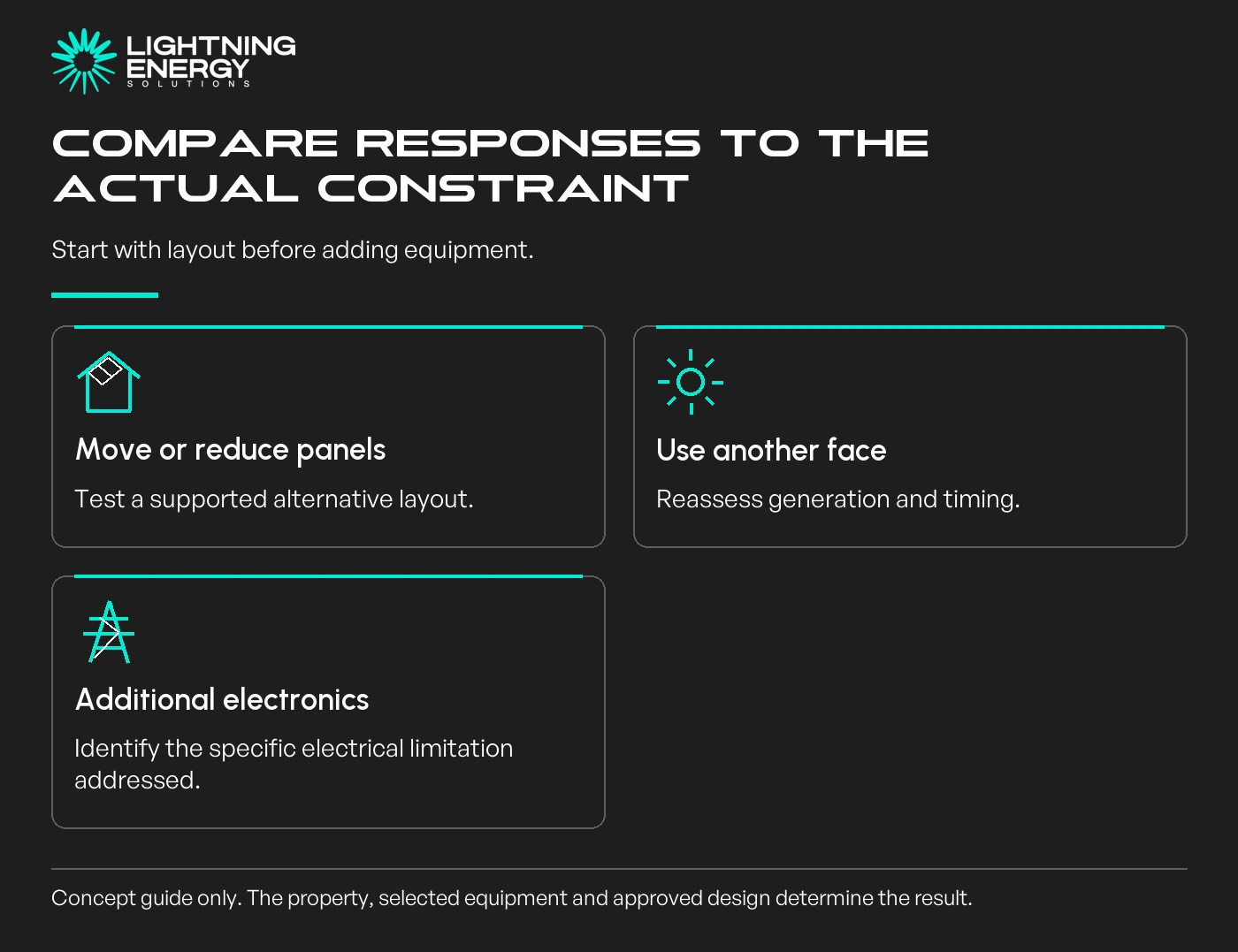
Possible responses should start with layout: move panels, use another suitable face or reconsider the number installed. Ask what each change does to seasonal generation and installed cost.
Then discuss the supported inverter arrangement and any panel-level electronics. Our inverter guide explains the functions involved.
Neither optimisers nor microinverters create sunlight where an obstruction blocks it. Require a clear explanation of the limitation the proposed equipment addresses and the loss that remains.
Avoid a blanket claim that shaded panels cause every other panel to lose the same proportion. The actual electrical design and equipment behaviour need to be considered together.
A generation estimate should distinguish total energy from the timing of useful energy. A shaded period can have a different household value depending on when appliances run and what export treatment applies.
The east-west orientation guide provides context when an alternative roof face changes the generation window.
Ask whether the proposal’s savings calculation uses the shaded estimate or an idealised unshaded result. A corrected drawing and an unchanged forecast deserve an explanation.
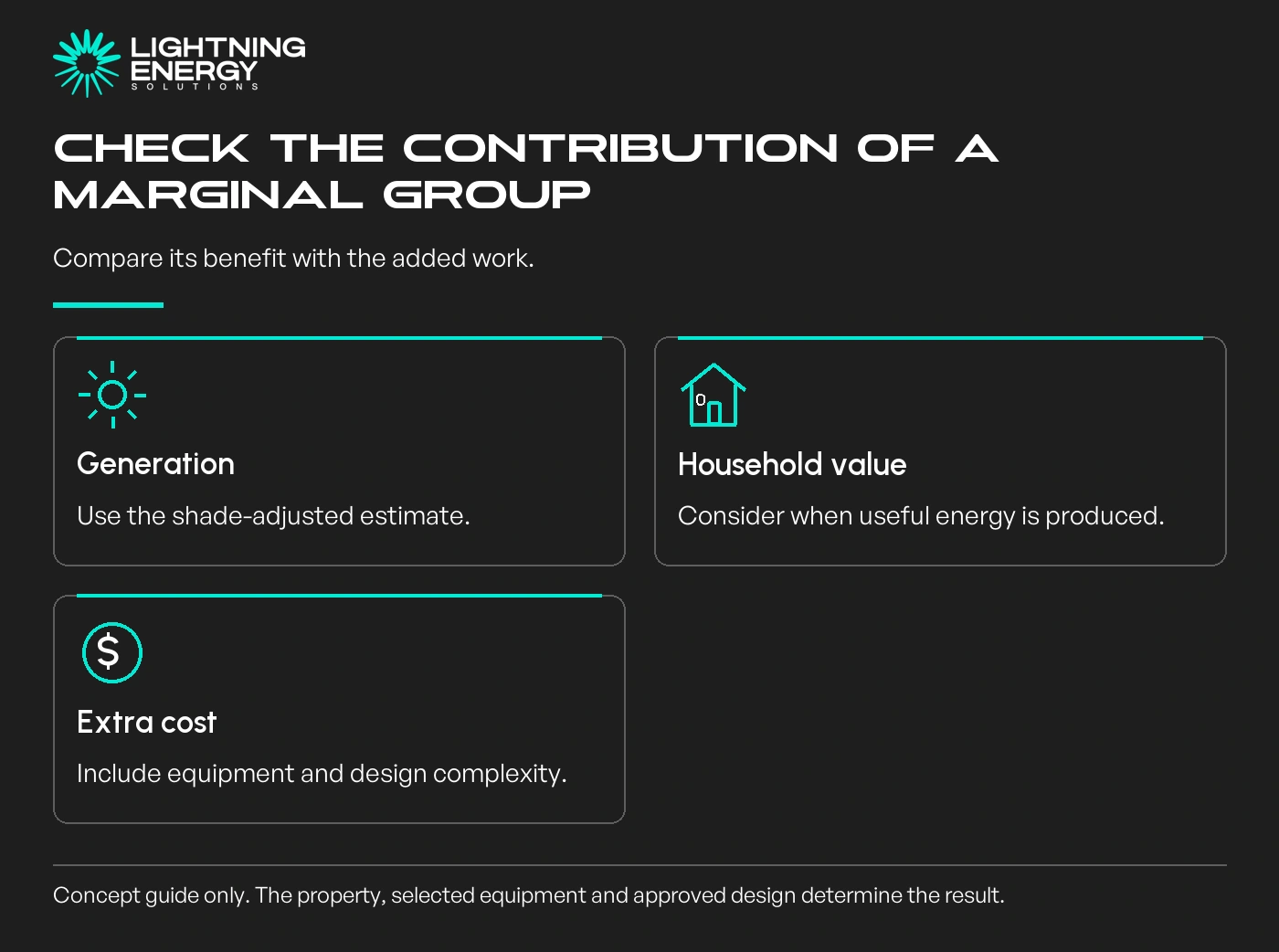
Do not pay for every possible panel merely because a designer can fit it in the picture. A marginal group may add complexity and cost without a useful contribution.
Equally, a manageable obstruction does not automatically make the whole roof unsuitable. Compare supported alternatives with honest loss estimates before deciding.
Contact Lightning Energy with current roof photographs and any known shading concerns. Ask for the obstruction assumptions, seasonal effect and proposed response to be explained together before approving the installation.
Available times
Book a consultation and we'll map solar, storage, hot water, and the rebates around your bills and your goals.
Question 1 of 6