
AC-Coupled or DC-Coupled Batteries for an Existing Solar Home
Compare AC-coupled and DC-coupled battery retrofits through their energy paths, equipment changes, controls and backup requirements for your home.
Compare AC-coupled and DC-coupled battery retrofits through their energy paths, equipment changes, controls and backup requirements for your home.

AC-coupled and DC-coupled describe how a battery connects to the solar and household electricity system. Either can be worth considering, but the label alone does not tell you the installed cost or backup capability.
For an existing solar home, start by asking which equipment stays, which equipment changes and how the complete system will operate. Then compare proposals against the same household requirements.
Solar panels produce DC electricity. In a typical AC-coupled retrofit, the existing solar inverter converts that electricity to AC, and a separate battery inverter handles charging and discharging the battery.
When solar energy is stored, it passes through conversion stages on the way into storage and again on the way out to household AC loads. Electricity used directly by the home follows a different path.
The government's Your Home guide explains this architecture and the distinction from DC coupling.
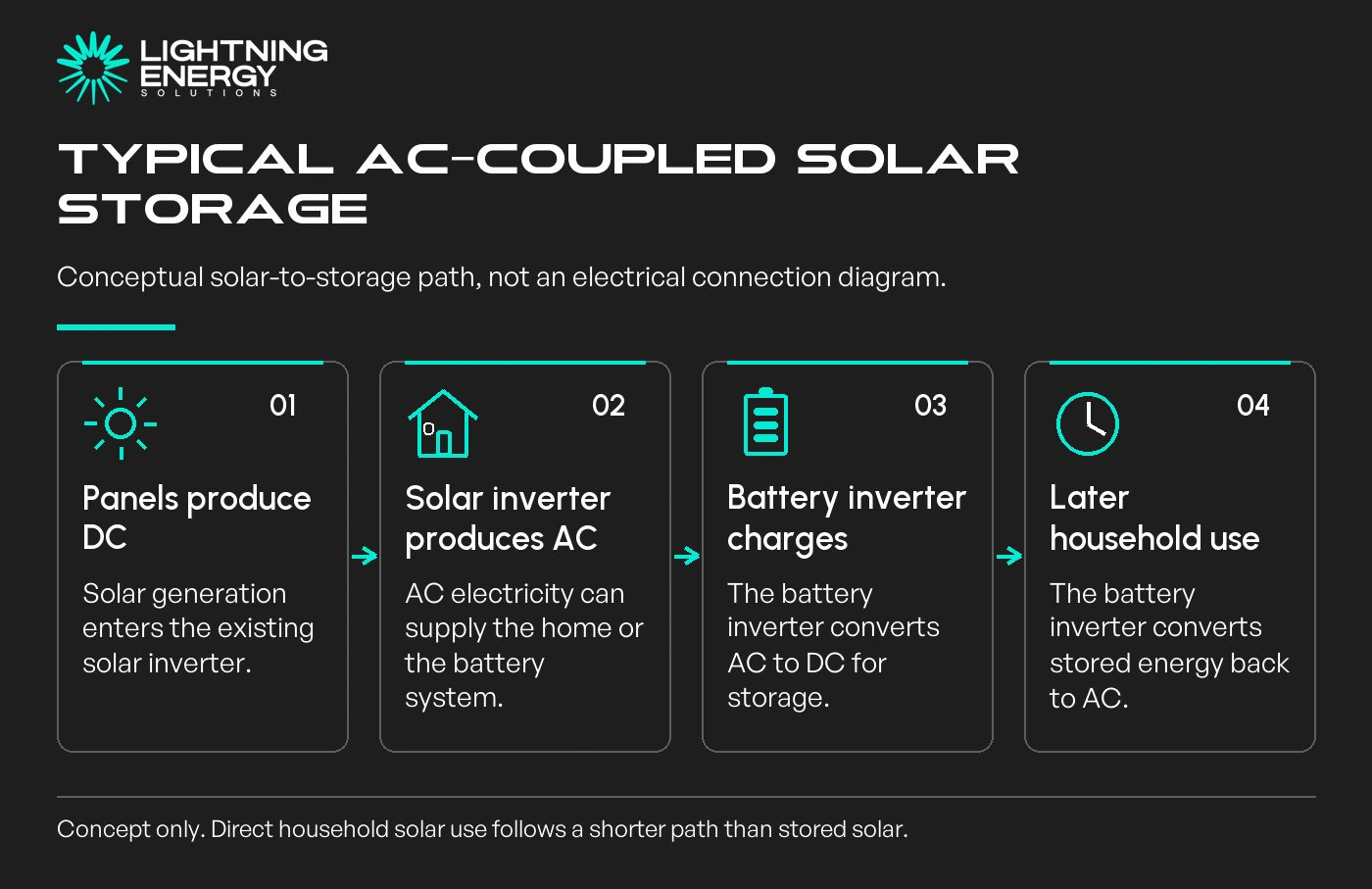
An advantage to assess is the opportunity to keep a suitable existing solar inverter. The design still needs compatible control, correct measurement and the required network approval.
Our inverter guide explains the roles behind these terms.
In a typical DC-coupled arrangement, solar and a compatible battery connect on the DC side of a hybrid inverter system. Stored energy is converted to AC when supplying household AC loads.
This can reduce the conversion steps involved in storing solar. However, counting conversion stages does not give a complete household efficiency result or a guaranteed saving.
Actual performance depends on the equipment, operating conditions and how much electricity travels through each route. Compare any efficiency figures using equivalent measurement boundaries and test conditions.
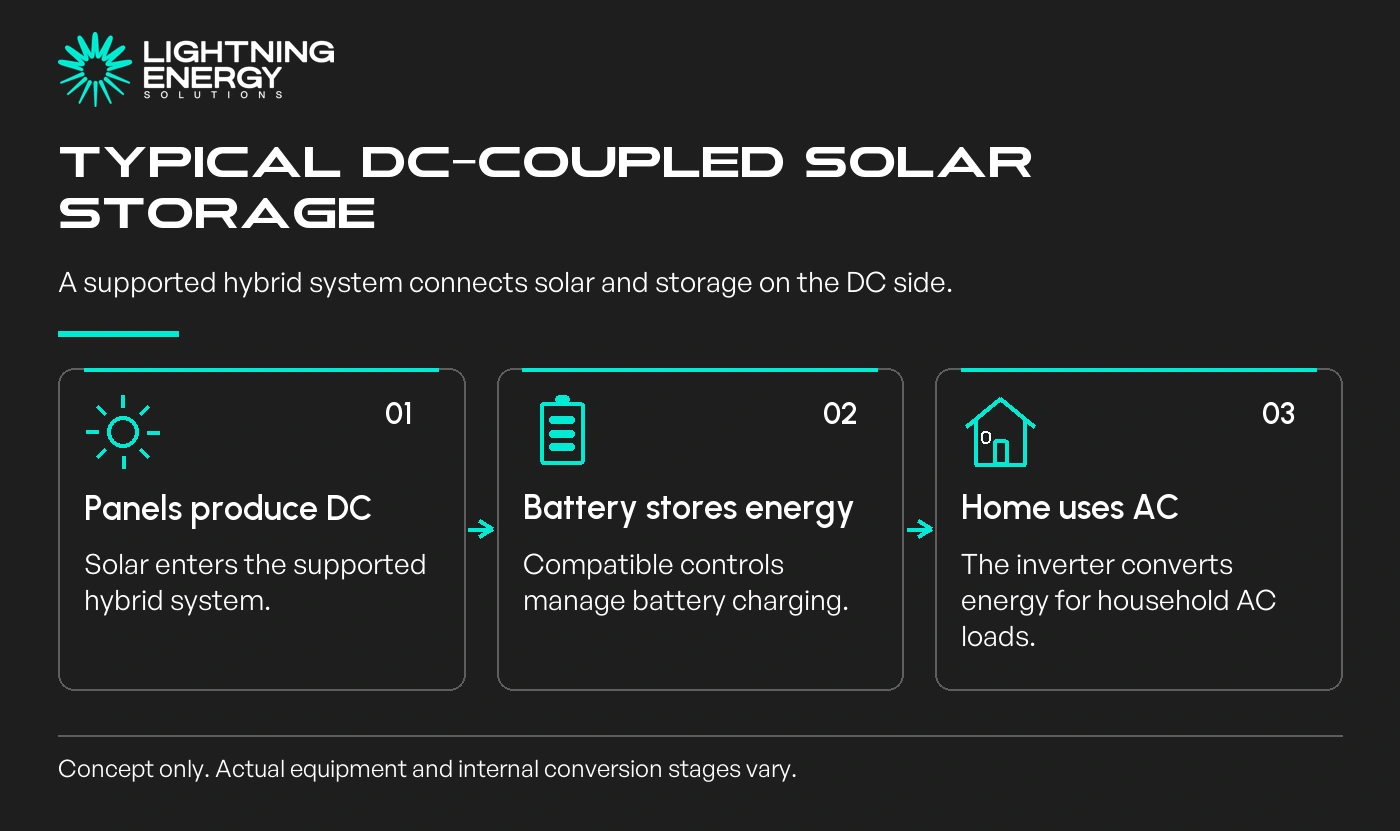
For an existing installation, this option may mean using a supported battery connection on the current inverter or replacing equipment. Ask which pathway the quote includes and what happens to the old inverter.
A battery described as DC-coupled also needs an exact supported pairing. The connection label does not make battery brands interchangeable.
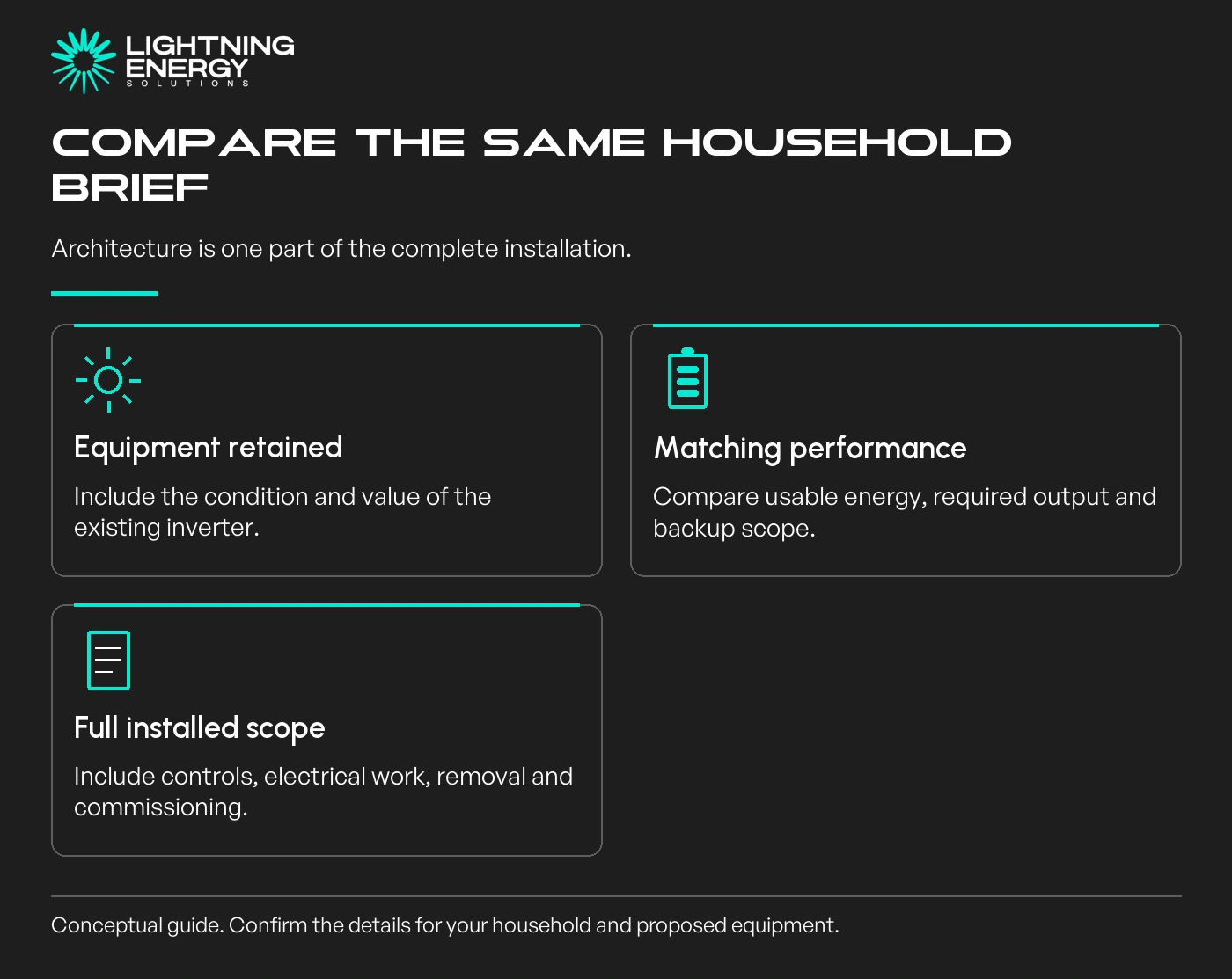
Imagine two hypothetical households with identical solar generation and evening demand. One has a reliable inverter suitable for an AC retrofit. The other already owns a compatible hybrid inverter.
Their best-value installation scopes may differ before any conversion-efficiency comparison begins. A small theoretical energy advantage should be assessed alongside replacement work, controls and support.
Use the same usable battery energy, required output and outage brief in both quotes. Otherwise you may be comparing a modest storage upgrade with a much more extensive backup installation.
Our battery quote checklist helps make inclusions and exclusions visible.
Ask which device measures household demand and grid exchange. Ask how the existing solar inverter and new battery comply with the site's export conditions when both can supply electricity.
Then consider an outage separately. Which circuits remain supplied? Can the installed solar equipment keep charging the battery? What controls excess generation if the battery becomes full?
AC coupling does not automatically rule out backup, and DC coupling does not automatically include it. The supported system design, additional hardware and commissioning determine those features.
The Australian Government's battery guide makes backup capability a separate purchasing consideration.
Australian Government: batteries.
Retaining useful equipment may be sensible when the proposed combination meets your needs. Replacement may be justified when required functions or the condition of existing equipment make it worthwhile.
Do not buy a more complex system simply to win an argument about coupling. Ask for the practical benefits in your home and the complete cost of delivering them.
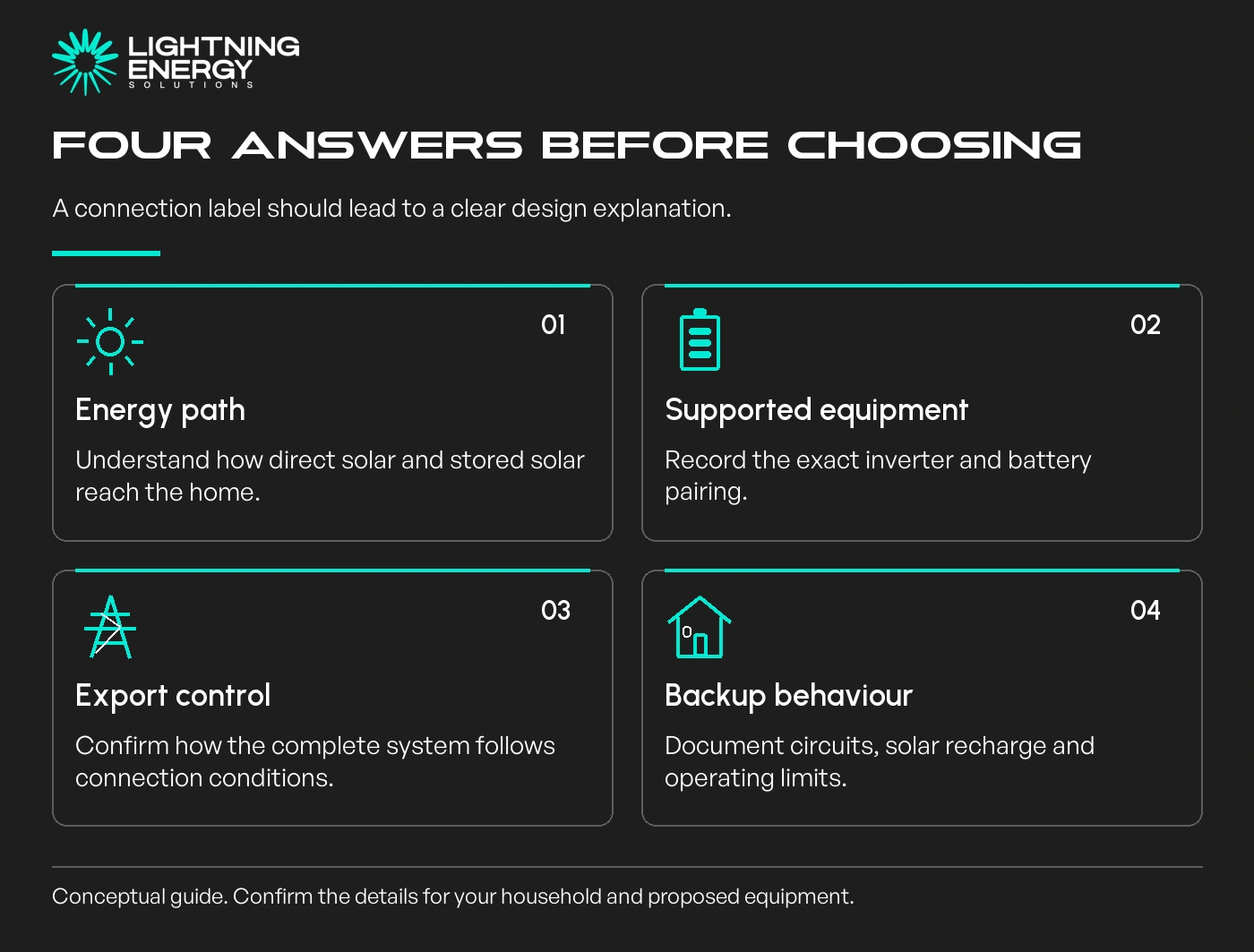
A battery assessment should finish with a clear equipment list, supported energy paths, control responsibilities and backup scope. Those details are more useful than a preferred acronym.
Plan your battery upgradeBring your existing inverter details and electricity data. We can compare suitable connection pathways and explain what each would change at your property.Available times
Book a consultation and we'll map solar, storage, hot water, and the rebates around your bills and your goals.
Question 1 of 6