
Adding Panels to Existing Solar: Check More Than Spare Roof Space
Check whether your existing solar can accept more panels, including electrical compatibility, roof condition, network approval and treatment of added capacity.
Check whether your existing solar can accept more panels, including electrical compatibility, roof condition, network approval and treatment of added capacity.

Spare roof space does not mean an existing solar system can accept more panels. Expansion also depends on the inverter inputs, existing modules, mounting, electrical condition and the property's connection approval.
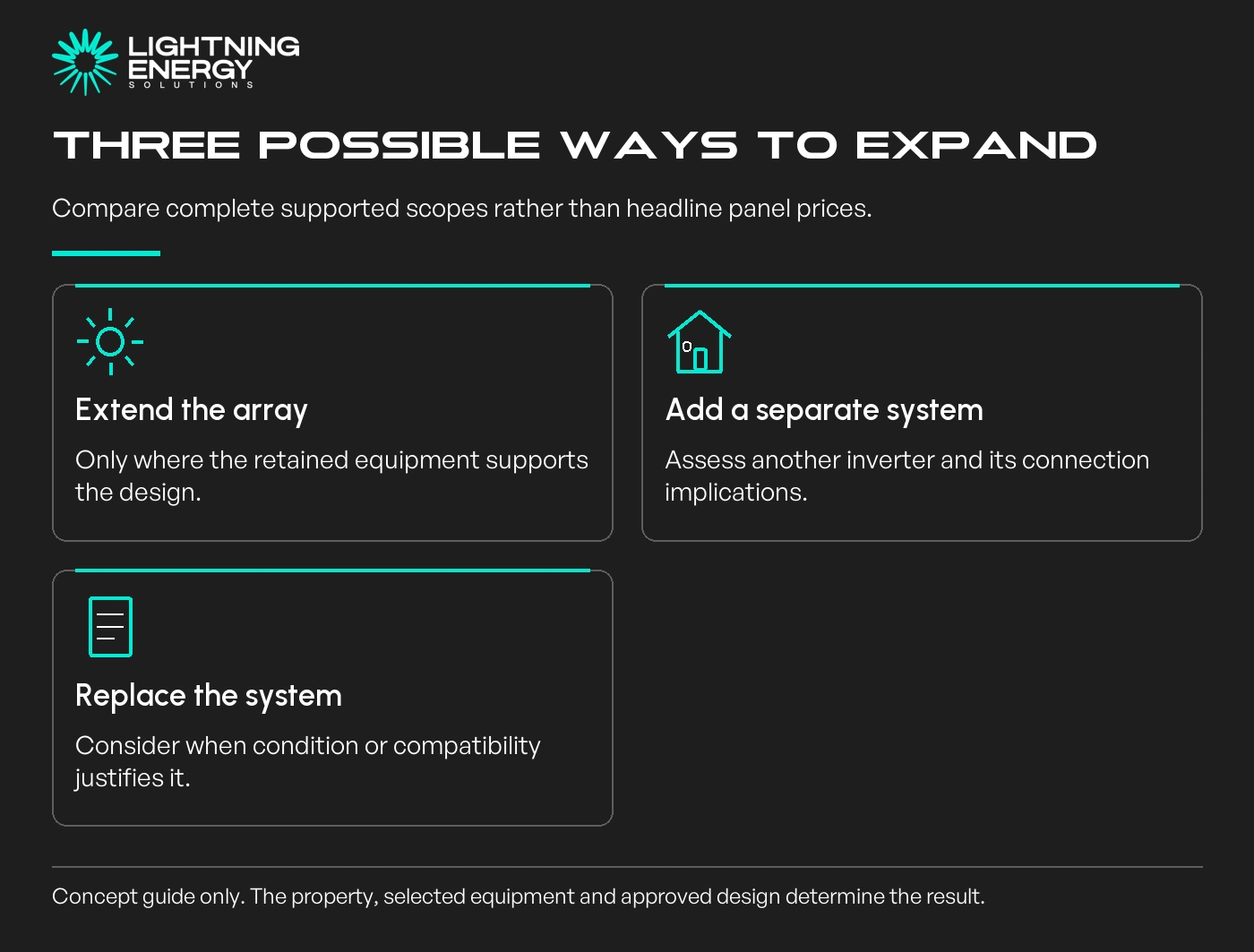
Start with a record of what is already installed. Then compare extending it, adding a separate supported system or replacing unsuitable equipment, rather than assuming one approach is always cheapest.
Our solar design service can assess those options using the current system and the extra electricity you expect to need.
Find the panel and inverter model codes, quantities, commissioning documents and original layout. Include any later changes, battery equipment and the current export approval.
A sales description such as six-kilowatt solar is incomplete. It does not identify the panel voltage and current, inverter tracking inputs or which roof groups are connected together.
SAA's design requirements require a compatible array and inverter configuration that fits the roof.
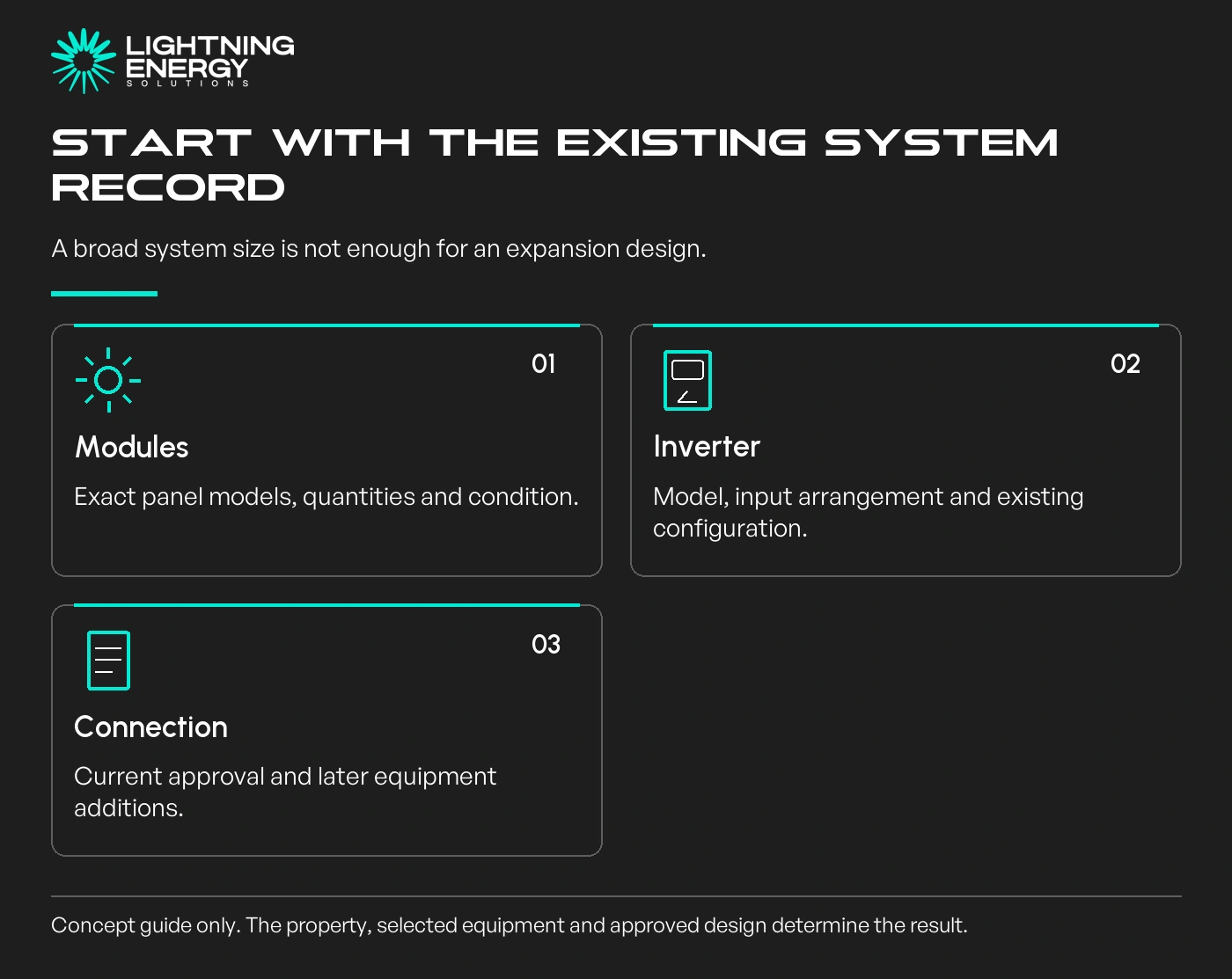
The designer needs the actual manufacturer documents. A higher-wattage modern panel is not automatically interchangeable with an older module, and an unused connector is not proof of spare electrical capacity.
This is an electrical design assessment, not a DIY exercise in joining additional panels to an existing string.
Inspect the roof, mounting, cabling and existing modules professionally. A proposed extension can uncover defects or components that need updating before the final system can be certified.
The Clean Energy Regulator says an eligible extension using a new inverter and retained panels must meet the applicable requirements, including consideration of the existing installation and any needed redesign.
Clean Energy Regulator upgrade guidance.
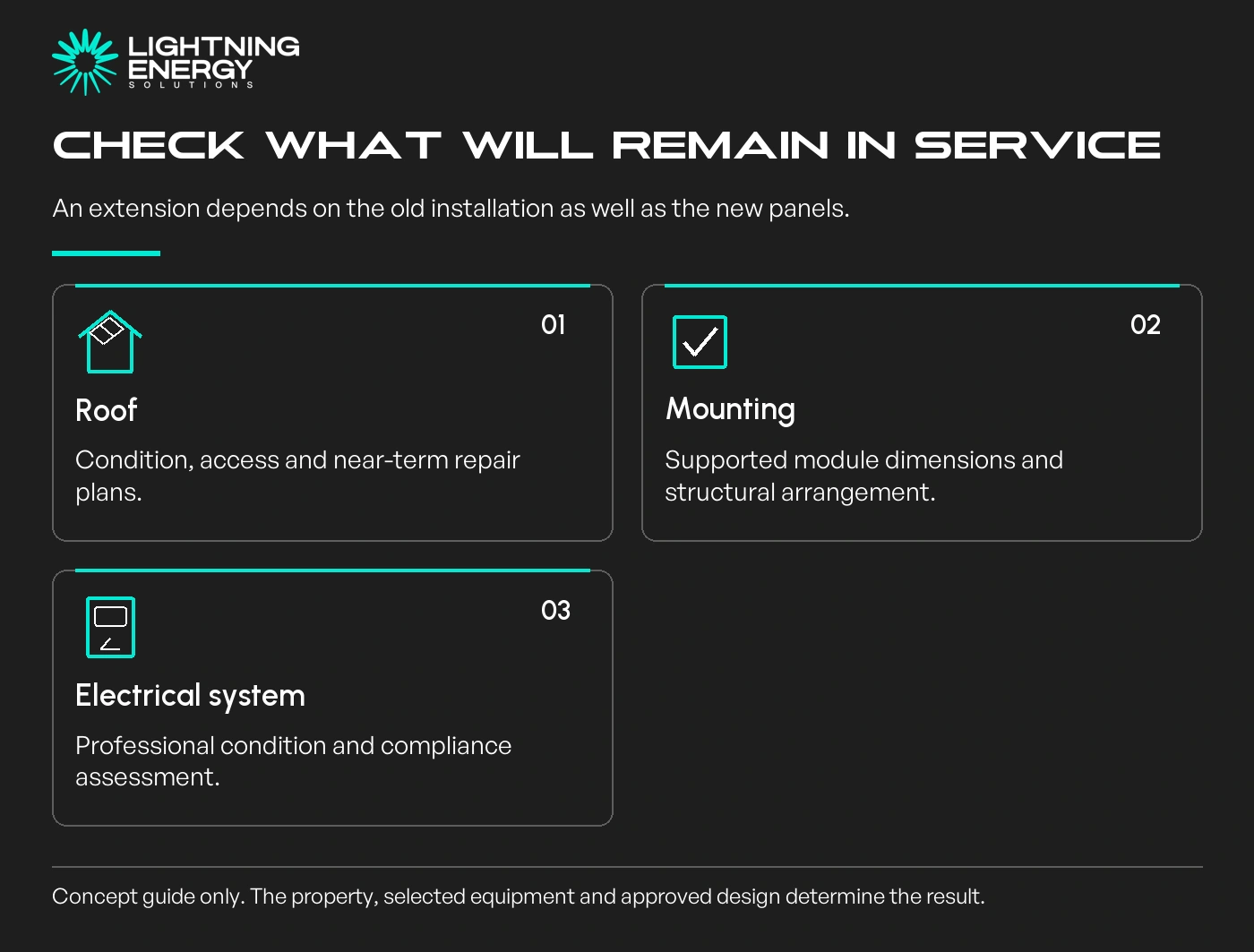
Do not assume old mounting rails can simply be extended for a different panel format. The supported mounting design, roof loads and access constraints still need to be established.
Our roof replacement checklist is useful if roof work is likely soon. Adding panels first may create avoidable removal work later.
An extension can be sensible when the inverter and existing equipment support it. A separate array and inverter can sometimes preserve a useful old system while providing a distinct new installation.
A full replacement may be justified where condition, compatibility or layout makes retention unattractive. It should not be the automatic answer solely because the original system is older.
Ask each quote to include required switchboard work, monitoring integration, removal, disposal and approvals. Otherwise, an apparently inexpensive extension can become difficult to compare fairly.
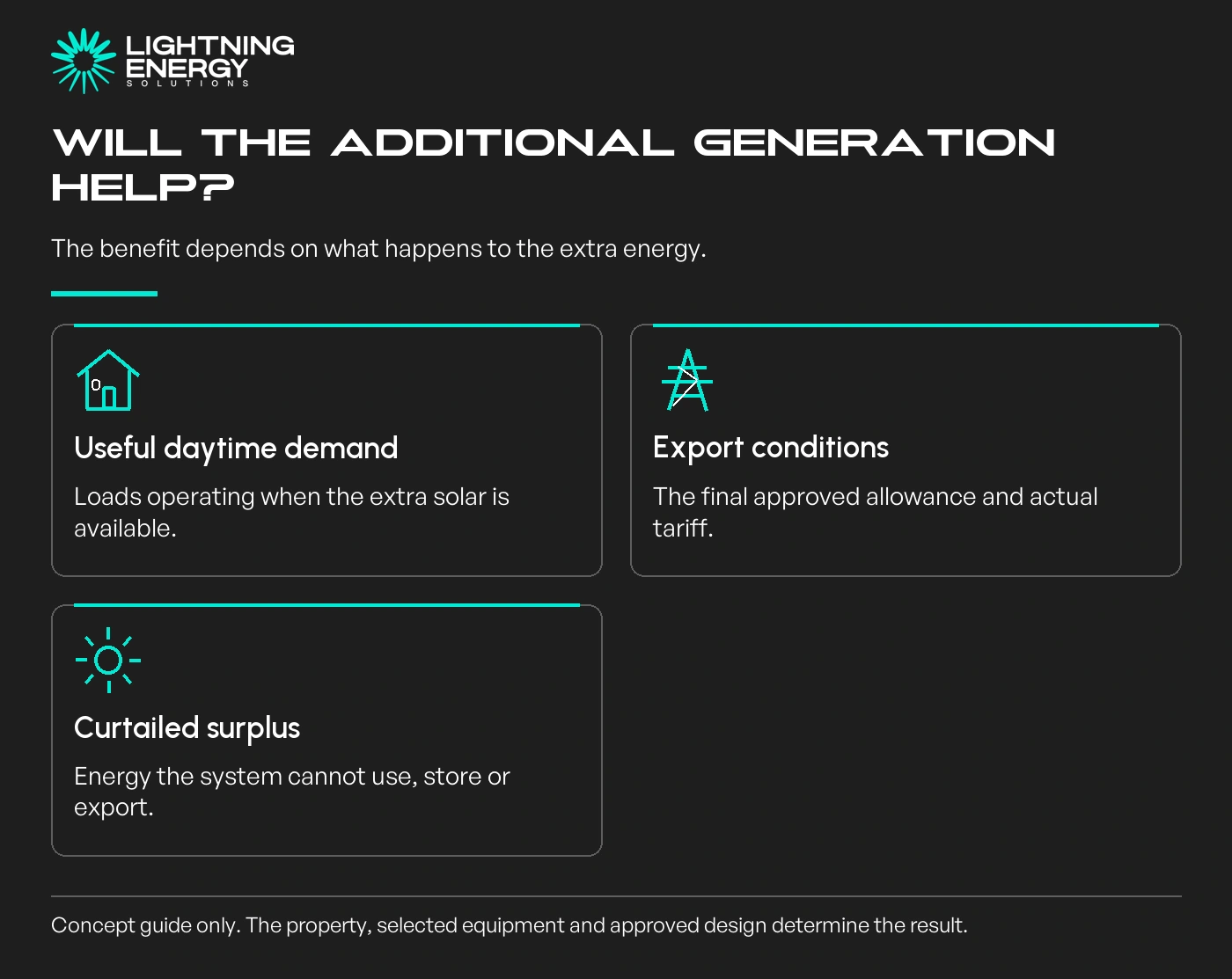
Imagine a family adding daytime EV charging. Extra generation during the hours the car is home may be useful. A family whose new demand occurs entirely at night needs a different energy and tariff assessment.
Our system-size guide helps connect that expected demand with a realistic design.
The distributor needs the proposed final configuration, including relevant solar and battery inverter capacity. An existing approval should not be treated as permission for any future equipment addition.
AusNet's connection guidance explains its assessment. Your own distributor's requirements govern the application.
Certificate eligibility also differs between added capacity, replacement panels and replacement systems. Previously claimed equipment cannot simply be claimed again because other parts of the installation have changed.
Have the retailer show any proposed incentive as a separately supported line item. Confirm the eligible equipment and application treatment before accepting a discounted final price.
If most additional generation would be curtailed or have little useful value, expansion may not be worthwhile yet. Scheduling suitable existing loads or correcting a fault can sometimes be the more useful first step.
Send us the current model codes and future usage plan. A supported final design will tell you more than the amount of empty roof visible from the street.
Available times
Book a consultation and we'll map solar, storage, hot water, and the rebates around your bills and your goals.
Question 1 of 6
