
Replacing Your Roof When You Already Have Solar: A Planning Checklist
Replacing a roof with solar already installed takes more than lifting panels off. Plan the trades, storage, mounting, warranties and final handover before work starts.
Replacing a roof with solar already installed takes more than lifting panels off. Plan the trades, storage, mounting, warranties and final handover before work starts.

If your roof needs replacing and already has solar, organise the roofing and solar work together. The expensive mistake is to book one trade, assume the other can fit around it, and discover that nobody owns the gap between them.
I would begin with one written sequence: assess the existing system, arrange safe removal, complete the roof, then reinstall and test. Each handover needs a named person and a clear condition for the next stage to start.
This is a planning guide for the homeowner. Electrical disconnection and reconnection belong with a licensed electrician. Energy Safe Victoria is clear that electrical work is not a DIY job.
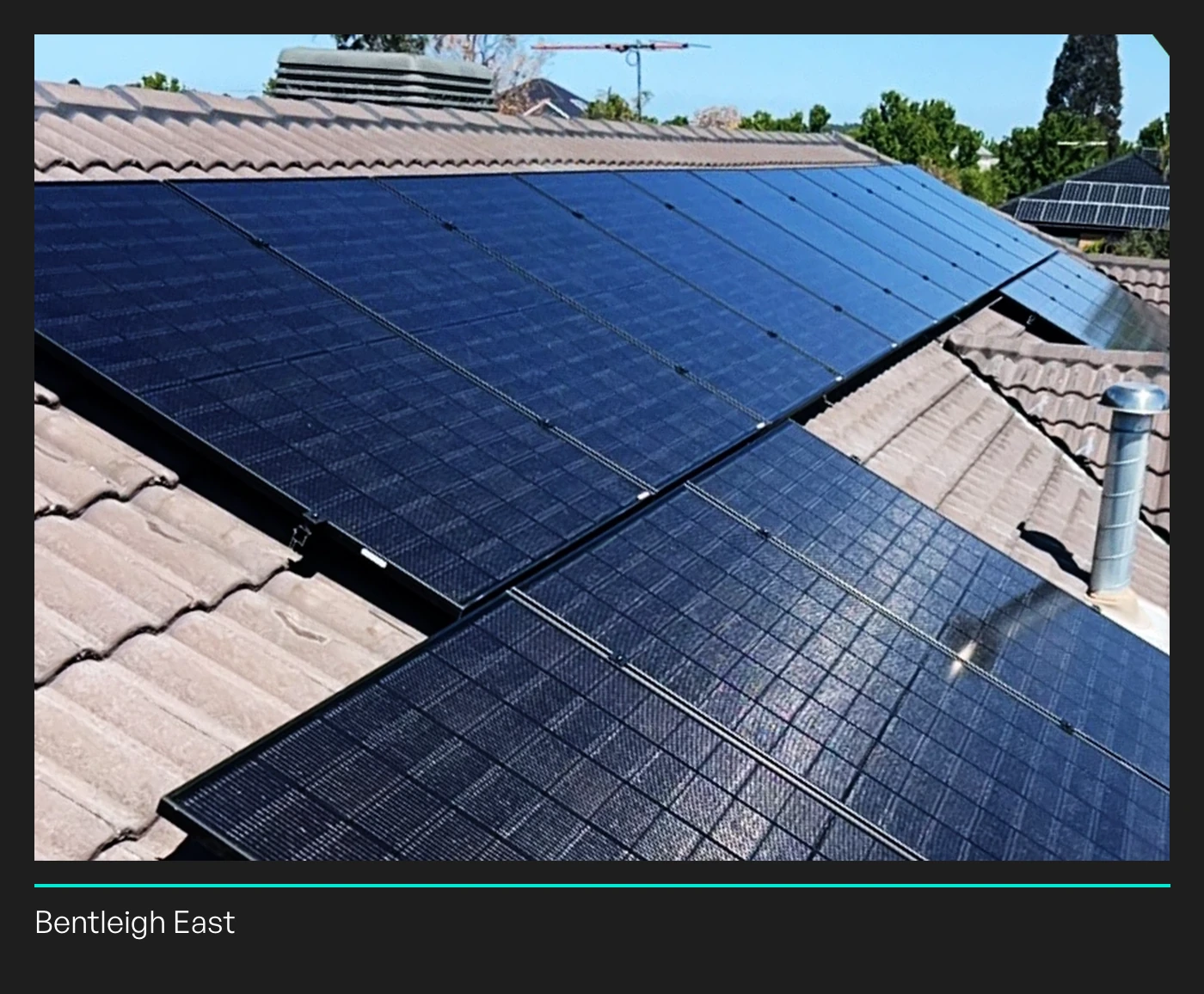
Before booking removal, gather the panel and inverter model numbers, installation paperwork, warranty documents and monitoring records. Ask the solar contractor to inspect the system and explain what appears suitable for reuse.
Roof age and battery plans are separate questions from panel condition. A working array might be worth retaining, while damaged equipment or an awkward future layout may justify comparing replacement options.
The government’s roof design guidance recommends dealing with a roof that needs repair or replacement before installing solar.
For a system already in place, I would apply that principle by resolving the roof work before fixing the final solar layout.
New vents, altered roof sections or a different cladding profile can change the available space and mounting approach.
Our solar planning page is a starting point if replacement is being considered. A reroof is an opportunity to assess the system, not an automatic reason to discard panels that are still suitable.
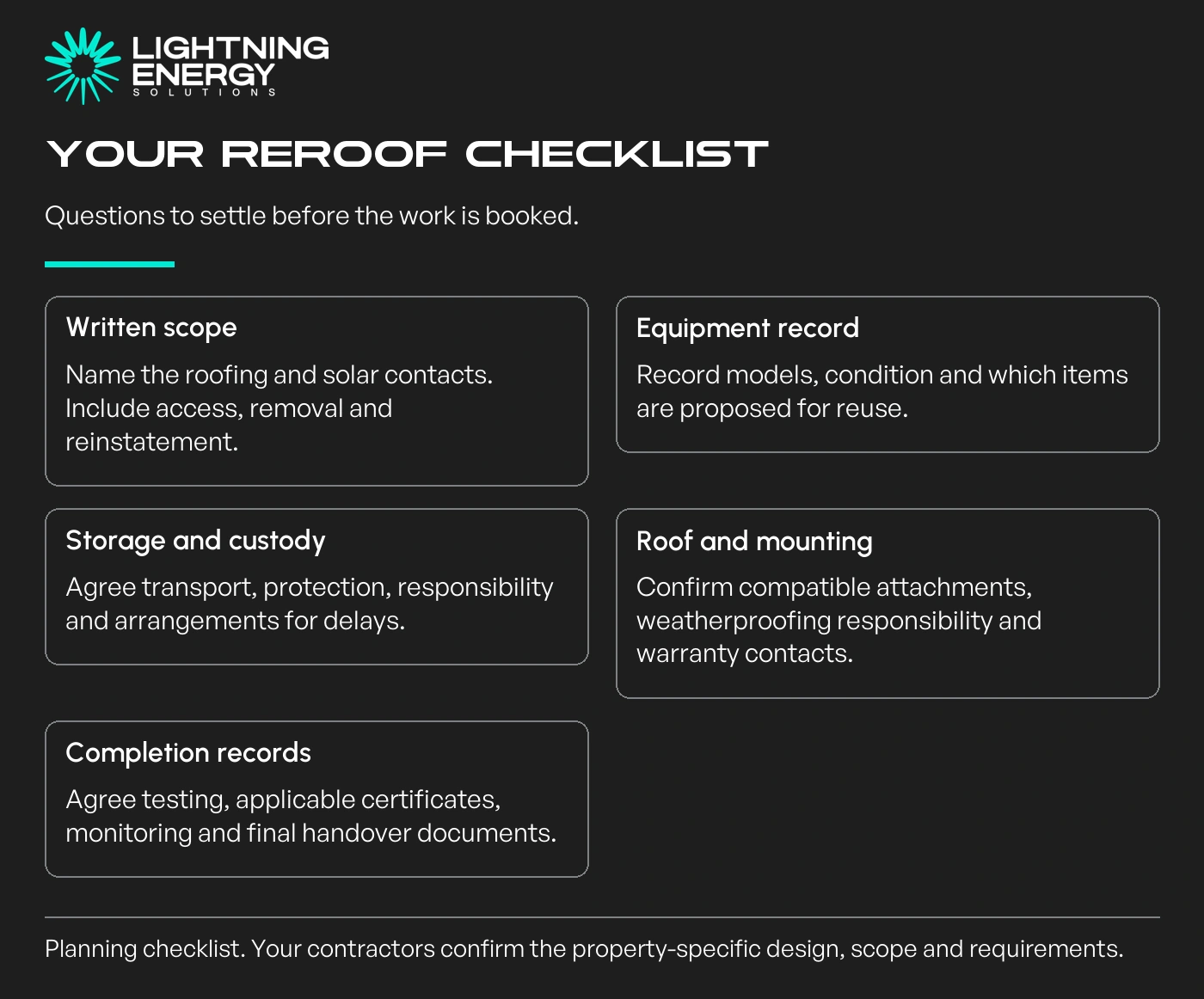
Ask for a scope that separates roofing, solar removal, storage, mounting, reinstallation and electrical completion.
A single total is difficult to compare when one quote includes access equipment and another assumes somebody else supplies it.
I would also confirm who coordinates scaffold or other roof access, how weather delays are handled and who keeps the property protected between stages.
Put the expected period without solar into the programme, without treating it as guaranteed.
Where the roofing and solar contracts are separate, nominate a contact in each business. The homeowner should not have to interpret a technical disagreement about where a mounting point can go.
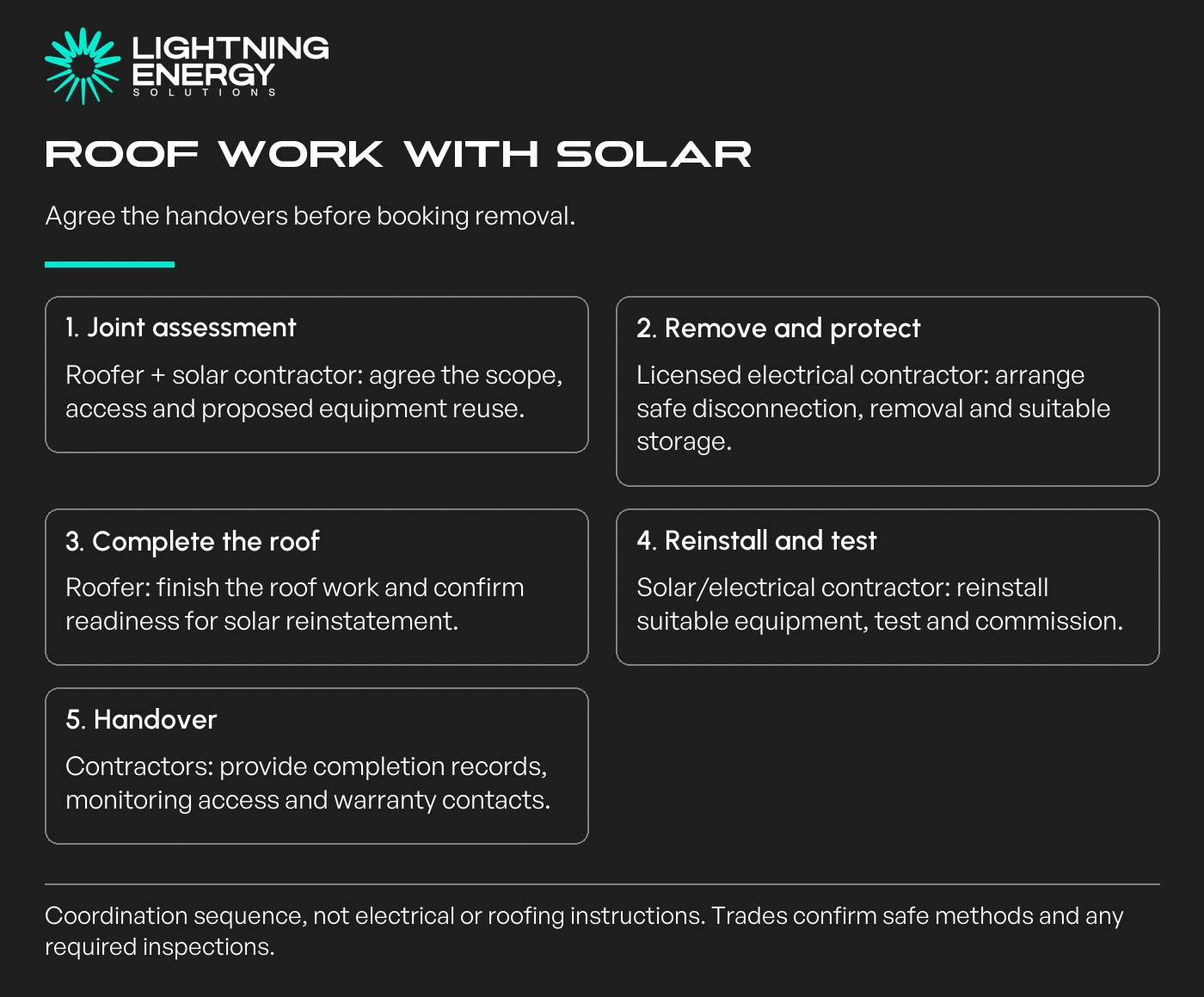
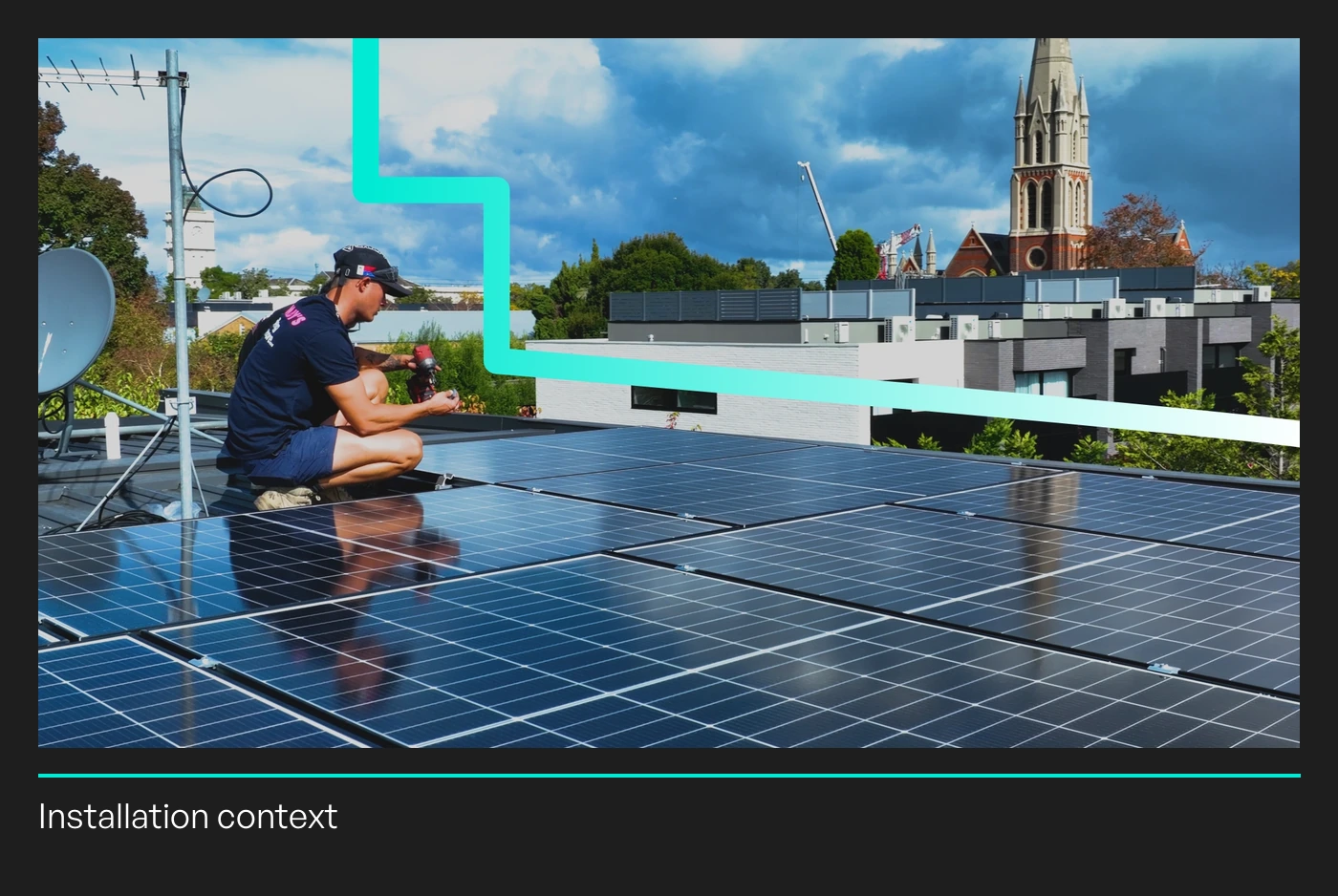
A pile of panels in the driveway is not a storage plan. Agree who inventories the equipment, records its condition, transports it if necessary and provides suitable protected storage until the roof is ready.
The contractor should specify handling and storage arrangements that suit the equipment. I would want photographs and a list of model and serial details so there is a record of what left the roof and what returned.
Ask who is responsible for accidental damage, theft or a longer storage period. Our solar insurance guide explains why policy-specific questions need written answers.
If some equipment will not be reused, include its removal and lawful disposal or recycling in the scope. Avoid leaving that decision until the last visit, when the people and transport needed may already have gone.
Panels, rails, clamps, roof attachments and electrical components need their own assessment. Reusing a panel does not establish that every part of its old mounting arrangement suits the new roof.
Ask the solar contractor to identify the mounting system, its compatibility with the roof and panels, and which parts will be retained or replaced.
The roofer and solar contractor should agree on penetrations and weatherproofing responsibilities.
Solar Victoria’s maintenance guide describes inspection and electrical testing beyond surface cleaning. I would use the system assessment to identify defects before agreeing the final scope.
If an unexpected defect appears during removal, the quote should explain how a variation is priced and approved. That is a better arrangement than assuming that every old component is usable or approving an open-ended replacement allowance.
Ask each contractor to explain the warranty for their own work and how a later roof leak or solar fault will be investigated. Agree a first contact and the records they need, particularly when more than one business is involved.
We can help establish the position for the selected panels, inverter and mounting equipment before work starts. Removing a system should not be described as automatically preserving or automatically cancelling every warranty.
Consumer Affairs Victoria explains that written warranties sit alongside consumer guarantees.
Reinstallation is not finished just because the panels are back on the roof. Agree the testing, commissioning, documentation and any required inspection with the electrical contractor as part of the original scope.
Energy Safe’s solar safety guidance includes checking wiring, fittings, components and inverter faults.
The electrical contractor should explain the checks relevant to the reinstalled system.
Our installer selection guide can help compare the responsibility and aftercare offered. I would prioritise a complete plan over the cheapest removal line on a quote.
My advice is to book the assessment before the roofing start date. If the system is healthy and suits the finished roof, retaining it may be sensible. If it does not, compare a replacement design while the work can still be coordinated.
Plan the roof and solar togetherSend us the roof-work proposal and any existing solar model or installation details you have. We can discuss removal, reuse and reinstallation requirements alongside the roofing programme.Available times
Book a consultation and we'll map solar, storage, hot water, and the rebates around your bills and your goals.
Question 1 of 6