No Driveway, No Problem? The Proposal to Expand Public EV Charging
An EV charging plan should not assume everybody owns a garage. Renters, apartment residents and regional drivers can depend on public infrastructure, which makes a new Australian charging proposal particularly relevant.
LLuke CoveLightning Energy10 October 2026 · 4 min read
An EV charging plan should not assume everybody owns a garage. Renters, apartment residents and regional drivers can depend on public infrastructure, which makes a new Australian charging proposal particularly relevant.
The key word is proposal. The regulatory work is intended to support a rollout, but it does not mean a charger has already been approved for every street or town.
The Australian Energy Market Commission's 24 September announcement concerns draft rules supporting the Commonwealth's $40 million charging programme.
The proposal addresses the role of electricity distributors in facilitating charging infrastructure, including locations where commercial delivery is difficult. Regional gaps and kerbside access are part of the problem it seeks to address.
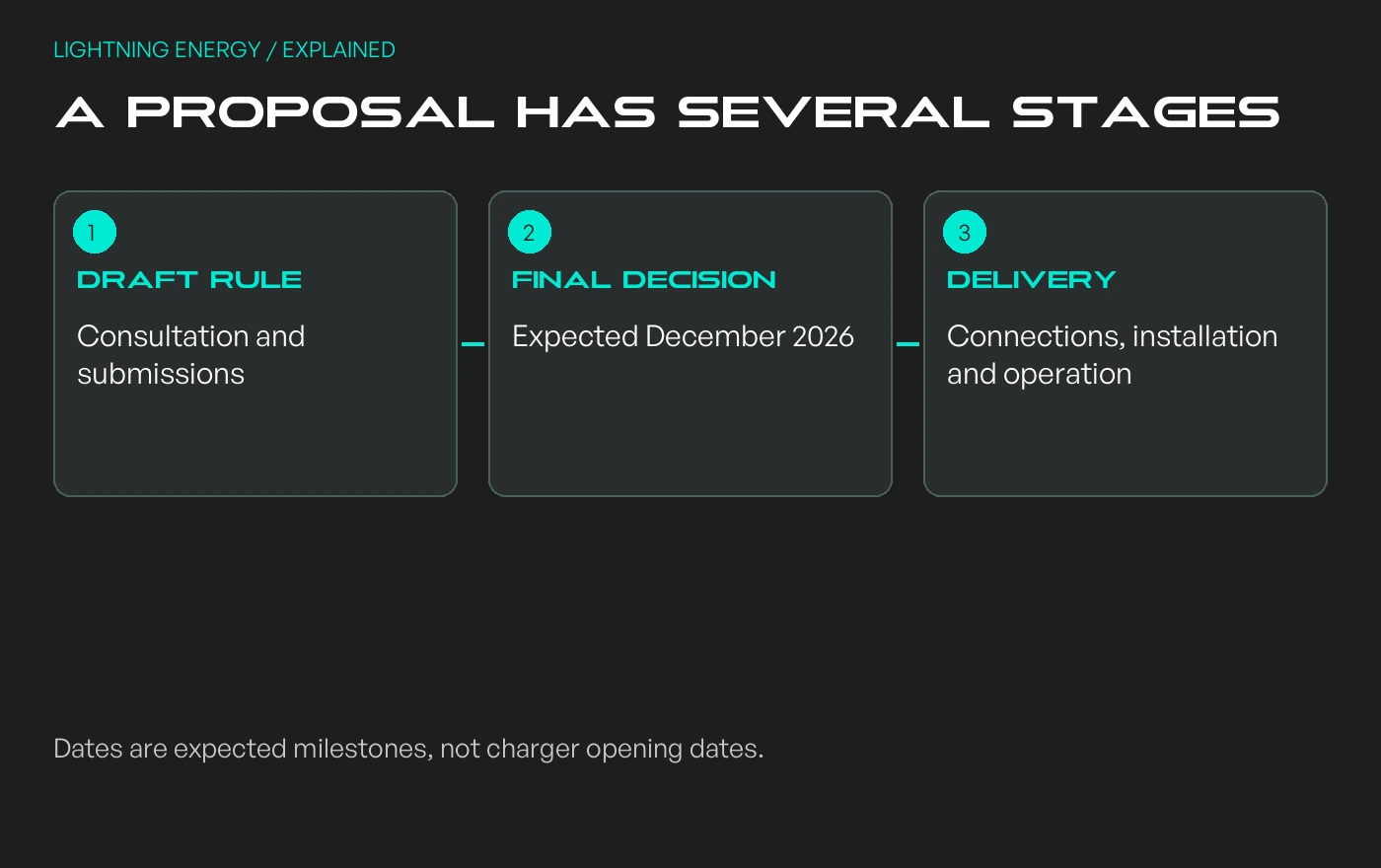
Consultation is scheduled to close on 5 November, with a final determination expected on 17 December. These are process dates, not a promise of operational chargers by then.
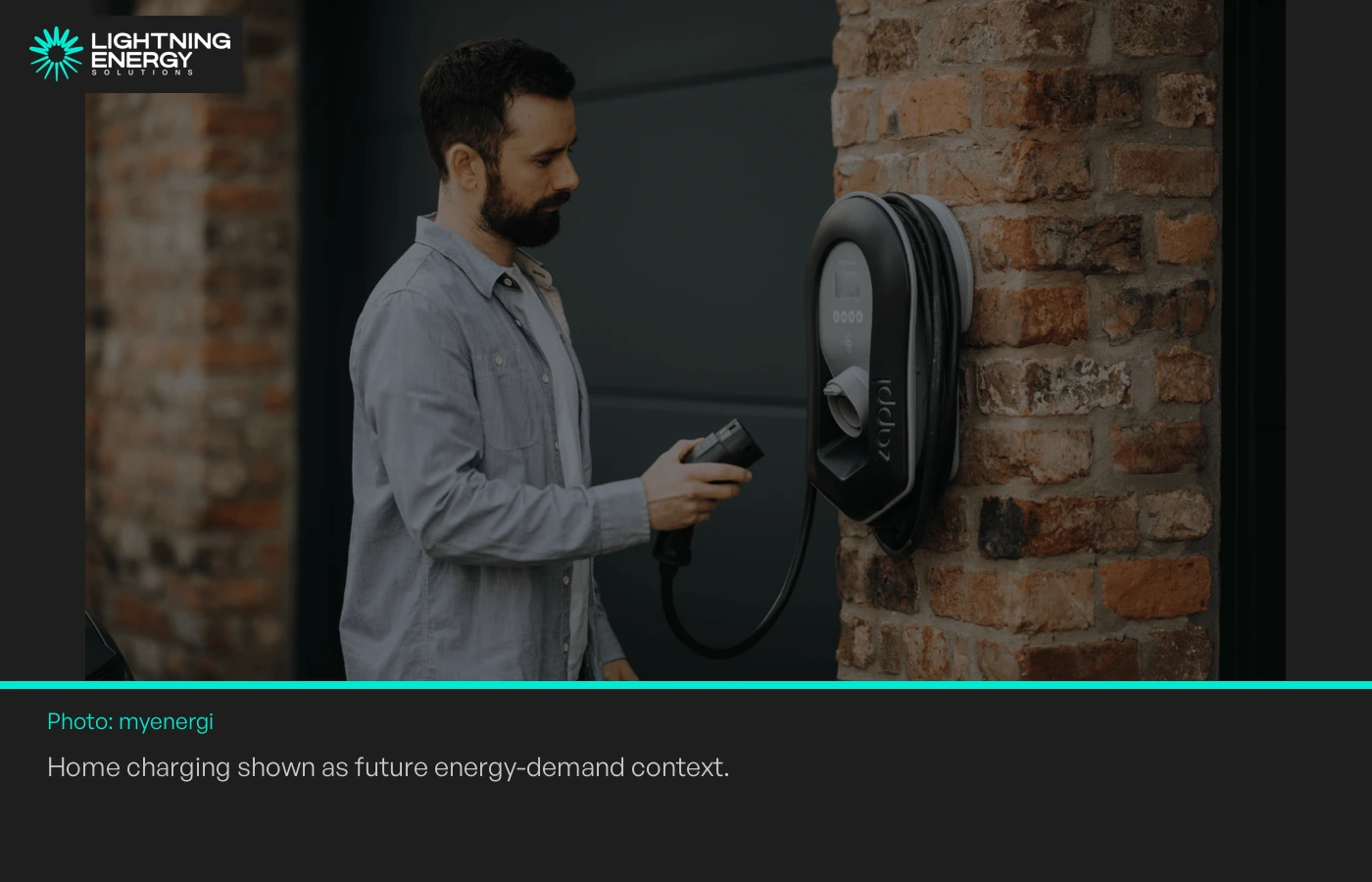
Photo: myenergi. Home charging shown as future energy-demand context.
Why the local electricity network matters
A charging site needs more than a machine and a parking space. Electrical capacity, connection arrangements, permissions, access and ongoing operation all influence whether it becomes a useful service.
The rule-change page sets out the regulatory process. A workable framework still needs site-specific delivery.
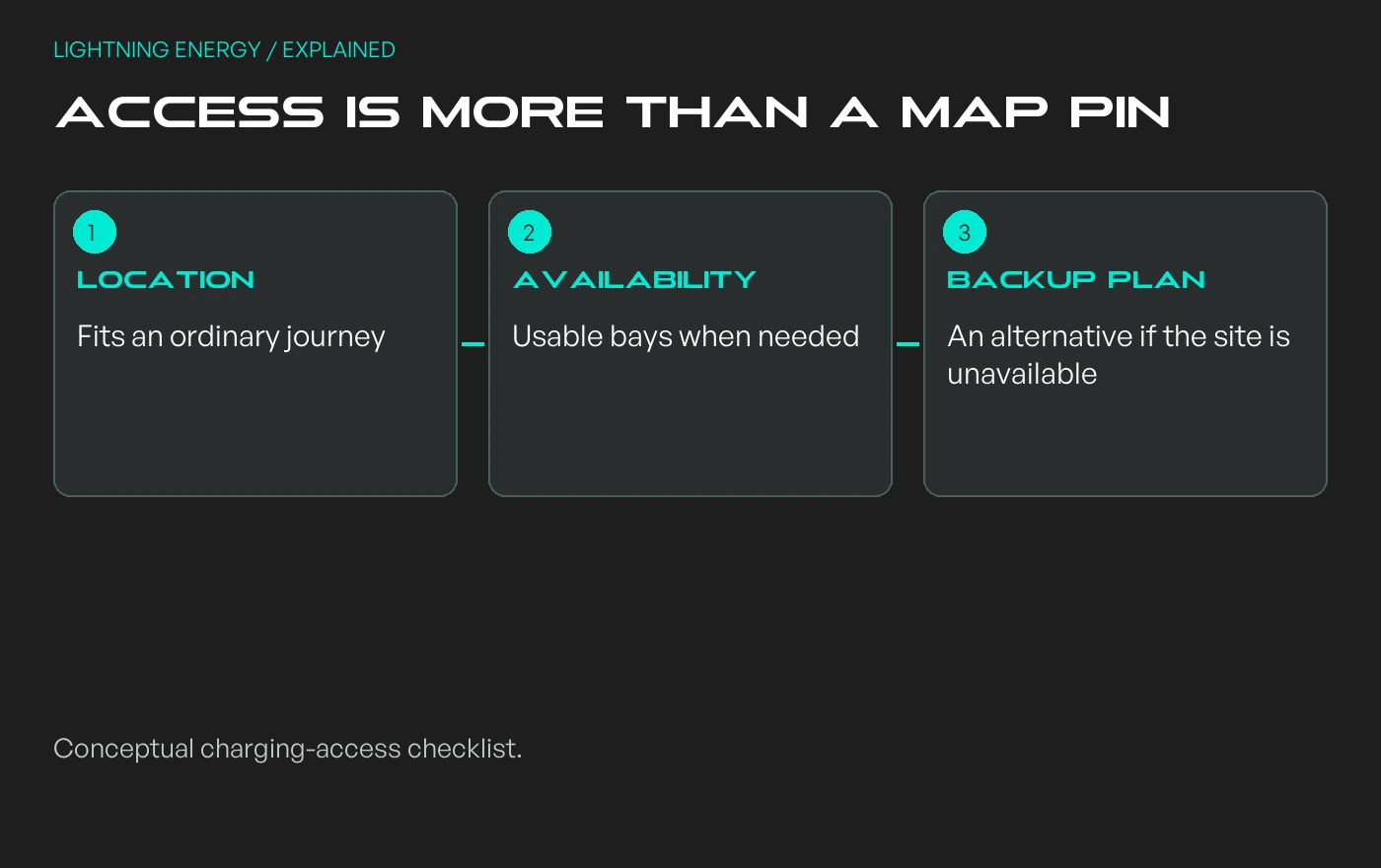
I would judge the eventual result by usable access: whether the charger works, whether a driver can reach it when needed and whether alternatives exist when it is occupied or unavailable.
Original Lightning Energy graphic. Dates are expected milestones, not charger opening dates.
What this means if you cannot charge at home
Before choosing a car, map an ordinary week of parking and travel. Consider charging near work, regular destinations and convenient public stops rather than assuming every session must happen beside your home.
If a property can support a private EV charger, permissions and electrical scope still matter. An apartment or rental should not be treated as a detached-house installation with a different postcode.
For homeowners with solar, daytime charging can be useful when the car is actually present. A public charger serves a different access need and may have a different price structure.
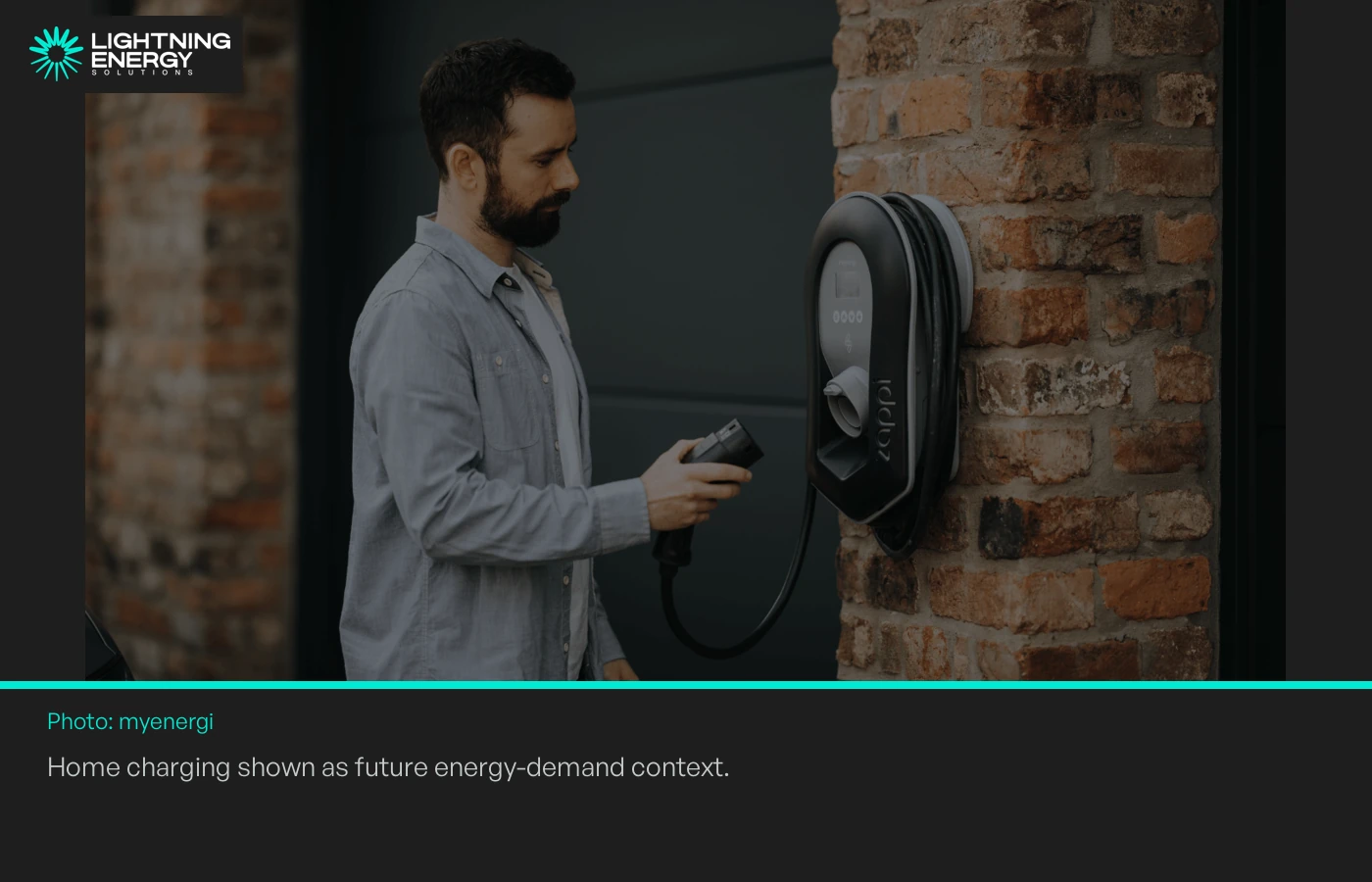
Photo: myenergi. Home charging shown as future energy-demand context. Illustrative household context, not the news project.
My recommendation while the rules are being decided
Plan from the infrastructure available now. Treat proposed sites as possible future improvements, not as the only way you will be able to make the vehicle work.
If battery storage is part of a home proposal, compare its role separately. Buying a stationary battery does not solve a lack of permission to install a charger or a lack of private parking.
I would welcome options that make EV ownership practical for more households. The useful next step is a realistic charging routine, with enough flexibility that one unavailable site does not derail the week.
Research checked 10 October 2026. Project plans and policy timelines may change. The linked sources distinguish announcements, proposals and operating results.
Book a consultation and we'll map solar, storage, hot water, and the rebates around your bills and your goals.
Loading consultations…
Lightning EnergyPlan your next energy upgrade.
⚡
Hi, I’m Lightning Energy’s project guide. I’ll ask a few practical questions, explain what usually matters for your project, and help you decide on a useful next step — no guesswork or sales pressure.
First, what kind of property are we planning for?