
NSW’s $23,107 Wholesale Price Spike: What Home Battery Owners Can Learn
NSW’s October price spike brought battery export rewards. Understand Amber’s reported figures, kW versus kWh, export limits and the risks behind a headline payday.
NSW’s October price spike brought battery export rewards. Understand Amber’s reported figures, kW versus kWh, export limits and the risks behind a headline payday.

A brief wholesale electricity price spike can make a home battery valuable to the grid. It does not make the highest market price a standing offer for every household, or turn a single afternoon into an annual savings forecast.
The NSW event on 12 October 2026 shows why battery capacity, export limits and electricity-plan terms need to be considered together. This desk-researched explainer was checked on 16 November 2026.
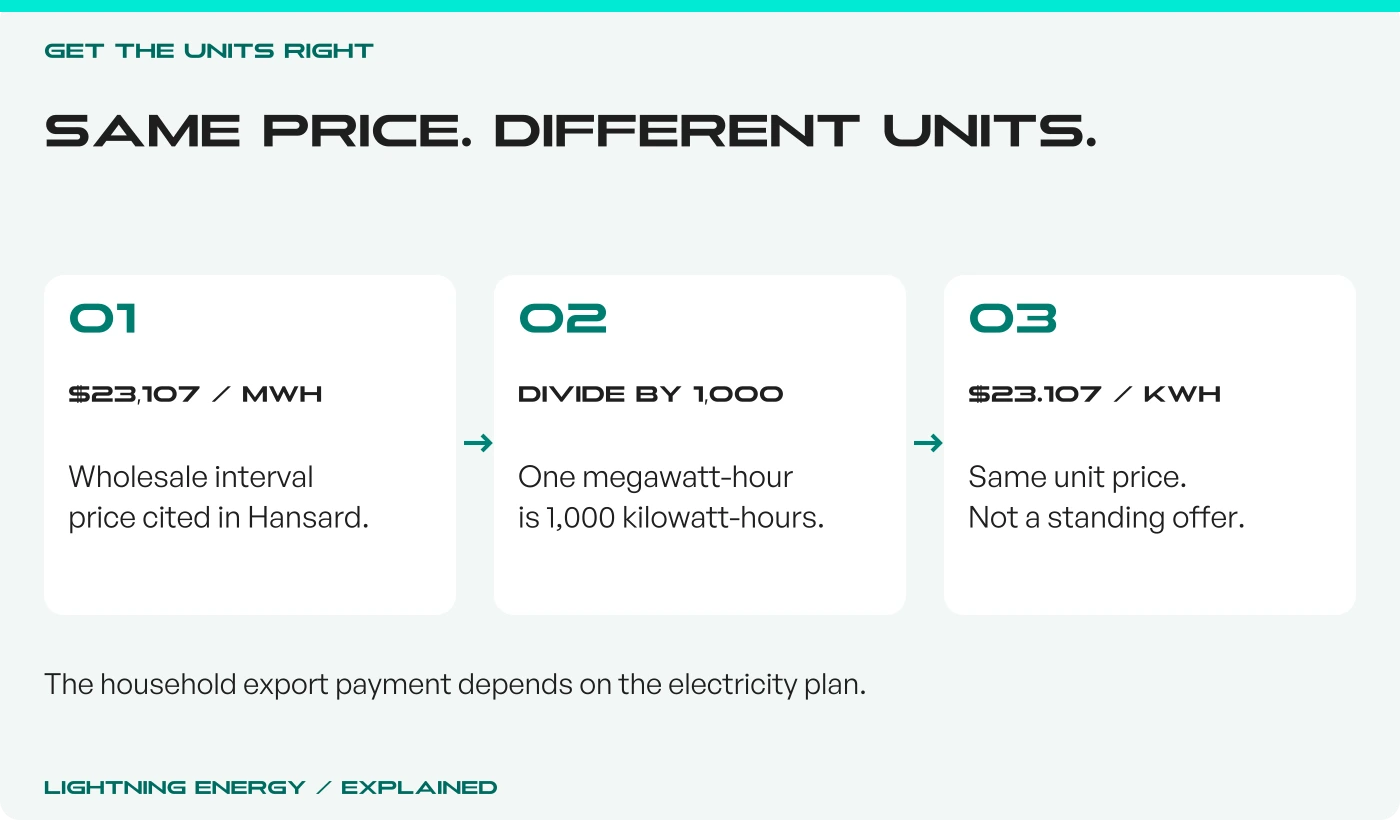
In NSW Parliament on 14 October, a question identified a five-minute wholesale price of $23,107/MWh on 12 October.
Energy Minister Penny Sharpe attributed the recent spikes to warmer weather and coal-generation outages.
That price converts to $23.107/kWh: divide dollars per megawatt-hour by 1,000. It was an interval price, not the price of every unit of electricity used or exported that afternoon.
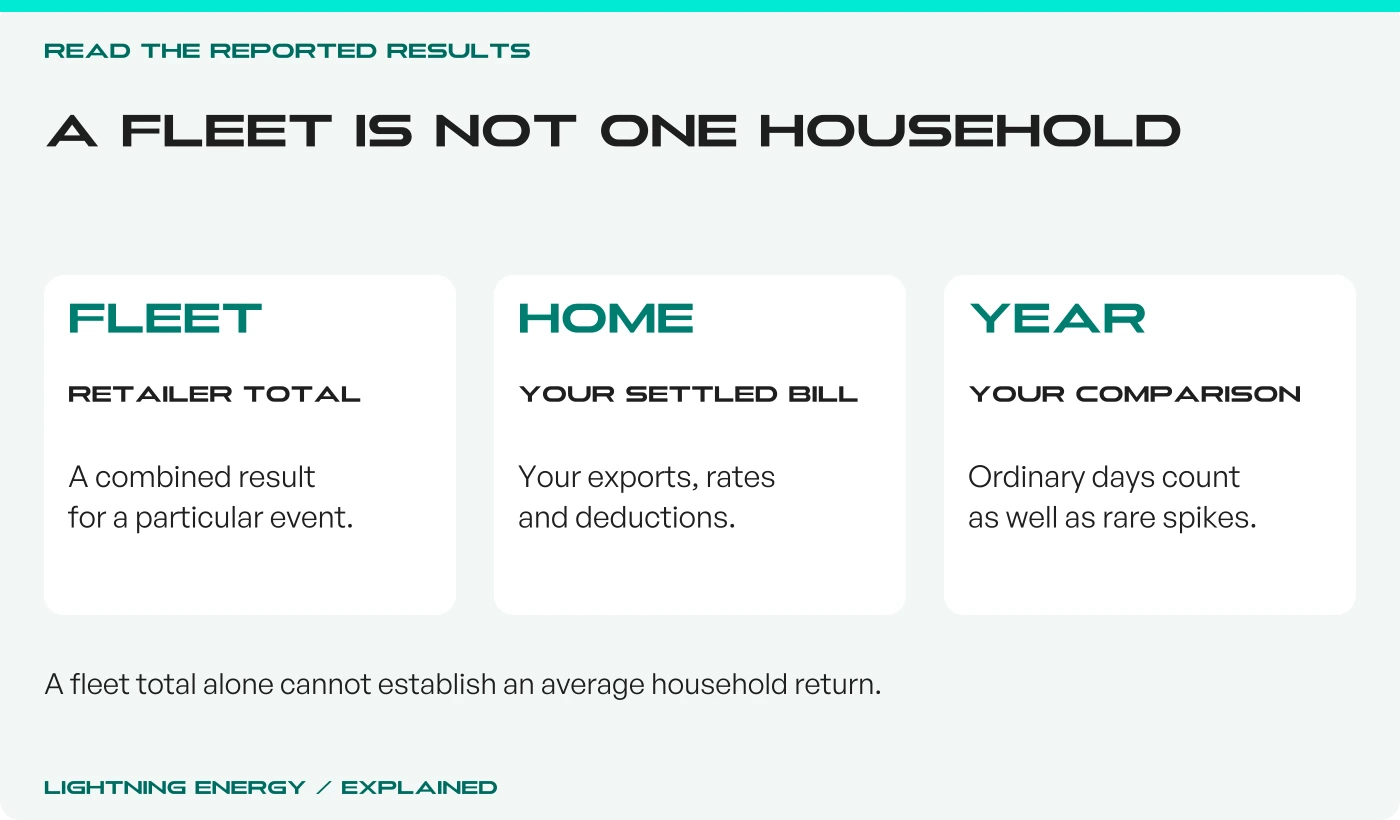
Amber’s own account, published on 16 October, says its NSW customers exported 218,247 kWh between 3:15 pm and 4:35 pm AEDT and received a combined net $2.12 million.
Those are retailer-reported fleet totals, not independently audited results from Lightning Energy.
We have not used a supposed $69 household average: the primary report does not establish the customer denominator needed to calculate it.
The report also lists an average export price of $10.80/kWh.
That figure multiplied by its export volume does not equal the stated net total.
Without a reconciliation of those measures, we would not use them to model an individual customer’s return.
The practical lesson is to inspect your own settled bill and interval exports. A fleet result cannot establish what another household, battery or electricity plan would have earned.
A fixed feed-in tariff, a time-of-use schedule, a VPP reward and a wholesale-linked export rate are different arrangements. A market spike does not automatically change a fixed contractual rate.
Amber’s plan comparison describes these approaches. It is a retailer’s explanation of its own offering, not an independent ranking of electricity plans.
Our recommendation is to compare the full import and export terms, daily charges, subscription fees and control conditions. A high export rate can be offset by costs elsewhere in the plan.
See our guide to comparing VPP rewards, tariffs and exit terms before comparing headline payments.
Battery capacity in kWh describes an amount of stored energy. Power in kW describes the rate of transfer. A short price event gives you only a limited time to export, even when the battery contains plenty of energy.
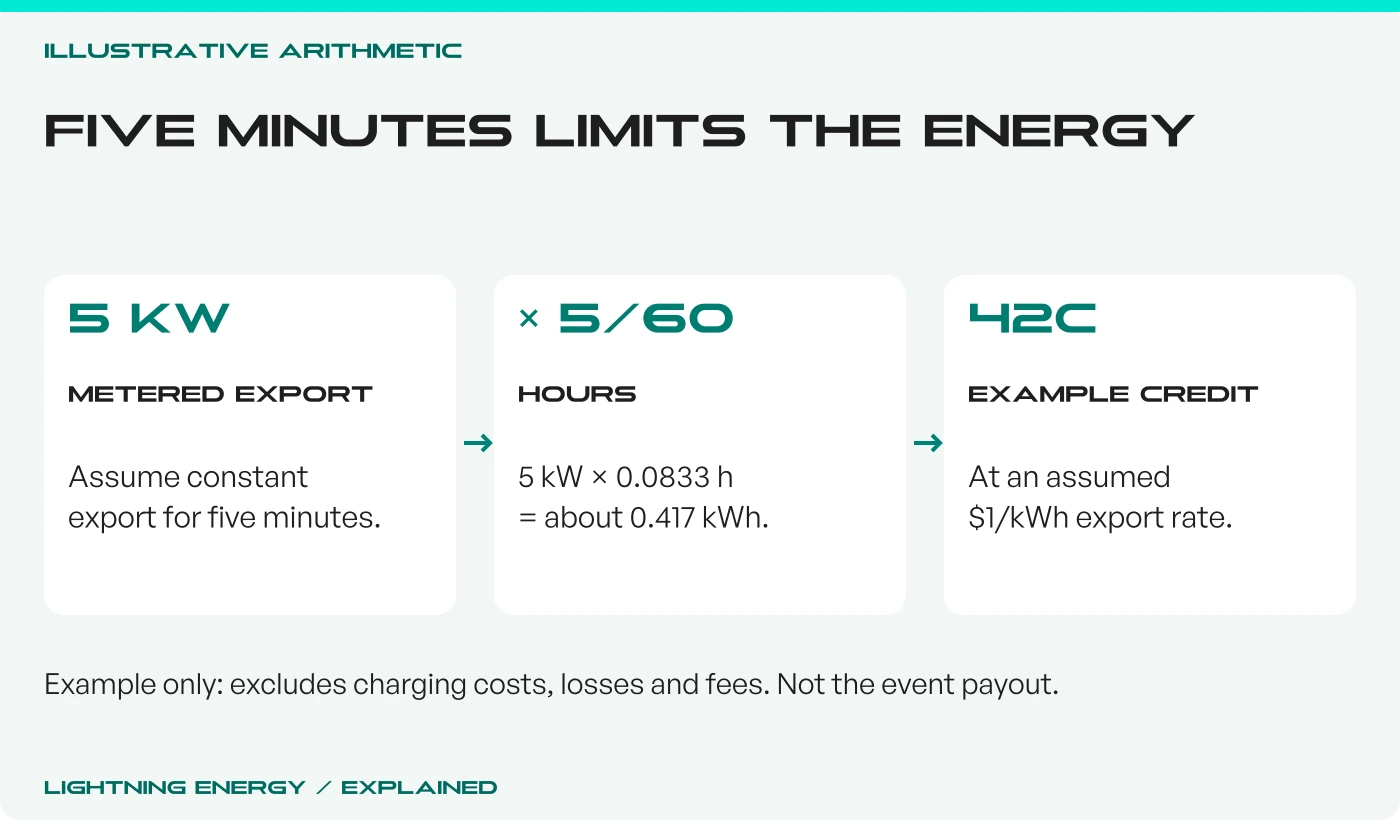
For illustration, an actual metered export of 5 kW maintained for five minutes delivers about 0.417 kWh. At an assumed settled export rate of $1/kWh, that would produce about 42 cents of export credit.
That example is arithmetic, not a description of the October event or any advertised plan. It excludes charging costs, losses and fees. A 5 kW inverter rating does not prove that 5 kW can be exported at your meter.
Check the approved connection limit alongside the inverter output and household demand. Our battery kW and kWh explainer helps separate those quantities.
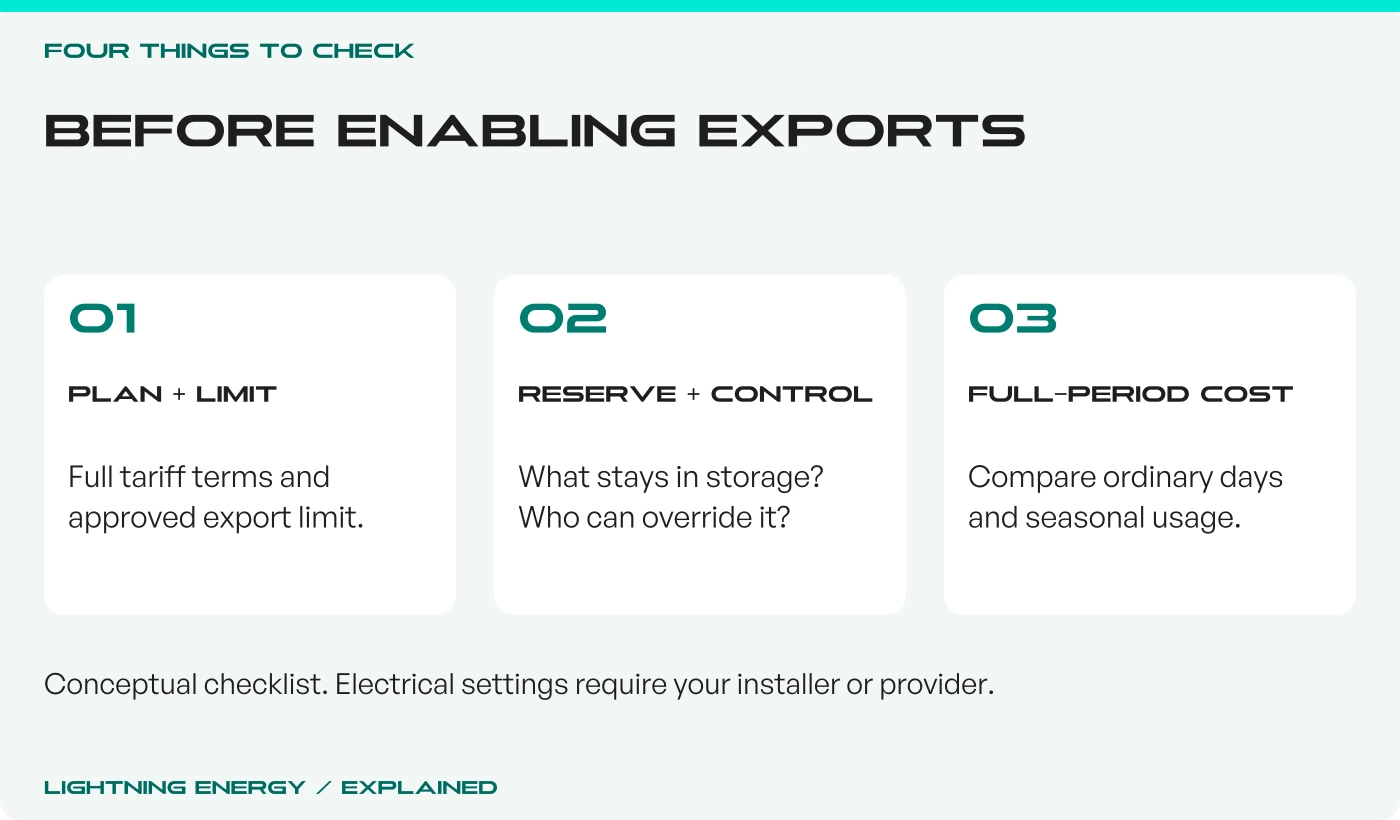
Our practical recommendation is to agree on a minimum reserve before enabling automated exports. Ask the provider what it can change, whether you can override it, and what happens when communications fail.
Read our guides to battery reserve settings separately.
Also read who controls a battery in a VPP. Check the rules for your particular system and plan.
A reserve percentage is not a promise of whole-home backup. Confirm which circuits the installed backup arrangement actually supplies and how long the remaining energy could support your essential loads.
For a proposed plan change, ask for a comparison using your actual interval usage and a clear set of assumptions. Include ordinary days, seasonal solar production, charging costs and the electricity needed after exports.
Keep exceptional-event income separate from the base calculation. If a plan only looks attractive after assuming repeated windfalls, ask to see the result with those windfalls removed.
NSW households can use the Australian Energy Regulator’s Energy Made Easy service to compare electricity plans. For battery control and export conditions, also read the provider’s current written terms.
If you are planning a battery installation, ask Lightning Energy to discuss your household loads, solar generation and backup priorities. Size and configure the system around those needs; treat uncertain trading income separately.
Photography: an existing supplied Tesla image from the Lightning Energy website library, used as general battery context. It does not depict a participant in the NSW event or demonstrate earnings. Diagrams are conceptual explanations.
Available times
Book a consultation and we'll map solar, storage, hot water, and the rebates around your bills and your goals.
Question 1 of 6
