
AEMO Pay Dispute: What It Means for Your Power Supply
What AEMO has confirmed about industrial action, why risk claims are not blackout forecasts, and what households should check about solar and battery backup.
What AEMO has confirmed about industrial action, why risk claims are not blackout forecasts, and what households should check about solar and battery backup.

The people coordinating electricity supply are in a pay dispute. That deserves attention. It does not, by itself, tell you that your home is about to lose power.
The useful household questions are what has actually been confirmed, where to find operational updates, and whether your existing solar and battery system can provide backup.
This explainer was researched on 31 October 2026. Industrial proceedings can change quickly; the dates below matter. It is not a live outage alert.
ABC News reported on 30 October that specialised AEMO employees had escalated industrial action during enterprise bargaining, including bans affecting non-critical planned outages and some routine communications.
The ABC describes a dispute over inflation protection in wage increases. It also reports the union’s position that members would not compromise public safety. These are reported positions, not findings made by Lightning Energy.
Read Daniel Mercer’s ABC report.
AEMO’s own statement, dated 21 October, says it applied to the Fair Work Commission to suspend or terminate protected industrial action. It identified risks it believed its continuity measures could not fully address.
AEMO said the Commission had issued an interim order suspending some control-room actions while its application was considered. The affected areas included operational briefings, certain planned network outages and industry enquiries.
That statement also said bargaining continued through Commission conciliation and reaffirmed AEMO’s commitment to safe, reliable operations. It describes an interim step, not a final resolution of the dispute.
AEMO’s enterprise agreement update is the primary source for its account.
We have not independently verified a later final Commission determination. An interim restriction on specified actions should not be presented as a permanent end to all industrial action.
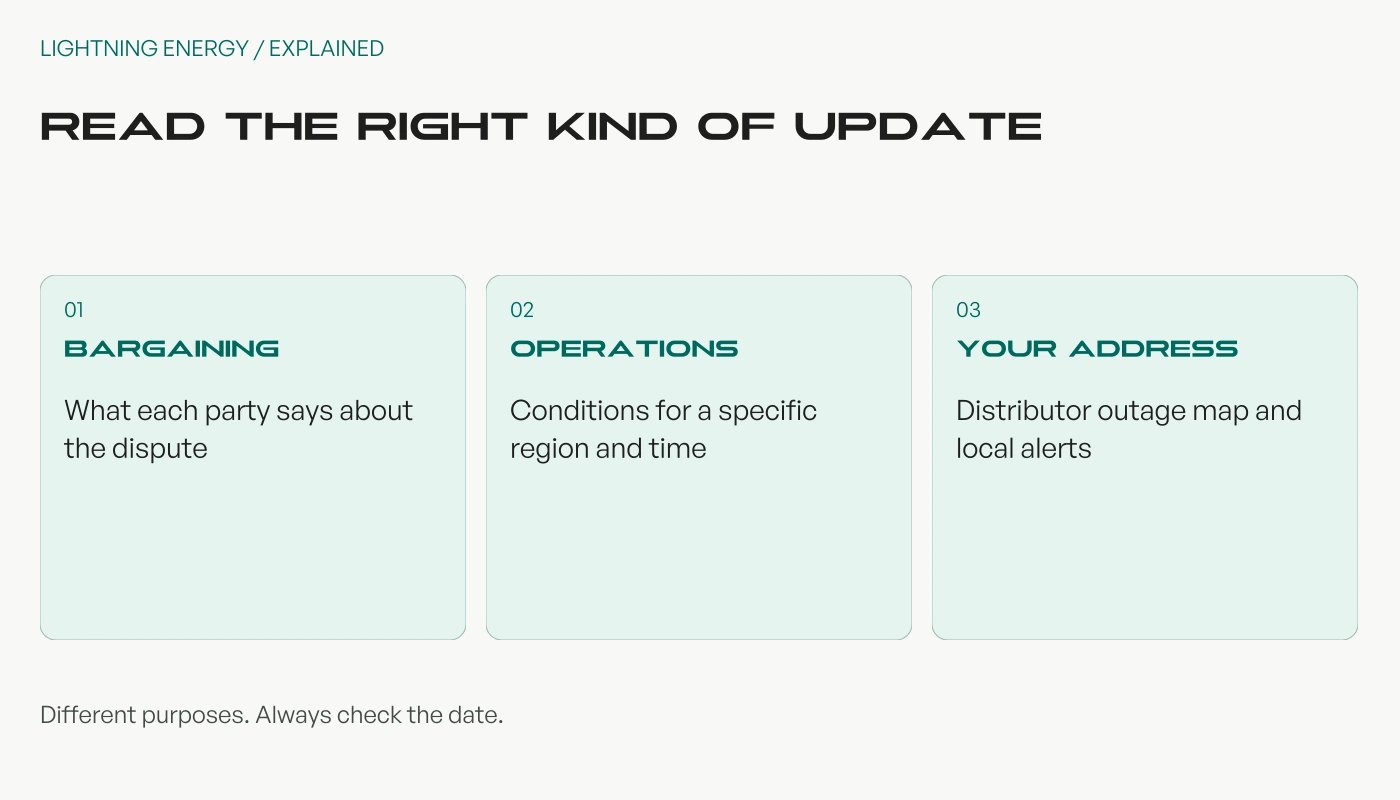
The alarming language in the news concerns possible consequences raised during a dispute. It does not specify a blackout time, affected street or probability of losing supply at your property.
Our reading of the sources is straightforward: the dispute is real, but the material reviewed does not establish that a blackout at your address is imminent. That is not a guarantee of uninterrupted electricity either.
For current system conditions, use operational information rather than treating a bargaining headline as an emergency notice. For a local interruption, your distributor’s outage map is usually the practical starting point.
AEMO’s NEM data dashboard includes forecast reserve information. A forecast is tied to a region and time, and can change.
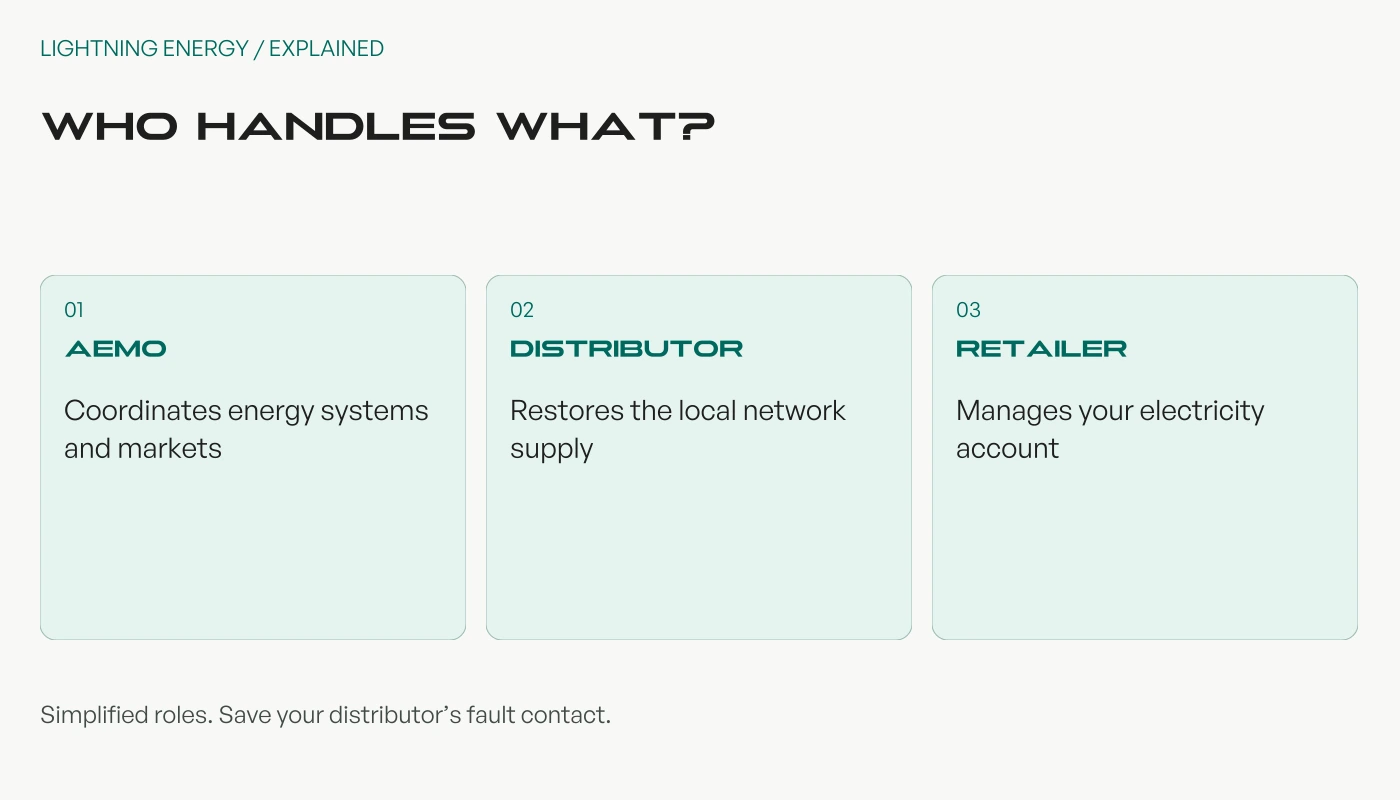
AEMO operates energy systems and markets and undertakes planning. Its role is different from the business maintaining the poles and wires in your neighbourhood.
See AEMO’s description of its functions. Electricity supply depends on coordinated activity across these organisations, not just the equipment at your house.
The Victorian Government says your electricity distributor is responsible for restoring supply. It recommends checking the distributor’s outage map and contacting it for restoration estimates.
Your retailer is the business sending your electricity bill. Keep the distributor’s fault contact handy as well; it is the relevant contact for local network outages.
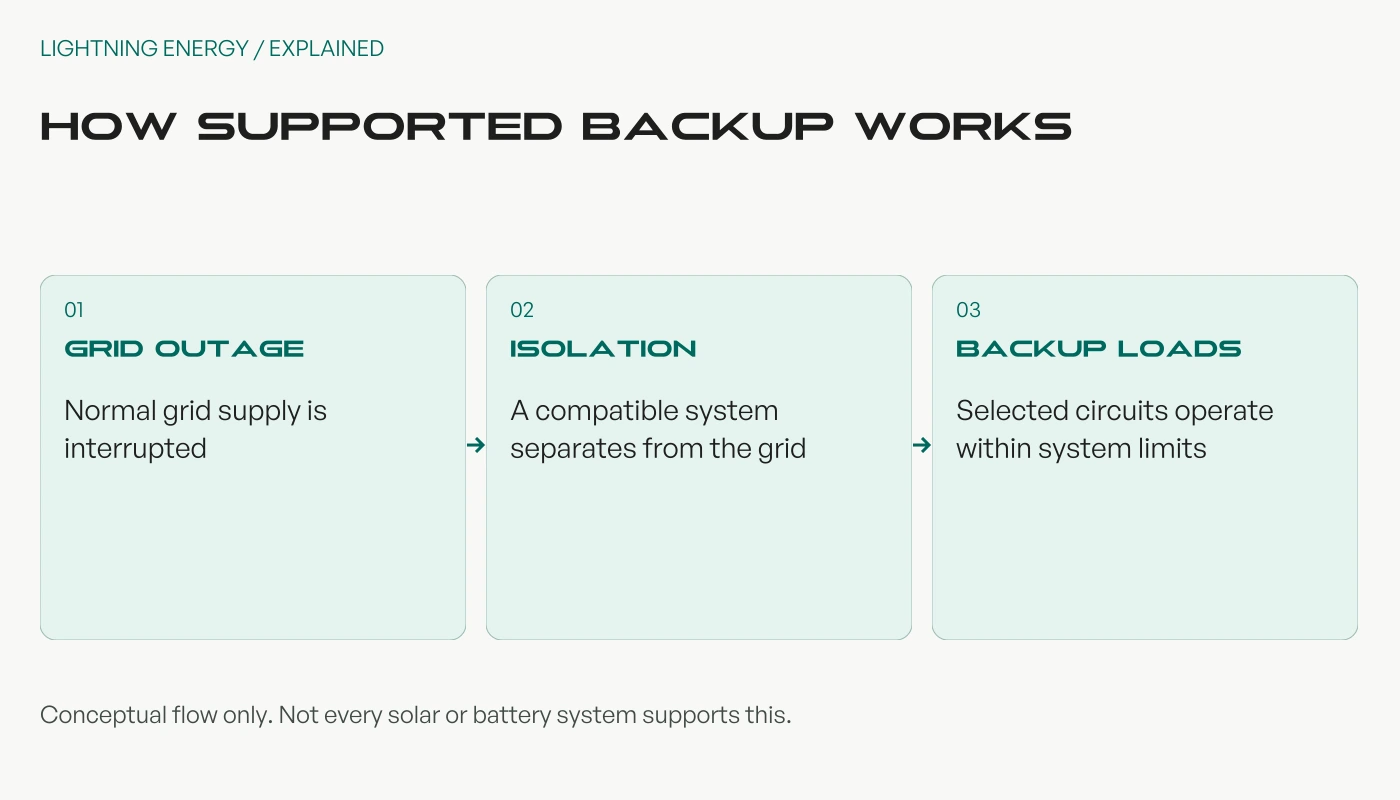
Most ordinary grid-connected solar systems shut down when the grid fails. That safety behaviour prevents electricity being fed into lines that may be worked on.
A battery can supply backup only if the equipment and installation support it. The battery’s presence, brand or advertised storage size is not enough to establish what will stay on.
The federal battery guidance explains the difference between systems that use stored energy alone during an outage and systems that can also operate solar while isolated.
Ask your installer to confirm the actual backed-up circuits, available power and whether solar can recharge the battery during an outage. On a three-phase property, establish which phases and appliances are supported.
Our home battery blackout backup guide helps you turn that discussion into an essential-appliance list.
Storage capacity and output power answer different questions. kWh describes energy; kW describes the rate at which energy can be supplied. A system needs enough of both for the intended appliances.
For an arithmetic example, 4 kWh available for backup divided by a steady 0.5 kW load gives eight hours before losses. This is not a forecast for any product or home.
Real loads vary, motors can demand extra starting power, and operating limits reduce the energy available. Read our guide to battery kW and kWh.
A battery may also have used energy before an interruption starts. If you participate in a VPP, check the contract and settings for any backup reserve and who can change it.
Federal VPP guidance warns that dispatch can leave less stored energy for backup; some programmes retain a reserve.
Our virtual power plant guide explains why payments and control permissions need to be considered together.
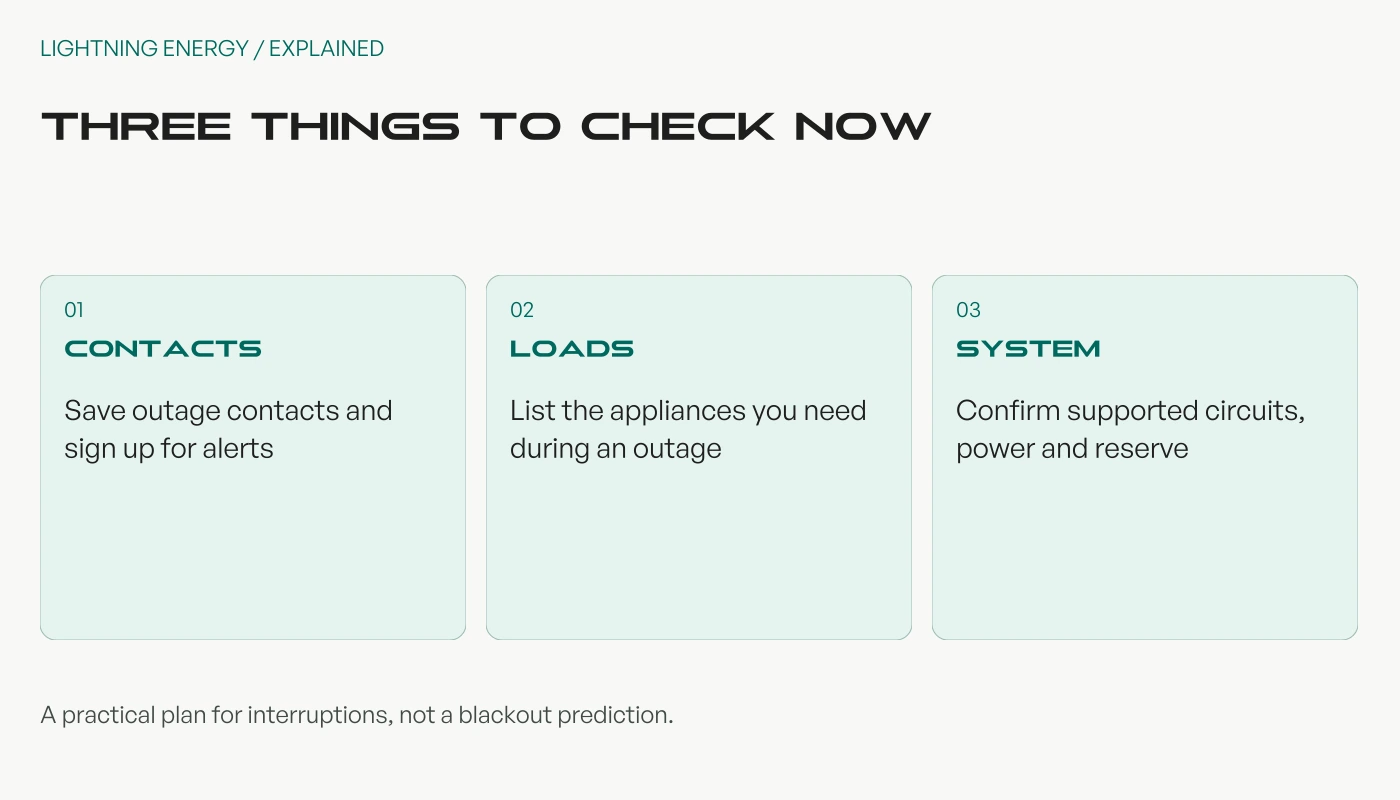
Keep your distributor’s details accessible, sign up for its outage alerts and have a charged phone and torch ready. Check your own system’s handover documents rather than testing unfamiliar electrical equipment yourself.
The Victorian Government’s outage preparation guide covers practical preparation and where to obtain restoration updates.
If someone relies on powered medical equipment, arrange a dedicated continuity plan with their healthcare provider and electricity businesses. Do not assume an ordinary home battery is a sufficient medical backup.
Solar Victoria’s backup guide specifically advises seeking specialist advice for medical equipment.
This dispute is a reason to understand how electricity reaches your home. It is not enough evidence, on its own, to justify an urgent battery purchase or a promised financial return.
If backup matters to you, ask for a proposal that names the supported appliances, power limits, reserve settings and any extra equipment required. Compare that with your outage history, budget and normal electricity use.
Talk to Lightning Energy about a backup assessment if you want those requirements checked. The aim is a clear, suitable system design with its limitations in writing.
Available times
Book a consultation and we'll map solar, storage, hot water, and the rebates around your bills and your goals.
Question 1 of 6
