
Air Conditioning in a Victorian Rental: Approval, Costs and Maintenance
Separate air conditioning improvements, repairs and rental-standard obligations in Victoria, and agree consent, payment and maintenance responsibilities in writing.
Separate air conditioning improvements, repairs and rental-standard obligations in Victoria, and agree consent, payment and maintenance responsibilities in writing.

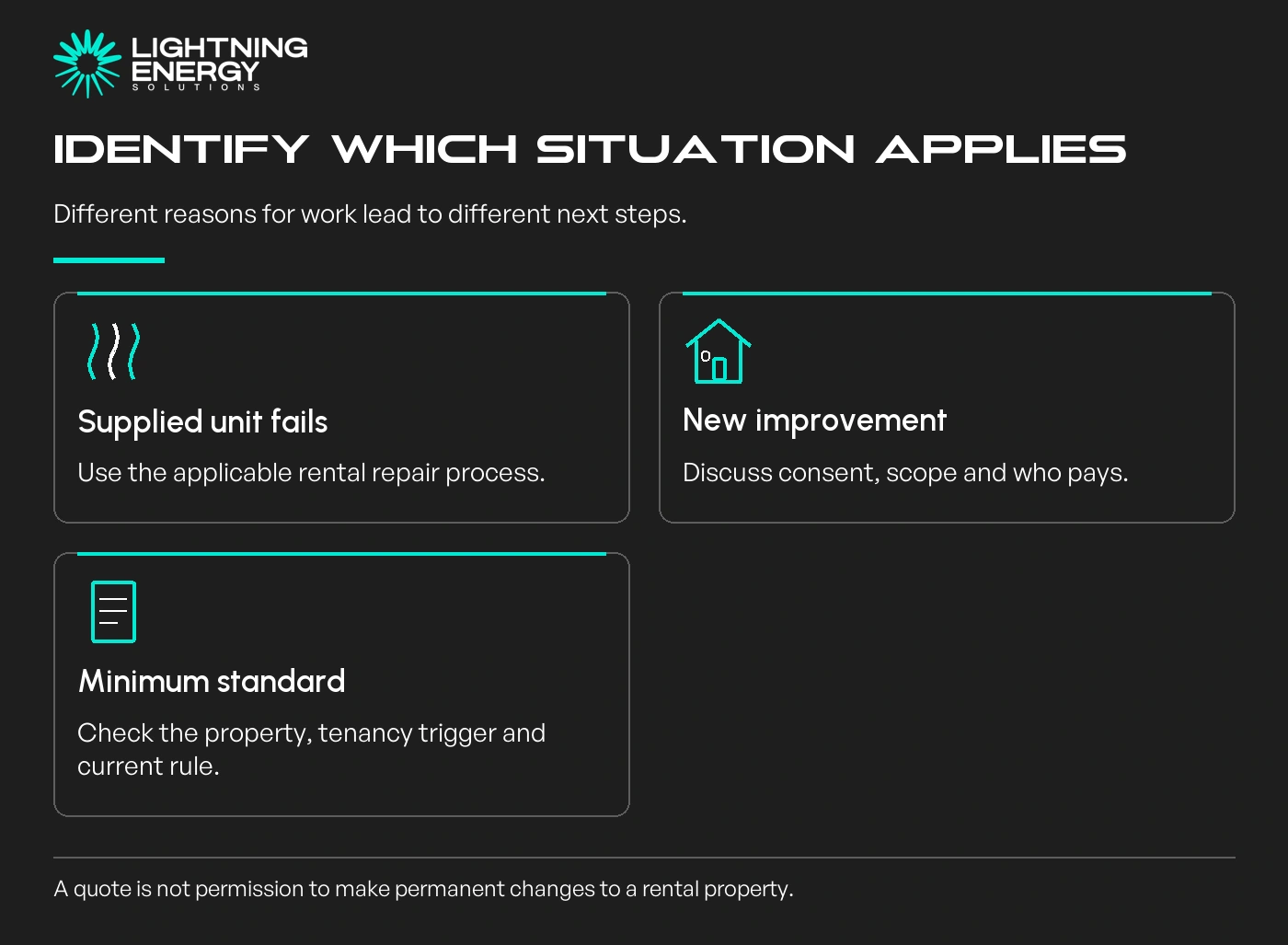
In a Victorian rental, adding an air conditioner, repairing a supplied one and meeting a minimum standard are different situations. Identify which applies before deciding who arranges or pays for the work.
Renters should raise the issue with the rental provider or agent and keep a written record. A contractor’s quote does not by itself authorise changes to the property.
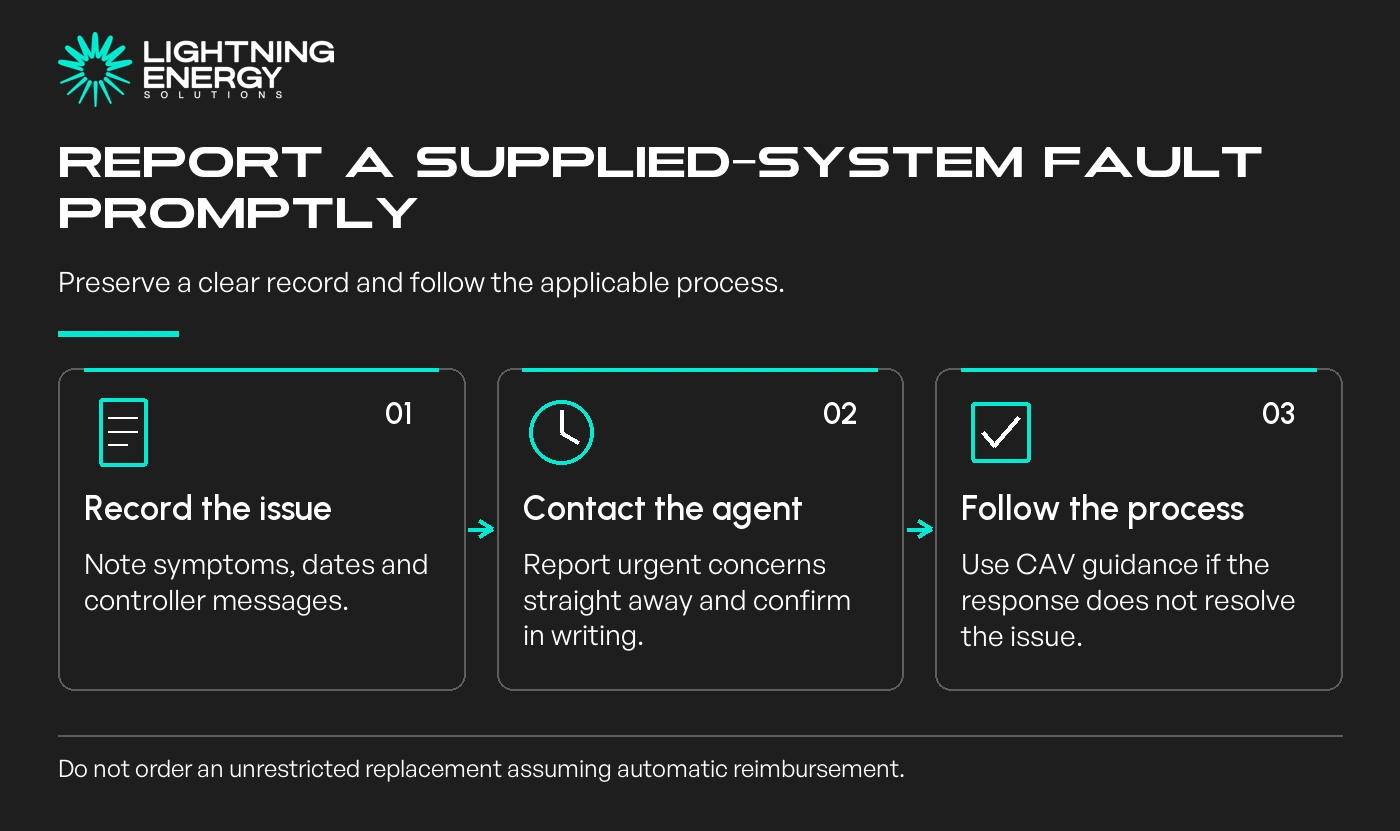
If a cooling appliance supplied by the rental provider stops working, Consumer Affairs Victoria lists that as an urgent repair. An essential heating appliance not working is also on its urgent-repair list.
Contact the provider or agent straight away and confirm the request in writing. Follow CAV’s process if the response is inadequate rather than assuming you can order any replacement and recover its cost.
A request to add cooling where none exists may instead be an improvement or a minimum-standard matter. Keep the reason for the request clear when obtaining an air conditioning assessment.
For an illustrative home, a failed supplied bedroom split and a request for a second new split in the study are separate jobs, even if they are discussed in the same email.
Current Victorian standards require a fixed heater in good working order in the main living area, with energy-efficiency requirements applying under the relevant tenancy rules.
CAV’s current minimum standards.
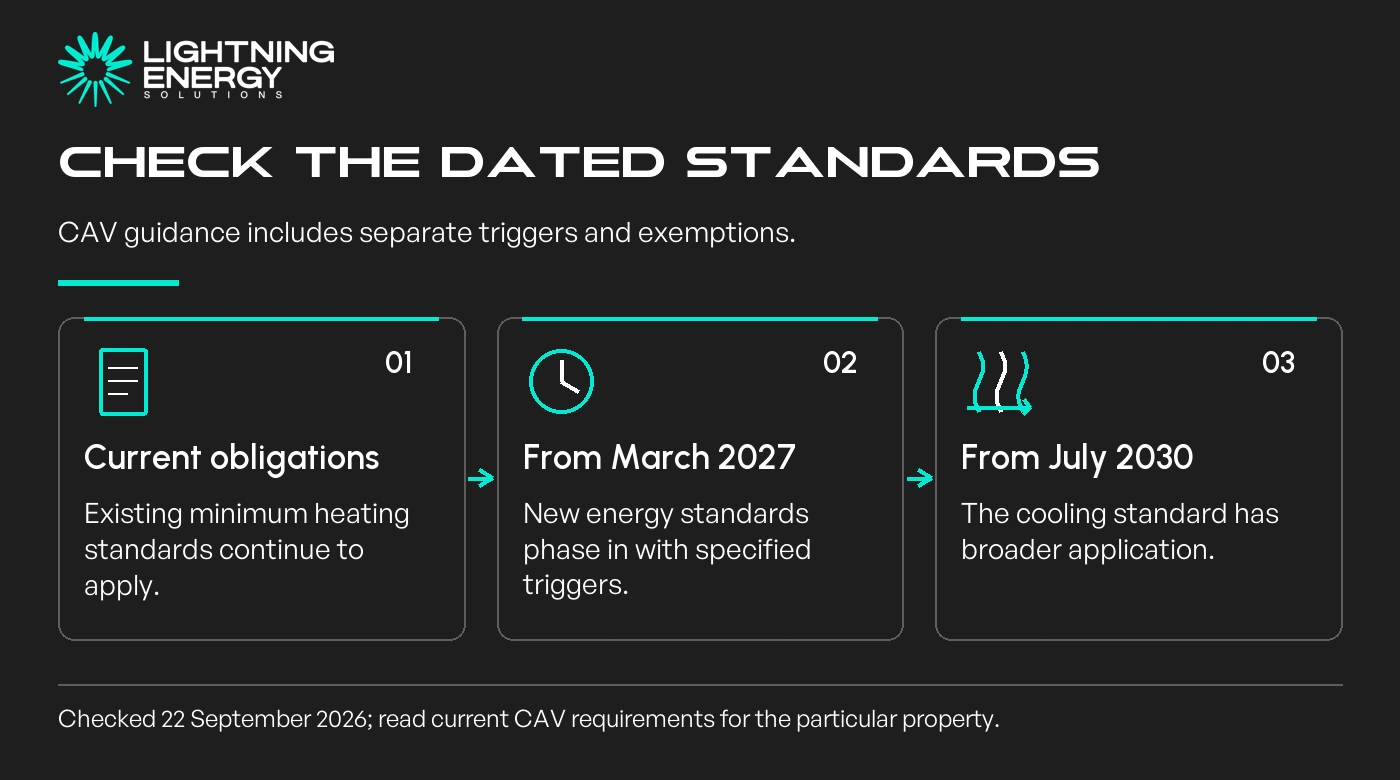
New energy standards phase in from 1 March 2027. Cooling requirements have triggers involving new or periodic agreements and failure of an existing fixed cooler beyond repair, with broader application from 1 July 2030.
From 1 March 2027, an existing fixed heater that fails beyond repair must meet the new efficient-electric replacement requirement, subject to the applicable exemptions.
Check the exact property, agreement, equipment and exemption provisions. A suitable reverse-cycle unit may address both heating and cooling, but a generic capacity or star claim does not prove compliance.
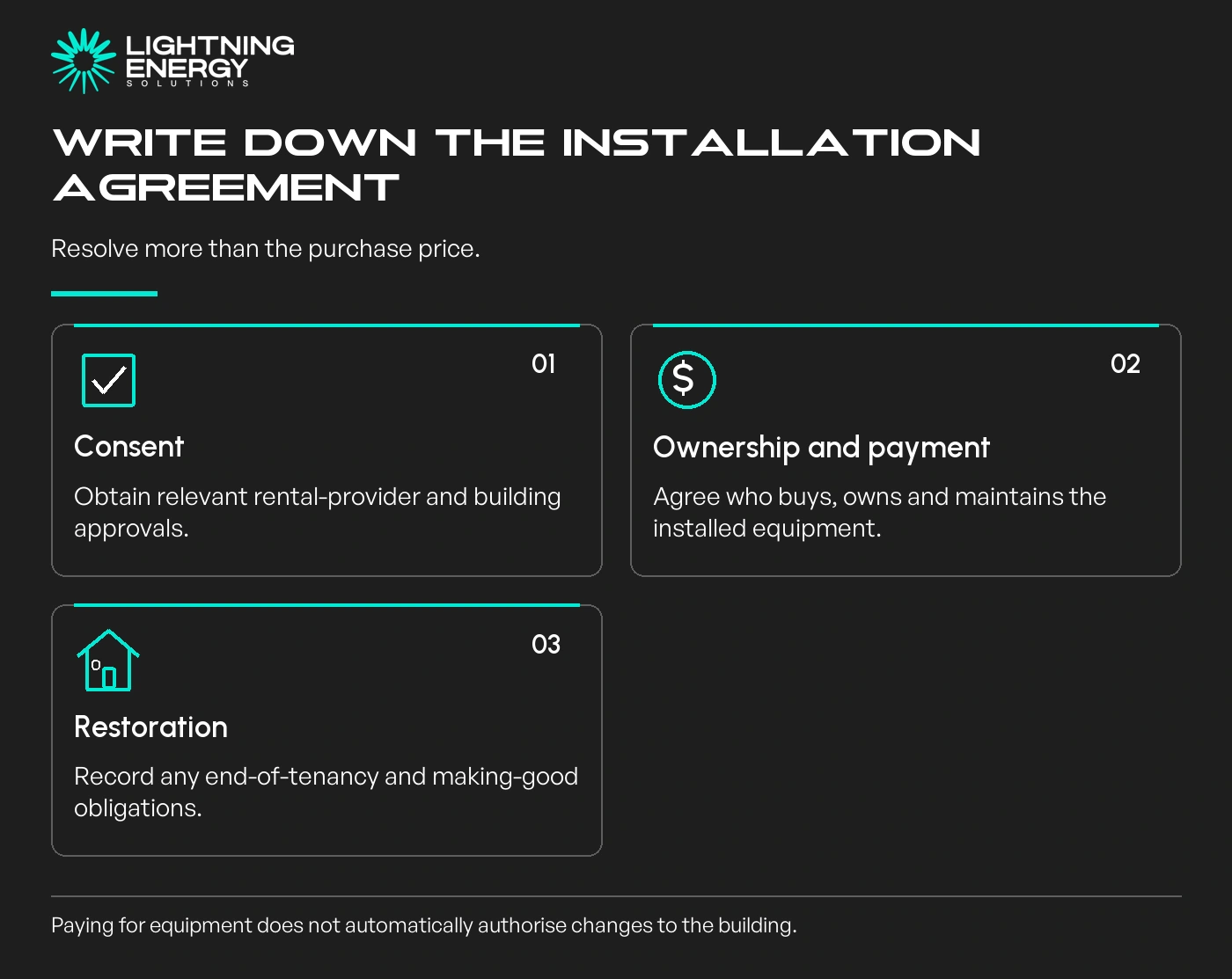
For a proposed new fixed system, obtain the relevant written consent and agree the model, locations, routes and trades. If common property is affected, owners corporation approval may also need attention.
CAV explains which renter changes require permission and the restoration responsibilities that can follow. Do not assume paying for an appliance makes permanent building changes automatically permissible.
CAV renter modification guidance.
Agree who owns the installed unit, who pays for the work and what happens at the end of the tenancy. Include any repairs to walls and surfaces rather than leaving them for a later dispute.
Review electrical requirements and any proposed VEU discount through the appropriate contractor and provider.
At handover, obtain the owner manual and a demonstration of safe accessible filter care. Agree how professional servicing is arranged and how faults are reported.
Do not confuse routine cleaning with responsibility for an equipment failure. CAV says rental providers arrange and pay for repairs that are not the renter’s fault; damage caused by a renter can be treated differently.
Keep photos of fault messages, dates and communications. Do not open equipment, alter electrical work or continue using a unit that presents an apparent safety hazard.
Avoid buying a portable appliance as an assumed substitute for a required fixed system. Equally, do not assume every room must receive a new unit under a standard directed at the main living area.
Rules in this guide were checked on 24 October 2026. Recheck CAV’s current guidance before acting, particularly around the phased 2027 changes or a disputed responsibility.
Provide the property requirements and the authorised scope when you request a quote. Clear consent and responsibilities help the renter, rental provider and installer work from the same brief.
Available times
Book a consultation and we'll map solar, storage, hot water, and the rebates around your bills and your goals.
Question 1 of 6
