
VEU Air Conditioning Discounts: Eligibility and Quote Checks
Check VEU air conditioning eligibility, dated minimum contributions and the final payable quote before accepting a heating or cooling upgrade in Victoria.
Check VEU air conditioning eligibility, dated minimum contributions and the final payable quote before accepting a heating or cooling upgrade in Victoria.

A VEU discount depends on the eligible upgrade, selected equipment and provider process. It is not a fixed rebate that every Victorian household receives for buying an air conditioner.
Ask for eligibility and the payable total in writing before work begins. An advertised saving is not enough to establish what your particular replacement will cost.
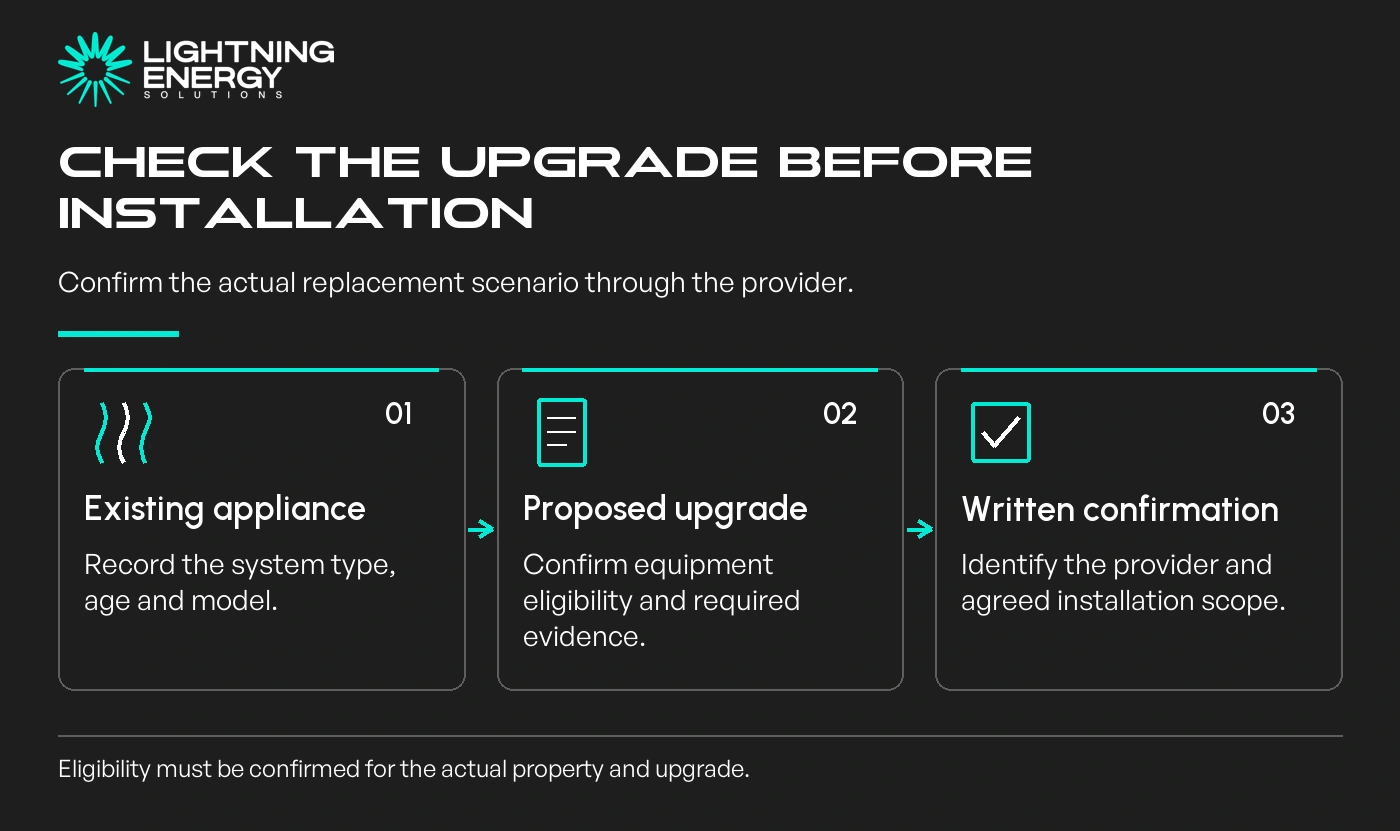
Give the provider the old appliance type, model details and photos, together with the rooms it serves. The Victorian Government says a replaced existing system must be more than two years old.
The accredited provider should confirm the applicable upgrade scenario, eligible equipment and required evidence. If your preferred installer works with a provider, arrange that relationship before installation.
Victorian heating and cooling discounts.
Do not assume a quote for replacing gas ducted heating has the same eligibility as adding a bedroom split. Ask the provider to describe the actual scenario in ordinary language.
Our air conditioning assessment considers the home’s design requirements alongside these programme checks.
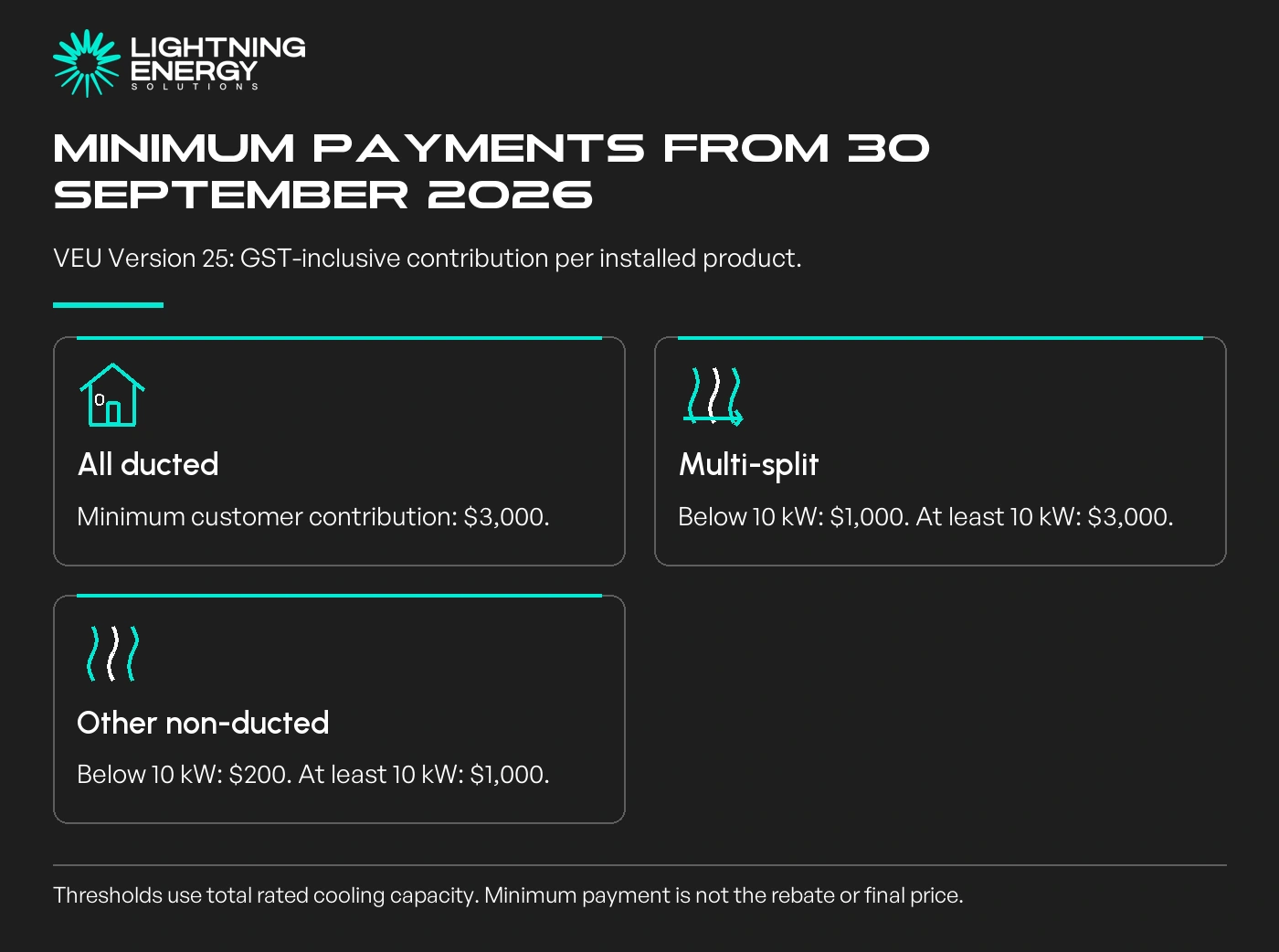
Version 25 of the VEU specifications introduced new minimum customer contributions on 30 September 2026. These are GST-inclusive minimum payments per installed product, not the discount amount or a complete installation price.
From that date, the minimum is $3,000 for all ducted air conditioners. For multi-splits, it is $1,000 below 10 kW total rated cooling capacity and $3,000 at or above 10 kW.
For other non-ducted air conditioners, the minimum is $200 below 10 kW total rated cooling capacity and $1,000 at or above 10 kW.
VEU specifications, Part 6, page 29.
Ask the provider to confirm the rules applying on your installation date and any later amendments. Paying a deposit does not establish that an earlier contribution rule applies.
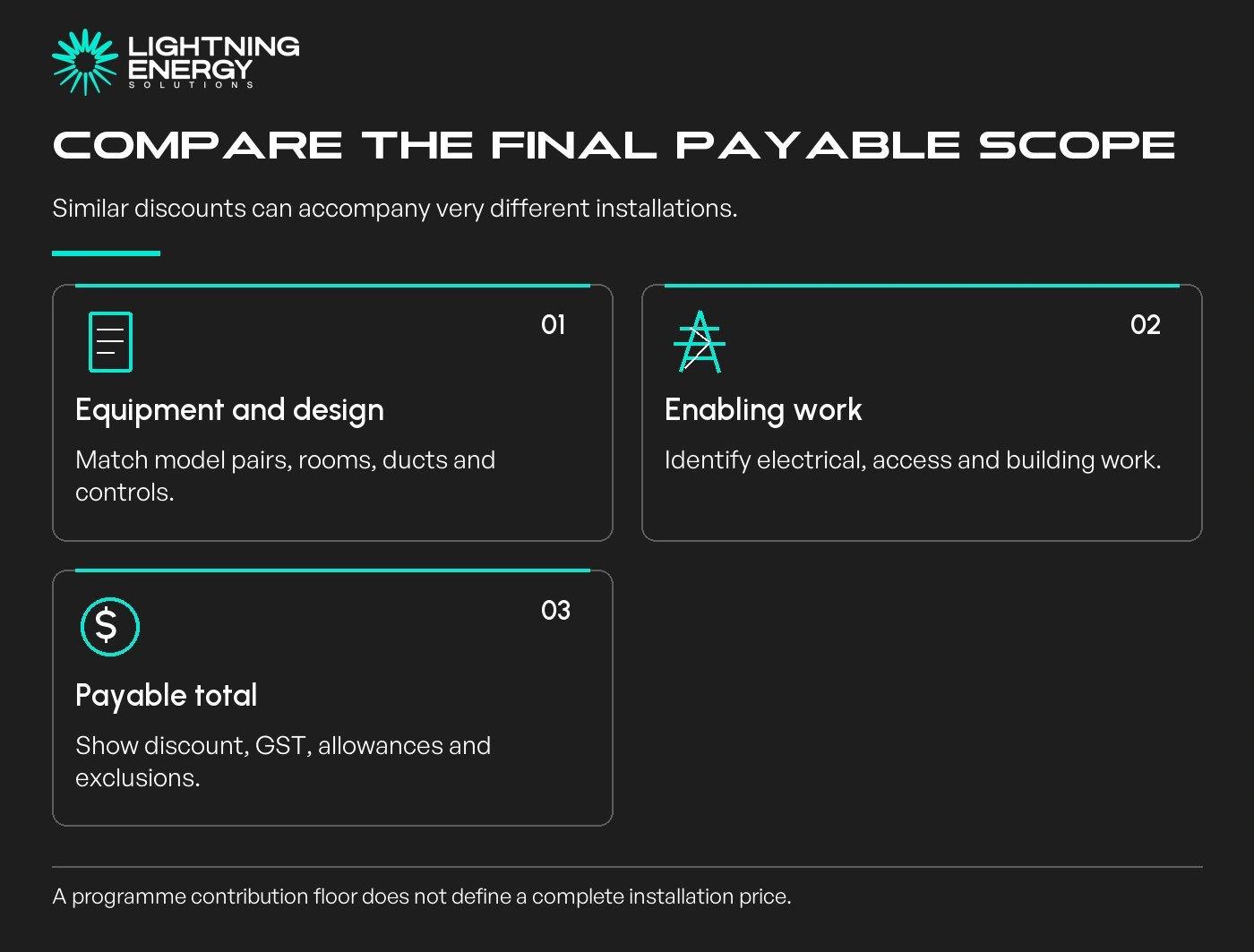
Request separate figures for the installation scope, confirmed discount and final amount payable. Identify GST, allowances, exclusions and any conditions that could change the total.
For an illustrative comparison, two eligible ducted quotes can exceed the same minimum contribution while covering different ductwork, electrical work and controls. The minimum does not make those quotes equivalent.
Check exact model pairs, rooms served, duct insulation, return air and zoning. Our ducted package page is a starting point; the assessed property determines the final scope.
Ask whether removing the old heater, disposal, roof repairs and patching are included. Programme decommissioning and restoring the appearance of the building are separate tasks.
Keep electrical supply work visible. The mains and switchboard guide explains why it should not disappear inside a vague installation allowance.
Save the accepted quote, eligibility confirmation and provider identity. Ask which documents you will receive after installation and who handles any programme queries.
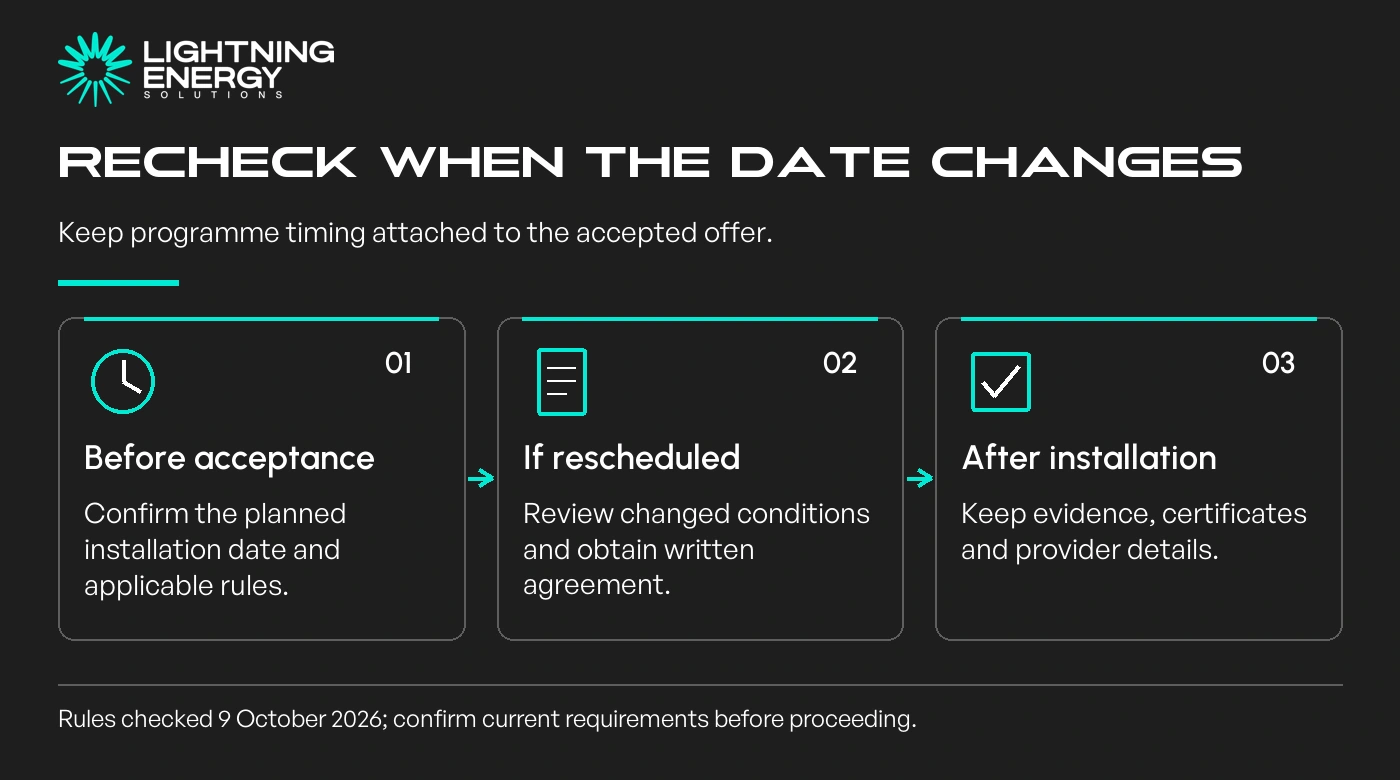
Check the installation date again if scheduling changes, and request written agreement to any revised amount before work proceeds. Avoid relying on a salesperson’s memory of an earlier offer.
Do not replace a suitable working system solely because a headline discount looks large. Compare the complete upgrade with your comfort needs, remaining equipment life and other household priorities.
An eligible model still needs an appropriate design. A discount does not prove that an oversized unit, unsuitable location or poorly planned duct layout is right for the property.
This guide uses rules checked on 9 October 2026. Reconfirm current programme requirements when obtaining and accepting your quotation.
Bring appliance photos and the itemised offer to a quote discussion. The useful result is an eligible, suitable installation with an agreed payable total and clear responsibilities.
Available times
Book a consultation and we'll map solar, storage, hot water, and the rebates around your bills and your goals.
Question 1 of 6