
Battery Operating Modes: Self-Consumption, Time-of-Use and Automated Trading
Home battery modes pursue different goals. Compare storing solar, shifting time-of-use purchases and automated trading while keeping a clear backup reserve.
Home battery modes pursue different goals. Compare storing solar, shifting time-of-use purchases and automated trading while keeping a clear backup reserve.

A battery operating mode tells the system what to prioritise. Storing solar for home use, avoiding expensive tariff periods and responding to automated trading instructions can produce quite different charging patterns.
The most suitable mode depends on your actual tariff, household demand and backup priorities. More visible activity in the app is not necessarily a better financial result.
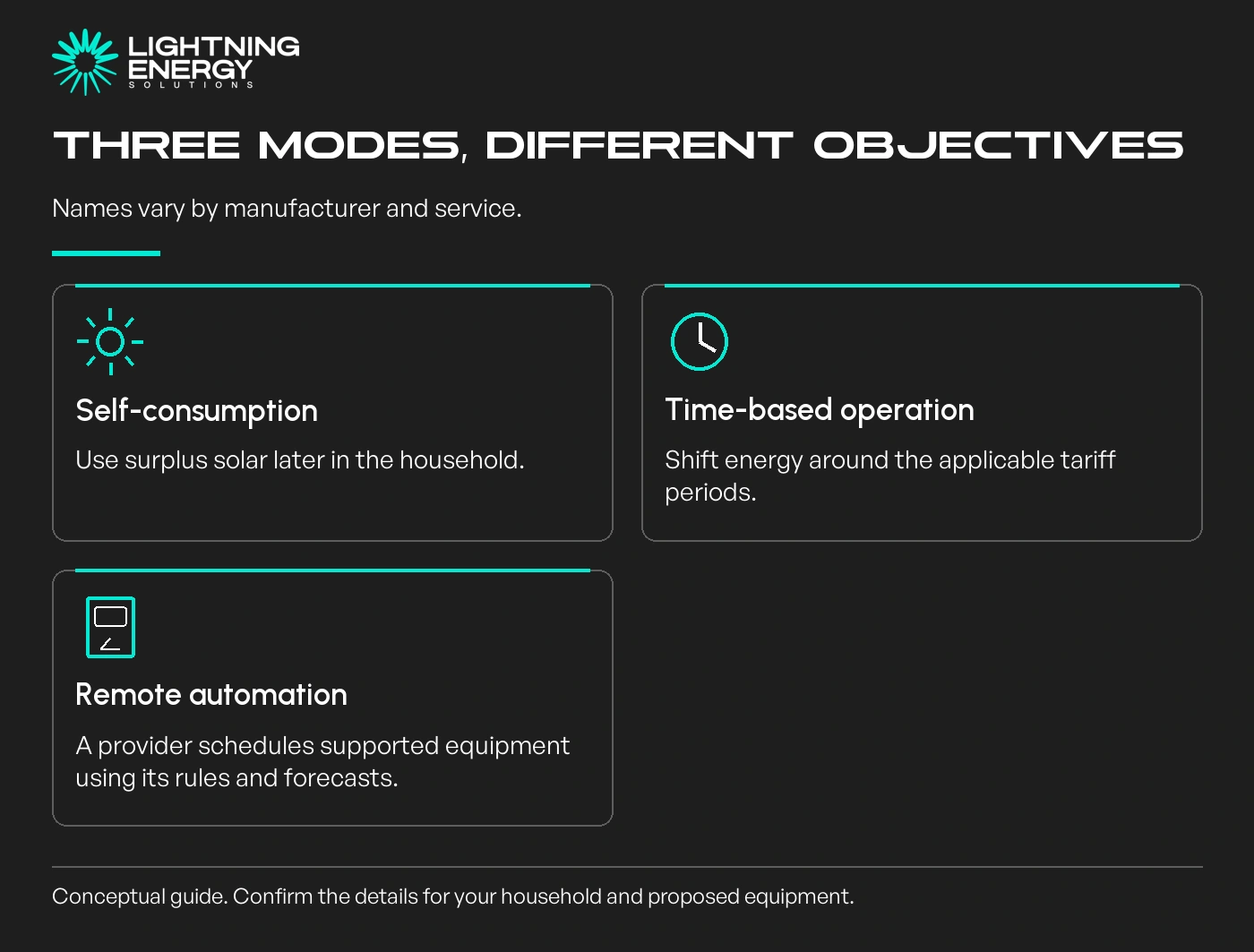
In a typical self-consumption strategy, surplus solar charges the battery and stored energy supplies the home when solar is insufficient, within the configured limits and reserve.
Tesla calls its version Self-Powered. Its Australian guidance describes using surplus daytime solar for later household demand. Other brands use their own names and may implement the details differently.
Tesla Australian Self-Powered guidance.
This can suit a household with useful solar surplus and evening demand. It does not require an expensive peak window to have value, although the import and export rates still affect the economics.
Our battery value guide explains the value of shifting energy after losses and forgone exports.
A time-based strategy considers when electricity is cheaper or more expensive. It may preserve energy for a later period instead of immediately supplying the house, depending on the product and permissions.
Tesla's Australian Savings mode guide describes forecasting and tariff-based operation. Grid charging and battery exports depend on the options supported at the site, so do not assume every advertised function is available.
Tesla Australian Savings mode guide.
A hypothetical household may accept cheap early-morning imports to preserve storage for a dearer evening period. That behaviour looks different from maximising self-consumption, without necessarily being a fault.
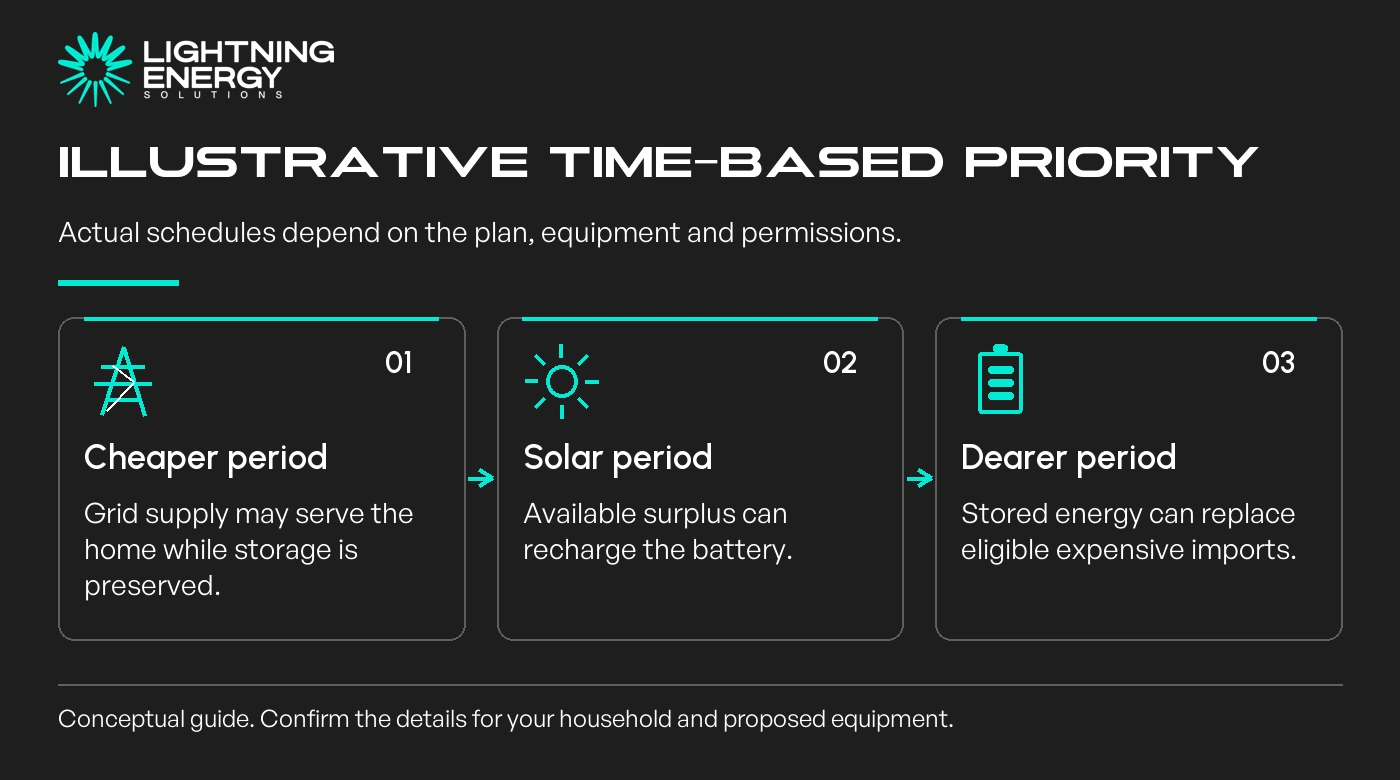
The rates, time windows and seasons entered into the control system must match the actual plan. Review them after changing retailers or receiving a tariff variation.
A provider can remotely schedule supported equipment using market prices and forecasts. That arrangement may prioritise charging, preserving or exporting energy differently from a fixed household timer.
Amber's SmartShift explanation identifies forecasts for prices, solar generation and household demand as inputs. It also explains that forecasts change and that local timed controls can compete with remote instructions.
Amber SmartShift operating explanation.
Our VPP overview covers the contractual side. An automation service's expected benefit is not a guarantee of particular daily behaviour or annual profit.
Backup reserve allocates stored energy to outage needs. Increasing it can reduce what the selected mode may use during ordinary operation; it does not create additional capacity.
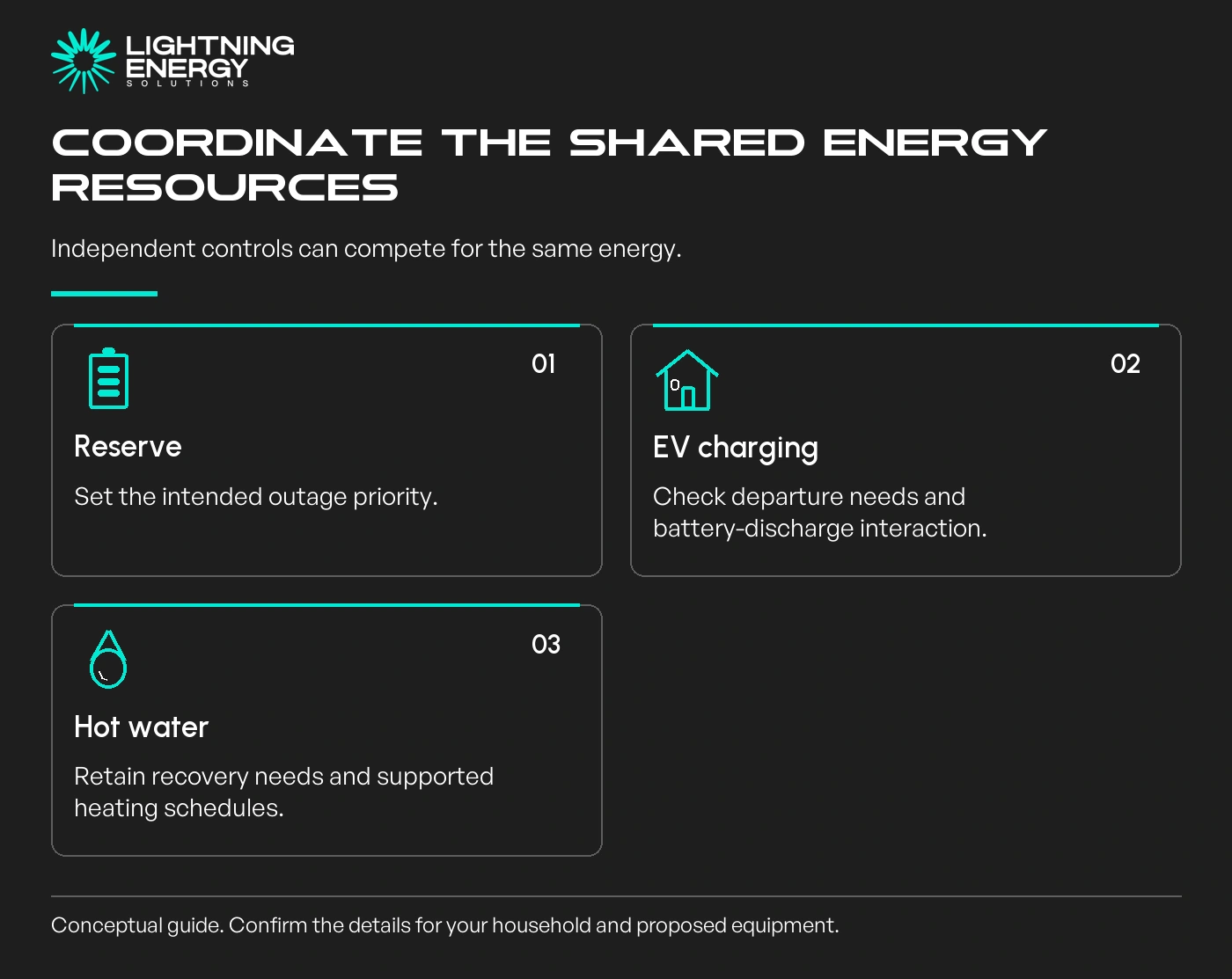
Consider EV charging and hot water at the same time. A car starting its timer can become a large household load while the battery is following a different priority.
Our EV and battery coordination guide explains why independently sensible settings can conflict.
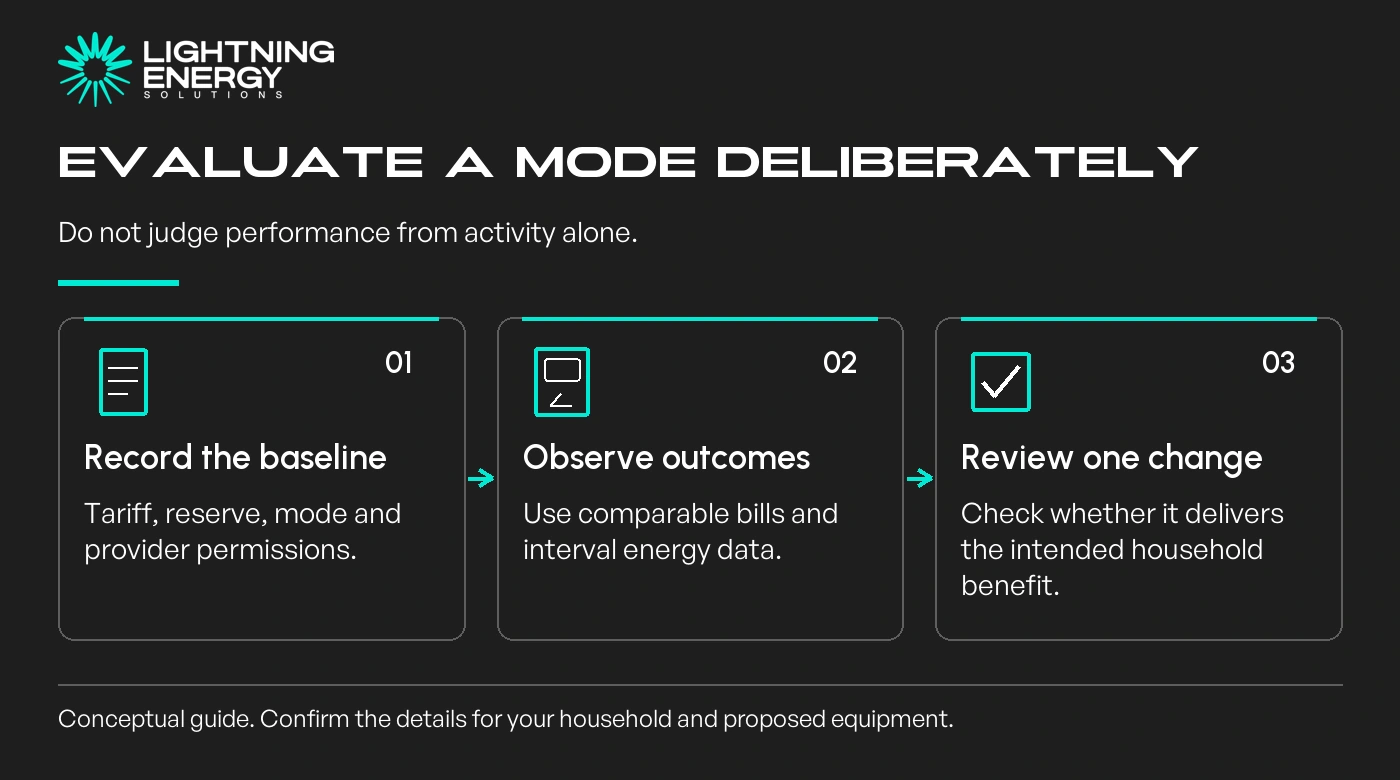
Keep a record of the selected mode, reserve, tariff and provider permissions. Compare representative periods using the bill and interval data, with allowance for weather and changed household demand.
If you change an owner-accessible setting, record when and why, then assess the intended result. Avoid repeatedly changing several controls at once, which makes the effect difficult to interpret.
A simpler supported mode can be preferable when the tariff offers little shifting value or the household does not want a trading contract. Choose a clear objective rather than trying to maximise every metric simultaneously.
Plan your battery upgradeBring your tariff, current mode and a few days of charge and discharge records. We can check whether the controls reflect your household's energy and backup priorities.Available times
Book a consultation and we'll map solar, storage, hot water, and the rebates around your bills and your goals.
Question 1 of 6
