
Budgeting to get off gas in Melbourne: costs beyond the appliances
Build an off-gas budget that includes installation, electrical enabling work, removal, site access, verified incentives and ongoing costs beyond appliance prices.
Build an off-gas budget that includes installation, electrical enabling work, removal, site access, verified incentives and ongoing costs beyond appliance prices.

An appliance price is not a complete budget for getting a Melbourne home off gas. The project can also involve electrical work, plumbing, access, removal, making good and the final gas connection process.
Start with a list of required outcomes and obtain site-specific scopes. A staged budget should show what must happen now, what can wait and which uncertain items need investigation before a firm price is possible.
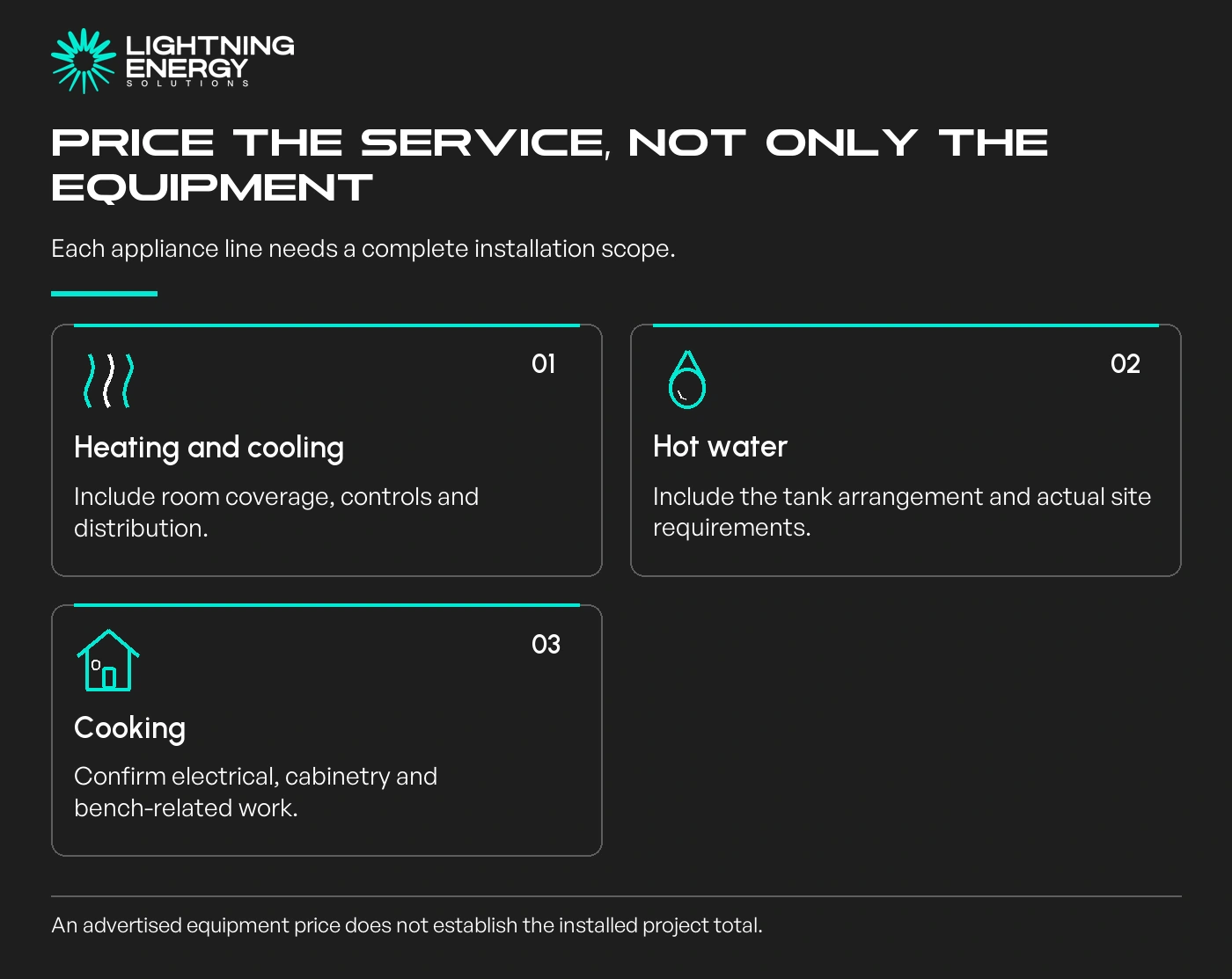
List heating and cooling, hot water and cooking separately. Record the rooms, household demand and features that matter rather than selecting equipment solely from the lowest advertised starting price.
For air conditioning, compare the complete room or ducted design, including controls and installation. For heat pump hot water, include the tank arrangement and the work required at its actual location.
A cooktop replacement can involve its own circuit, cabinetry and bench considerations. Ask the relevant trades to confirm what is included before assuming the old opening and services can simply be reused.
The government’s electrification guide supports staging purchases around household needs and budget.
For an illustrative home, heating might be the largest equipment purchase while an awkward tank delivery route creates an unexpected installation cost. Keep those categories separate so each quote can be compared fairly.
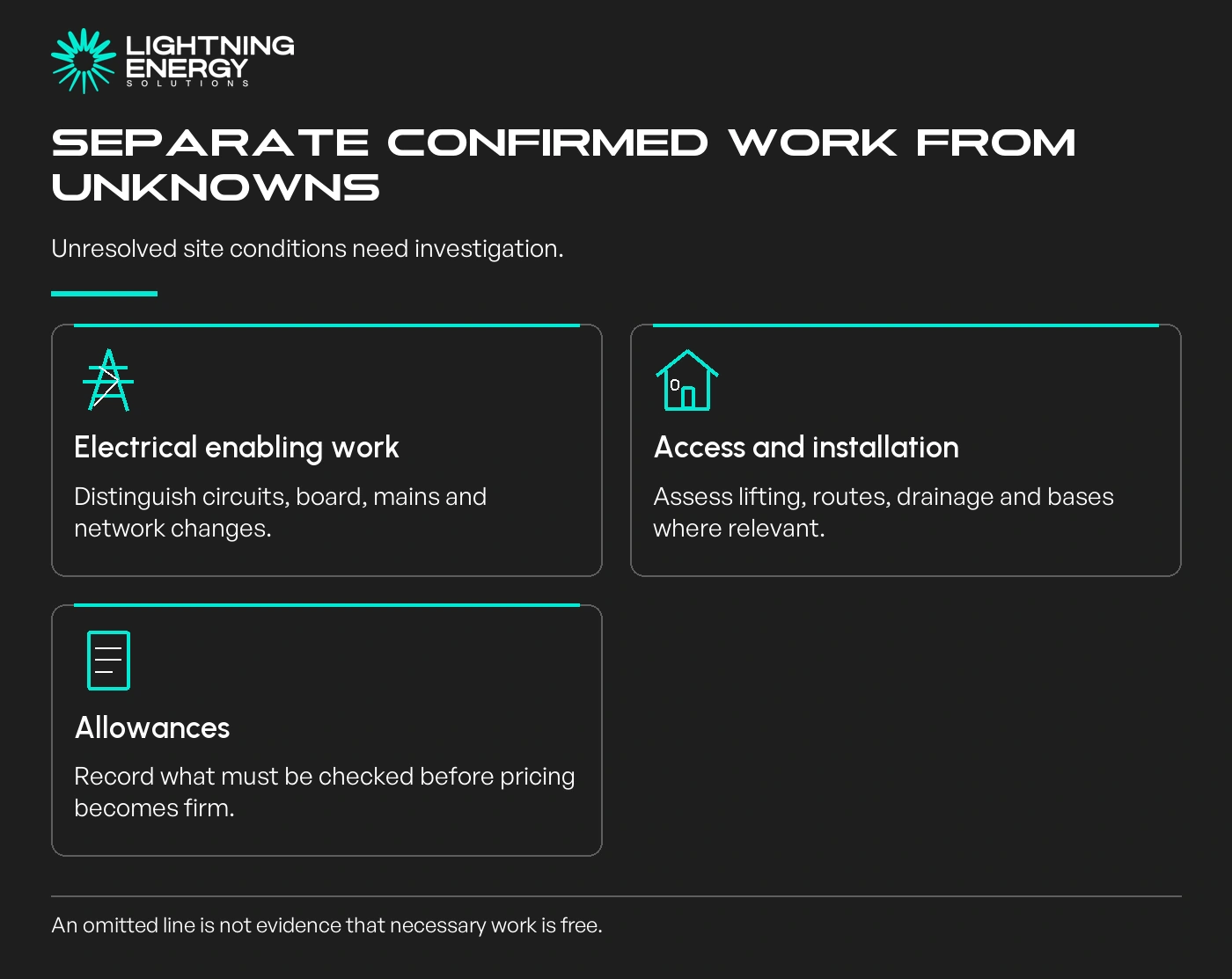
Have the electrician assess circuits, switchboard condition and supply against the proposed appliance list. Distinguish necessary local work from a network capacity or phase change.
Our electrical planning guide explains why these are different questions.
CitiPower and Powercor’s supply-alteration process shows that metering, connection changes and network work can have separate scope and coordination requirements.
Distributor supply-change guidance.
Ask about access equipment, lifting, difficult cable routes, drainage, new bases and any required treatment of suspect materials. These are assessment prompts, not a claim that every house needs every item.
Where an existing condition is unknown, record an allowance and the investigation needed to resolve it. A blank line in a quote is not evidence that the work will be free.
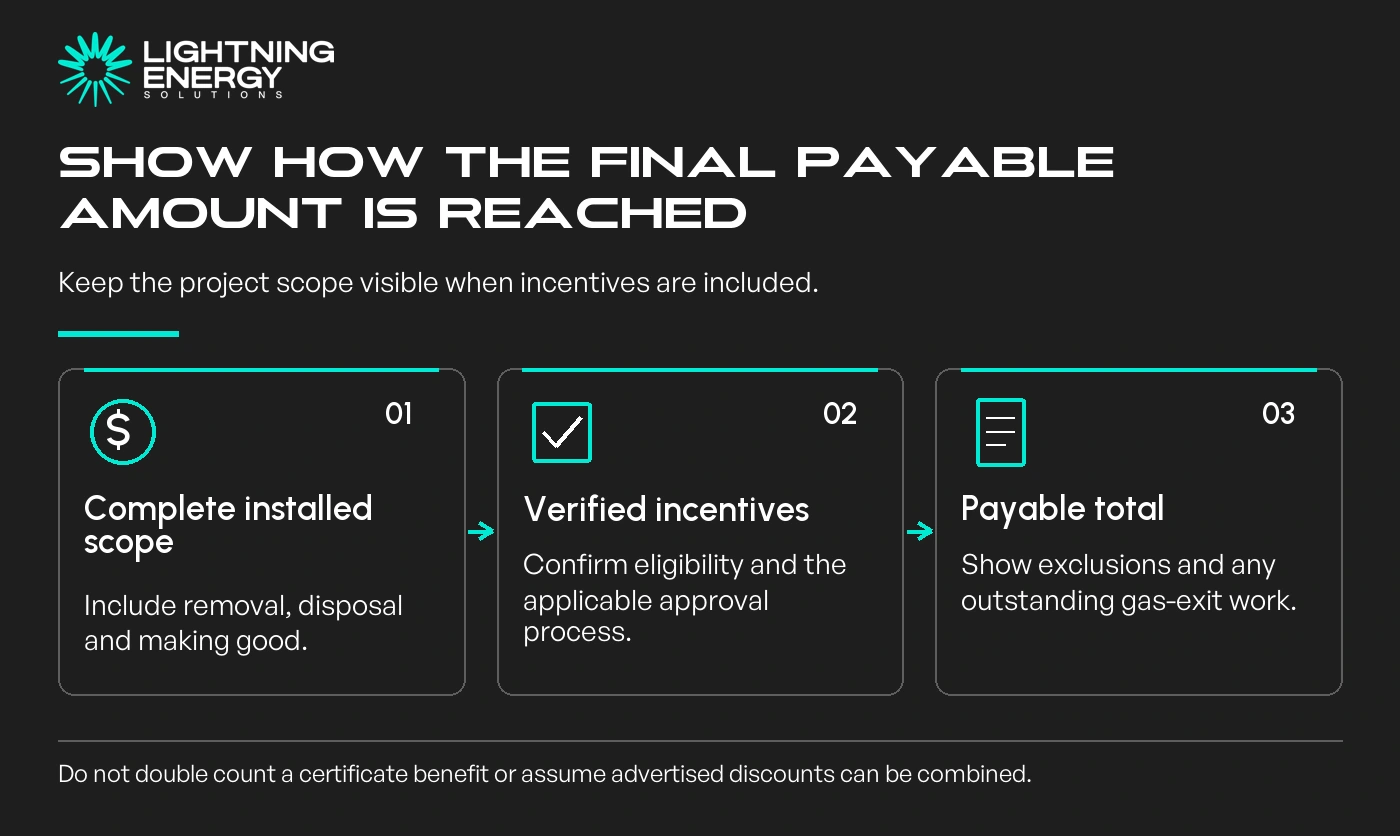
Specify old-appliance removal, disposal and making good. Ask who handles safe gas appliance decommissioning and what happens to redundant fittings or openings.
Price the retailer and distributor gas-exit process separately after the last appliance is gone. Multinet’s current guidance explains the distinction between account pathways and the actual disconnection or abolishment service.
Current Multinet gas-exit process.
Show each incentive only after the provider confirms the applicable eligibility, product and installation process. Do not stack discounts from unrelated advertising or count one certificate benefit twice.
Solar Victoria’s hot water rebate guidance explains its approval requirements and separate conditional emergency process.
Keep the undiscounted scope, confirmed incentives and final payable amount visible. That makes it easier to understand a changed quote if the product or eligibility assumption changes.
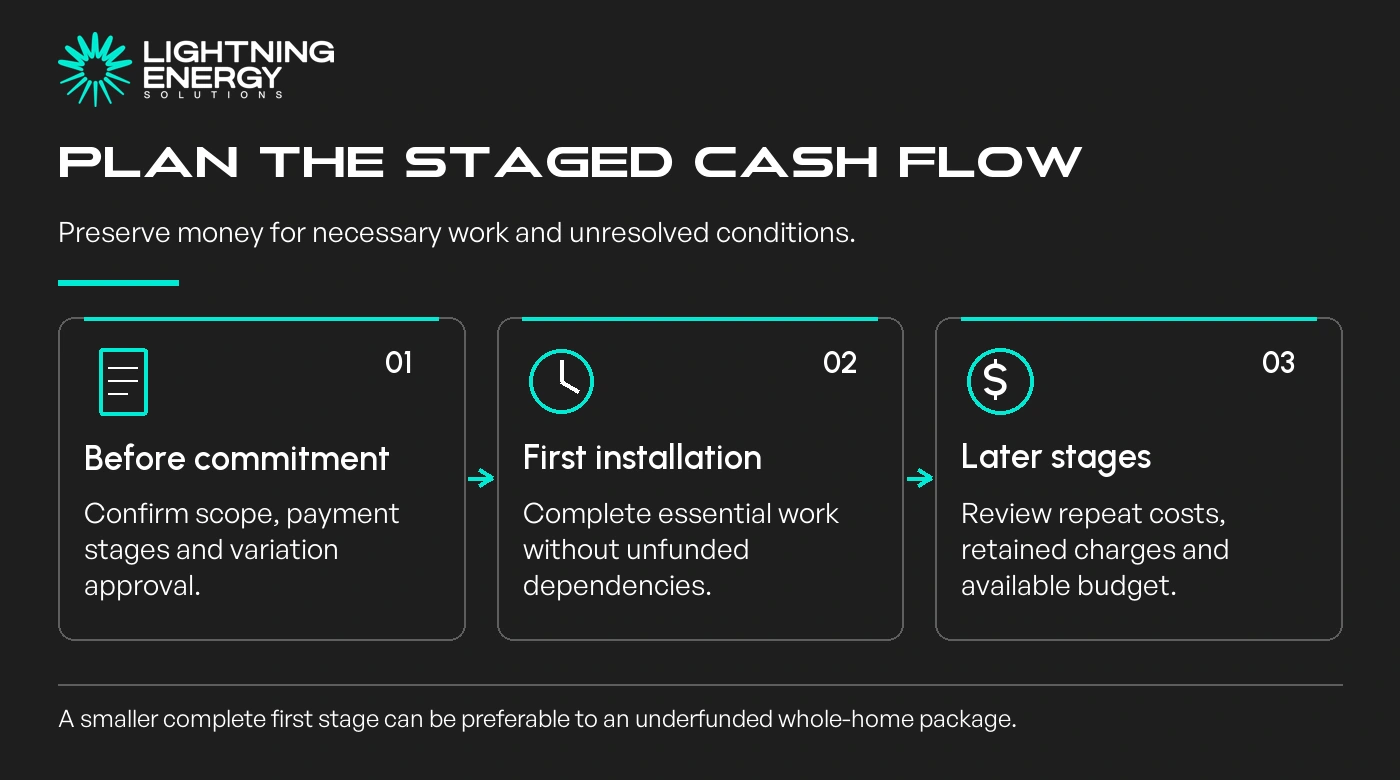
Show deposits and progress payments against the work they cover. Keep finance charges, maintenance and any retained gas supply charge separate from the appliance purchase total.
Ask which trade visits or enabling works would be repeated if purchases were staged. Combining work can be convenient, but it does not justify buying equipment that the household does not yet need.
Consumer Affairs Victoria recommends documenting quotes and agreeing how variations, timing changes and concerns will be handled.
Set a contingency appropriate to the unresolved site questions rather than treating the cheapest initial figure as a fixed project ceiling. Clarify who must approve extra work before it proceeds.
Do not commit the entire budget to equipment while leaving essential electrical or removal work unfunded. If necessary, reduce the first stage and retain a clear plan for the remaining appliances.
Bring the appliance list and site details when you request a staged quotation. A useful budget explains complete installed costs, known exclusions and the decisions still needed to make each stage firm.
Available times
Book a consultation and we'll map solar, storage, hot water, and the rebates around your bills and your goals.
Question 1 of 6