
GoodWe ESA vs Tesla Powerwall 3: What’s in the Quote?
A desk-researched Australian comparison of single-phase ESA and Powerwall 3, focusing on storage configuration, backup equipment and the complete quote.
A desk-researched Australian comparison of single-phase ESA and Powerwall 3, focusing on storage configuration, backup equipment and the complete quote.

GoodWe ESA and Tesla Powerwall 3 both combine solar inverter functions with battery storage.
Their different packaging means that a comparison based only on the cabinet price can miss important parts of the installation.
This is a document-based comparison checked on 17 October 2026, not a hands-on test.
It covers the Australian single-phase ESA family and the Australian Powerwall 3.
It does not transfer specifications from overseas versions, three-phase ESA or Powerwall 3AC.
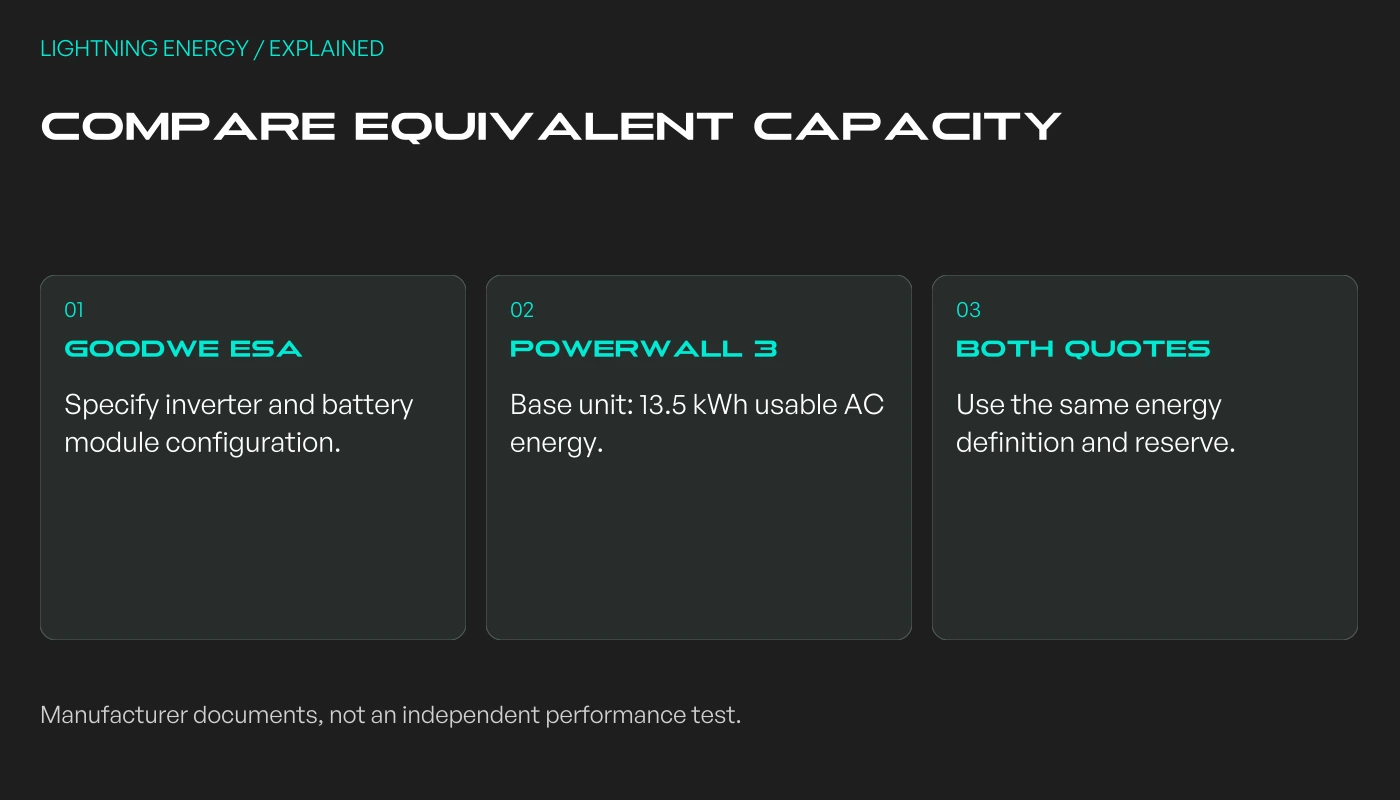
GoodWe’s Australian ESA page describes a modular system with 5 kWh and 8 kWh battery modules and inverter options across the 3–10 kW family.
Ask for the exact inverter model, module count and warranted usable energy in your quote.
Tesla’s Australian Powerwall 3 datasheet specifies 13.5 kWh usable AC battery energy for the base unit.
Expansion units add storage under the permitted design; they do not make every configuration identical.
Do not compare a module’s nominal capacity with a whole system’s usable AC capacity without checking definitions.
Reserve settings and conversion losses also affect energy available to the home.
Request figures on the same basis and retain the relevant datasheet revision.
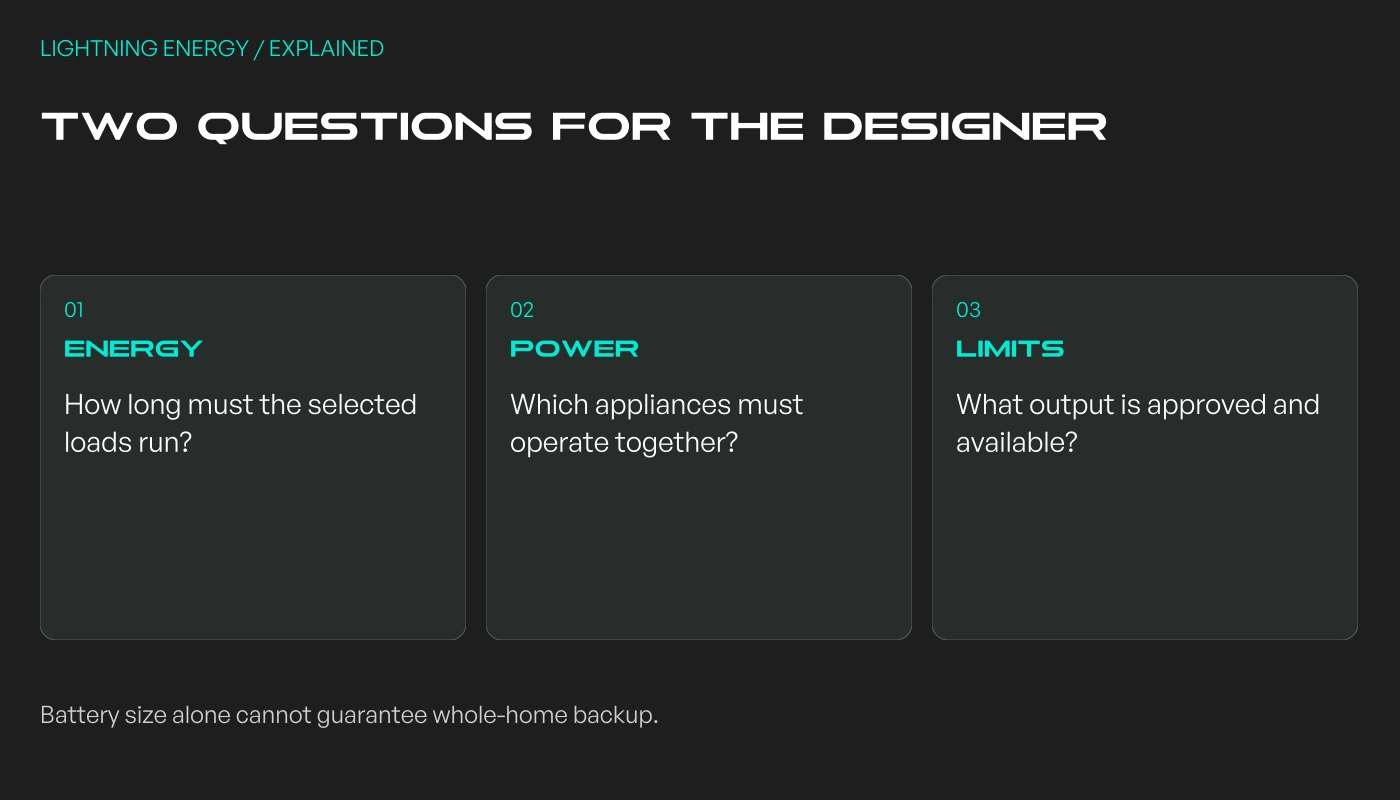
Capacity in kWh describes an amount of energy.
Output in kW describes how quickly energy can be supplied.
A household can need extra energy for a long evening, extra power for simultaneous appliances, or both.
Adding storage alone does not answer every requirement.
Tesla lists configurable AC output ratings of 5, 10 and 11.04 kW in its Australian datasheet.
The rating approved for your installation matters more than the largest number on the brochure.
For ESA, establish the selected inverter rating and the battery configuration supporting it.
Give the designer a list of loads you want operating together.
Include motor starting requirements where relevant.
Ask for separate normal-operation and outage limits; avoid accepting a generic whole-home claim as a substitute for that assessment.
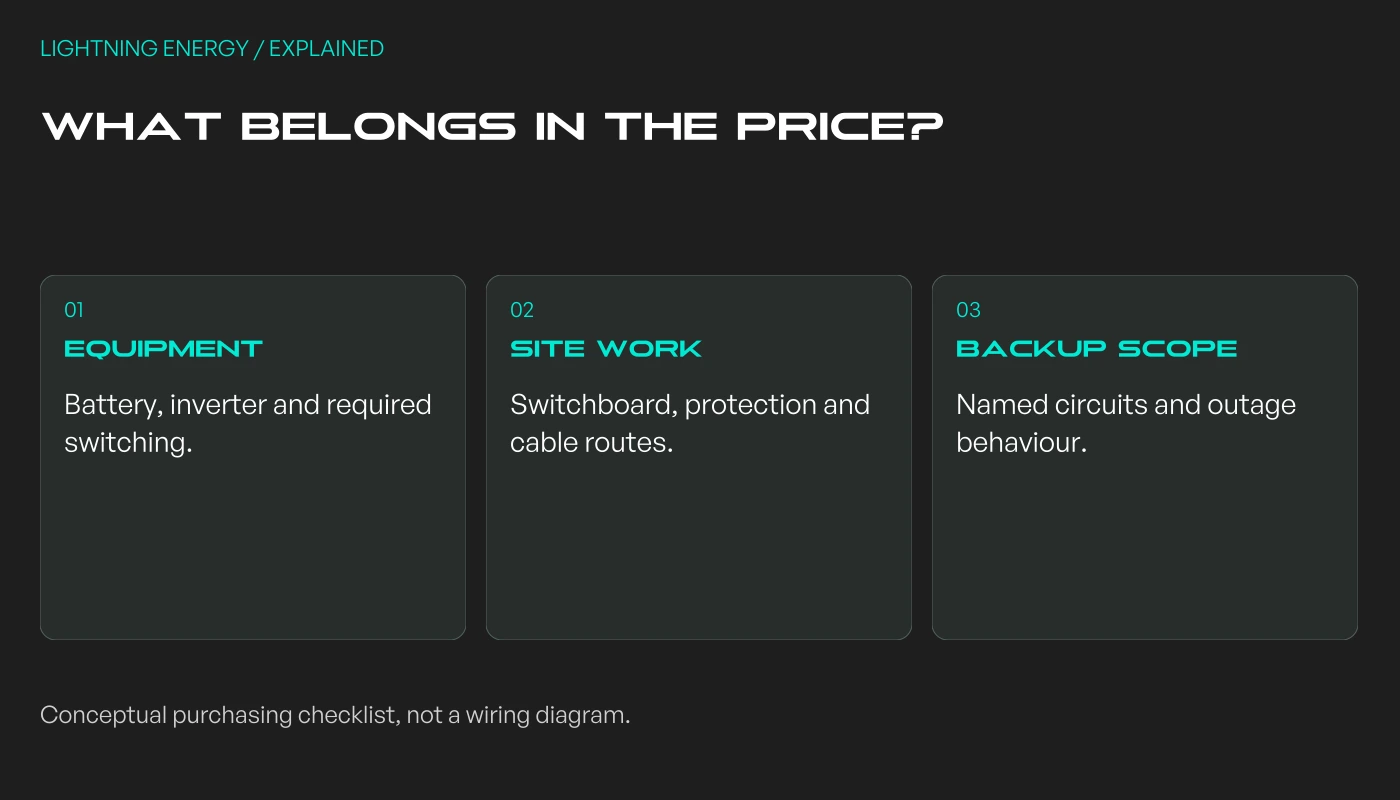
GoodWe advertises integrated backup switching with no separate gateway needed for its ESA design.
Tesla’s Australian Powerwall 3 datasheet names Backup Gateway 2 as the supported islanding device.
This is a hardware distinction, not proof that one completed installation costs less.
Switchboard alterations, protection, metering, cable routes and selected backup circuits can still affect either proposal.
A gateway included in one quote and omitted from another can make the headline prices misleading.
Ask each installer to mark included equipment explicitly.
For a retrofit, identify whether the existing solar inverter remains and what happens to its output during an outage.
A battery beside existing solar does not automatically mean that solar can recharge the battery when the grid is unavailable.
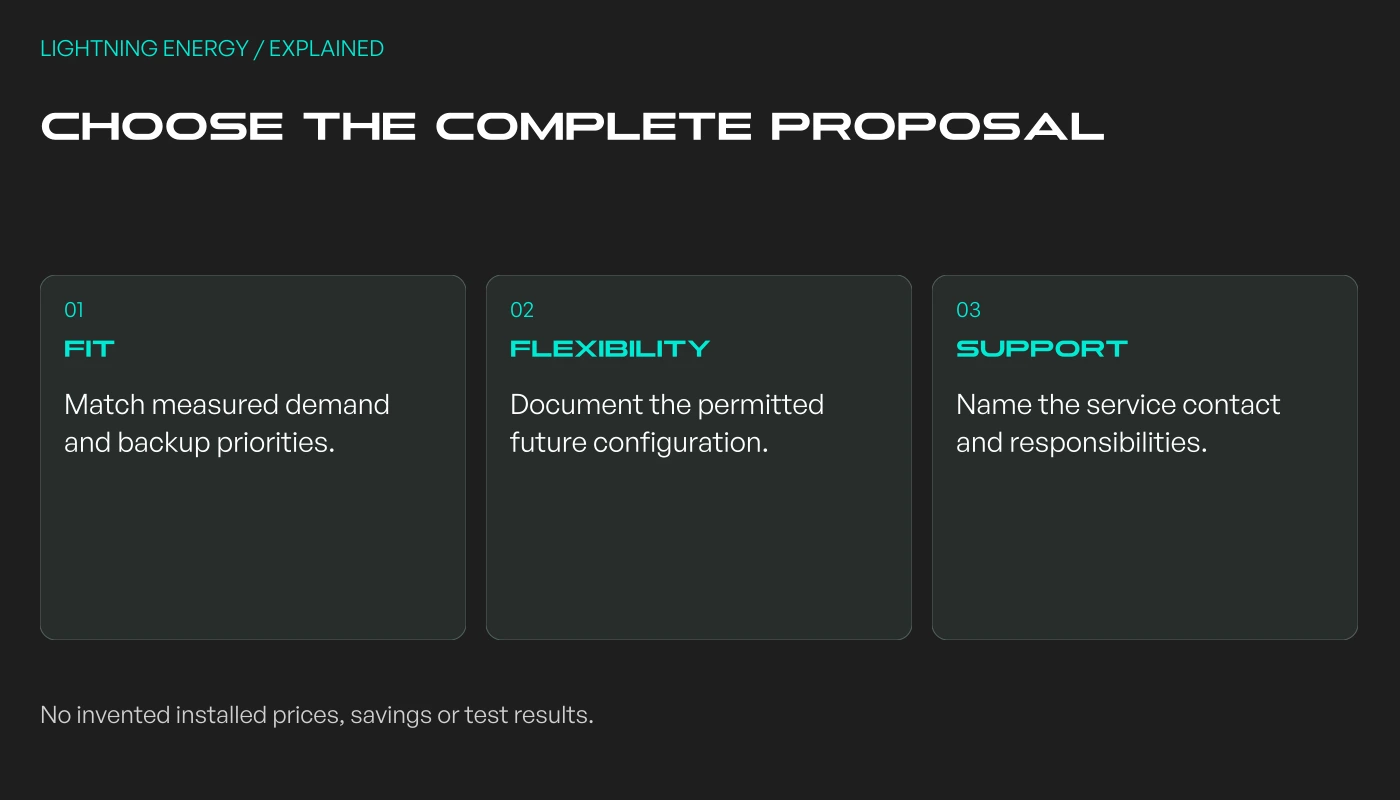
Modular storage is useful only when the proposed expansion is permitted and practical at your site.
Ask about compatible generations, available space, approval changes and installation costs.
Future equipment availability is not guaranteed by today’s product page.
Ask for a demonstration of reserve settings, schedules and monitoring.
If you want a particular VPP, verify the exact equipment and service combination rather than relying on a brand-wide compatibility claim.
Obtain the terms before agreeing to provider control.
Request the current Australian warranties for the exact configuration and identify who pays for diagnosis, labour and transport.
Keep manufacturer promises, installer workmanship and statutory consumer rights separate.
This article does not rank long-term reliability from specifications alone.
Our battery quote guide and solar-and-battery quote guide help organise a like-for-like comparison.
Review the Tesla option alongside your proposed ESA configuration, rather than comparing different capacities by brand name.
Explore home battery options and request a site-specific assessment.
The better proposal is the one that meets your loads, includes the necessary work and explains its limitations clearly.
Available times
Book a consultation and we'll map solar, storage, hot water, and the rebates around your bills and your goals.
Question 1 of 6
