
Buy a Home Battery Now or Wait? Separate Known Rules from Price Guesses
Buying now or waiting for a battery should follow your household case, confirmed program dates and written quote terms rather than uncertain price forecasts.
Buying now or waiting for a battery should follow your household case, confirmed program dates and written quote terms rather than uncertain price forecasts.

The decision to buy a battery now or wait should start with whether the present offer suits your household. Future prices may change, but an uncertain forecast is not a sound reason to rush a poor design or indefinitely delay a useful one.
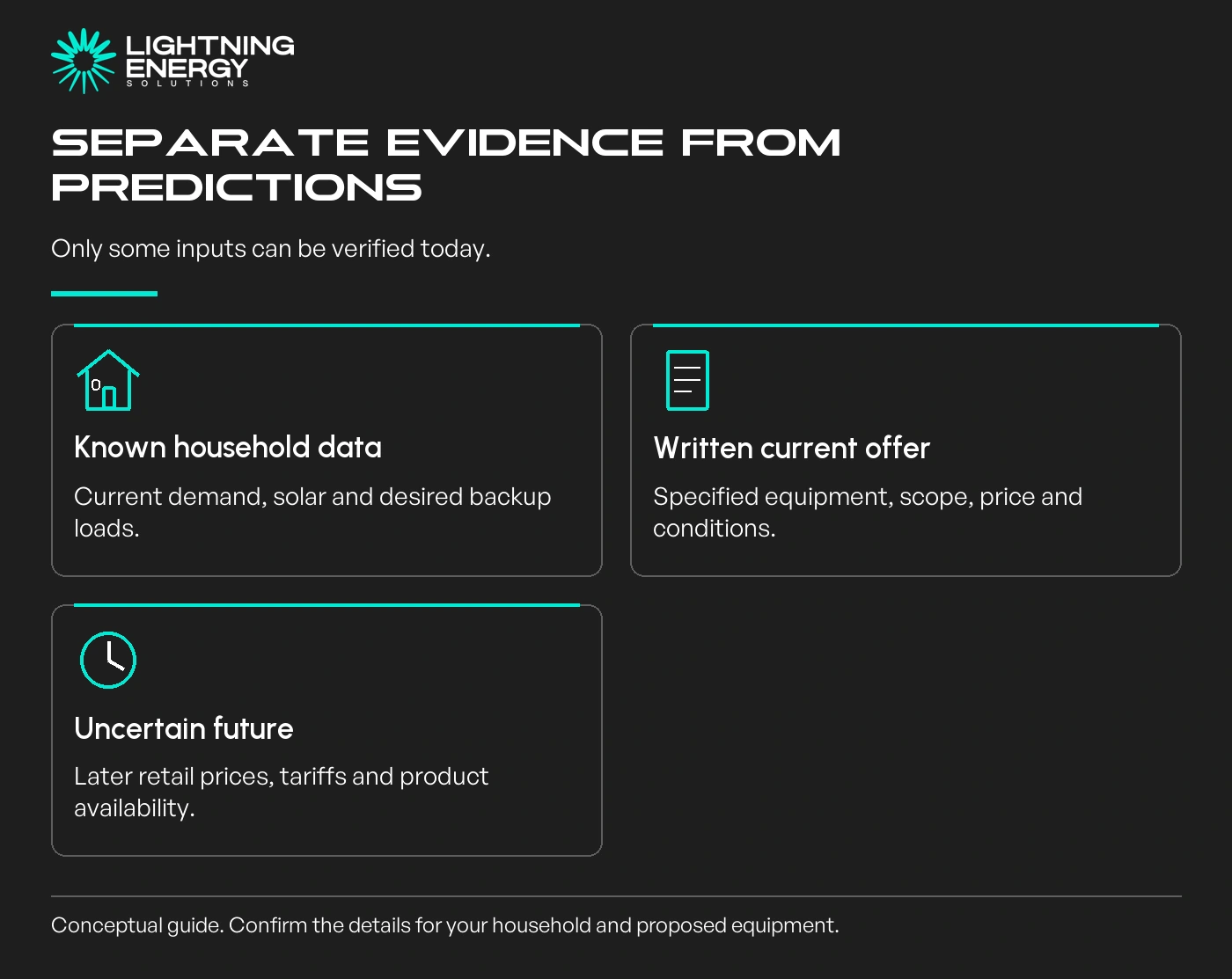
Separate what is known today from what is predicted. Your demand, current quote and published program rules can be checked; next year's retail prices, tariff offers and new-model availability cannot be guaranteed.
Review available solar surplus, later demand, desired backup and complete installed cost. Compare the battery with continuing without storage, including any practical changes to daytime appliance use.
The battery value guide explains that baseline. A product discount does not establish a worthwhile purchase if the household has little useful work for it.
Ask the retailer to show the assumptions behind any projected benefit. A calculation based on unusually favourable exports or repeated trading events needs a less optimistic scenario too.
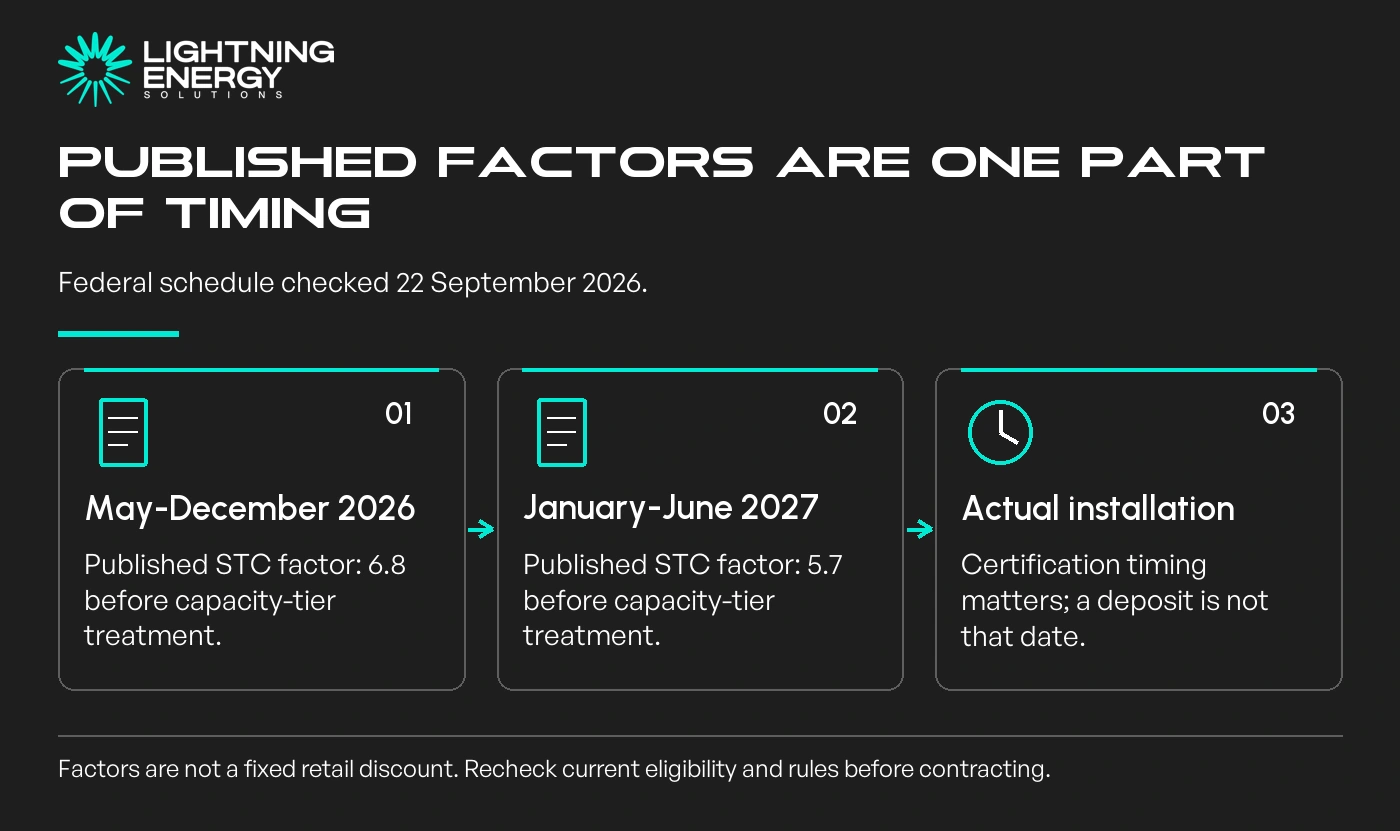
The current federal schedule lists a certificate factor of 6.8 for May–December 2026 and 5.7 for January–June 2027. That is a published change in the certificate calculation, not a prediction of the future installed price.
Current federal battery schedule.
DCCEEW defines the relevant installation date through electrical compliance certification. Signing a quote or paying a deposit does not itself secure that date.
Our federal battery guide covers eligibility. Recheck the current rules when accepting a quote, especially if the planned installation crosses a published change.
Ask how delays, substitutions or additional site work affect the price and any claimed discount. A verbal promise of installation before a deadline should not replace clear contractual treatment.
An upcoming product announcement is not proof of Australian stock, local approval, installer readiness or a final warranty. Compare equipment that can actually be specified and supported for the intended installation.
Similarly, falling global cell costs do not translate automatically into an equal reduction in an installed household price. Labour, site work, other equipment and commercial offers are part of the total.
A hypothetical buyer expecting a future $1,000 price reduction also needs to consider any changed support, forgone interim benefit and whether the expected reduction occurs at all.
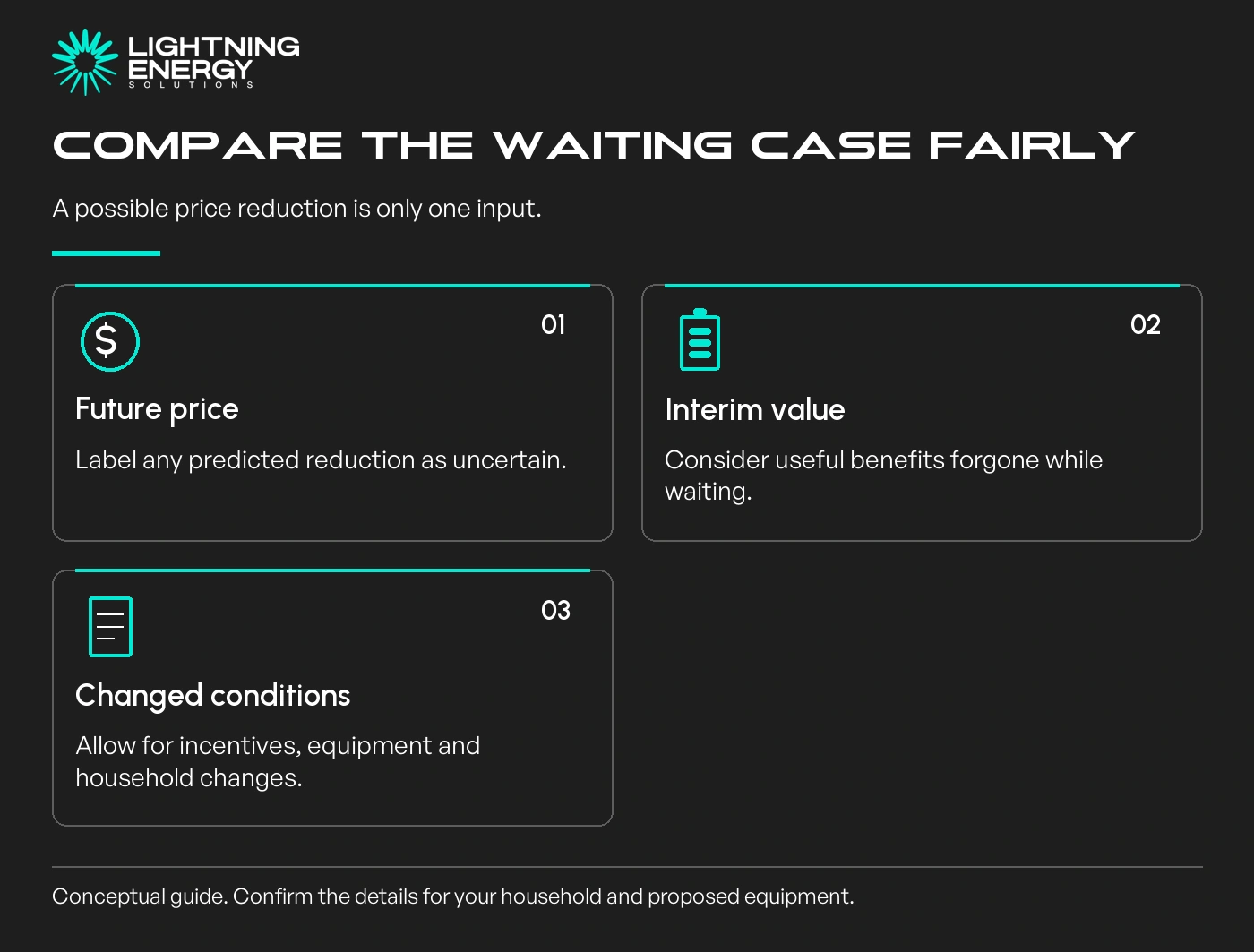
That does not mean buying immediately is always better. It means the waiting case needs the same scrutiny as the purchase case, with uncertain figures clearly labelled.
Moving plans, an imminent EV purchase, a heating replacement or a roof project can affect the design. Waiting for a confirmed major change may avoid choosing storage around a demand pattern that is about to disappear.
On the other hand, a current household with well-understood demand and a suitable complete offer need not postpone solely because a newer product will eventually exist.
A battery assessment should distinguish near-term plans from vague possibilities. Avoid paying for speculative future loads that may never arrive.
If the present case is weak or important information is missing, choose what evidence would change the decision. That could be a winter of interval data, a confirmed appliance specification or a revised installation scope.
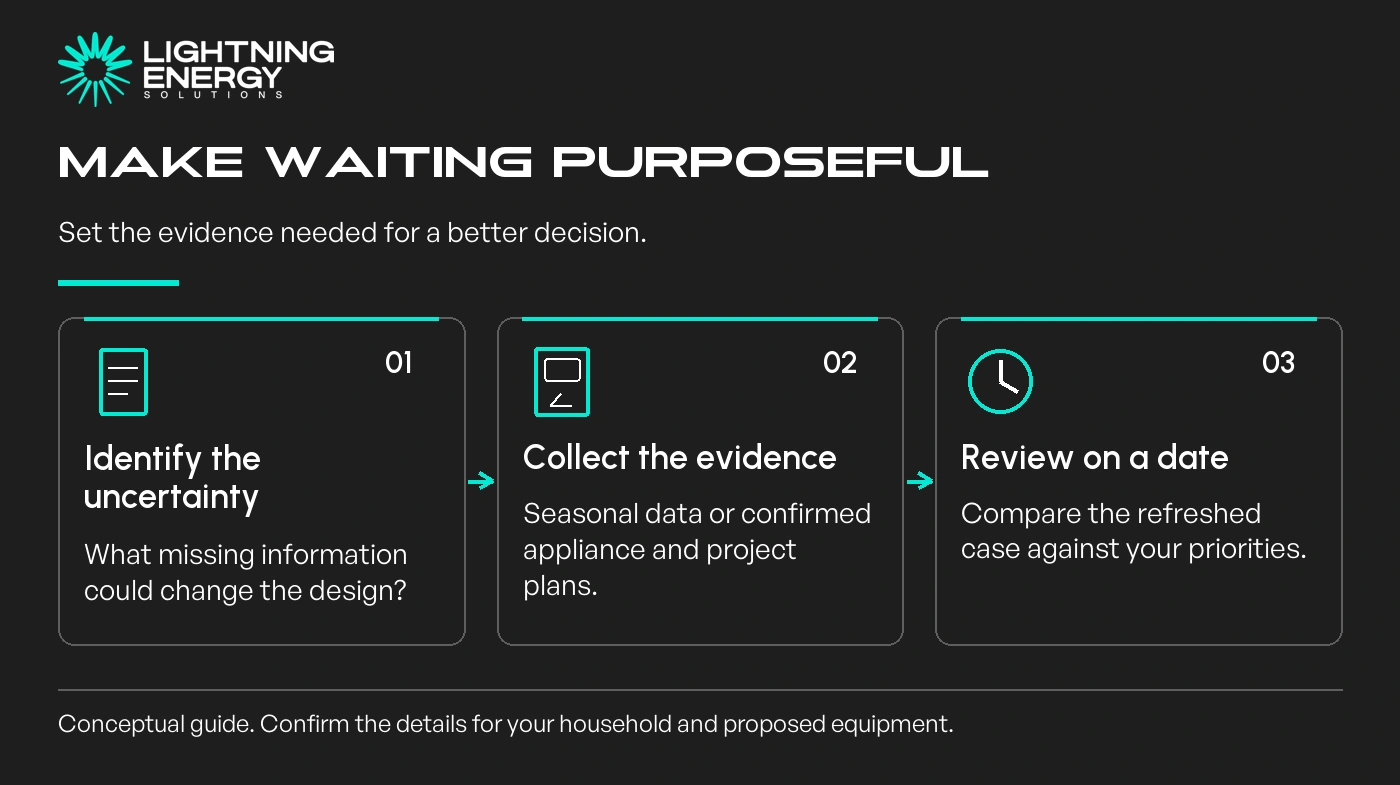
Set a review date and keep the current quote as a reference. This turns waiting into a useful information-gathering period instead of repeatedly reacting to sale deadlines and product rumours.
If the case already meets your financial and backup priorities, make the decision on that evidence. Neither buying now nor waiting should depend on a guaranteed future market outcome.
Plan your battery upgradeBring your current quote, energy records and planned household changes. We can identify what is known, what remains uncertain and whether more information would materially improve the design decision.Available times
Book a consultation and we'll map solar, storage, hot water, and the rebates around your bills and your goals.
Question 1 of 6
