
Can a Home Battery Make Better Use of Solar Under an Export Limit?
A battery can sometimes capture solar that an export limit would curtail. Check actual surplus, charging power, storage headroom and later demand first.
A battery can sometimes capture solar that an export limit would curtail. Check actual surplus, charging power, storage headroom and later demand first.

A battery can make better use of solar under an export limit when it has room to charge and the system can direct surplus energy into storage. It cannot remove every generation constraint or keep absorbing energy once full.
The useful opportunity depends on when curtailment occurs, how much energy is affected and whether stored energy has a valuable later use. An export-limit number alone is not a battery sizing calculation.
Ask for the connection approval and the installer's explanation of how the limit applies to the complete site. Separate a fixed export limit from a flexible arrangement that changes with network conditions.
Powercor's battery guidance describes a pre-approval process that determines the site's permitted export arrangement. The approval for your address matters more than a general limit quoted online.
Powercor home battery connection guidance.
Our solar export-limit guide explains why panel capacity, inverter rating and grid exports are different quantities.
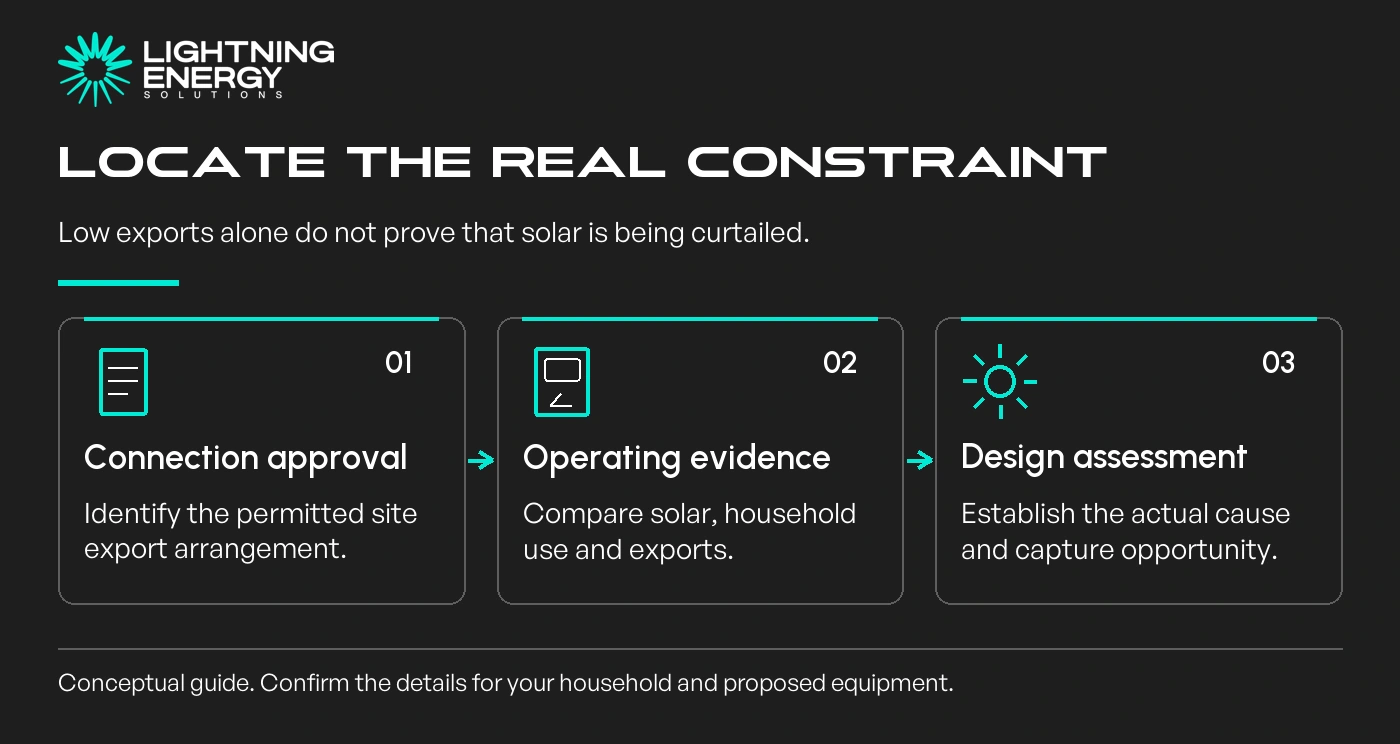
Low exports do not necessarily mean lost generation. The household may simply be using the solar directly, or clouds, shade and other equipment limits may explain the output.
Ask the installer to assess suitable generation and operating data across representative days. A flat graph can be a useful clue, but it is not enough to diagnose the cause without the system details.
Australian Government guidance explains that storage can reduce export-related curtailment by accepting excess solar. That benefit still depends on the available charging path and capacity.
Australian Government battery guidance.
A hypothetical system has 4 kW of solar surplus after household use during an export-constrained interval. If the battery can accept only 2 kW at that moment, it cannot capture the whole surplus through that charging path.
Over one hour at that steady assumed rate, 2 kW would put about 2 kWh into the charging path before relevant losses. The battery also needs enough empty capacity for the energy to be accepted.
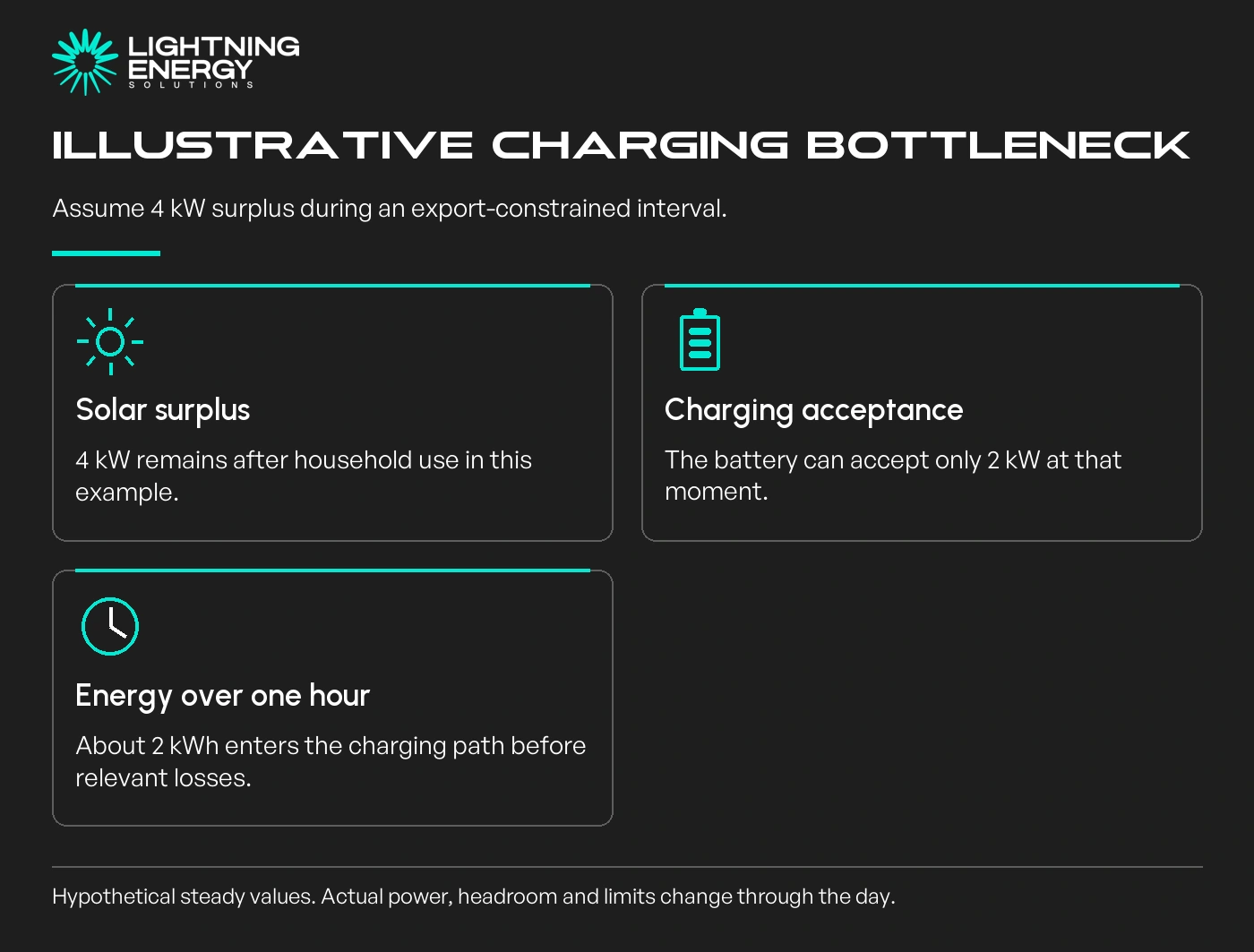
This is an illustration, not a prediction for your roof. Actual solar, household demand, conversion limits and battery temperature or charge state can change during the interval.
A battery already full before the constrained period cannot keep absorbing surplus. Control settings may influence headroom, but any change needs to remain within supported operation and the approved connection.
Capturing otherwise curtailed solar can avoid later imports, after storage losses. The value depends on how much energy is actually delivered later and the price it replaces.
A battery value assessment should compare annual useful energy with complete installed cost. Do not value every clipped summer peak as a recurring year-round saving.
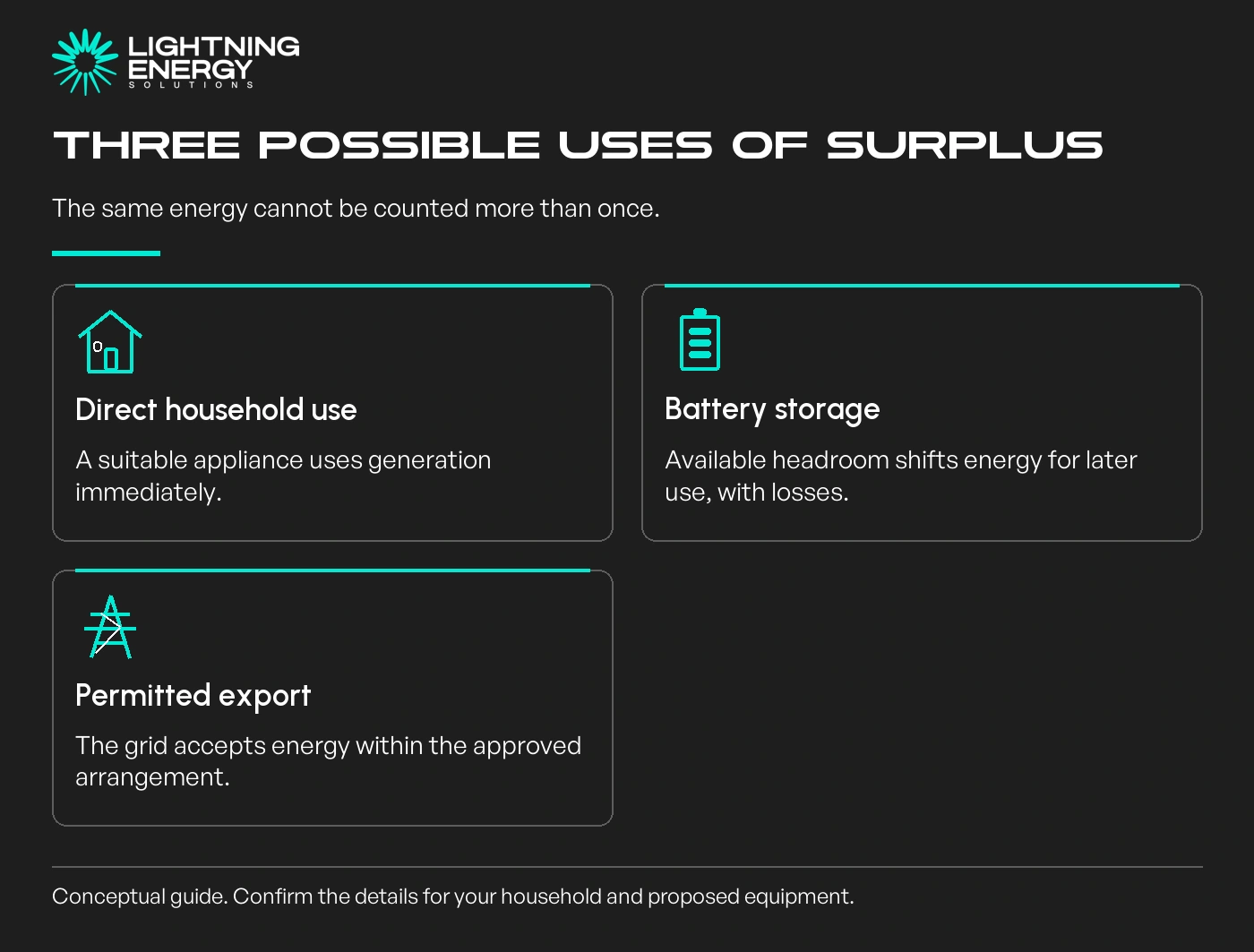
Suitable direct daytime loads may use some solar without storage. Consider hot-water scheduling or EV charging where those loads, controls and household routines make sense.
They compete for the same surplus, so do not count it as both direct appliance use and battery charging in the financial estimate.
Powercor offers flexible exports to eligible customers under specified conditions. That may change the available export opportunity, but admission, communications and equipment requirements need checking for the property.
Powercor flexible export information.
A flexible connection does not guarantee an unrestricted export level at every moment. Compare its actual conditions and export payments with the proposed storage option.
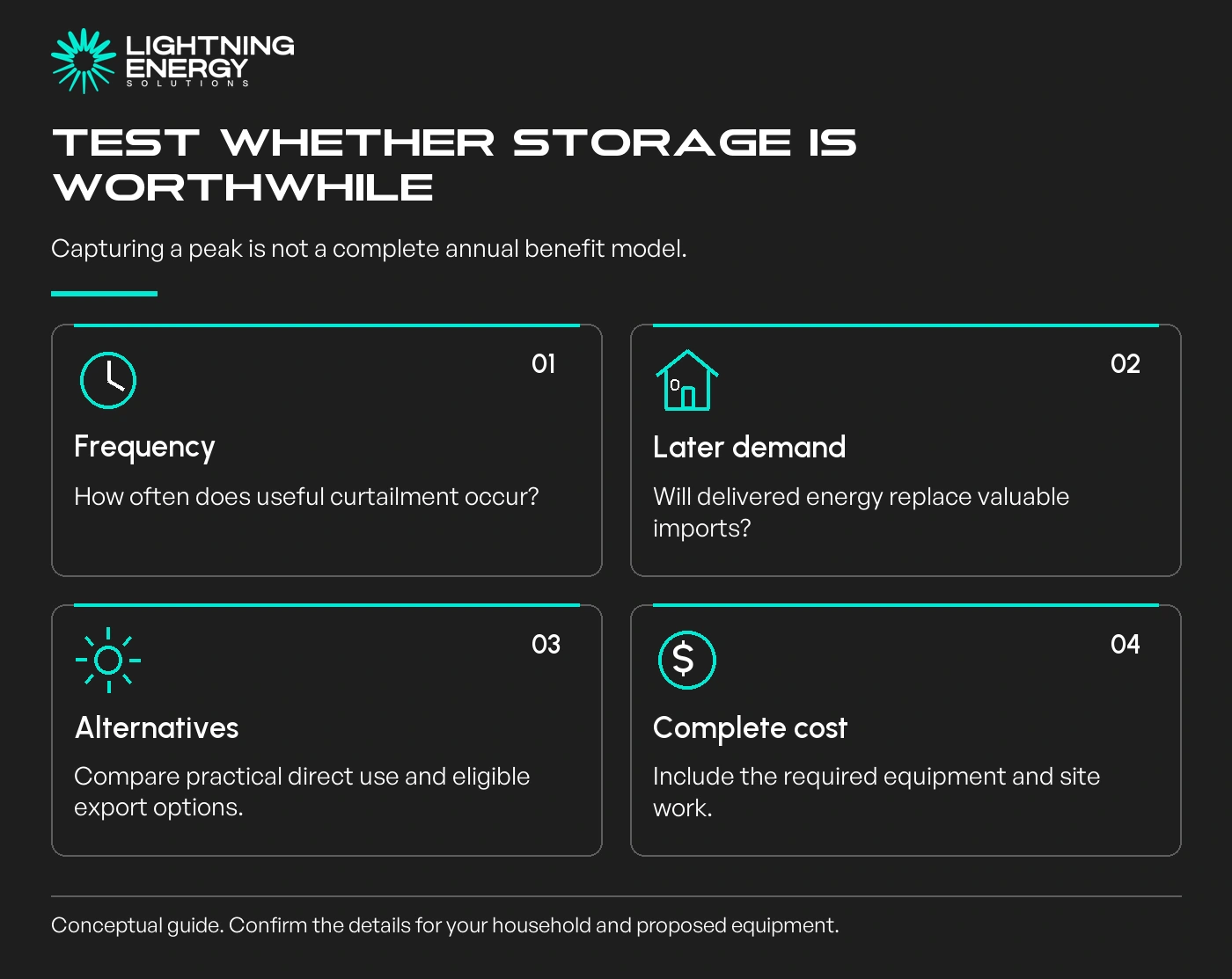
A battery design review can distinguish useful storage from an unrelated production fault. Never change protected export settings or attempt to bypass an approved limit yourself.
Plan your battery upgradeBring the connection approval and representative generation, export and consumption records. We can assess whether charging headroom would capture useful energy and compare storage with other supported options.Available times
Book a consultation and we'll map solar, storage, hot water, and the rebates around your bills and your goals.
Question 1 of 6
