
Can a Larger Solar Array Still Make Sense Under a Low Export Limit?
A low solar export limit does not automatically rule out a larger array. Compare extra useful generation, curtailment and cost under the approved settings.
A low solar export limit does not automatically rule out a larger array. Compare extra useful generation, curtailment and cost under the approved settings.

A larger solar array can make sense under a low export limit when the extra generation has a useful destination. That may be daytime household demand or compatible storage, rather than the grid.
It can also be poor value if most of the additional output is curtailed. Compare the smaller and larger designs under the actual connection conditions before making either assumption.
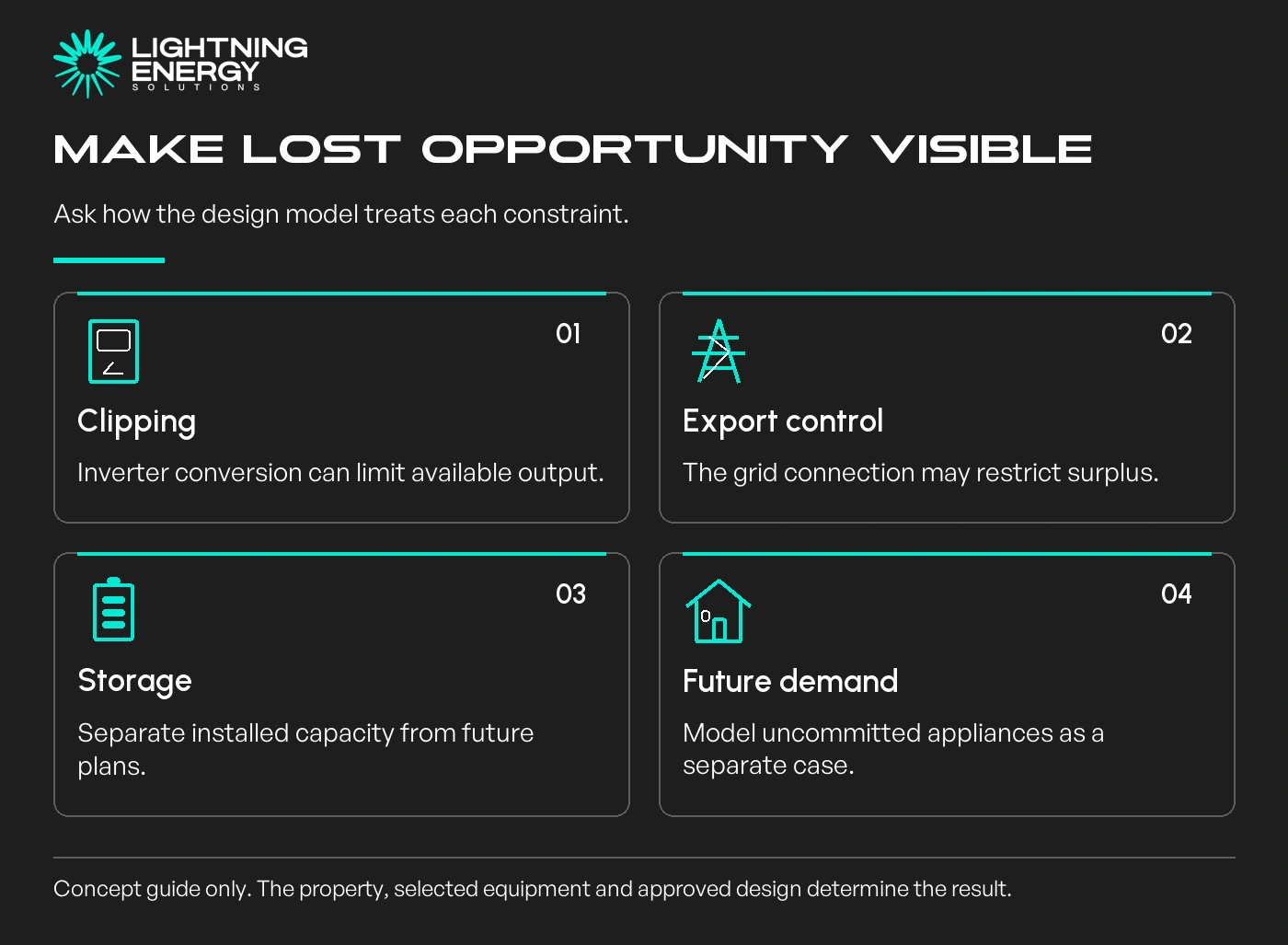
Panel capacity describes the array's rated output under test conditions. The inverter has its own conversion limits. The approved export limit governs electricity allowed to leave the property.
The government sizing guide distinguishes these design considerations.
A restricted grid export does not mean the entire home can only use that amount of solar power.
For example, solar may serve household demand while the remaining approved amount is exported. The exact balance still depends on generation, inverter capability and the installed control arrangement.
Our solar export explainer provides the foundation. Never infer permission for a larger system solely from the existing export figure.
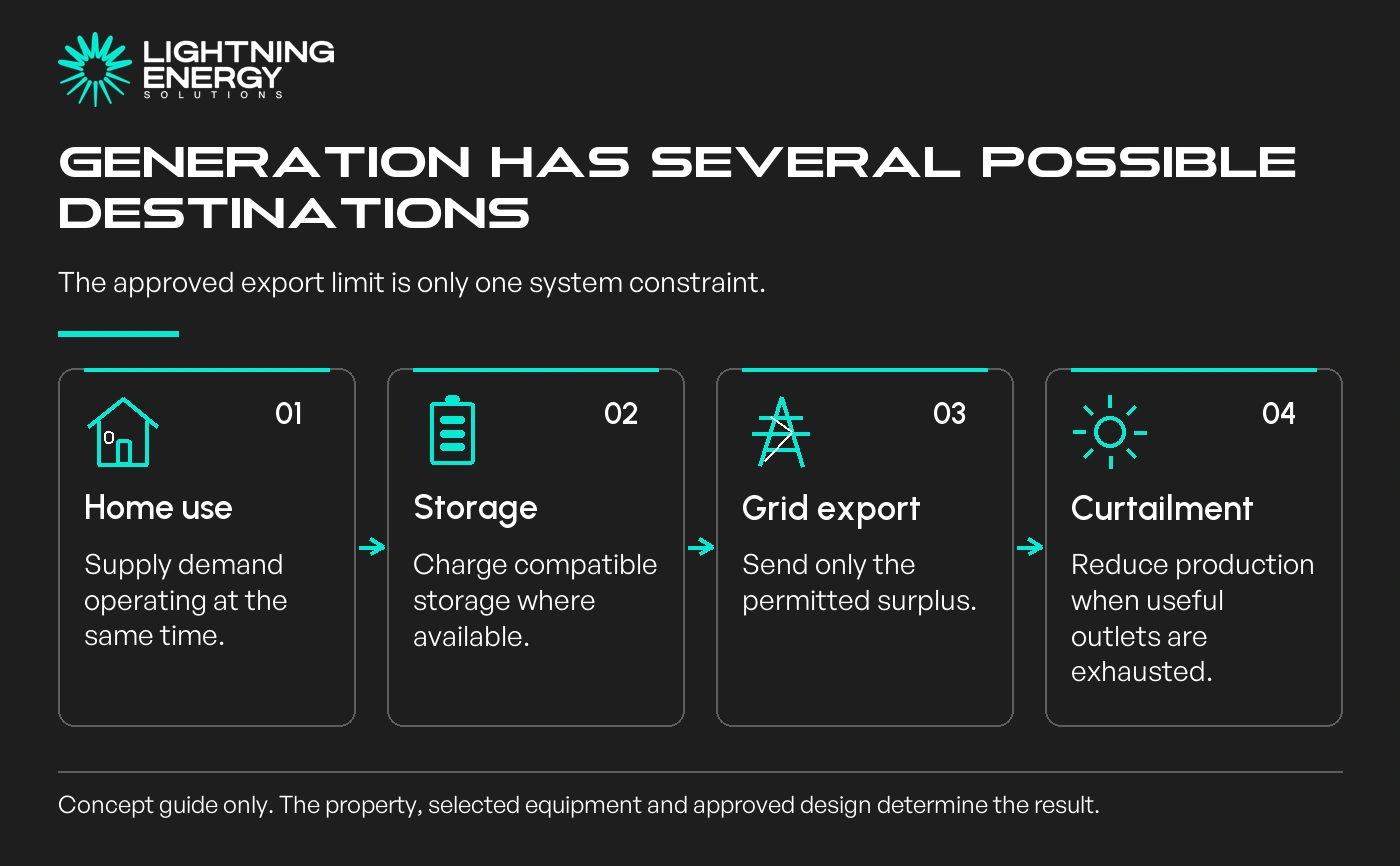
Additional panels may provide useful output outside the strongest midday period, depending on orientation, shading and inverter design. A roof-specific model is needed to quantify that benefit.
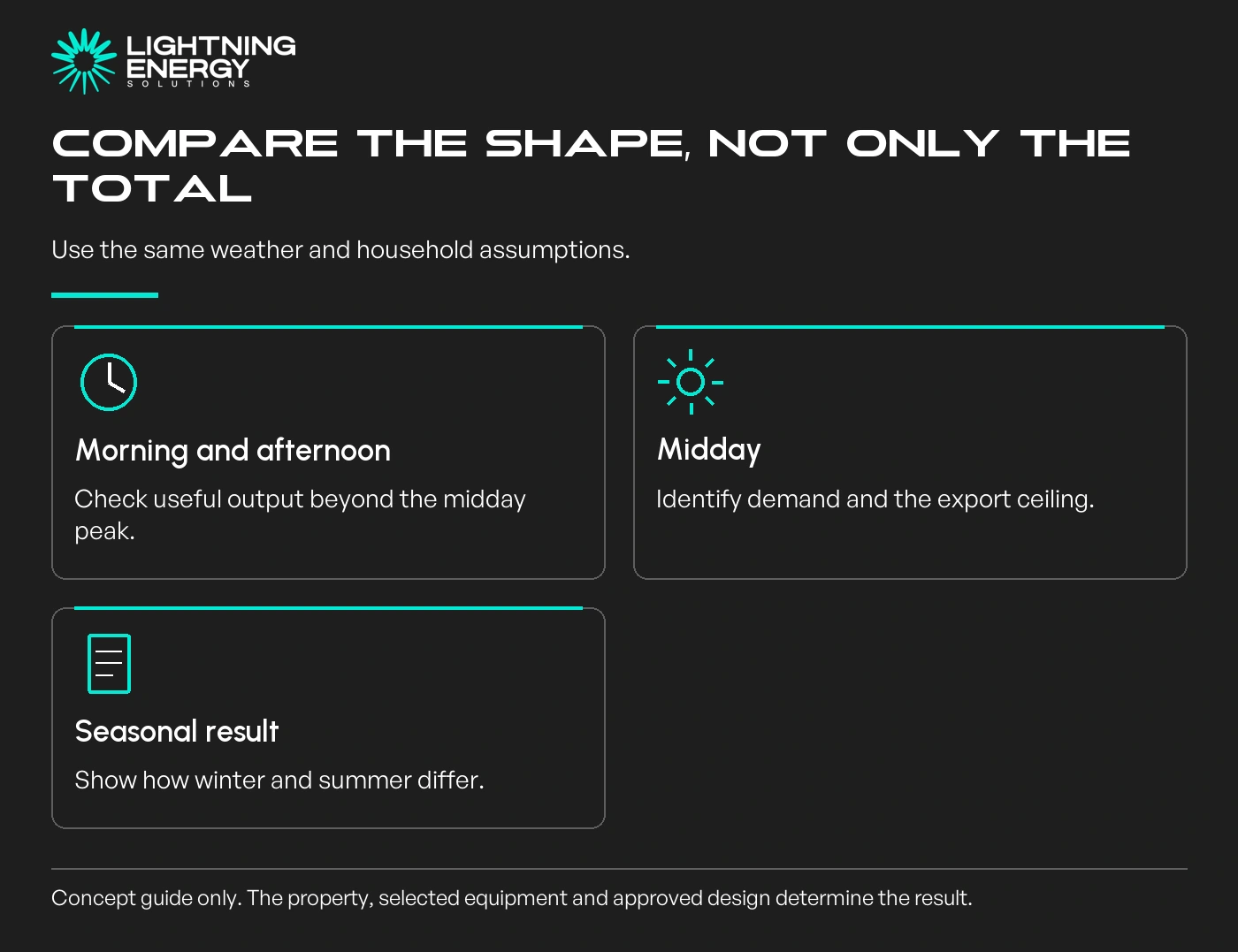
The comparison should show when extra energy is consumed, stored, exported or curtailed. An annual generation total before export control cannot establish the value delivered to the household.
For solar design, ask the designer to keep household demand and tariff assumptions consistent between options. Otherwise a larger design can appear better simply because the model assumes more convenient consumption.
Our east-west roof guide explains why the shape of generation can matter alongside its annual total.
When available production exceeds the useful outlets permitted by the system, controls may reduce generation. That is different from energy successfully generated and exported for a low payment.
Ask how the model represents export controls and inverter clipping. Check whether a battery is already included in the calculation or merely proposed as a future purchase.
Imagine two otherwise comparable designs for a home empty through most weekdays. Extra midday panels may add limited value today, even if the roof has plenty of space.
If the same household later installs daytime hot-water heating or regularly charges an EV at home, the result could change. Those are separate scenarios, not certain future benefits.
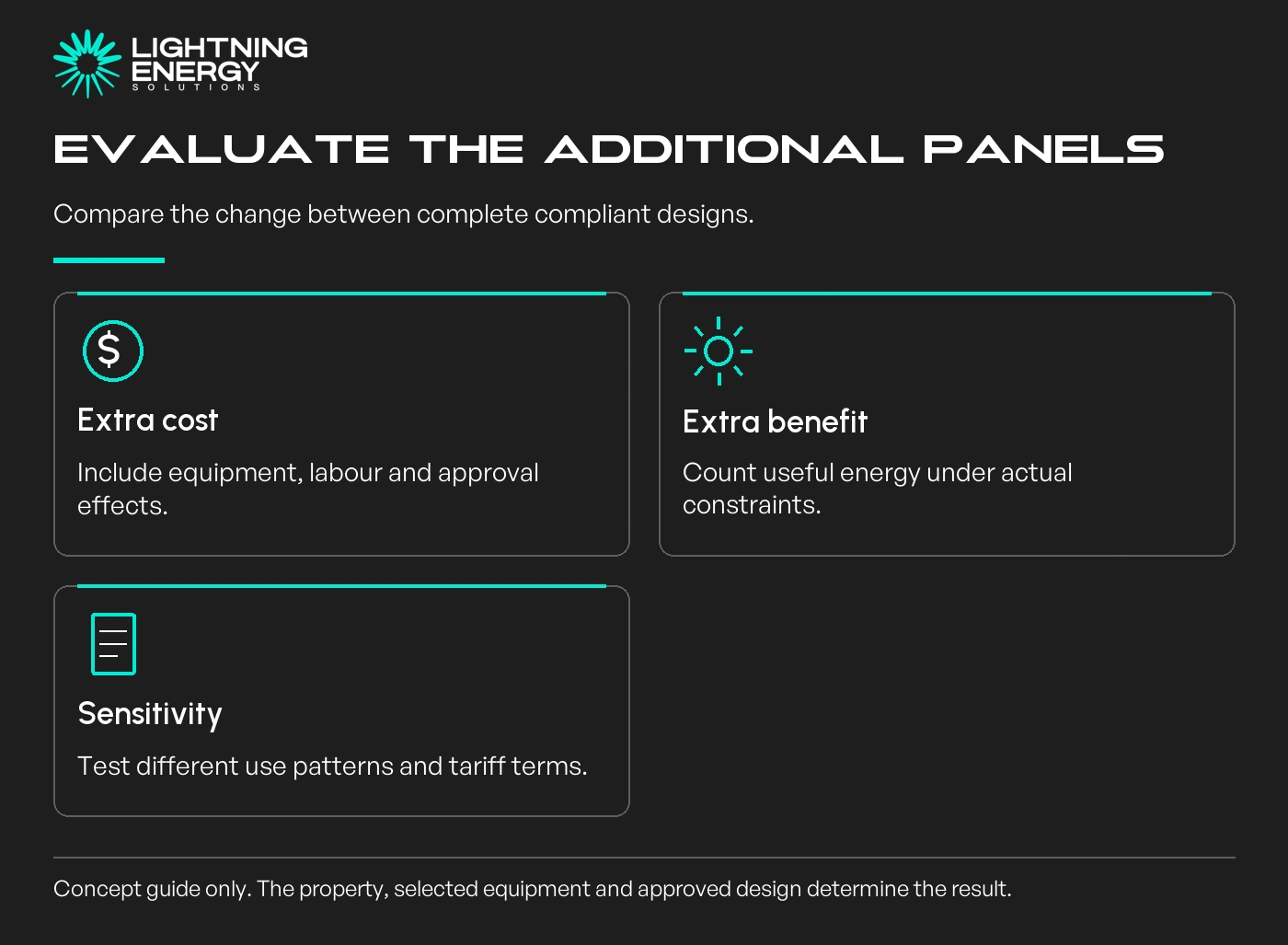
Focus on the additional installed cost and the additional useful benefit. Comparing each option's total generation against the whole system price can hide whether the last group of panels is worthwhile.
Include changes to mounting, inverter selection, electrical work and approvals. The incremental price is not always just the number of extra modules multiplied by a catalogue price.
Battery storage deserves its own comparison. Do not assume storage is necessary merely because exports are restricted, or that a future battery will absorb every curtailed kilowatt-hour.
Government design guidance highlights property-specific constraints.
Use monthly or interval modelling where the decision depends on season, occupancy and an export ceiling.
Request a smaller and larger compliant design using the approved connection offer. Ask which hours create the extra benefit and which assumptions would make that benefit disappear.
A larger array may be sensible where added energy is repeatedly useful and the added cost is reasonable. A smaller system may be preferable where extra production mostly has nowhere valuable to go.
Do not rely on an unapproved higher export limit or an uncommitted appliance purchase to justify the quoted return. If those assumptions change, the economics must be recalculated.
The right answer is a transparent comparison for your home. A low export limit is one design constraint; it is neither an automatic ban on extra panels nor a reason to ignore curtailment.
Available times
Book a consultation and we'll map solar, storage, hot water, and the rebates around your bills and your goals.
Question 1 of 6
